Skip to content
Menu

A booking made through these earns us a commission from Viator. The price is the same, and the commission had no bearing on what is recommended.

Event

Two Anniversaries Fall Here, in the Busiest Month and the Quietest

  • By
  • Published
  • Last updated
  • Event

The raid ran 16 to 18 October. The execution followed on 2 December at Charles Town. Visiting on either date is a different experience, for opposite reasons.

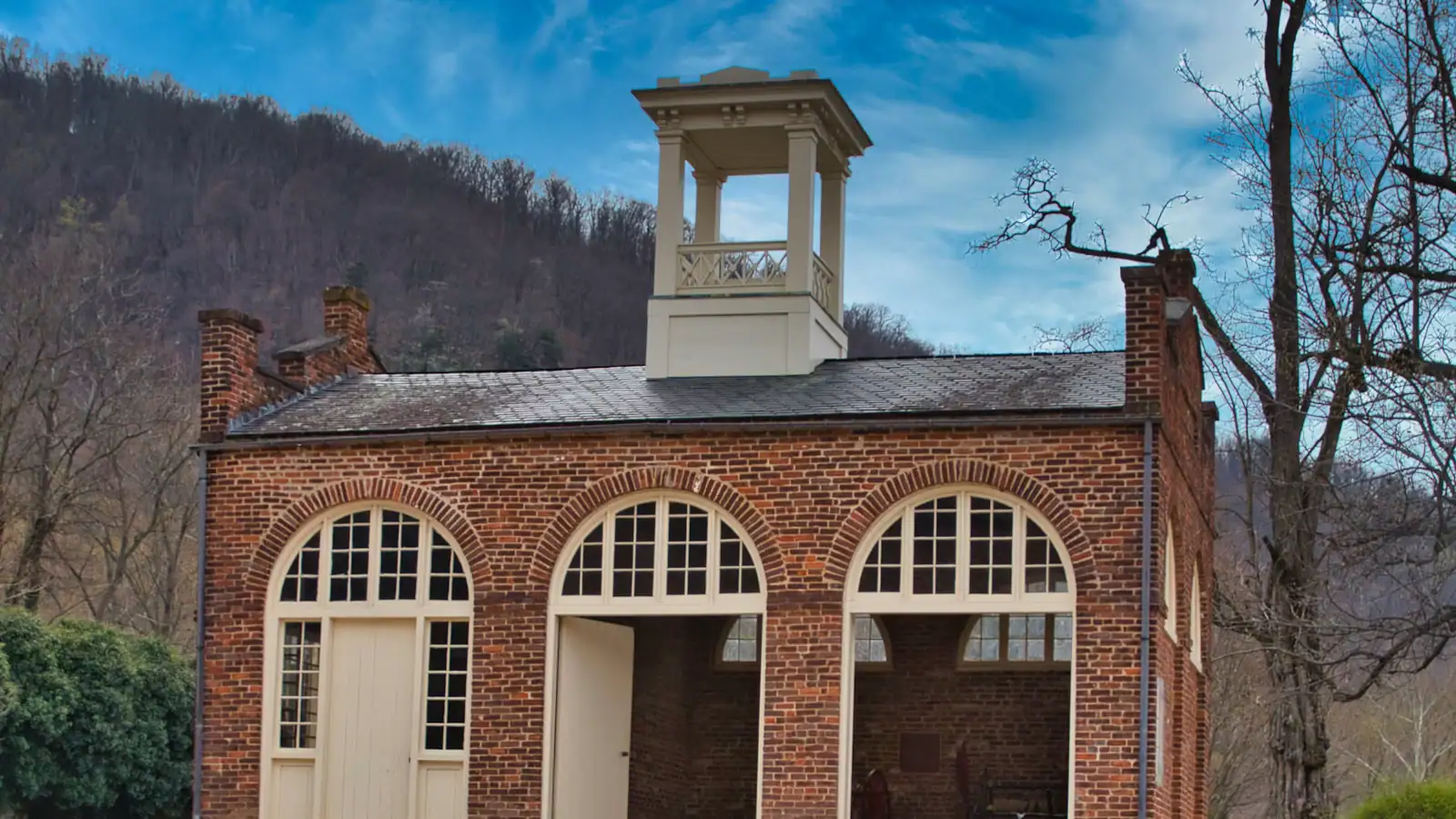
A squat brick building with a small square tower and an arched doorway, standing alone on open groundUnsplash

Two dates anchor the calendar at Harpers Ferry, and they could not be more differently placed.

On the night of 16 October 1859, John Brown and twenty-one others crossed the Potomac and seized the United States Armory. The raid was over by the morning of the eighteenth: ten of the party were dead, five escaped, and Brown was a prisoner. He was tried at Charles Town, eight miles away, convicted on 2 November of treason against Virginia, murder and inciting slave insurrection, and hanged on 2 December 1859. Four more of his men were hanged on 16 December and two on 16 March 1860.

Those two anniversaries fall in the busiest and the quietest weeks of the visiting year respectively.

Mid-October is peak season here. The ridges are colouring, weekend queues run from mid-morning to mid-afternoon, and the town of 269 residents is receiving several thousand people a day through one parking lot. Visiting on the anniversary of the raid means seeing the place at full capacity. The compensation is that the park frequently marks the date with programming, and a ranger talk on the ground where the events happened is worth more than a panel.

Early December is the other end of the scale. The leaves are gone, the light is short, the last shuttle is 5.30 p.m., and on a weekday you may have an exhibit building to yourself. For anyone whose interest is the history rather than the scenery, it is the better visit. Charles Town, where the trial and the execution took place, is a twenty-minute drive and has the courthouse still standing; the gallows site is a few streets away in what is now a residential neighbourhood, marked and easy to walk past.

A third date belongs in the same list and gets far less attention. The September 1862 siege ended on the fifteenth with over twelve thousand Union troops surrendering on Bolivar Heights — the largest surrender of United States forces in the war — and Antietam followed two days later, seventeen miles north.

Programming for anniversary dates is arranged annually and not always published far ahead. Ask at the visitor center desk rather than relying on a schedule found online.

SourcingDates of the raid, trial, conviction and executions per the documentary record; September 1862 surrender figures per the National Park Service. Anniversary programming is arranged annually and is not confirmed here.

Plan around it

What this means for visitors

The pages that carry the practical detail behind this story — hours, costs, access and where it sits on Harpers Ferry.

  • Things to do

    History & the Civil War

    John Brown's 1859 raid on the federal armoury, the 1862 surrender on Bolivar Heights and Storer College — the history of Harpers Ferry…

  • Things to do

    Museums & Exhibits

    The park's one-room exhibits on Shenandoah Street, the John Brown Museum, Black Voices and Storer College — what each Harpers Ferry museum…

  • Things to do

    Day Trips

    Day trips from Harpers Ferry: Antietam twenty minutes away, Shepherdstown, Charles Town and the towpath, plus how to visit Harpers Ferry…

  • Guide

    One Day in Harpers Ferry, Hour by Hour

    The lower town read in geographical order tells the story backwards. Here is the day arranged chronologically instead, from the armoury…

Related

Explore History & the Civil War

This story touches something you can book. These are live listings from our booking partner, not a recommendation attached to the report above.

A booking made through these earns us a commission from Viator. The price is the same, and the commission had no bearing on what is recommended.

Newsroom

More from the newsroom

Who reported this

History Editor

Loretta writes the reason the name is known: the October 1859 raid on the federal armoury, the trial at Charles Town, the 1862 surrender on Bolivar Heights, and Storer College and the Niagara Movement that met on its campus in 1906. She has worked in a county archive, prefers a document to a plaque, and flags where the interpretation is contested.

Our newsroom is machine-assisted and human-edited: stories are drafted from verified public sources and checked before they publish. How that works is set out in our editorial standards.

More from Loretta Sims