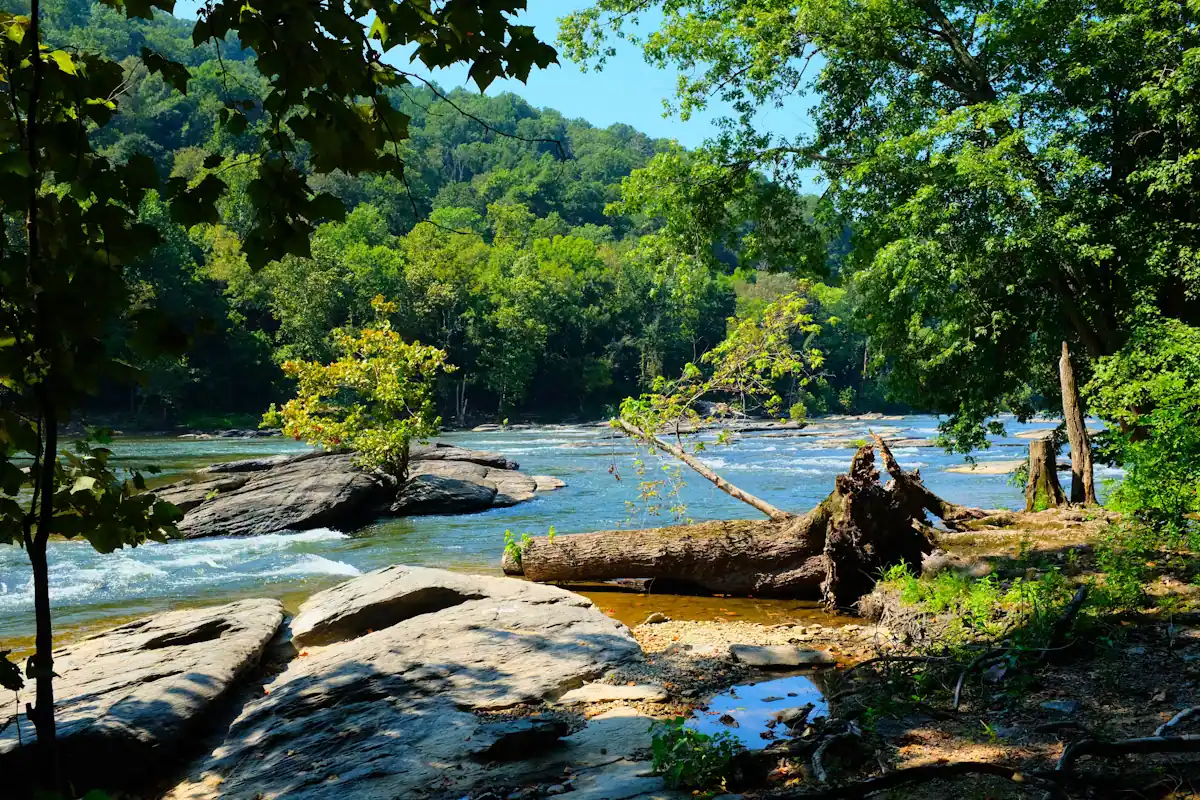
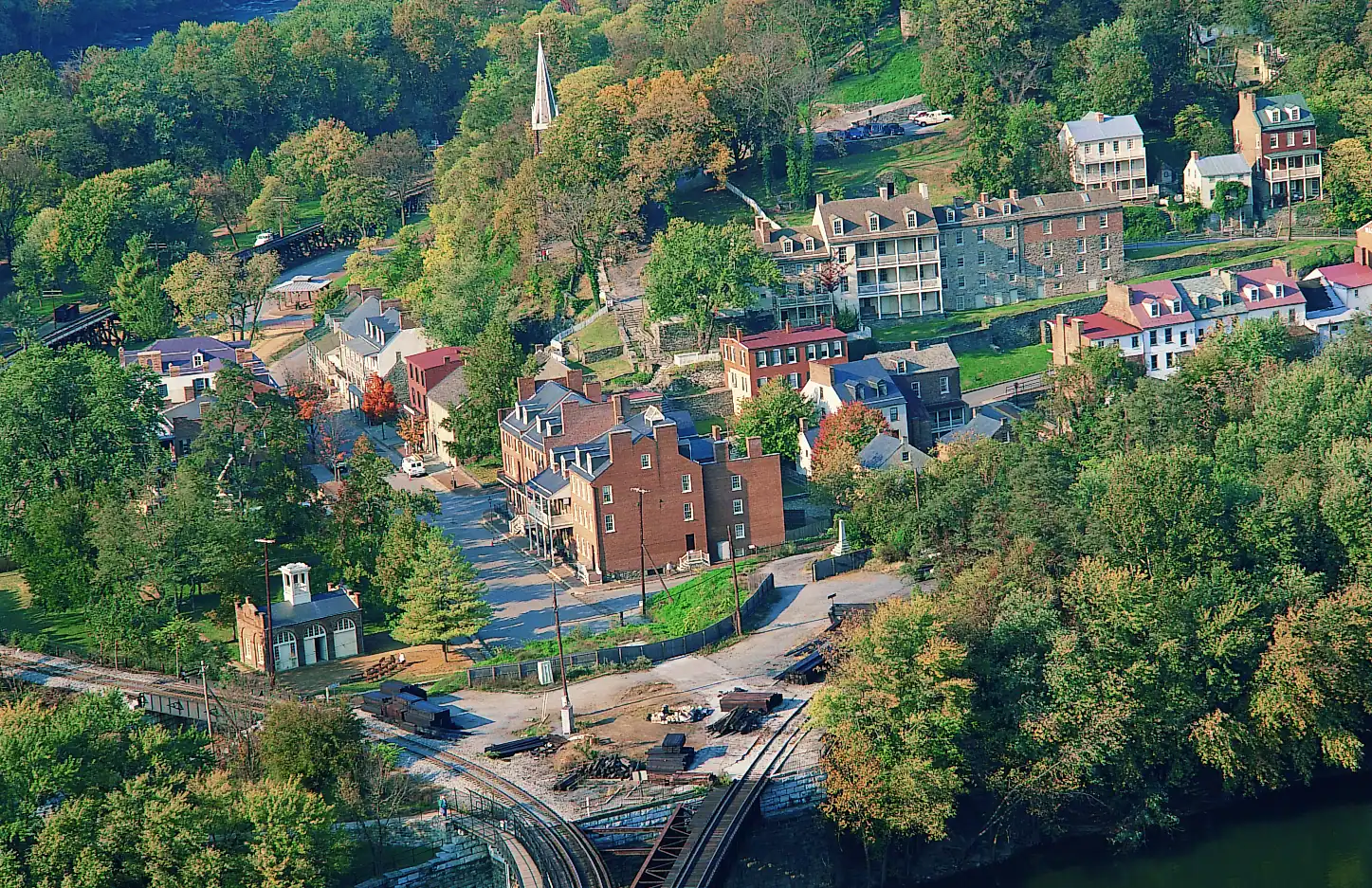
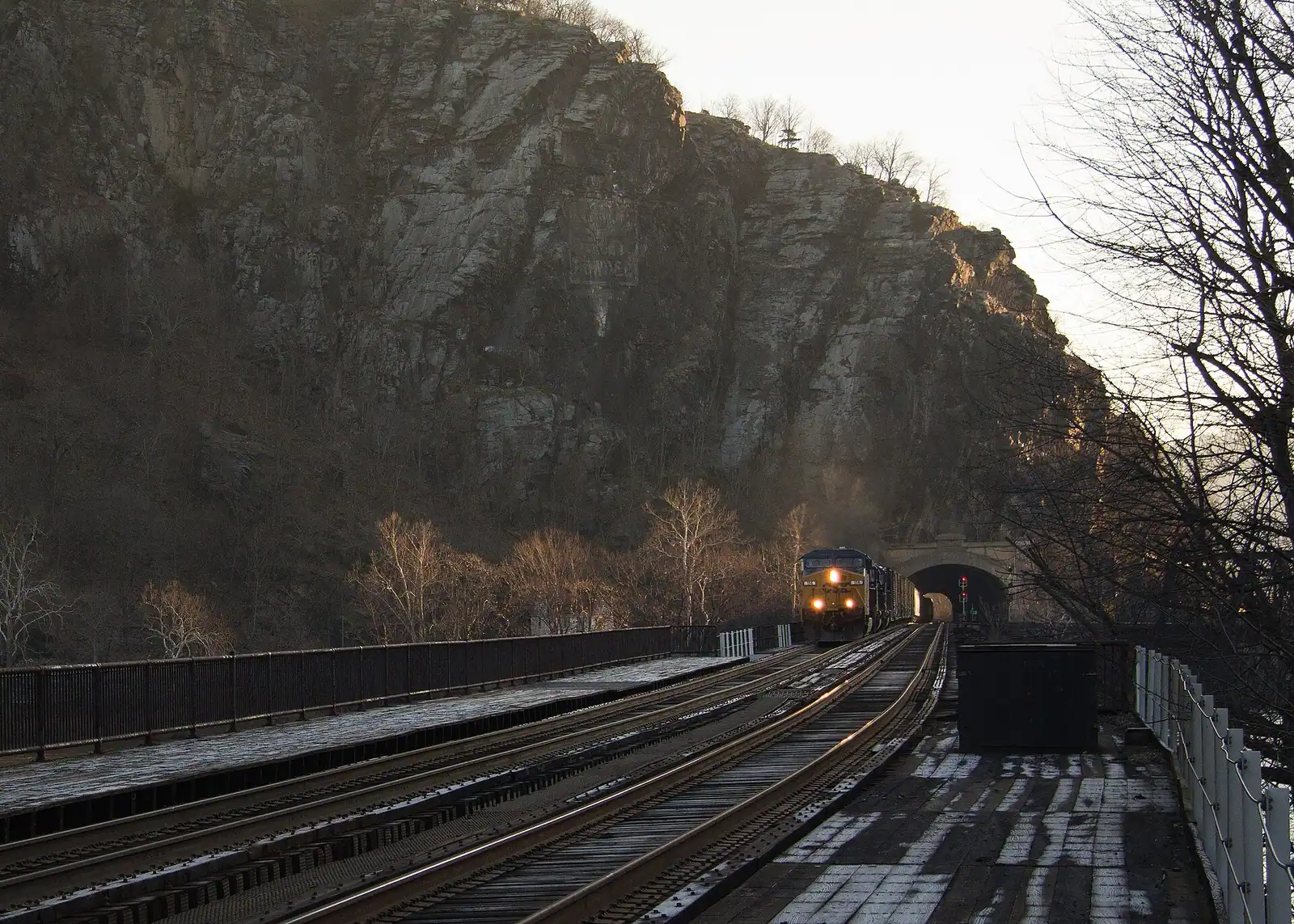
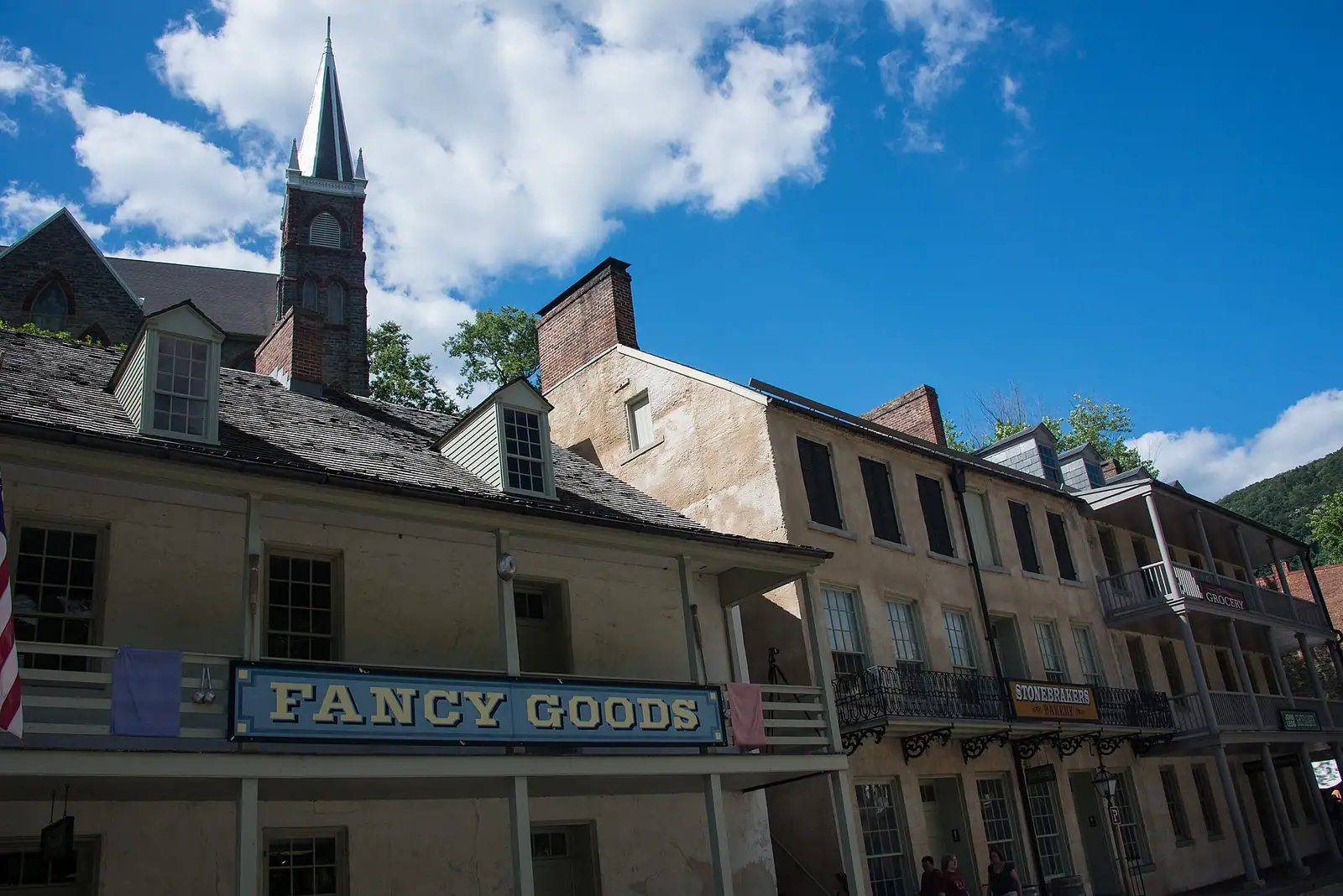
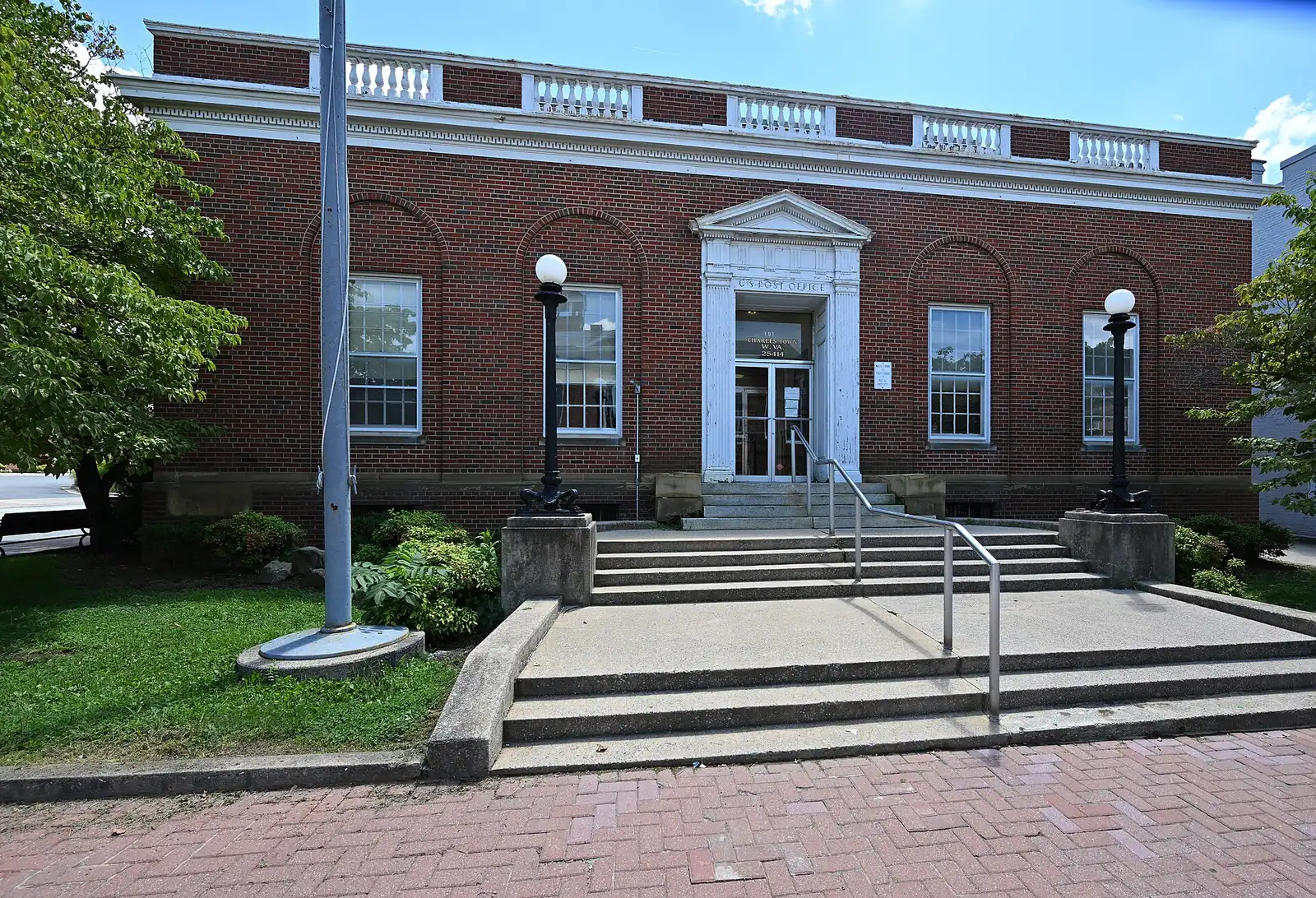
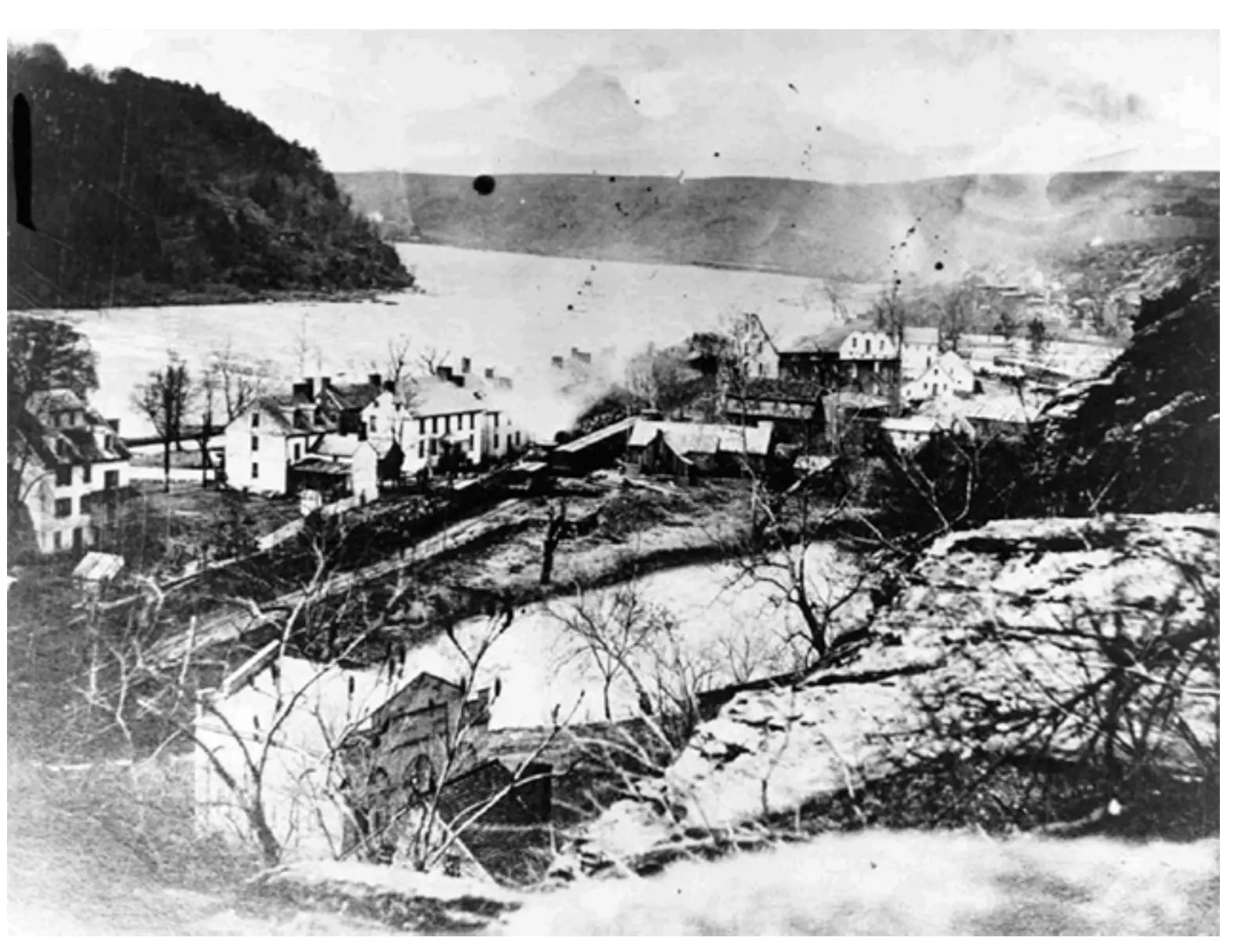
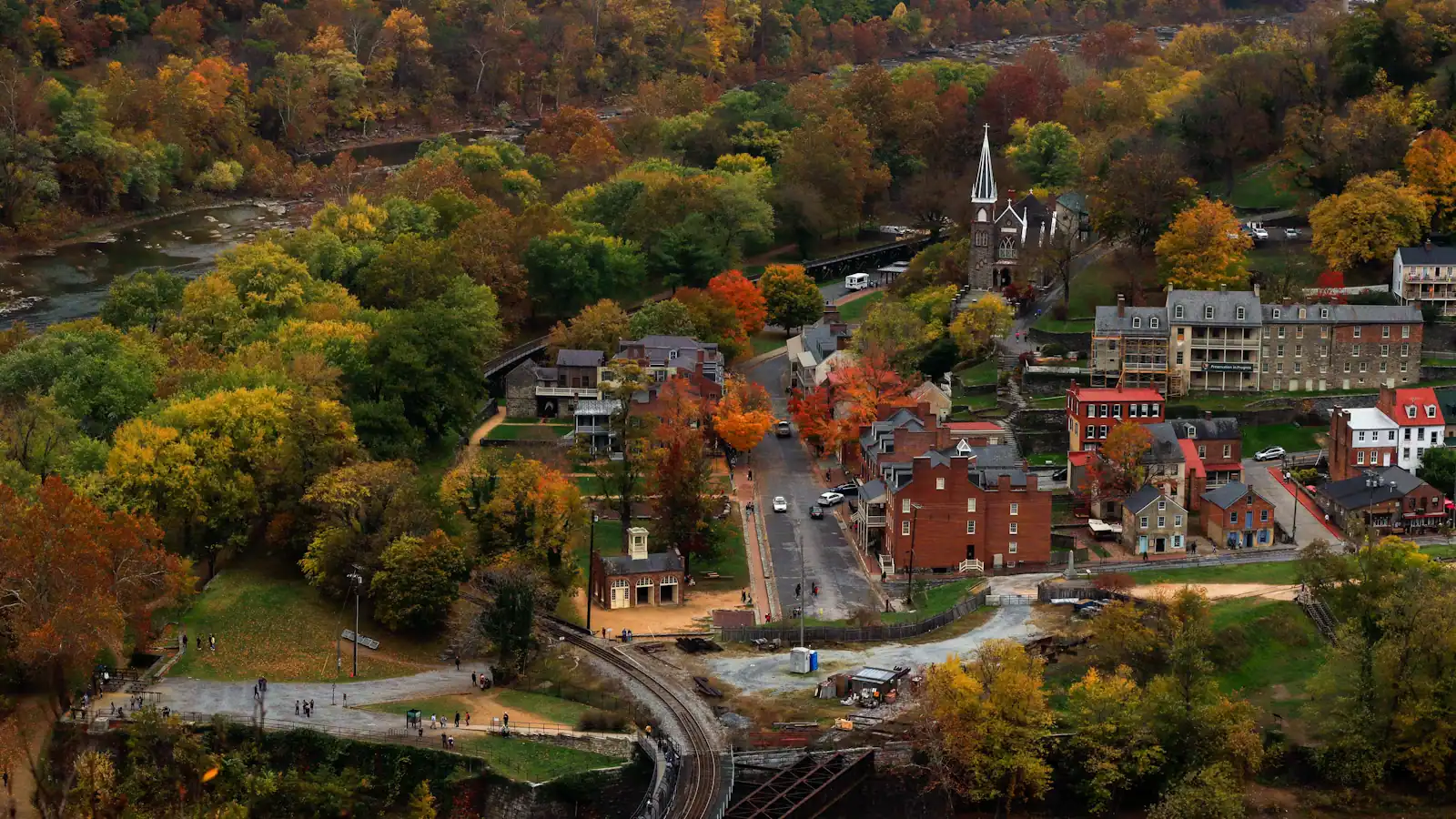
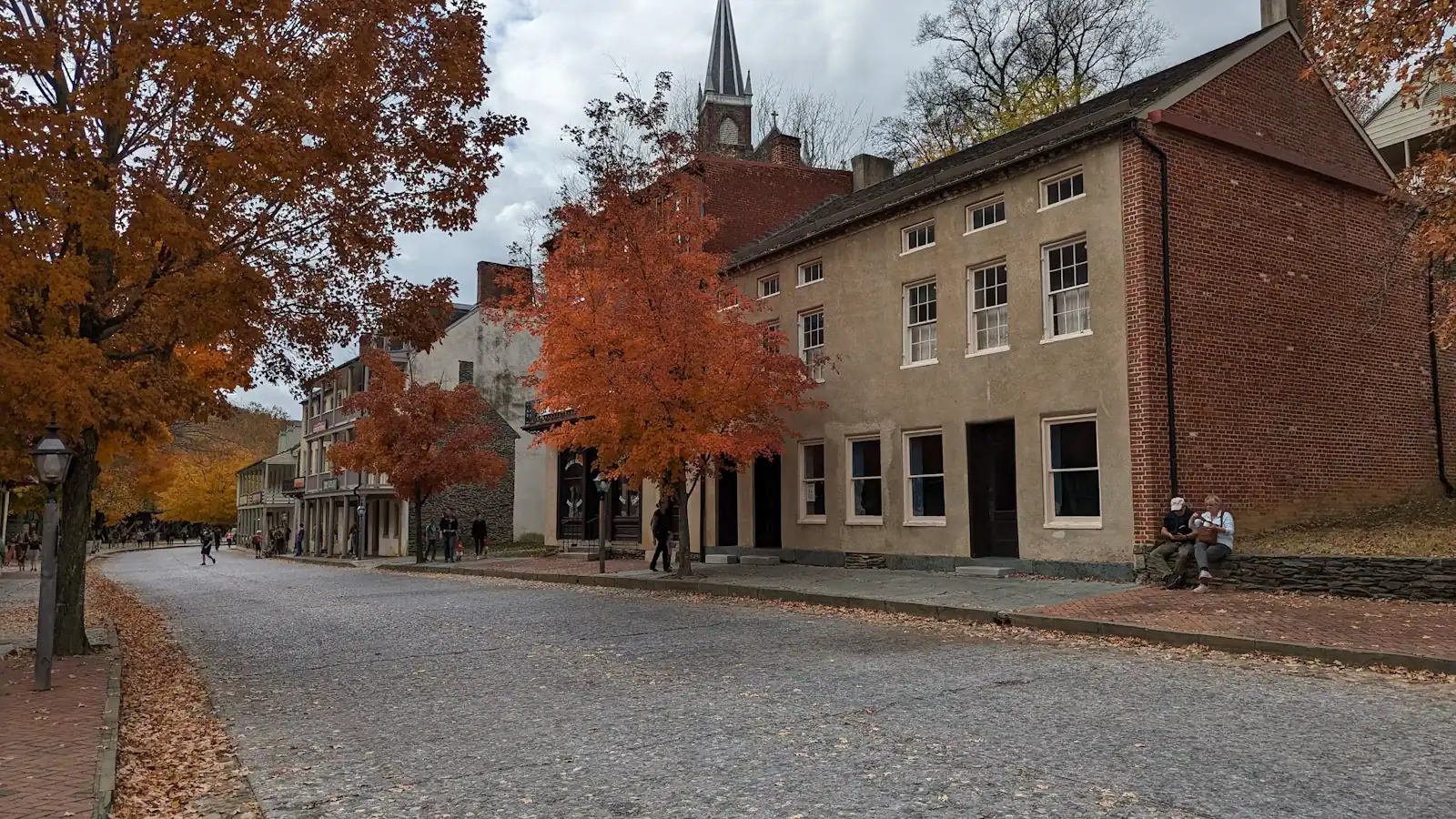
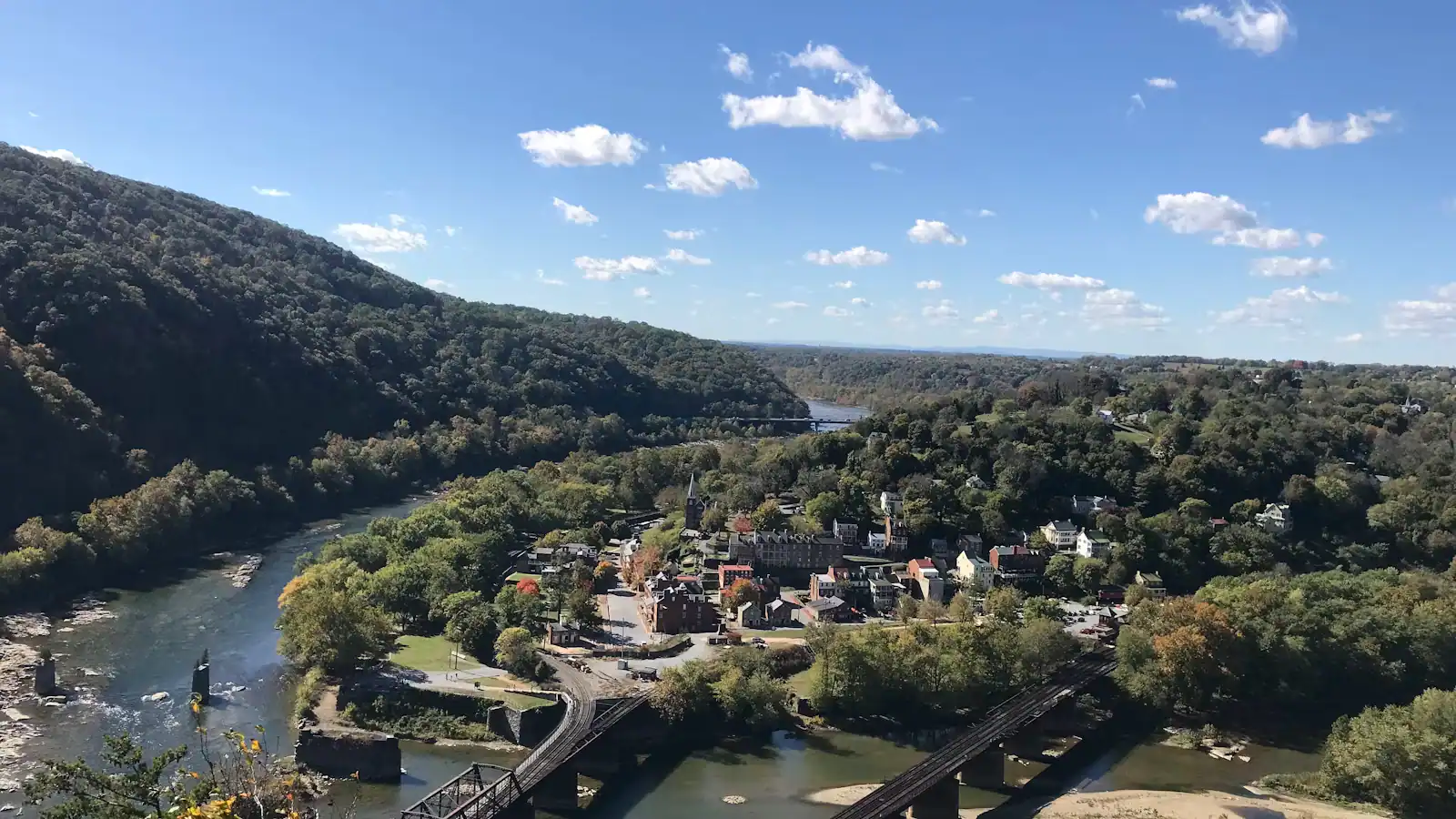
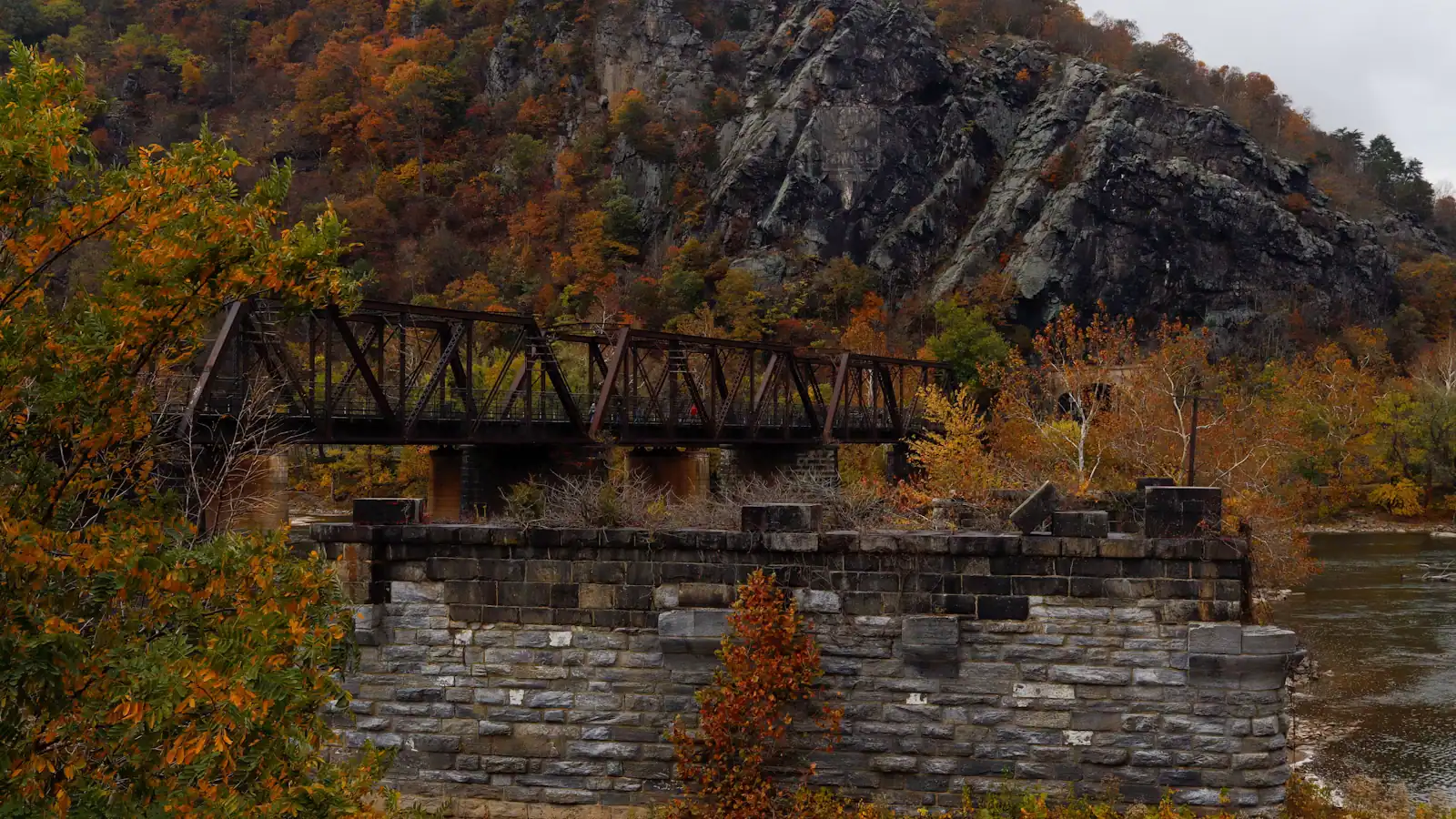
The United States built its second national armoury on this ground in 1799 because the ground did the work. Two rivers arrive at the same corner, the Potomac out of the mountains and the Shenandoah up the valley, and both drop hard enough to turn machinery. For sixty years the federal government made guns here — more than six hundred thousand muskets, rifles and pistols before the war — and on Virginius Island, on a channel of the Shenandoah, John H. Hall built rifles from parts cut to gauge rather than fitted by hand, which is one of the places American mass production begins.
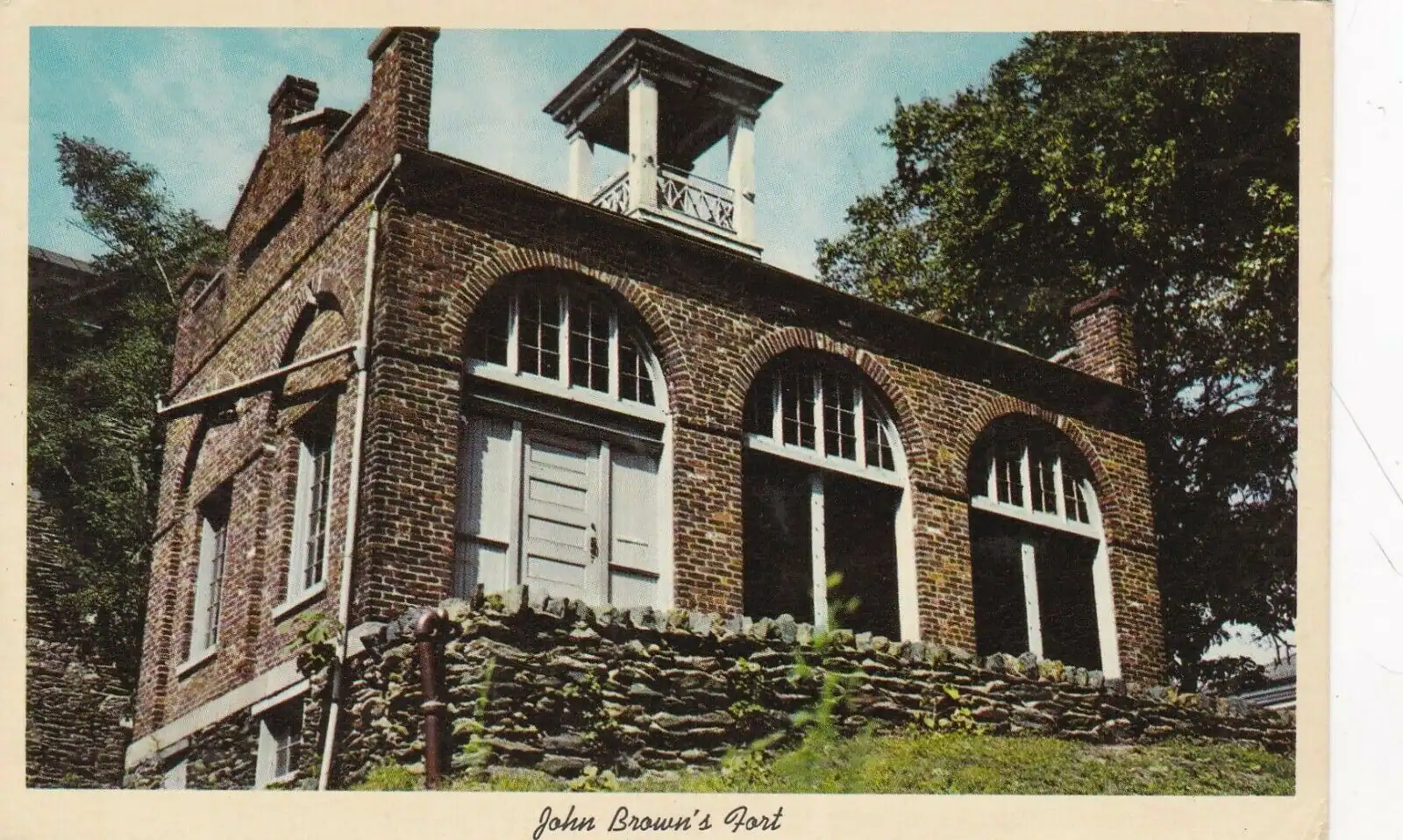
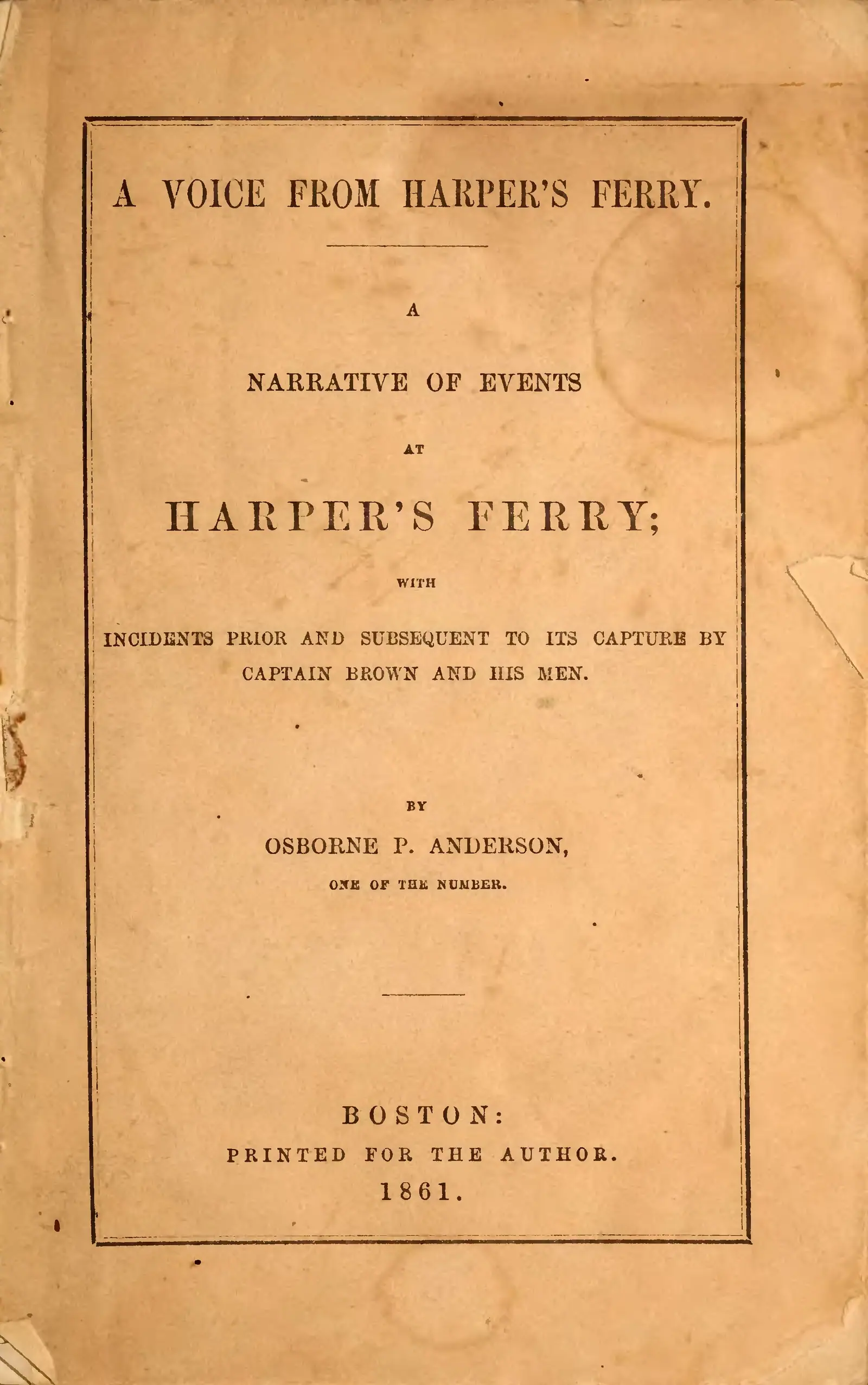
That is why John Brown came. On the night of 16 October 1859 he crossed the Potomac from a rented farm in Maryland with twenty-one others, five of them Black men, and took the armoury, the arsenal and Hall's rifle works. The plan was to arm an uprising out of the mountains. It did not happen. The first person his party killed was Hayward Shepherd, a free Black man working as a baggage handler at the railway station. Local militia pinned the raiders down through the 17th. On the morning of the 18th a company of US Marines under Colonel Robert E. Lee, with Lieutenant J.E.B. Stuart sent forward to demand surrender, broke into the armoury's brick fire engine house with a ladder and finished it in about three minutes. Ten of Brown's men died, including two of his sons. Brown was tried at Charles Town eight miles away, convicted of treason against Virginia, murder and conspiring with enslaved people to rebel, and hanged there on 2 December 1859.
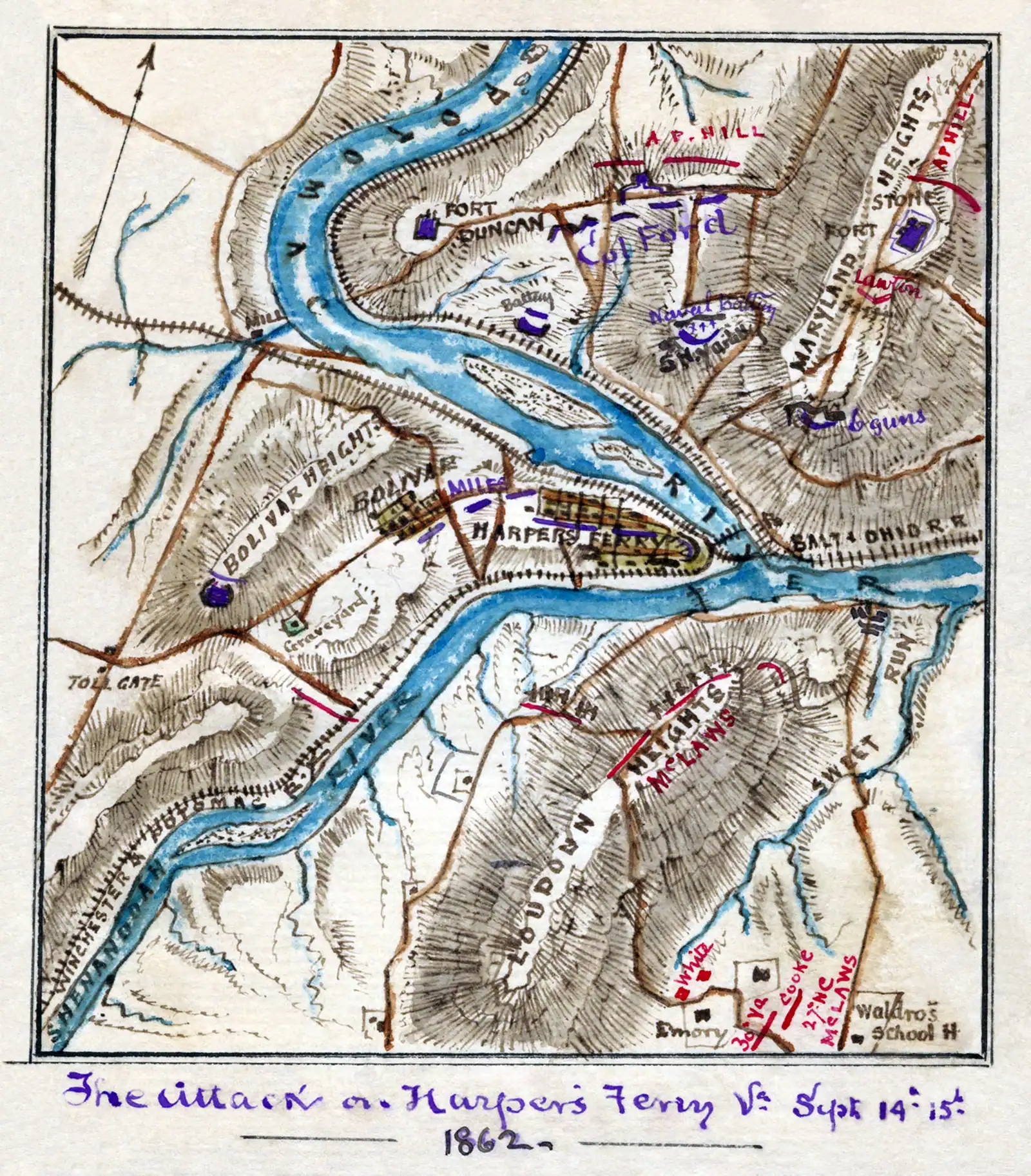
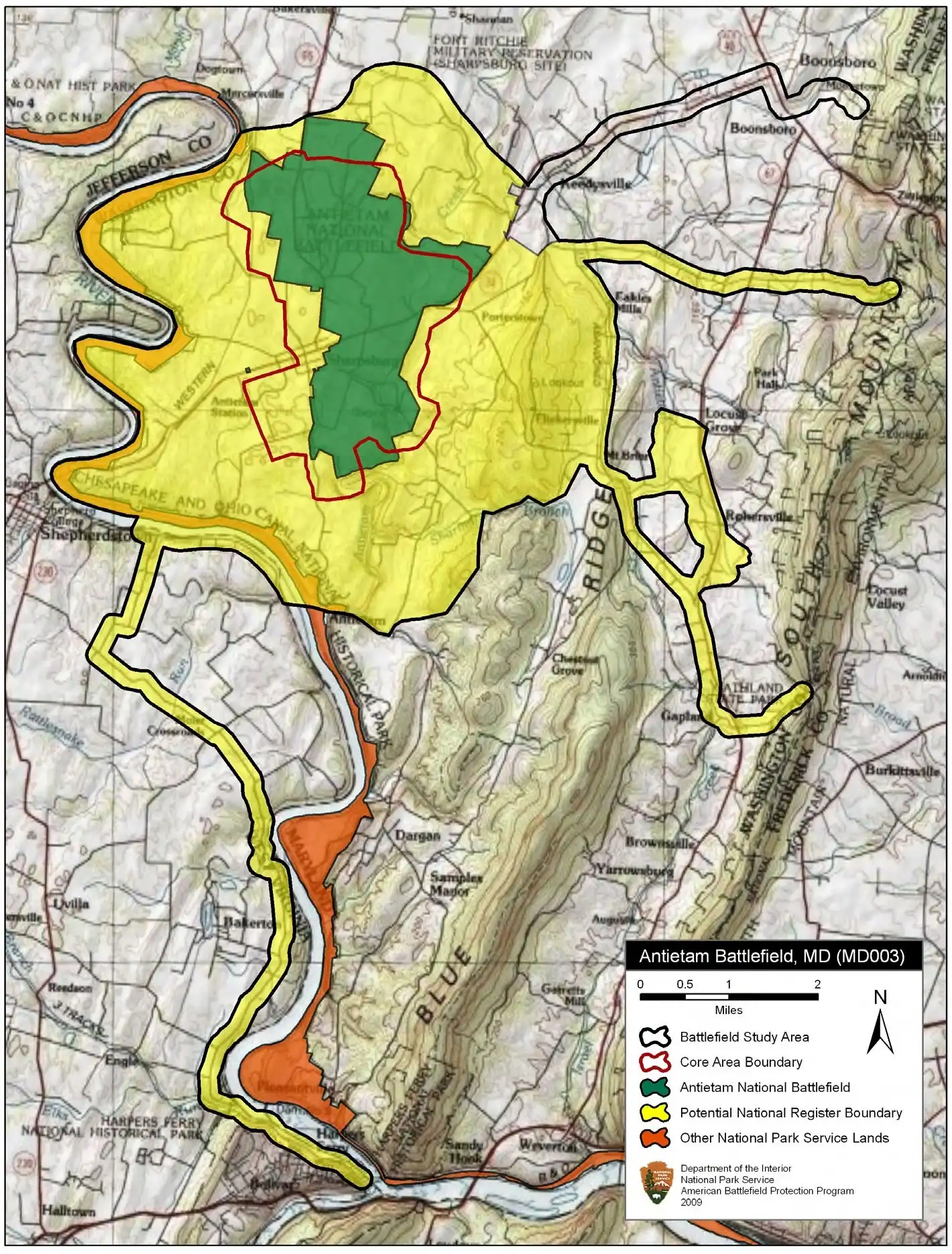
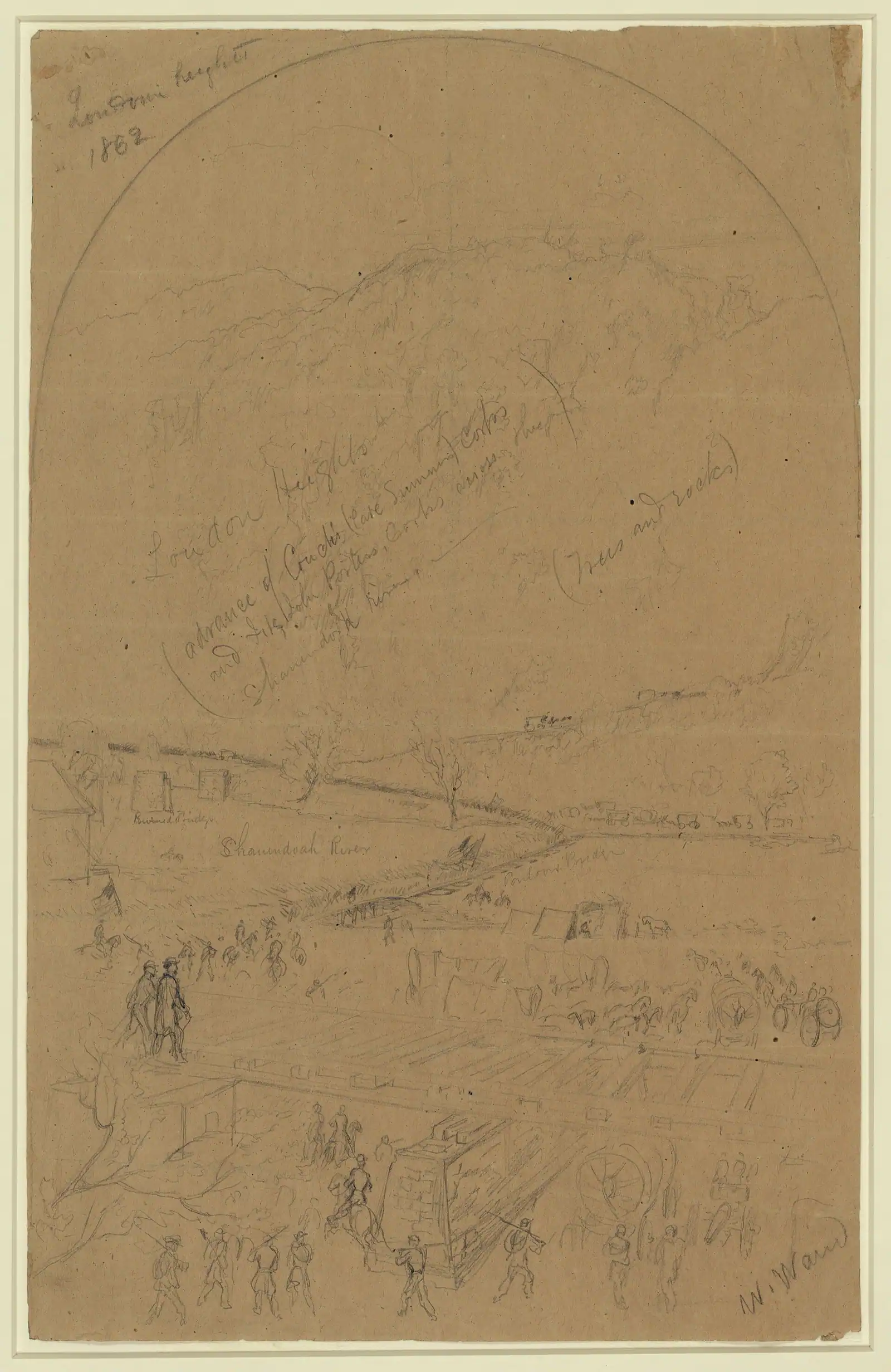
Sixteen months later the armoury was on fire, lit by its own Union garrison to keep the machinery out of Confederate hands. Much of it was carried south anyway and went on making rifles for the other side. The town changed hands over and over — the figure usually given is eight times — and in September 1862 Confederate artillery on the three heights that overlook the place forced the surrender of a Union garrison of about 12,500 men. Antietam was fought two days later, twenty minutes up the road.
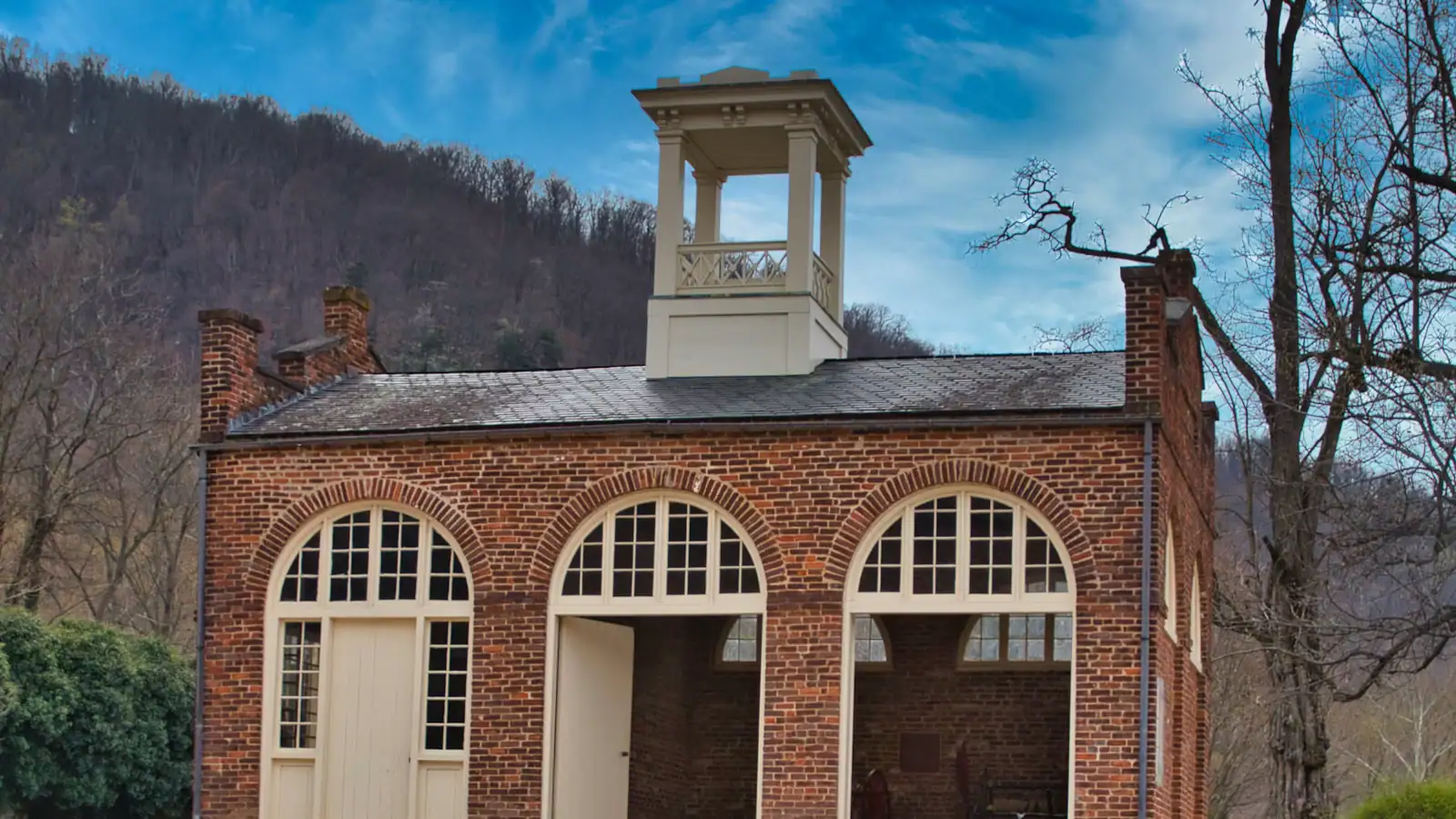
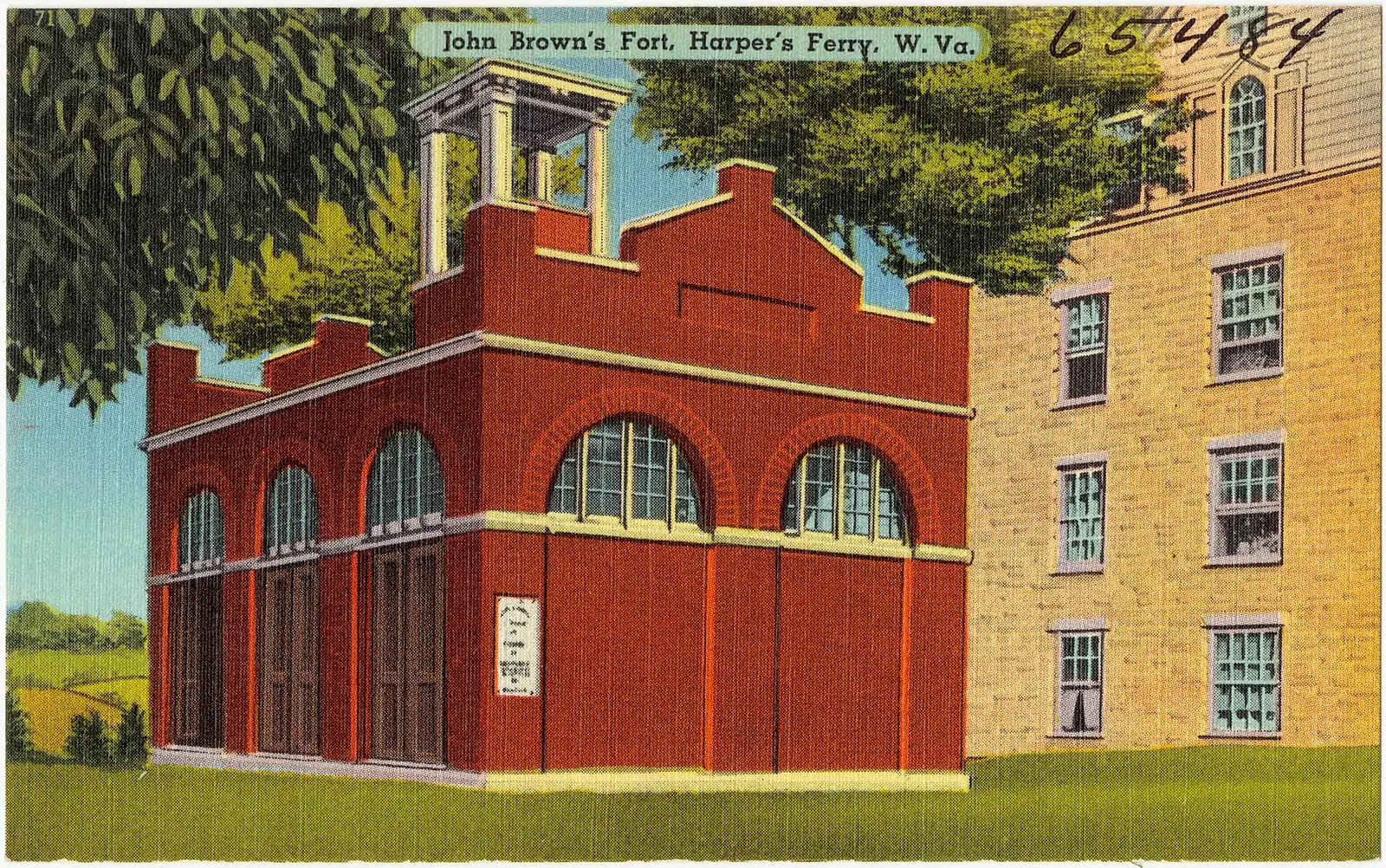
Here is the thing visitors most often get wrong, so it sits in the third paragraph rather than the fifth. John Brown's Fort is a real building and it is not in its real place. It is the armoury's 1848 fire engine house, the only armoury building to survive the war, and it has been taken apart and moved four times — to Chicago for the 1893 world's fair, back to a farm outside town, up to the Storer College campus, and finally down to a spot about 150 feet from where it was built. Its original ground is under a railroad embankment. An obelisk marks the site.
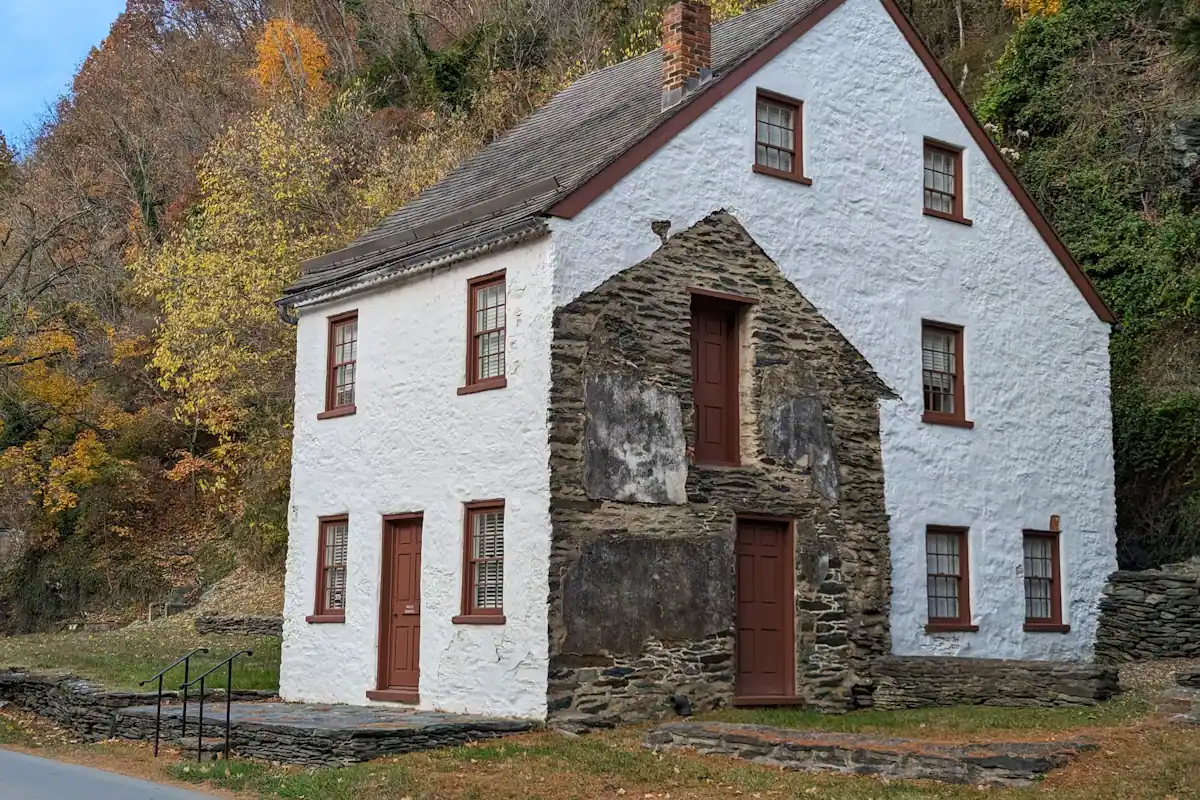
What followed the war matters as much as the war. In 1865 a one-room school for freed people opened on Camp Hill, in surplus armoury buildings; it became Storer College, it ran until 1955, and in August 1906 the Niagara Movement held its first meeting on American soil on that campus and walked down to John Brown's Fort at dawn. This page is written to be read in that order, because the town was.