Historic site
Free
Storer College
A college founded to educate people who had been enslaved, closed in 1955 by the consequences of a civil rights victory.
0.5–1.5 hoursFree; covered by the park entrance fee charged on your vehicle590 ft away
A booking made through these earns us a commission from Viator. The price is the same, and the commission had no bearing on what is recommended.
Neighbourhood
Last updated
The terrace above the lower town: Storer College, the 1906 Niagara Movement meeting, and the view without the queue.
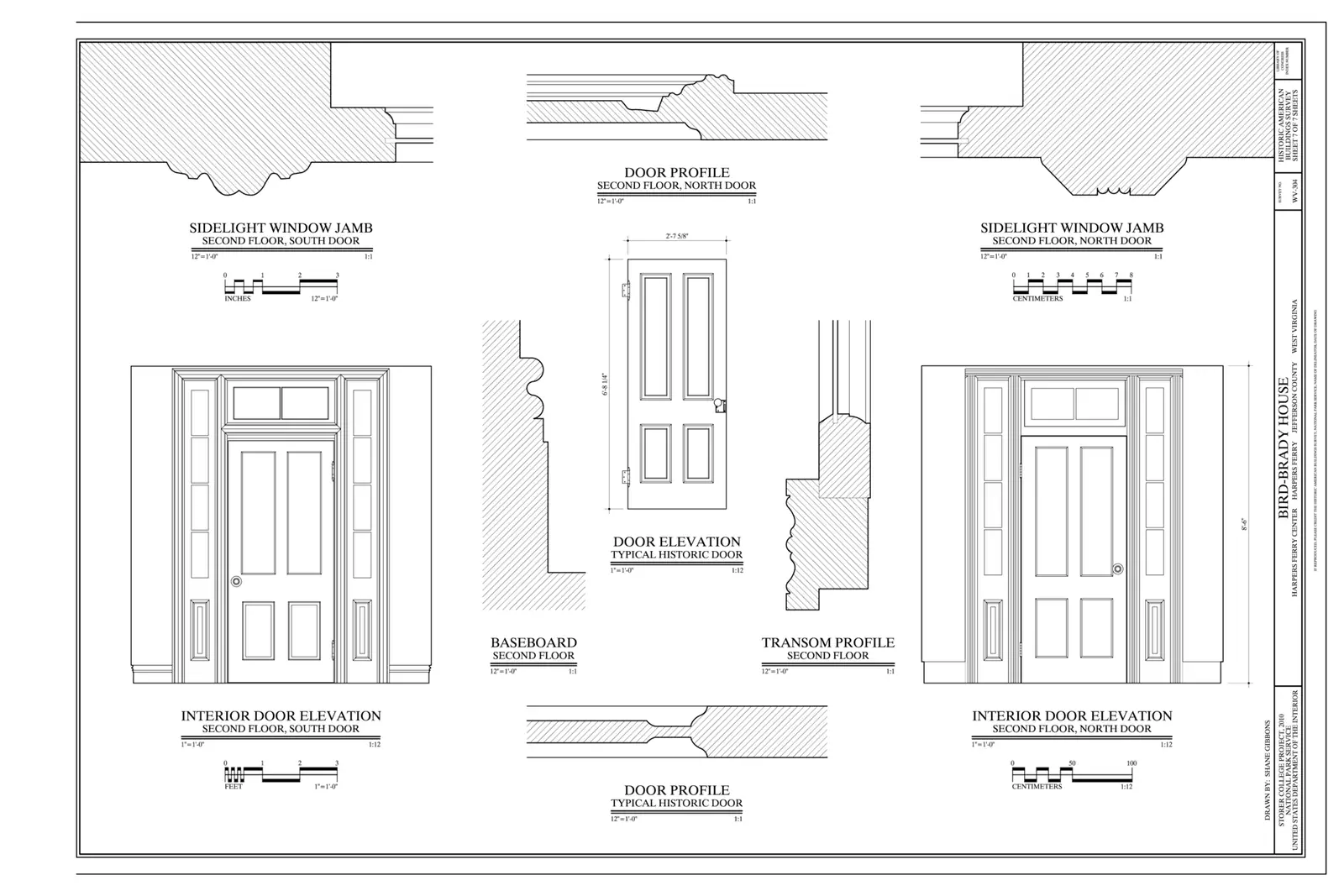
Photo: Gibbons, ShanePublic domain
Climb the stone steps past St Peter's and Jefferson Rock and keep going, and the ground levels into something unexpected after the vertical town below it: a broad grassy terrace with substantial nineteenth-century buildings set around it, a long view down the Shenandoah gorge, and almost nobody there. This is Camp Hill, and it holds the part of Harpers Ferry's history that the lower town does not tell.
The name comes from the military. Armies camped here because it commands the neck of land behind the town, and the buildings that survive include officers' quarters from the armoury period, including the Lockwood House, which served in turn as a residence, a headquarters and a schoolroom.
What matters most began in 1867. Storer College was founded here to educate people freed from slavery, in a state that had been part of Virginia six years earlier, at a moment when educating Black Americans in the South was in many places actively dangerous. It admitted students without distinction of race. It trained teachers, and those teachers went out across the region. It ran for eighty-eight years and closed in 1955, after West Virginia withdrew its appropriation in the wake of Brown v. Board of Education, which is one of the bleaker ironies in American educational history: a school founded for freed people, closed in the backwash of desegregation.
In August 1906 the college hosted the first meeting on American soil of the Niagara Movement, the organisation W. E. B. Du Bois and others founded the year before, and which became the NAACP. The delegates walked down the hill to John Brown's Fort, which at that time stood on this campus.
The National Park Service has used the campus since 1963 for the Stephen T. Mather Training Center, where its own rangers are trained. It is a working facility rather than a museum, so read the panels outside and do not expect to wander into buildings.
Give it an hour. Most visitors give it nothing.
On foot from the lower town: up High Street, onto the stone steps, past St Peter's and the ruins of St John's, past Jefferson Rock and keep climbing. Fifteen to twenty minutes from the shuttle stop with a real gradient and uneven stone throughout.
From Bolivar the approach is level, which is the route for anyone who cannot manage steps and the obvious one if you are already on the hill.
There is no visitor parking on Camp Hill itself. Park at the visitor center on Cavalier Heights and either ride the shuttle down and walk up, or walk across from the Bolivar side.
The college grew out of a freedmen's school operating in the armoury buildings immediately after the Civil War, and was chartered in 1867 with money from John Storer, a New England philanthropist, on the condition that it admit students regardless of race or sex.
It began as a primary and normal school, training teachers, because that was the most urgent need: there were almost no Black teachers in the region and an entire population newly entitled to education. Over the following decades it added secondary and then collegiate work. Its graduates taught across West Virginia, Virginia and Maryland.
The end came from an unexpected direction. After Brown v. Board of Education in 1954, West Virginia integrated its public higher education and withdrew the appropriation that Storer depended on. The college could not survive without it and closed in 1955.
The buildings did not go. Anthony Hall, the Lockwood House, faculty houses and the grounds are here, and the National Park Service acquired the campus and put its training centre in it. A few of the exteriors carry their original names. The panels around the green explain what each building was.
Standing on the grass between them, the arithmetic is worth doing: this ground was a school for freed people within two years of the war that freed them, three hundred yards above the armoury John Brown tried to seize.
The Niagara Movement was founded in 1905 by W. E. B. Du Bois, William Monroe Trotter and others, in opposition to the accommodationist politics then dominant in Black American public life. Its founding meeting had to be held on the Canadian side of Niagara Falls because hotels on the American side would not take the delegates.
In August 1906 it met at Storer College, its first meeting on American soil. The choice of Harpers Ferry was deliberate and pointed: the delegates came to the place where John Brown had tried to end slavery by force, in the second year of an organisation demanding full civil rights without qualification.
They walked down the hill to John Brown's Fort, which stood on the Storer campus at the time, some of them barefoot, at dawn. Du Bois wrote an address at the meeting that reads today as one of the plainest statements of the case for equal citizenship made in that generation.
The Niagara Movement itself lasted only a few years, but the NAACP, founded in 1909, grew directly out of it. That line runs from this lawn.
There is no building to go into and no ticket to buy. There is a green, some panels, and a fact worth standing still for.
One of the more confusing threads in the town, and Camp Hill is where it makes sense.
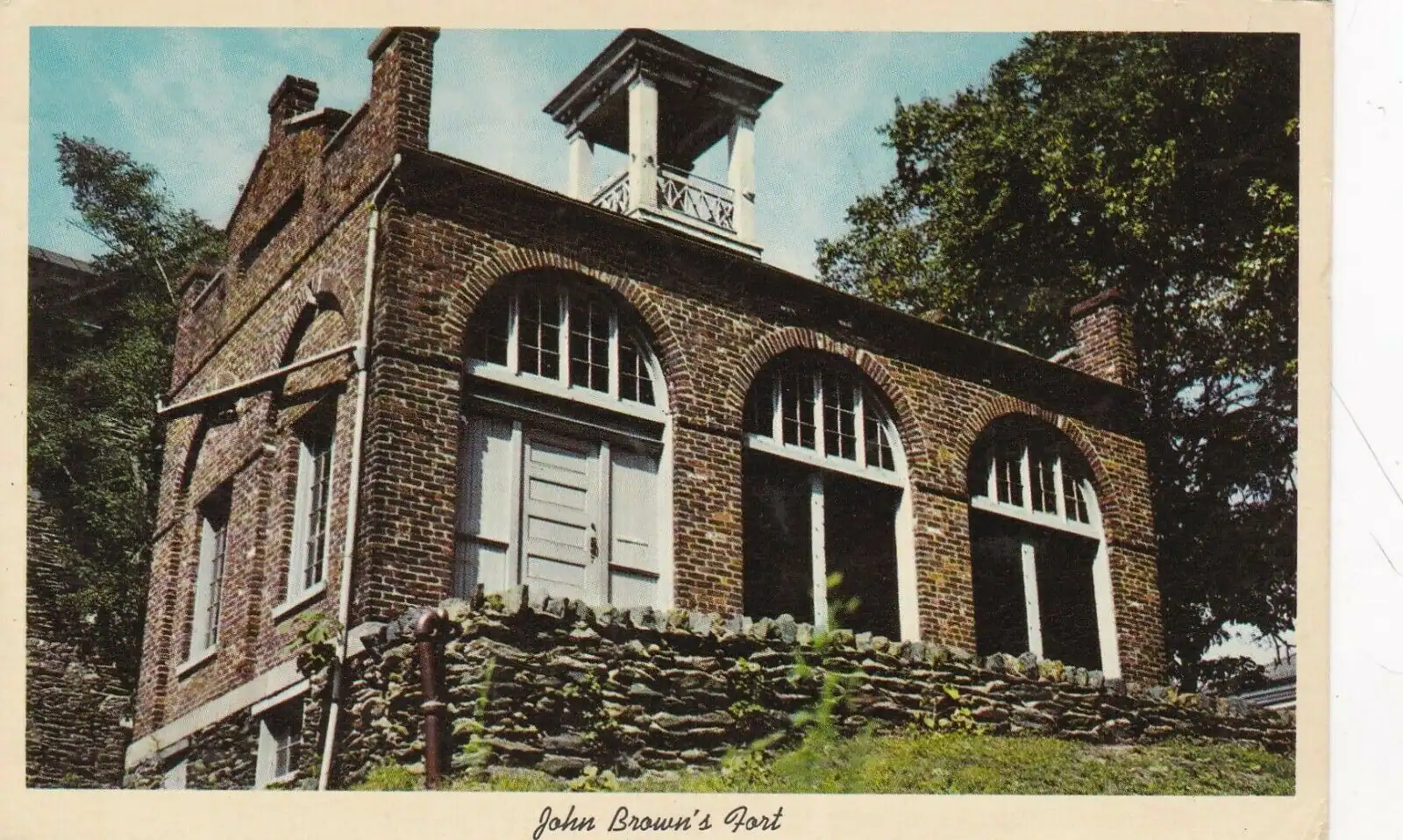
The building called John Brown's Fort is the armoury's 1848 fire engine house, the only armoury building to survive the Civil War. It has been moved four times and does not stand where the raid happened.
In 1891 it was dismantled and shipped to Chicago for the 1893 World's Columbian Exposition, where it was a commercial failure. It came back in 1895 to a farm outside town. In 1909 it was moved onto the Storer College campus here on Camp Hill, which is why the 1906 delegates who walked to it were walking on this ground, and why a great many early photographs show it in a setting that looks nothing like the lower town.
In 1968 the National Park Service moved it down to its present site, about 150 feet from where it was originally built. The original ground now lies under a railroad embankment.
So the fort you photograph in the lower town is genuine, is not in its original position, and spent nearly sixty years up here. If a photograph in a book shows it on a lawn with a college behind it, that is Camp Hill and it is not a mistake.
Two routes, and they suit different people.
Up the steps from the lower town. Take High Street to the stone steps, past St Peter's and the St John's ruins, past Jefferson Rock, and keep climbing. It is the direct way and it is a genuine ascent on uneven stone. Fifteen to twenty minutes from Shenandoah Street at a steady pace, longer with stops. There is no step-free version of this route.
By road from Bolivar. Camp Hill is reachable on the level from the town above, which is the option for anyone who cannot manage the steps and the sensible one if you are already up the hill with a car.
Allow an hour on the top: the green, the buildings, the panels, and the view down the Shenandoah, which from here is wide and largely unphotographed because the people taking photographs are all at Jefferson Rock a hundred feet below.
Best time is late afternoon in autumn or any morning in winter, when the leaves are off and you can see the shape of the ridges that decided every fight here. The Mather Training Center is a working facility; the grounds are the visit.
Straight-line distances, so allow more on the road — the island is long and has one main parkway.
Historic site
A college founded to educate people who had been enslaved, closed in 1955 by the consequences of a civil rights victory.
0.5–1.5 hoursFree; covered by the park entrance fee charged on your vehicle590 ft away
Viewpoint
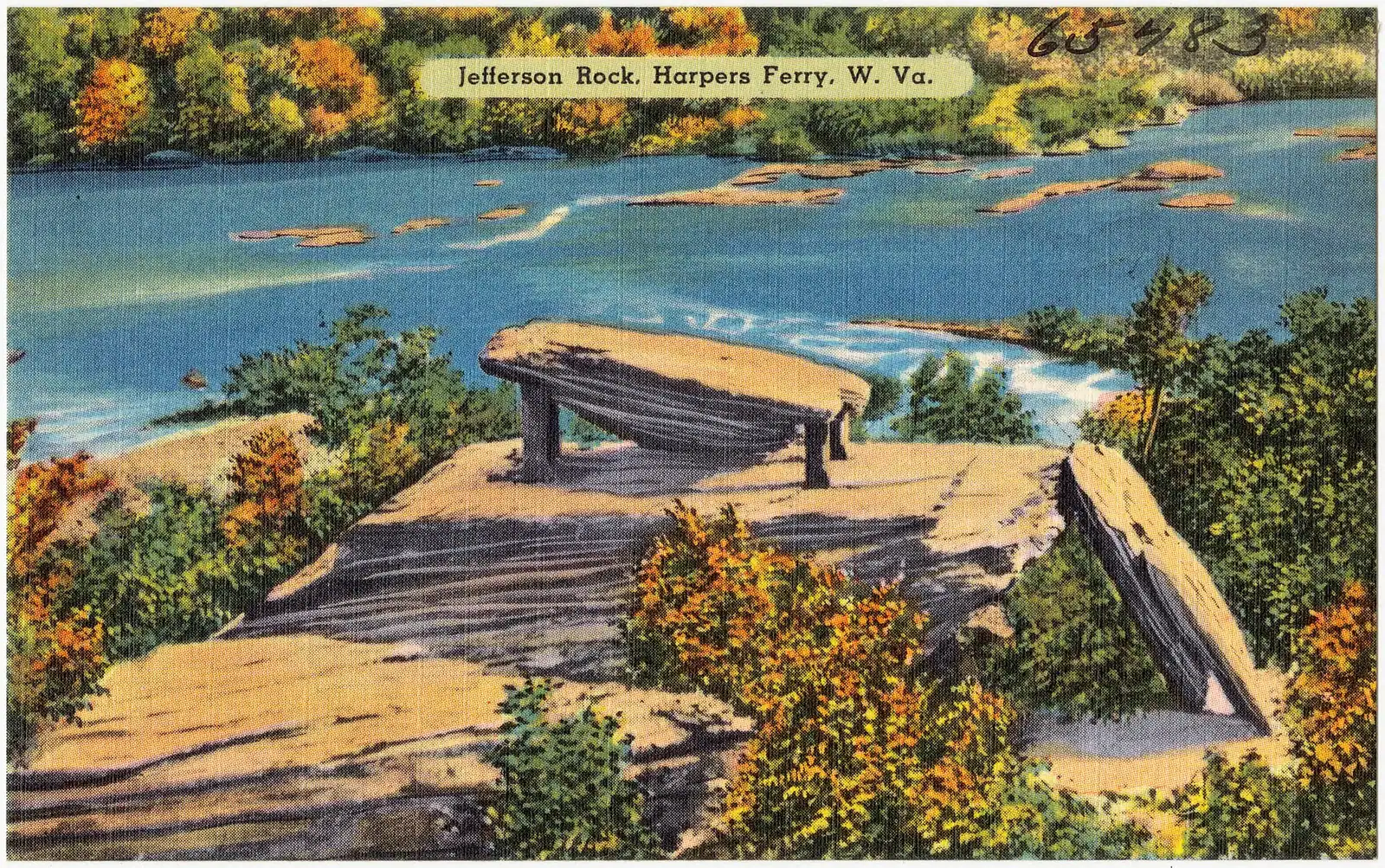
A propped shale slab above the Shenandoah gorge, and the spot that gave American travel writing its first great sentence.
0.5–1.5 hoursFree once you are inside the park; the park entrance fee still applies to your vehicle0.3 mi away
Shopping
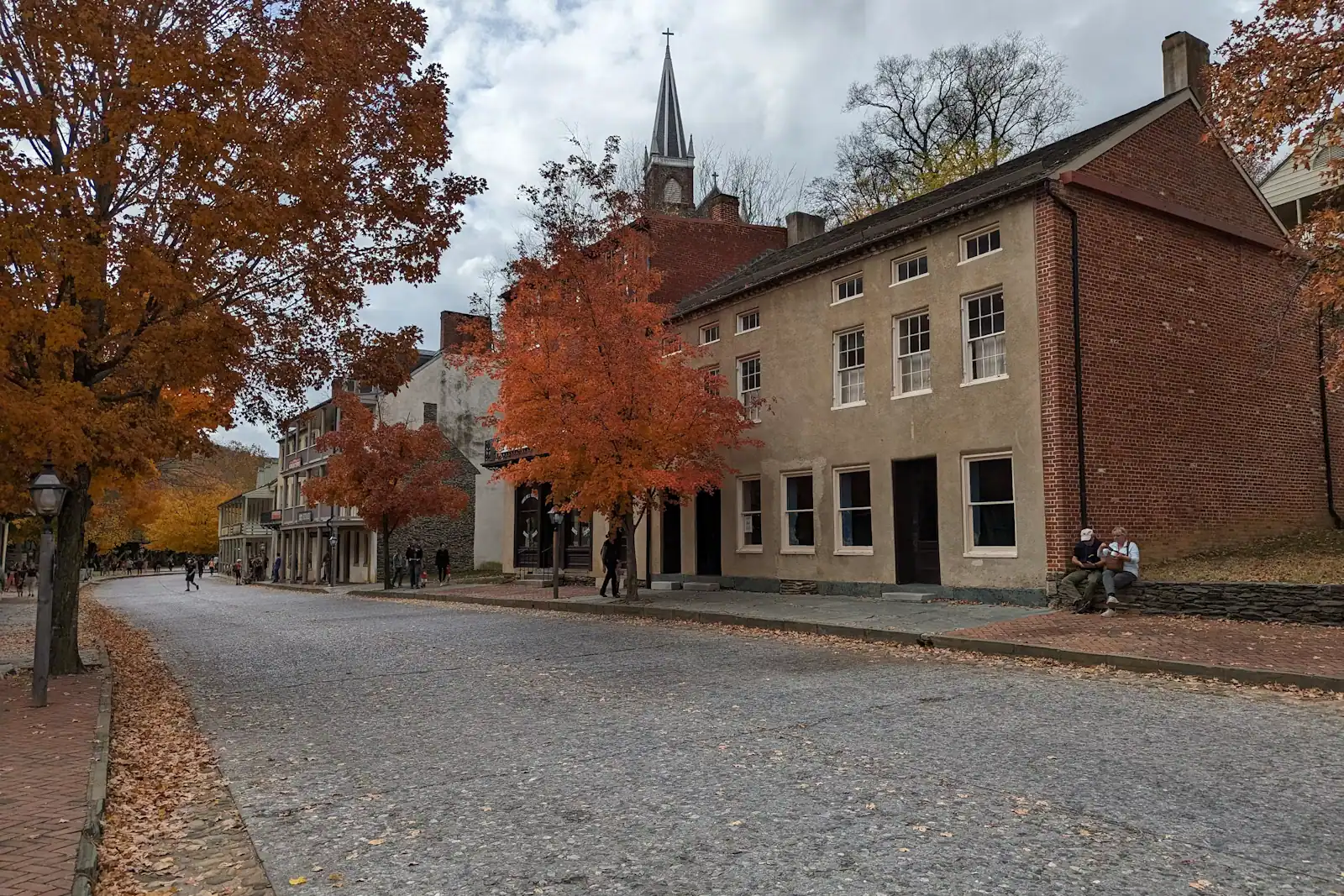
The lower town's one commercial street: a stone climb of shopfronts ending at the steps up to St Peter's and Jefferson Rock.
0.5–1.5 hoursThe street is free to walk; reaching it means entering the national historical park0.4 mi away
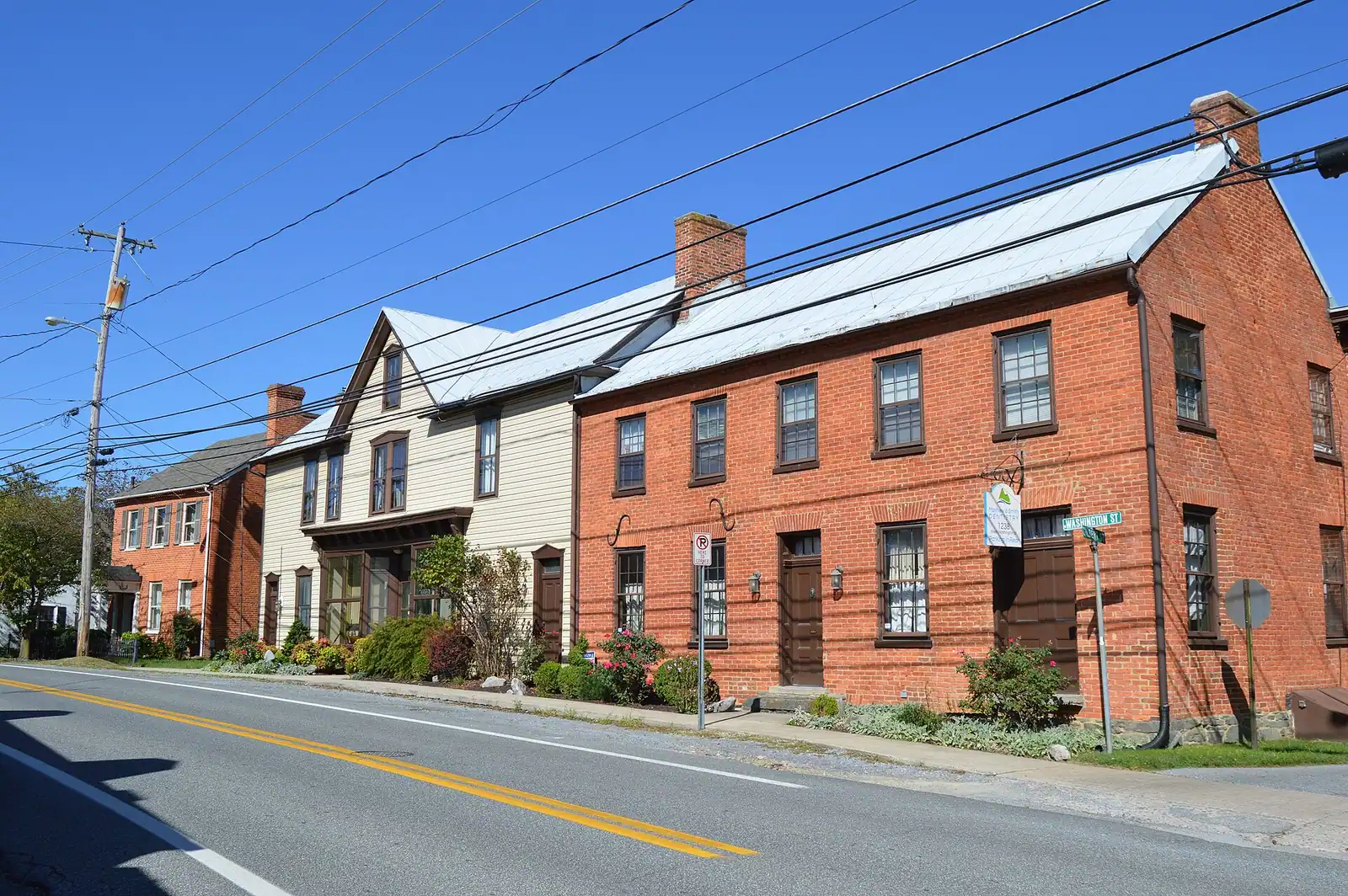
Neighbourhood
A separate town on the ridge above the lower town, four times the size of Harpers Ferry, where the rooms and the kitchens actually are.
1–3 hoursFree. Bolivar is a town, not a park site, and carries no entrance fee0.5 mi away
Where this place fits into a day, and the pages that plan one.
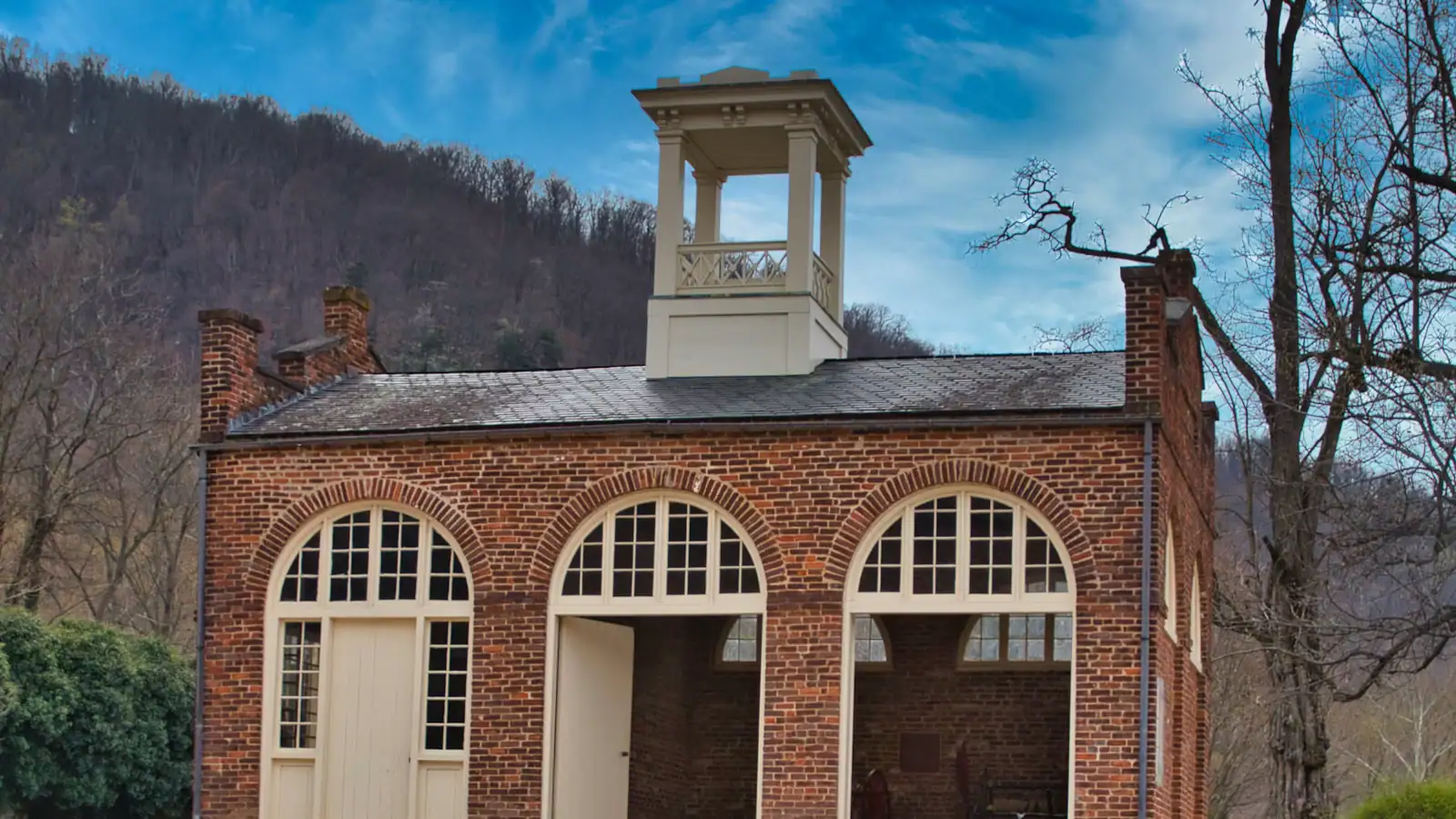
Things to do
The United States built its second national armoury on this ground in 1799 because the ground did the work. Two rivers arrive at the same corner…
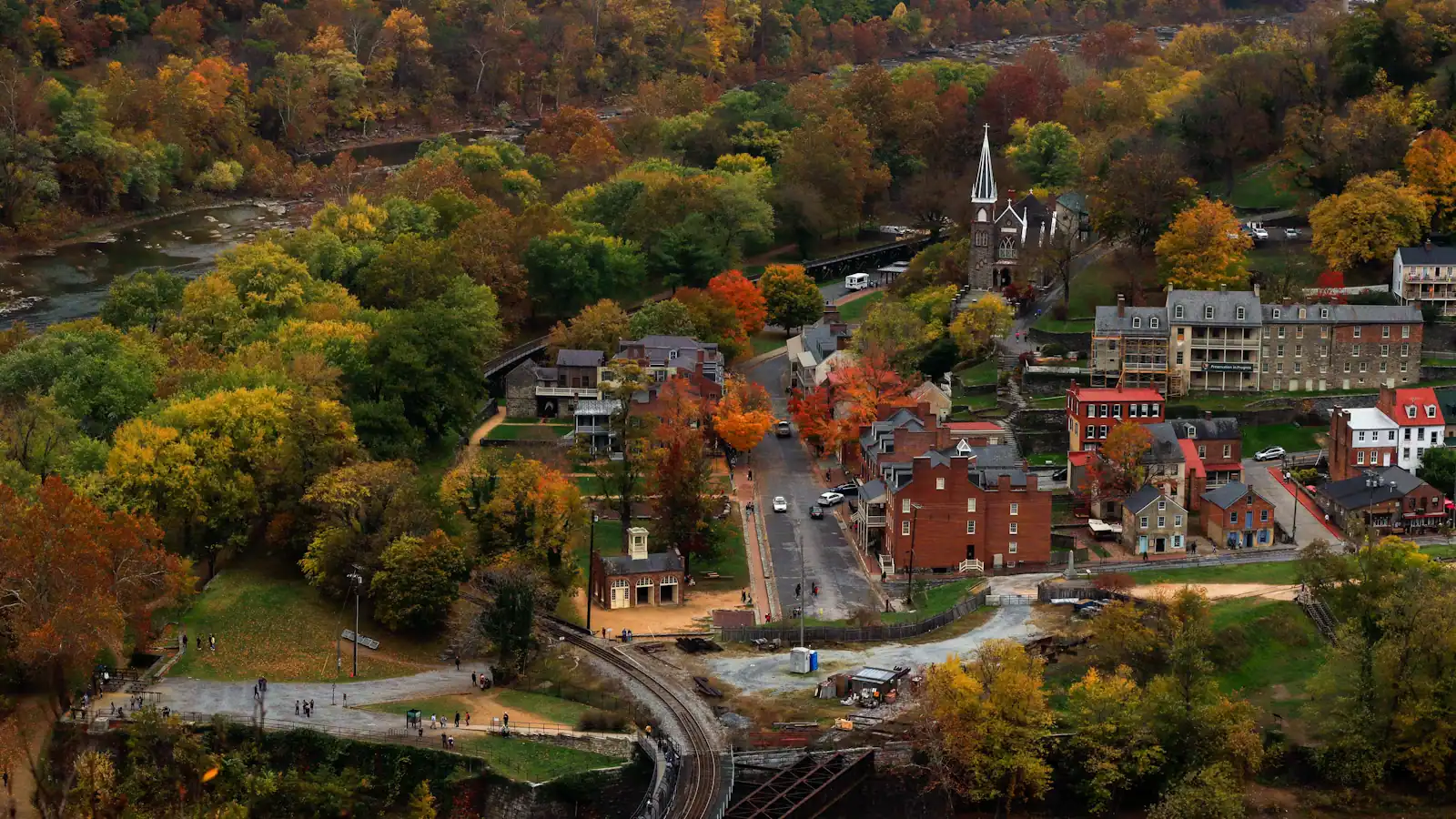
Guide hub
At most national parks the town is outside the gate. Here the town is the park. Harpers Ferry National Historical Park covers roughly 3,660 acres in…
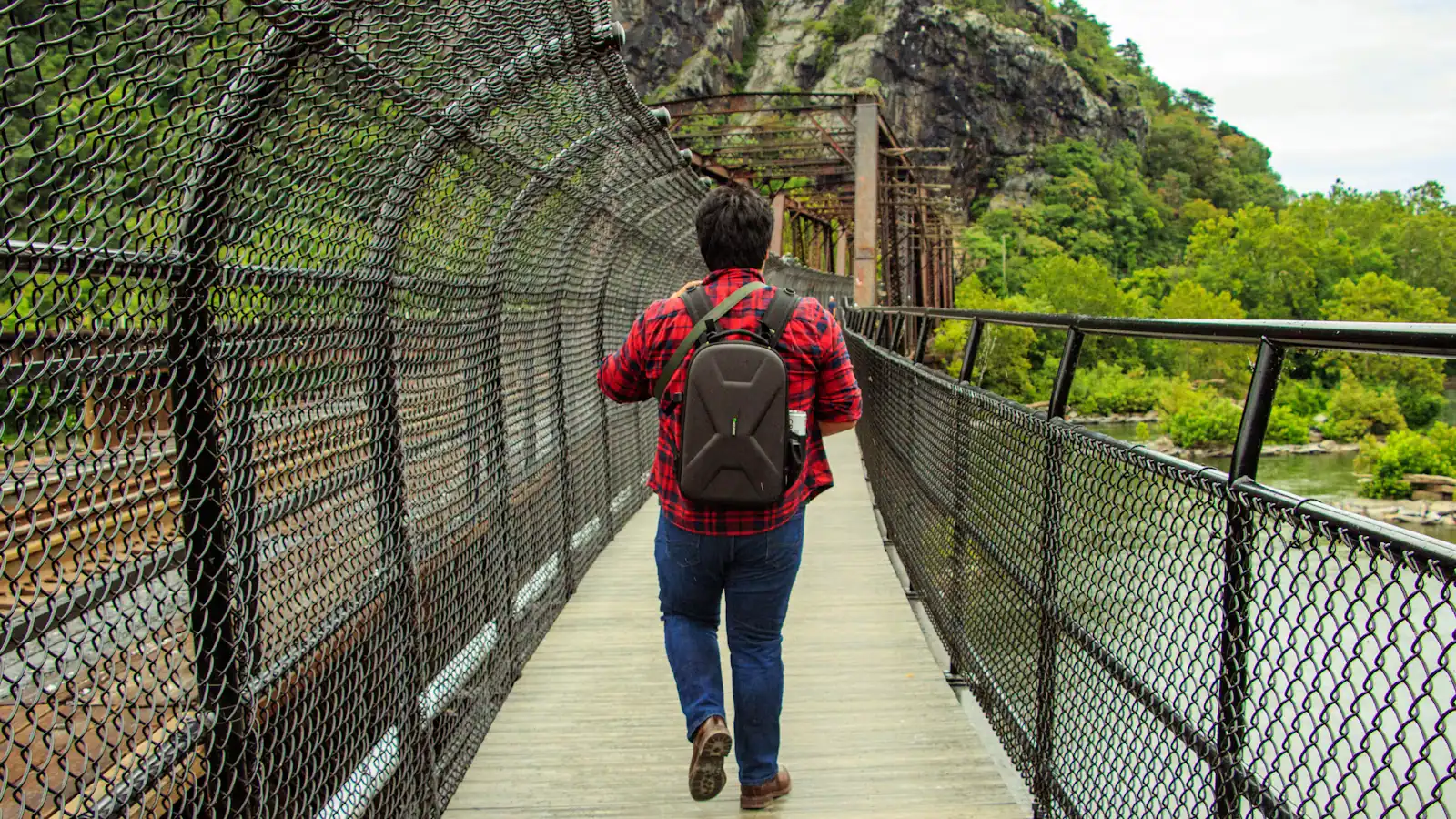
Budget
Harpers Ferry is one of the cheapest good days out in the mid-Atlantic, and it is worth being precise about why, because the word free does two…
Things to do
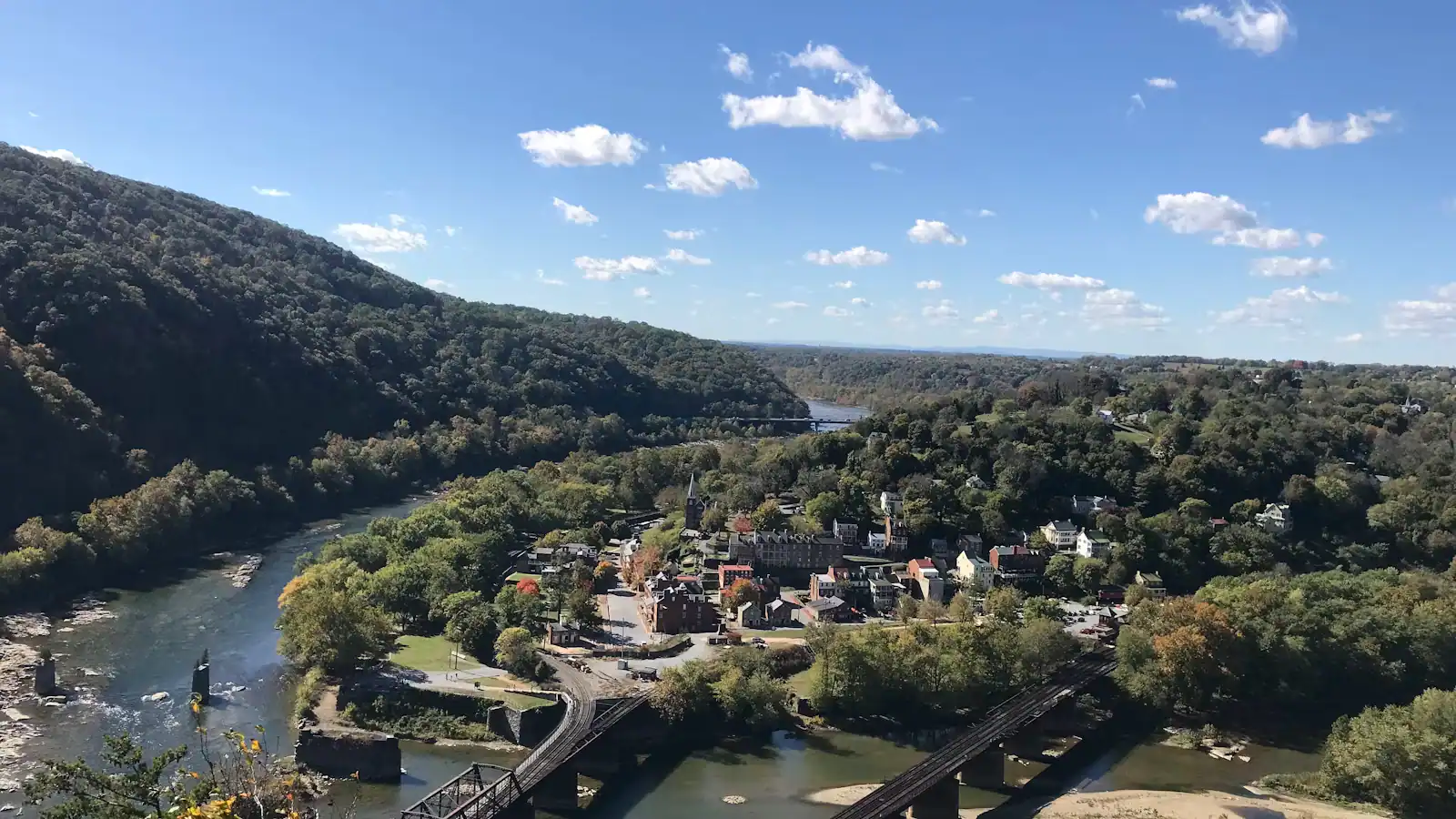
Start with the correction, because it saves an afternoon. The photograph you have seen of Harpers Ferry — the whole town laid out on its spit of…
Guide
The lower town read in geographical order tells the story backwards. Here is the day arranged chronologically instead, from the armoury grounds at nine to Jefferson Rock at dusk.
9 min readLoretta Sims
Guide
Twenty-two men seized a federal armoury on a Sunday night in October 1859. Thirty-six hours later it was over. The argument it started took another six years and 600,000 lives to finish.
10 min readLoretta Sims
Guide
A town of 269 people where two rivers and three states meet, and most of the streets are a national park. Three unrelated crowds arrive here every weekend. Work out which one you are first.
9 min readPrudence Ashby
The terrace above the lower town holding the old Storer College campus, reached up the stone steps past Jefferson Rock or on the level from Bolivar. It takes its name from the armies that camped there, and the surviving buildings include armoury-era officers' quarters such as the Lockwood House. Storer College operated here from 1867 to 1955, and the campus has housed the National Park Service's Stephen T. Mather Training Center since 1963.
A college founded on Camp Hill in 1867 to educate people freed from slavery, which admitted students without distinction of race and trained teachers who went out across West Virginia, Virginia and Maryland. It grew from a freedmen's school operating immediately after the Civil War and ran for eighty-eight years. It closed in 1955 after West Virginia withdrew its appropriation following Brown v. Board of Education. Its campus is now part of the national historical park.
Deliberately, for the symbolism. The movement had been founded in 1905 on the Canadian side of Niagara Falls because American hotels refused the delegates. For its first meeting on American soil, in August 1906, it chose Storer College at Harpers Ferry, the place where John Brown had tried to end slavery by force. Delegates walked down to John Brown's Fort, which then stood on the campus. The NAACP grew directly out of the movement.
Generally not. The campus houses the Stephen T. Mather Training Center, a working National Park Service facility where rangers are trained, rather than a public museum. The visit is the grounds: the green, the building exteriors, the interpretive panels explaining what each one was, and a wide view down the Shenandoah gorge. Ask at the visitor center whether any ranger programme covers Camp Hill on the day you visit.
Walk up High Street, continue onto the stone steps past St Peter's Roman Catholic Church and the ruins of St John's, pass Jefferson Rock and keep climbing. It takes fifteen to twenty minutes from the Shenandoah Street shuttle stop and is a genuine ascent on uneven stone with no step-free alternative. Anyone who cannot manage steps should approach on the level from Bolivar instead.