On this page
- Why the guns were here in the first place
- Three days
- The trial at Charles Town
- What the raid actually did
- What survives to see
- John Brown's Fort, and why it is not where it was
- Storer College on Camp Hill
- Charles Town, eight miles away
- How the park tells it
- Where the account above is contested
- The order to see it in
- Common questions
On the night of Sunday 16 October 1859, a party of twenty-two men walked down the Maryland side of the Potomac, crossed the railway bridge into Harpers Ferry and took the United States Armory. Fifteen of them were white and seven were Black. Their leader was a fifty-nine-year-old wool merchant and abolitionist named John Brown, who had already killed men in Kansas and who intended to arm enslaved people across the South from the arsenal he had just captured.
Thirty-six hours later ten of them were dead, Brown was a prisoner bleeding on the floor of the armoury paymaster's office, and the raid had failed completely in every military sense. It is also the reason anyone outside West Virginia has heard of this town.
Why the guns were here in the first place
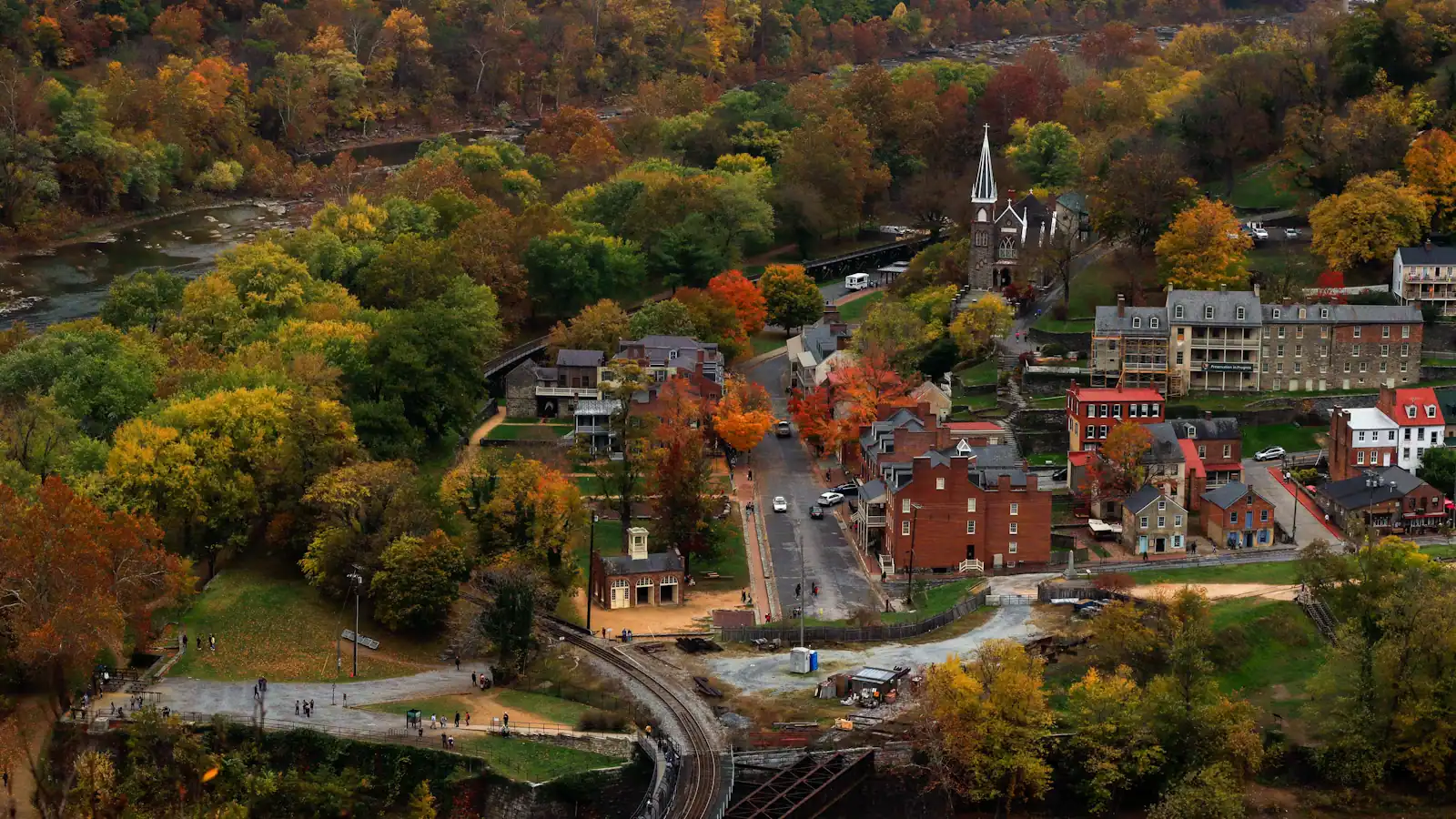
Harpers Ferry was chosen for water. Two rivers meet at a gap in the Blue Ridge, and the fall of the Shenandoah in its last mile gave enough power to drive machinery. Construction of a federal armoury began in 1799, one of only two in the country. Between 1801 and 1861 the works here turned out more than 600,000 muskets, rifles and pistols.
That is the whole strategic logic of the raid. Brown did not come to a symbolic place. He came to a factory holding the largest stock of federal small arms within reach of the mountains, at the top of a valley he believed could carry a rising south into Virginia. The mountains, he told Frederick Douglass, were full of natural forts.
Douglass, who met Brown at a quarry outside Chambersburg that August, refused to join him. He told Brown the plan was a steel trap and that he would never get out alive.
Three days
| Sunday 16 October, evening | Brown leaves three men at the Kennedy farm in Maryland and crosses the Potomac with the rest. The armoury, the arsenal and Hall's Rifle Works are taken with almost no resistance. |
| Monday 17 October, about 1.30 a.m. | Heyward Shepherd, a free Black man working as a baggage handler for the Baltimore and Ohio Railroad, is shot at the bridge. He is the first person killed in the raid. He dies some hours later. |
| Monday 17 October, morning | Brown lets the eastbound train continue. The alarm spreads by telegraph. Militia from Charles Town and Martinsburg seize the bridges and cut off retreat. The raiders are surrounded by men they did not expect for another day. |
| Monday, afternoon | The mayor of Harpers Ferry, Fontaine Beckham, is shot dead. Brown's son Oliver is mortally wounded. William H. Leeman is shot trying to swim the Potomac. Brown withdraws with hostages into the armoury fire engine house. |
| Monday, night | A detachment of United States Marines arrives from Washington under Colonel Robert E. Lee, with Lieutenant J.E.B. Stuart as his aide. |
| Tuesday 18 October, about 6.30 a.m. | Stuart carries a surrender demand to the door under a white flag. Brown refuses. Lieutenant Israel Greene leads the assault with a ladder for a battering ram, breaks in within about three minutes and cuts Brown down with a dress sword. Brown's son Watson is dying inside. |
Ten raiders were killed. Seven were captured and later executed. Five escaped. Four townspeople and one Marine died. Not a single enslaved person in Jefferson County rose to join them, which was the assumption on which the entire plan rested.
The trial at Charles Town
Brown was tried eight miles away at the Jefferson County courthouse in Charles Town, and quickly. He was indicted on three counts: treason against the Commonwealth of Virginia, murder, and conspiring with enslaved people to rebel. He was carried into court on a cot and lay on it through most of the proceedings. On 2 November 1859 the jury found him guilty on all counts, after deliberating for a matter of minutes.
He was hanged in a field at Charles Town on 2 December 1859. Virginia put fifteen hundred troops around the gallows. Among the militia present was a young actor named John Wilkes Booth, who had attached himself to a Richmond company in order to be there. Thomas Jackson, not yet called Stonewall, watched from the field as an instructor from the Virginia Military Institute.
Four of Brown's men were hanged at Charles Town on 16 December 1859, and two more on 16 March 1860.
What the raid actually did
It did not free anyone. What it did was destroy the last pretence that the argument could be managed.
Northern reaction split hard and then hardened. Emerson called Brown a new saint; plenty of moderate Northerners called him a lunatic and said so loudly. In the South the raid confirmed the thing slaveholders most feared and had been assured was impossible, and the discovery of letters at the Kennedy farm from Northern backers turned a local emergency into evidence of conspiracy. Militia companies formed across Virginia through the winter of 1859. Some of them were on the field at Bull Run eighteen months later.
Abraham Lincoln, campaigning at Cooper Union in February 1860, took care to condemn the raid as absurd and futile, which tells you how dangerous the subject had become inside a year.
Sixteen months after the hanging, the country was at war. Union troops marched into Virginia singing about Brown's body. Frederick Douglass, who had refused to come, wrote afterwards that Brown had begun the war that ended American slavery.
What survives to see
John Brown's Fort, and why it is not where it was
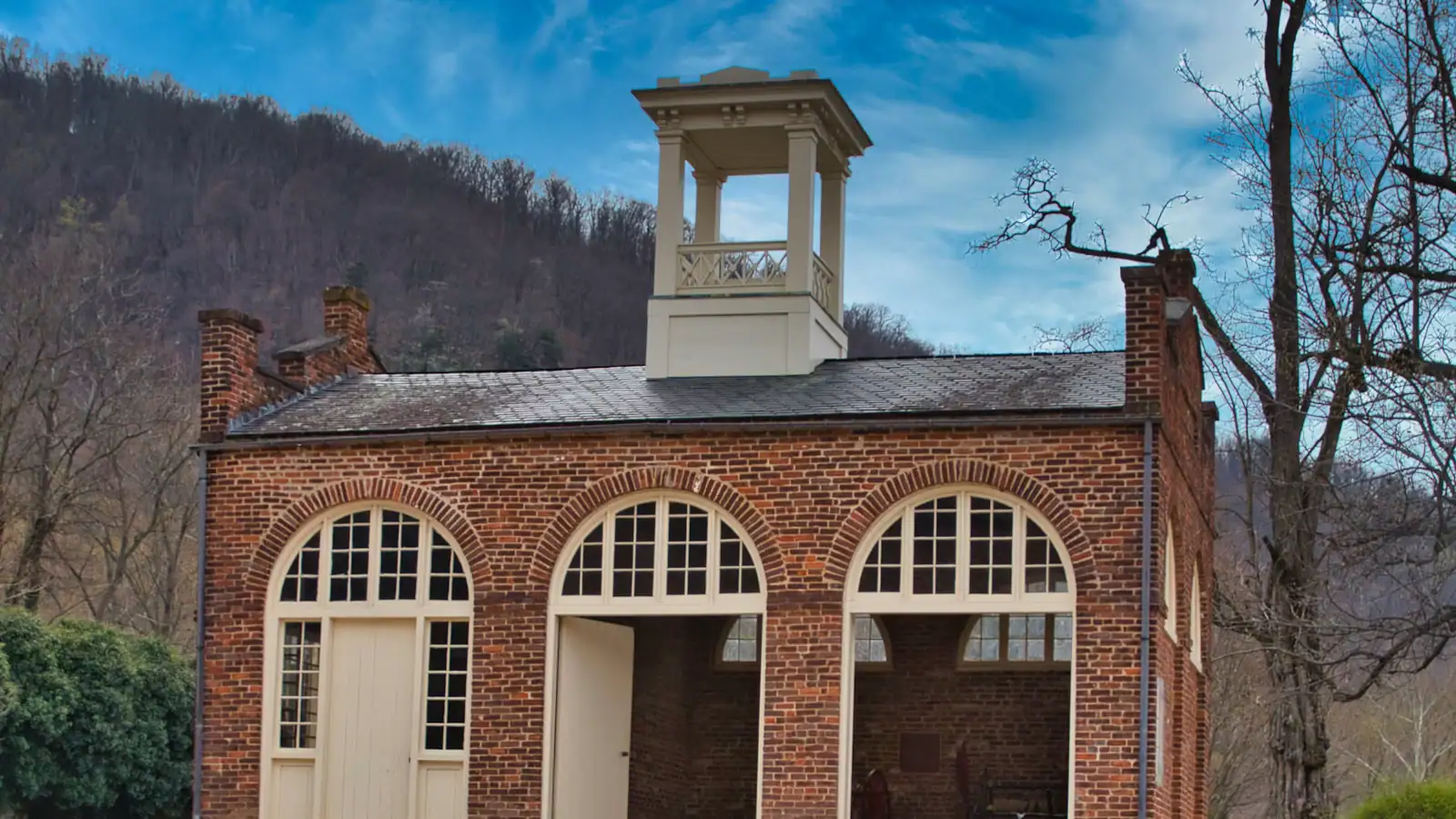
The building the Marines broke into is the armoury fire engine house, and the only armoury structure still standing. Its history since is nearly as strange as the raid. It was sold and dismantled in 1891 and shipped to the World's Columbian Exposition in Chicago, where almost nobody paid to see it. The Baltimore and Ohio carried it home free of charge in 1895 and it was rebuilt on a farm about two miles above the town. In 1909 it was moved again, onto the Storer College campus. In 1968 the Park Service brought it back down to the lower town.
It is not on its original site. It stands roughly 150 feet east of where it was, because a railway embankment now covers the ground it occupied. The original position is marked by a stone obelisk. People photograph the fort and walk past the obelisk, which is the wrong way round if you want to understand what you are looking at.
Storer College on Camp Hill
The college on the hill above the town was founded in 1867 to educate people freed by the Thirteenth Amendment, growing out of a school started in 1865 for nineteen formerly enslaved children. In August 1906 the Niagara Movement, led by W. E. B. Du Bois, held its first meeting on American soil on that campus, and its delegates walked to John Brown's Fort. The college closed in 1955. The buildings are part of the park now.
Charles Town, eight miles away
Charles Town still has the courthouse. The site of the gallows is a few streets away, in what is now a residential neighbourhood, marked and easy to miss.
How the park tells it
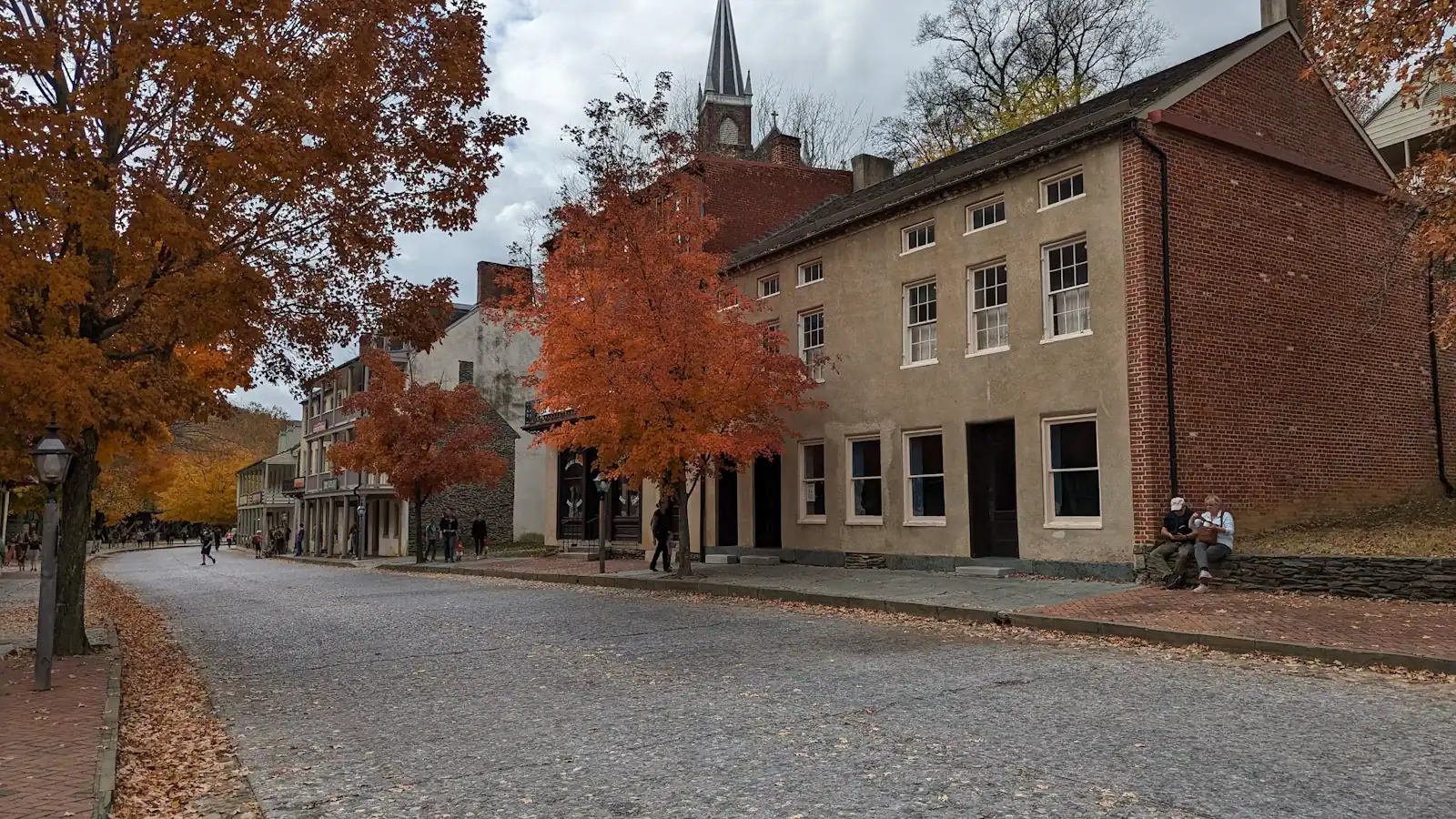
The interpretation here has changed more than once, and the town carries the evidence of that in stone. A monument to Heyward Shepherd was erected in 1931 by the United Daughters of the Confederacy and the Sons of Confederate Veterans, with an inscription praising the faithfulness of enslaved people. Storer College faculty objected at the time. The Park Service now displays it with a panel explaining what it was for.
That is the useful thing about spending a day here rather than reading a summary. You can stand in front of two markers put up seventy years apart and see two different countries arguing about the same thirty-six hours.
Where the account above is contested
Three things are argued over by people who have read the same documents, and a guide that pretends otherwise is not much use.
Whether the plan was ever coherent. Brown expected a general rising and made no provision for its failure. Some historians read that as delusion; others read the raid as deliberately sacrificial, intended from the start to force the question rather than to win.
Whether he was mad. His own lawyers raised insanity and he refused it flatly. Nineteen affidavits were gathered from Ohio. The claim served everyone's convenience at the time and has been recycled ever since, which is reason enough to treat it carefully.
What the Kansas killings mean. In May 1856 Brown and his party took five pro-slavery settlers from their homes on the Pottawatomie Creek and hacked them to death. Nothing about Harpers Ferry can be read honestly without that.
The park does not resolve these for you, and neither will we.
The order to see it in
- Start at the armoury grounds and the obelisk by the railway embankment, so you are standing on the ground before you look at the building.
- Then John Brown's Fort, 150 feet away, and note the join lines from four separate reconstructions.
- The John Brown Museum on Shenandoah Street covers the raid itself; allow half an hour.
- Walk up the stone steps to Camp Hill for Storer College and the 1906 meeting. This is the part most visitors skip and the part that changes what the raid means.
- If you have a car and another two hours, drive the eight miles to Charles Town for the courthouse.
Exhibit buildings open 9 a.m. to 5 p.m. and individual ones close for repairs without much notice, so check at the visitor center on arrival rather than planning around a building.
Last updated
Opening hours, ordinances and prices move with the season. We re-check this guide rather than rewrite it, and the date above is the last time someone did. How we research and correct.