Skip to content
Menu

A booking made through these earns us a commission from Viator. The price is the same, and the commission had no bearing on what is recommended.

Things to Do

Fall Foliage in Harpers Ferry: Where to Stand, and When

Last updated

Fall foliage in Harpers Ferry: when the ridges turn, why the colour is bronze rather than scarlet, the five best overlooks, and how bad October weekends get.

A river turning between steep wooded slopes seen from high ground, the canopy in full leafUnsplash

Harpers Ferry in October is the version of this place that ends up on other people's walls, and it is worth understanding both why it works and what it costs you.

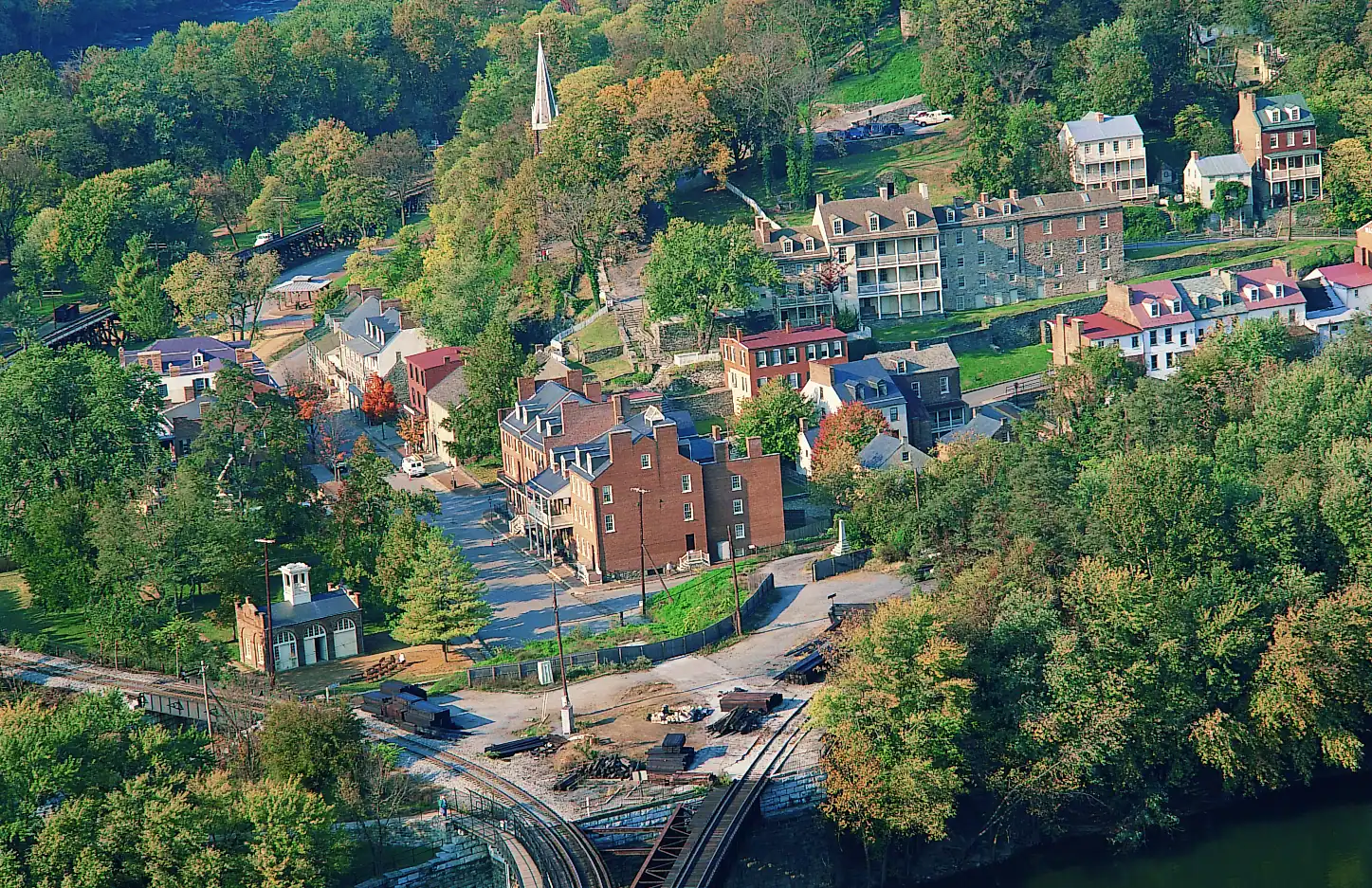
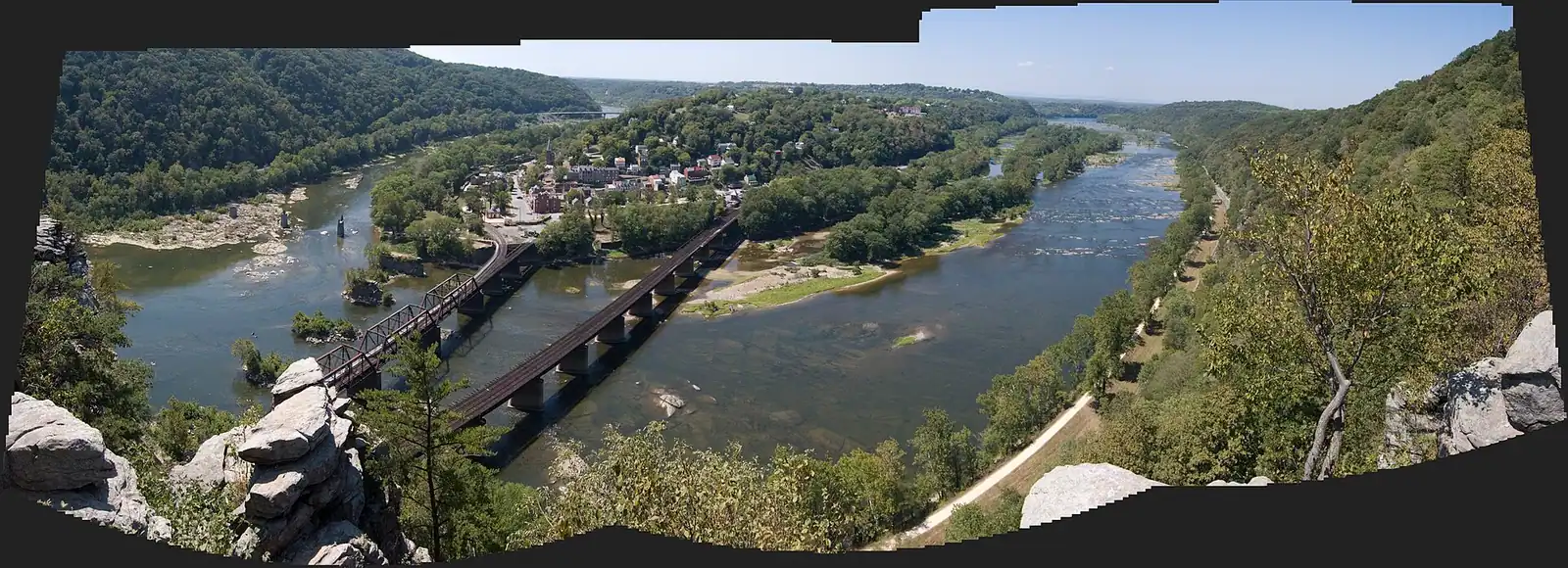
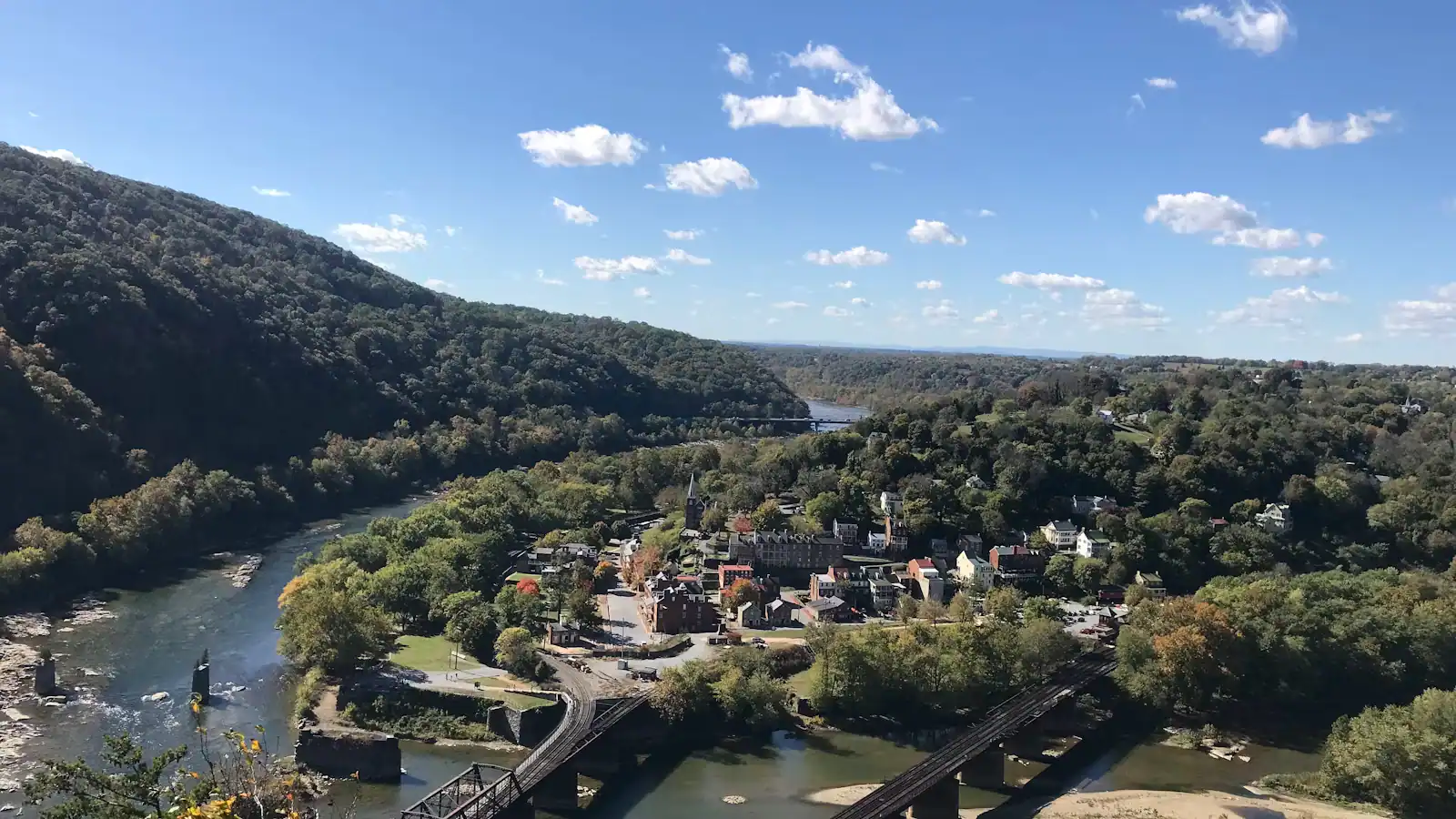
Why it works is elevation and water. The lower town sits at about 509 feet where two rivers meet, and Maryland Heights rises to roughly 1,448 feet directly across the Potomac. That is a thousand feet of vertical inside a single view, which means that for two or three weeks in the middle of autumn you can stand on one ridge and see colour at four different stages at once: turned on the tops, turning on the shoulders, still green down by the water, and reflected in the river between them. Very few overlooks in the mid-Atlantic give you that much depth in one frame, and the two bridges and the church spire give the eye somewhere to land.

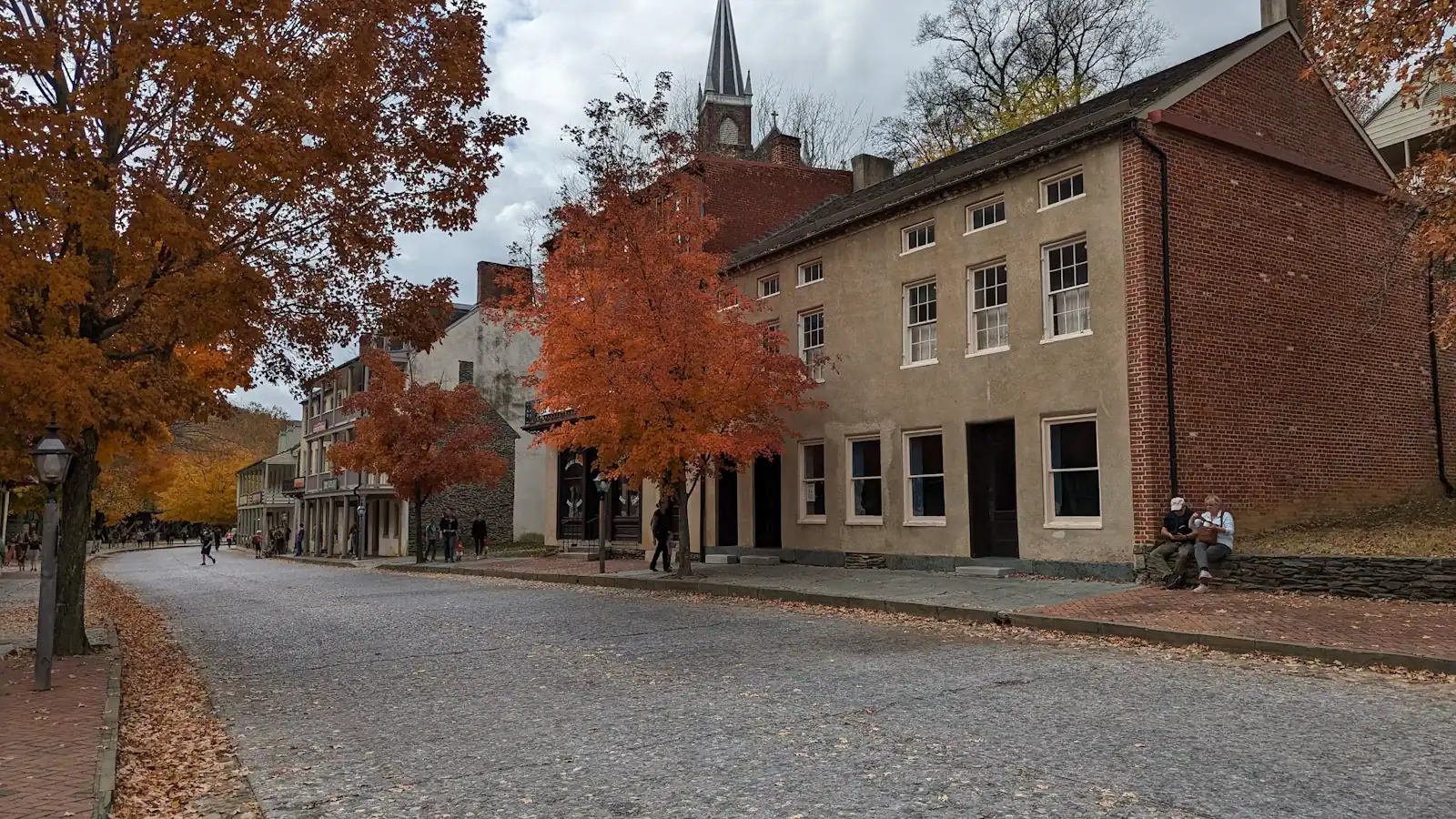
Now the honest part about the colour itself. This is Blue Ridge oak and hickory forest, not New England sugar maple. If you are arriving expecting the scarlet of Vermont you will be slightly disappointed and entirely wrong about what you are looking at. What these ridges do is bronze, russet, deep gold and copper, with the sharp reds coming from sumac, dogwood and Virginia creeper in the understorey rather than from the canopy. It holds longer than maple does, it photographs better in flat light, and it runs later — the middle and end of October rather than the start.

What it costs you is solitude. October is the peak crowding of the Harpers Ferry year, worse than July, and it arrives with the Civil War anniversary season stacked on top of it. On a fine October Saturday the visitor centre lot on Cavalier Heights fills by the middle of the morning, the shuttle queue builds behind it, and there is a genuine queue for the rock at the Maryland Heights overlook. That is not a reason to stay away. It is a reason to come on a Tuesday, or to be on the nine o'clock first bus, or to walk up Bolivar Heights instead and have a wide ridge view largely to yourself.

The pages below cover when the colour arrives, the five places worth standing, and how to get an October day here that does not involve queueing for anything.
Why the colour here is bronze rather than scarlet

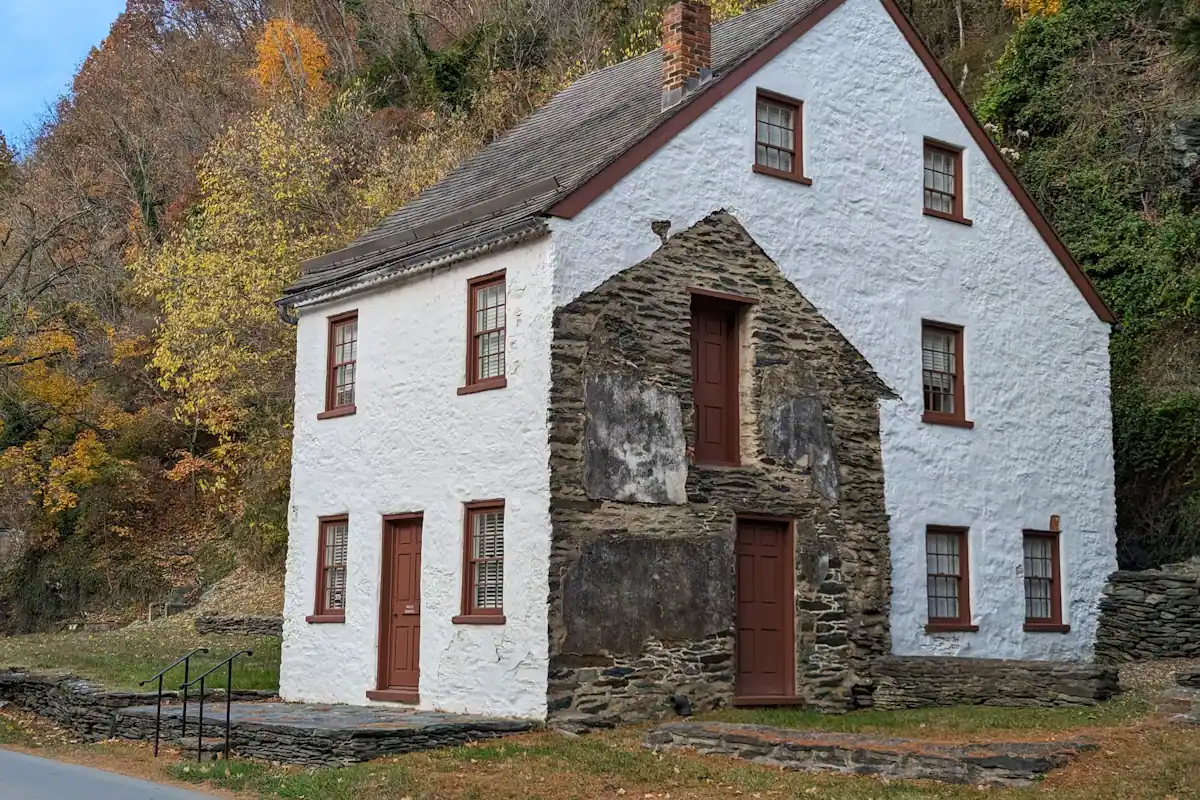
A whitewashed stone-walled house on a steep bank, with a dry stone retaining wall holding up its gardenUnsplash
A whitewashed stone-walled house on a steep bank, with a dry stone retaining wall holding up its garden

The forest on these ridges is oak and hickory, which is the defining hardwood mix of the central Appalachians and behaves nothing like the sugar maple forest people picture when they think of autumn leaves.

Maples turn early, turn violently red, and drop. Oaks and hickories turn late, turn through yellow into bronze, russet and a deep coppery brown, and hang on — in a dry autumn some oaks keep their leaves half the winter. That gives Harpers Ferry a longer, warmer, less showy season than New England, and one that peaks in the second half of October rather than at the start of it.

The sharp reds are down at eye level. Sumac along the roadsides and the railbed goes scarlet early, often by the end of September. Virginia creeper climbs the stone walls and the ruins on Virginius Island and turns crimson before anything above it moves. Dogwood and blackgum in the understorey do the same. So the picture is a copper canopy with red underneath it, rather than a red canopy.

Two practical consequences. First, an overcast day is fine here, and arguably better — bronze and gold hold their saturation in flat light, where scarlet needs sun. Second, a visit at the very start of October is not a failure. You get the understorey reds, the ridge tops beginning, and none of the crowds.

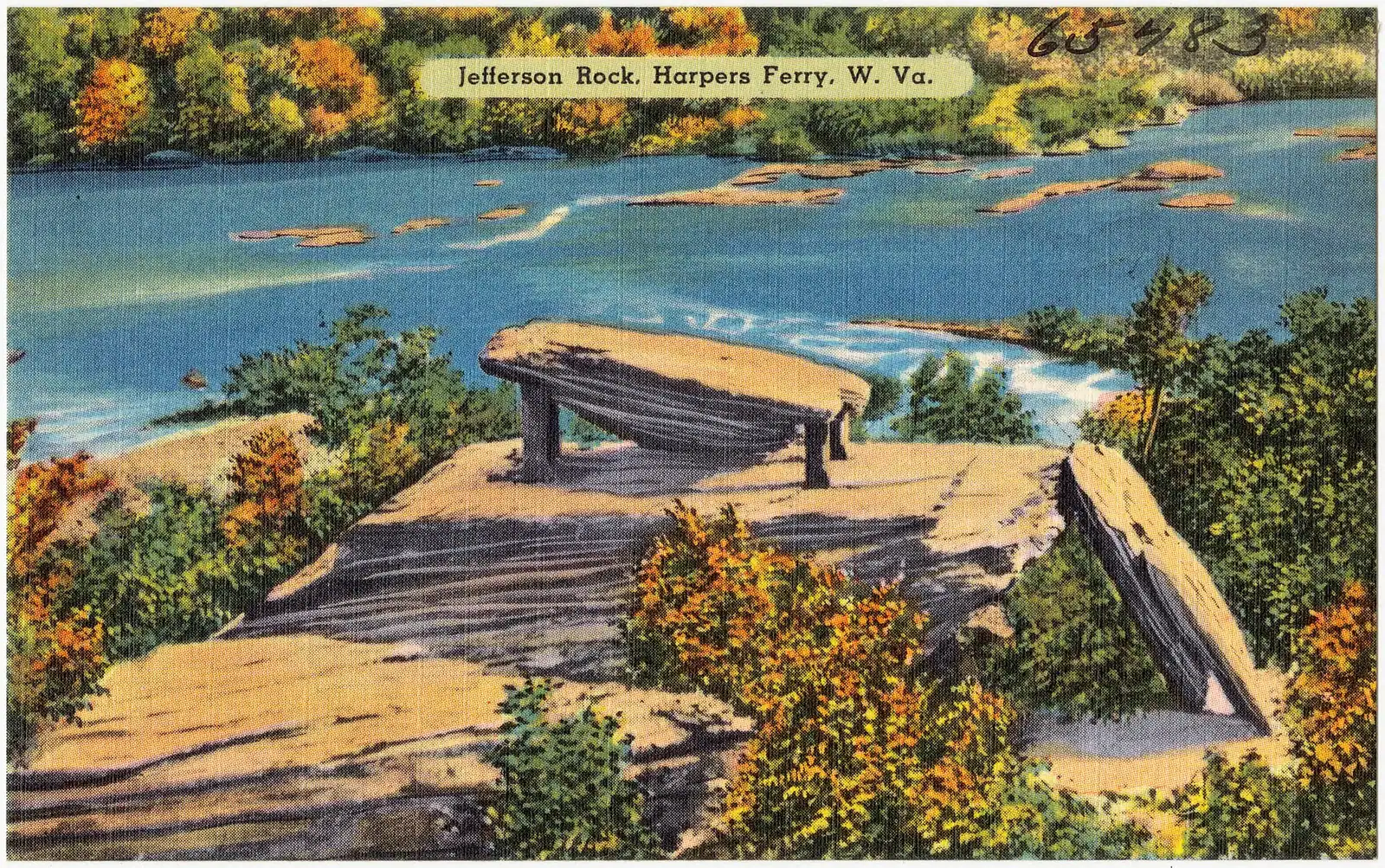
The gorge also does something useful with the light. In the last hour of the day the sun comes down the Shenandoah valley from the south-west and rakes across the town, which is why photographers keep coming back to Jefferson Rock at exactly that hour.

When the ridges turn

When to go

A guide that promises you a peak week is guessing. What can be said honestly is the shape of a normal autumn here, and how to read it against the elevation.

Mid-September to the end of the month. Nothing on the ridge tops yet. Sumac and Virginia creeper going red at road and river level, humidity broken, air in the sixties and seventies, and the rivers still warm enough for a late float. This is the best weather of the Harpers Ferry year and almost nobody is here for the leaves.

First half of October. Colour begins on the tops of Maryland Heights and Loudoun Heights and works downhill. From the lower town you can watch it come down the slope over a fortnight. Weekends are already busy but not yet at their worst.

Middle and end of October. Peak on the ridges in most years, and the three weeks the town struggles to hold. Maximum contrast in a single view, maximum crowds, and a Saturday that needs planning.

Early November. The canopy thins, the oaks go coppery and hold, and the sightlines start to open. The clocks go back in early November, which cuts the last shuttle from the lower town from 7 p.m. back to 5:30 p.m. — the single most commonly missed autumn fact here.

Elevation is your forecast. If the tops are turned and the river is still green, you are roughly a week to ten days from peak in the town itself.

What else October brings

The colour is not the only reason the town is full, and understanding the rest helps you plan around it.

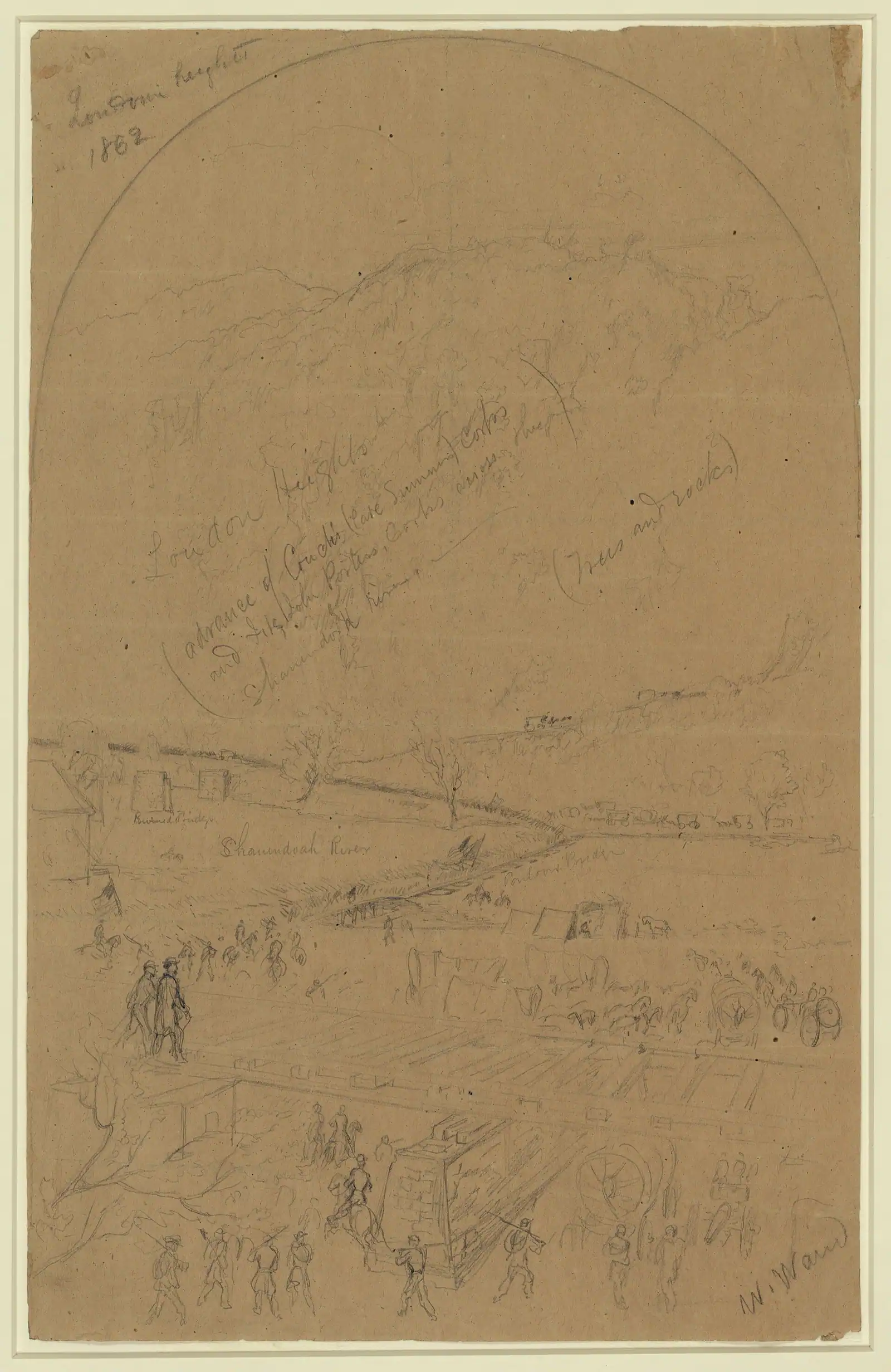
Autumn here is Civil War anniversary season. Antietam was fought on 17 September 1862, two days after the Union garrison at Harpers Ferry surrendered on Bolivar Heights — roughly 12,500 men, commonly cited as the largest surrender of United States troops until Bataan in 1942. Those dates draw people to this corner of three states every September, and the battlefield at Sharpsburg is a twenty-minute drive. The John Brown raid anniversary follows on 16 October, and the town takes it seriously.

The rivers are still working in early autumn. September water is warm from summer and the humidity has broken, which is the best combination of weather and water in the year for a float. By late October the commercial season is winding down and bookings thin out, so ring rather than turn up.

Weather-wise, September and October are the driest, clearest stretch of the year in the gorge, with air in the sixties and seventies and cold early mornings down by the water where the river holds the town a step behind the ridge. Bring a layer for the first hour of a climb and expect to shed it.

One last autumn note. Trails and parking lots close thirty minutes after sunset, and sunset in late October is well before six. Work backwards from that, not forwards from breakfast.

Five places to stand for it

How they compare

Ranked by what you actually have to do to get there. Trail figures are the National Park Service's own.

WhereEffortThe viewCrowding in October
Maryland Heights overlook4.5–6.5 miles round trip, 990–1,788 ft, 3–4 hoursThe classic: the town on its point, both rivers, both bridges, colour at four stagesWorst in the park. A queue for the rock on a fine Saturday
Bolivar Heights0.3–2.4 miles, 4–263 ft, 10 min–1.6 hoursBlue Ridge, the Potomac water gap, the Shenandoah Valley, from open ridgeQuiet, even on peak weekends
Jefferson Rock1810 stone steps up from the lower townDown the Shenandoah gorge; the best light of the day in the last hourBusy at sunset, manageable otherwise
The PointFlat, in the lower townBoth rivers meeting, Maryland Heights filling the frame above youBusy all day, but it is a short stop
Loudoun HeightsUp to 7.5 miles, 1,377 ft, 4–5.5 hoursThe only view east, into Pleasant Valley. EmptyAlmost nobody

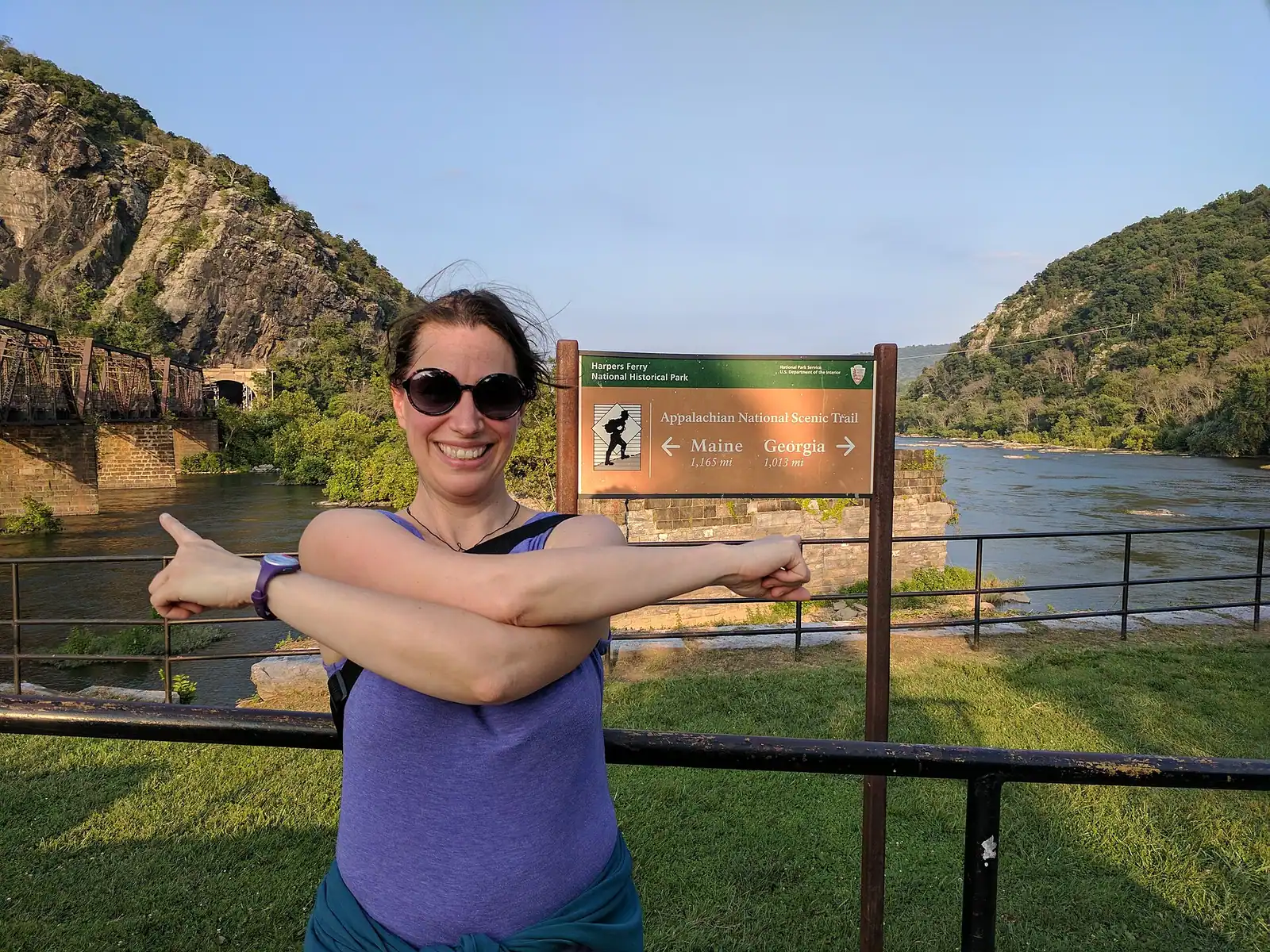
Two that are not viewpoints but should be. The C&O Canal towpath on the Maryland bank gives you level crushed stone under a mile of continuous canopy, which is the best walk here for anyone who does not want to climb. And the Appalachian Trail across the footbridge and downstream toward Weverton puts you under colour on the flat with the river alongside.

If you can only do one thing and you have three hours and good legs, it is Maryland Heights, early. If you have one hour, or knees with opinions, it is Bolivar Heights, and you will not feel short-changed.

The weekend problem, stated plainly

Before you book

October is the busiest month of the Harpers Ferry year. Not July. October.

Here is what that looks like on the ground. The visitor centre lot on Cavalier Heights can fill by the middle of the morning on a fine Saturday, and when it fills, the queue for the shuttle builds behind it — so a late arrival costs you the parking space and then costs you again at the bus stop. Up on Maryland Heights, the overlook is a single rock ledge that comfortably holds a few people at a time, and on a peak weekend there is a genuine queue for it. In the lower town, High Street and the museum doorways move at a shuffle.

Three fixes, in order of effectiveness.

Come on a weekday. The difference between a Tuesday and a Saturday in the third week of October is larger than the difference between any two seasons.

Be on the nine o'clock first shuttle. It buys you the lower town before the coaches and the climb before the queue.

Take the train. MARC's Brunswick Line runs weekdays only and Amtrak's Floridian calls once each way daily, so this needs planning around a specific service — but it removes the parking problem entirely, and the platform is inside the lower town.

And if none of that works, go to Bolivar Heights. Own parking at the end of Whitman Avenue, a main loop of about a third of a mile, and a wide ridge view that a fraction of October's visitors ever see.

On the ground

Where to go

Every place below has its own page — hours, parking, what it costs and what to expect when you get there.

  • A plain church with a steep roof and a spire standing above a wooded slope

    Historic site

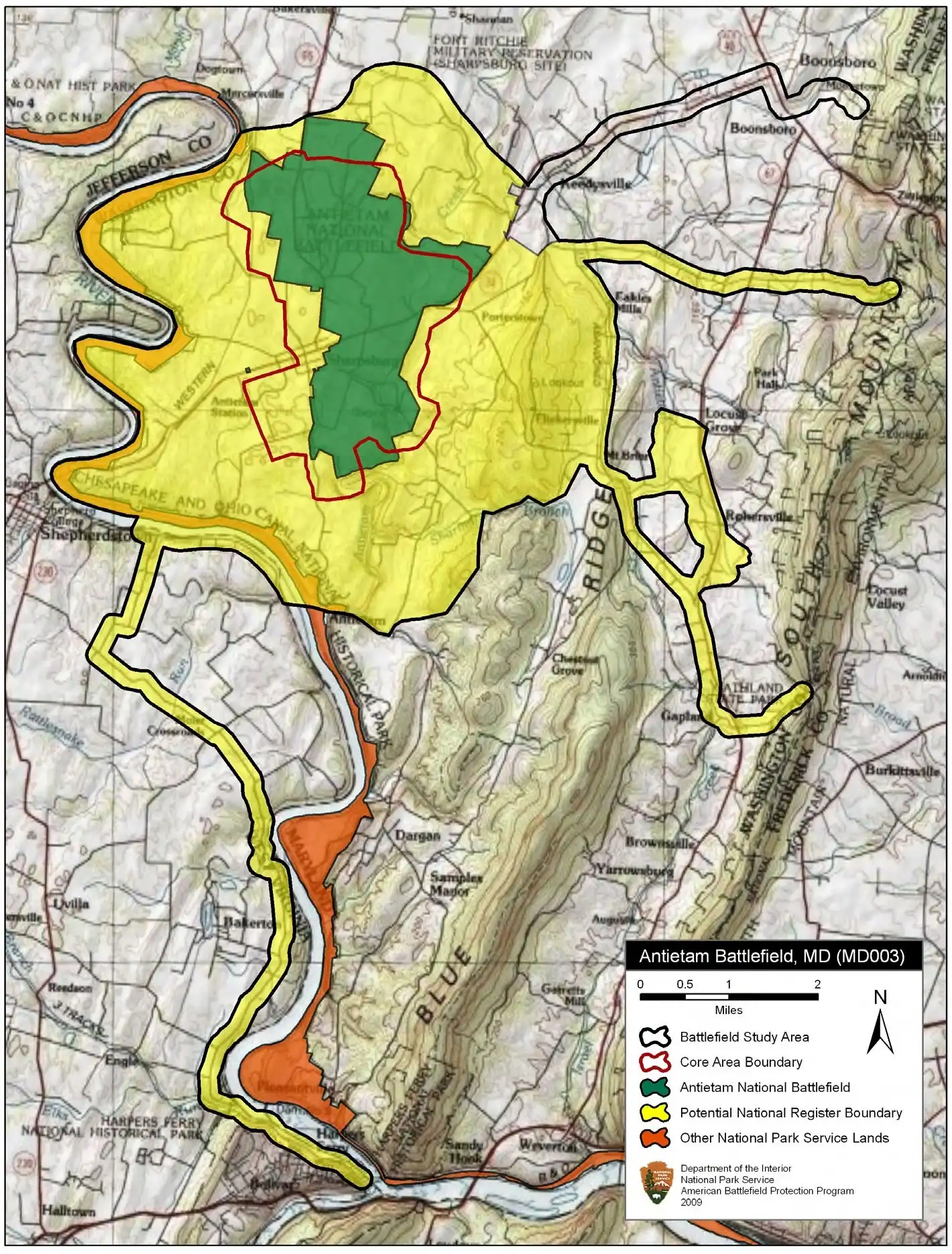
    Antietam National Battlefield

    Roughly 23,000 casualties in one September day, half an hour north of Harpers Ferry, and the same campaign that took this town.

    2.5–6 hoursAt the time of writing: $20 per private vehicle, $15 per motorcycle, $10 per person on foot or bicycle, each valid three consecutive days

  • A small town of pale rooftops and a church spire seen from above, wrapped by wooded hills and river water

    Trail

    Free

    Maryland Heights Trail

    The cliff ledge that produces the photograph everyone has seen of this town, and about a thousand feet of climbing to reach it.

    3–5 hoursNo charge for the trail; the park entrance fee applies to your vehicle

  • A river turning between steep wooded slopes in full summer leaf, seen from high ground

    Viewpoint

    Free

    Jefferson Rock

    A propped shale slab above the Shenandoah gorge, and the spot that gave American travel writing its first great sentence.

    0.5–1.5 hoursFree once you are inside the park; the park entrance fee still applies to your vehicle

  • A long steel bridge carrying a walkway across a wide river, with a forested ridge rising behind it

    Viewpoint

    Free

    The Point

    Ninety seconds from the shuttle stop, level the whole way, and the only spot where the town's geography explains itself.

    10–30 minutesFree; covered by the park entrance fee already charged on your vehicle

  • Green trees lining the edge of flat, slow river water under a bright sky

    Trail

    Free

    C&O Canal Towpath

    184 miles of level crushed stone on the Maryland bank, reached by a footbridge and an awkward spiral staircase.

    1–5 hoursFree. The towpath itself carries no entrance fee

  • A whitewashed stone-walled house on a steep bank, its garden held up by a dry stone retaining wall

    Historic site

    Free

    Bolivar Heights

    Flat, open and five minutes from the car park: the battlefield where a Union garrison of 12,500 surrendered in two days.

    1–1.5 hoursNo separate charge; covered by the park entrance fee, which is valid three consecutive days

  • Broken ledges of rock running across a shallow river between wooded banks

    Trail

    Free

    Loudoun Heights

    The Virginia ridge across the Shenandoah: more climbing than Maryland Heights, fewer views, and almost nobody on it.

    4–5.5 hoursFree to walk; the park entrance fee applies to your vehicle at the visitor centre

Straight answers

Questions people actually ask

When is peak fall foliage in Harpers Ferry?

In most years the ridges peak through the middle and end of October, later than New England because this is oak and hickory forest rather than sugar maple. Colour starts on the tops of Maryland Heights and Loudoun Heights and works downhill over a fortnight, so if the tops are turned and the riverbank is still green you are roughly a week to ten days from peak in the town itself.

Where is the best view of fall colour in Harpers Ferry?

The Maryland Heights overlook, which puts the town, both rivers, both bridges and about a thousand feet of vertical colour in a single frame. It costs 4.5 to 6.5 miles round trip and 990 to 1,788 feet of climbing. For a fraction of the effort, Bolivar Heights gives you the Blue Ridge, the Potomac water gap and the Shenandoah Valley from a level ridge in under an hour.

How crowded is Harpers Ferry in October?

It is the busiest month of the year here, busier than July, because peak colour and the Civil War anniversaries land in the same few weeks. On a fine Saturday the visitor centre lot fills by mid-morning and the shuttle queue builds behind it, and there is a genuine queue for the rock at the Maryland Heights overlook. A weekday in the same week is a completely different experience.

Why is the fall colour in Harpers Ferry not bright red?

Because these ridges are oak and hickory, the defining hardwood mix of the central Appalachians, rather than the sugar maple of New England. Oaks and hickories turn later and run through yellow into bronze, russet and copper. The sharp reds come from sumac, dogwood and Virginia creeper in the understorey and along the walls. It holds longer than maple and photographs well in flat light.

Can you see fall foliage in Harpers Ferry without hiking?

Yes. The Point, in the flat part of the lower town, puts both rivers and the wall of Maryland Heights right in front of you. Bolivar Heights has its own parking and a main loop of about a third of a mile on level ground. And the C&O Canal towpath across the footbridge is level crushed stone under continuous canopy, which you can walk as far or as little as you like.

What time does it get dark in Harpers Ferry in October?

Sunset falls well before six by late October, and that matters more here than usual because the park's trails and parking lots close thirty minutes after sunset. The last shuttle up from the lower town is 7 p.m. while daylight saving time is in force, dropping to 5:30 p.m. once the clocks go back in early November. Plan the descent from any overlook accordingly.

Is September a good time to visit Harpers Ferry?

It is arguably the best time, and it is under-used. The humidity breaks, air settles into the sixties and seventies, the rivers are still warm from summer, and the leaf crowds have not arrived. You will not get peak ridge colour, but you will get the understorey reds, the clearest weather of the year, and the Antietam anniversary on 17 September a twenty-minute drive away.