Skip to content
Menu

A booking made through these earns us a commission from Viator. The price is the same, and the commission had no bearing on what is recommended.

Plan your trip

The Best Time to Visit Harpers Ferry

Last updated

When to visit Harpers Ferry: how river level and leaf cover decide your day, the best weeks month by month, and which October weekends to avoid.

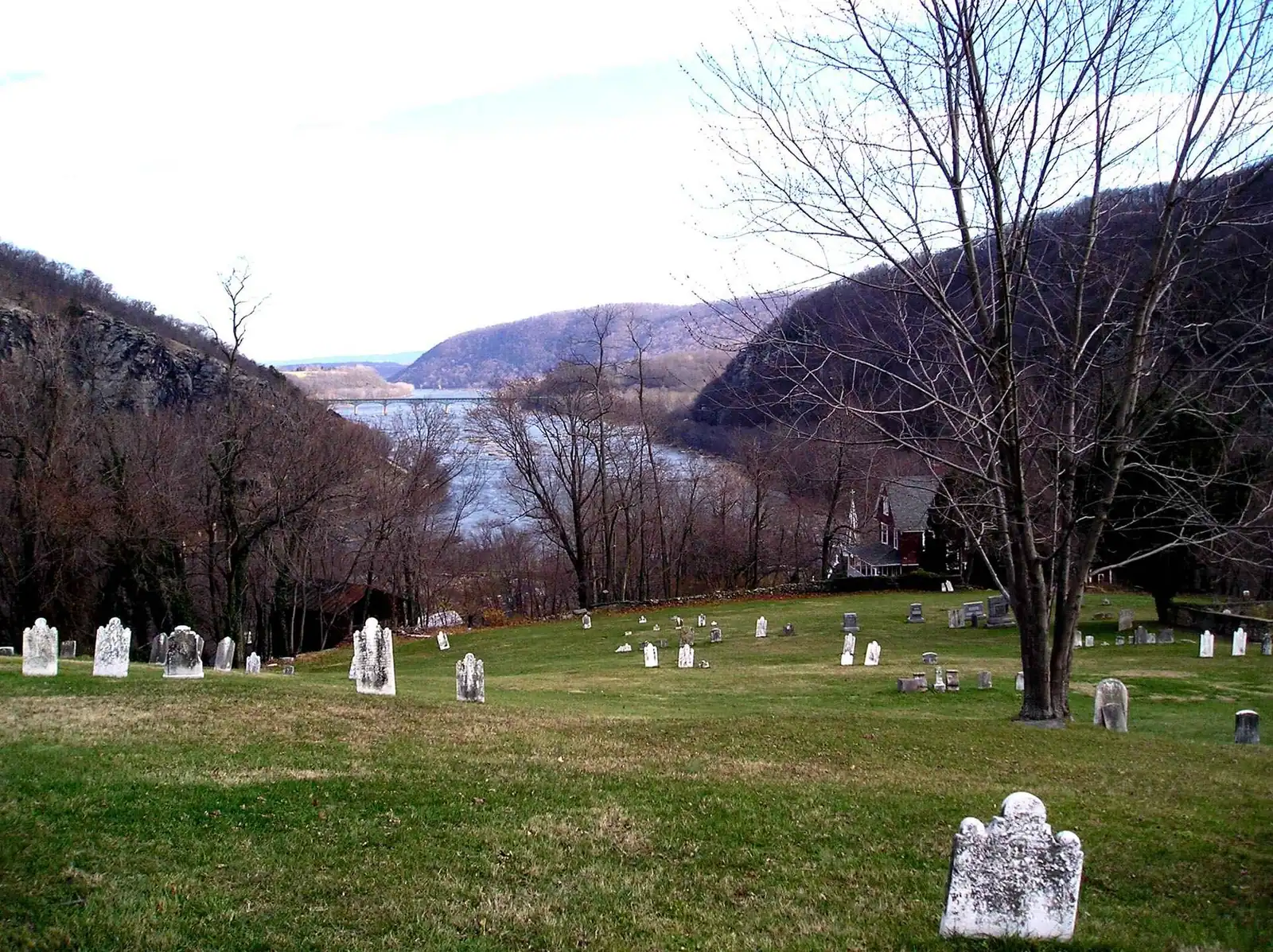
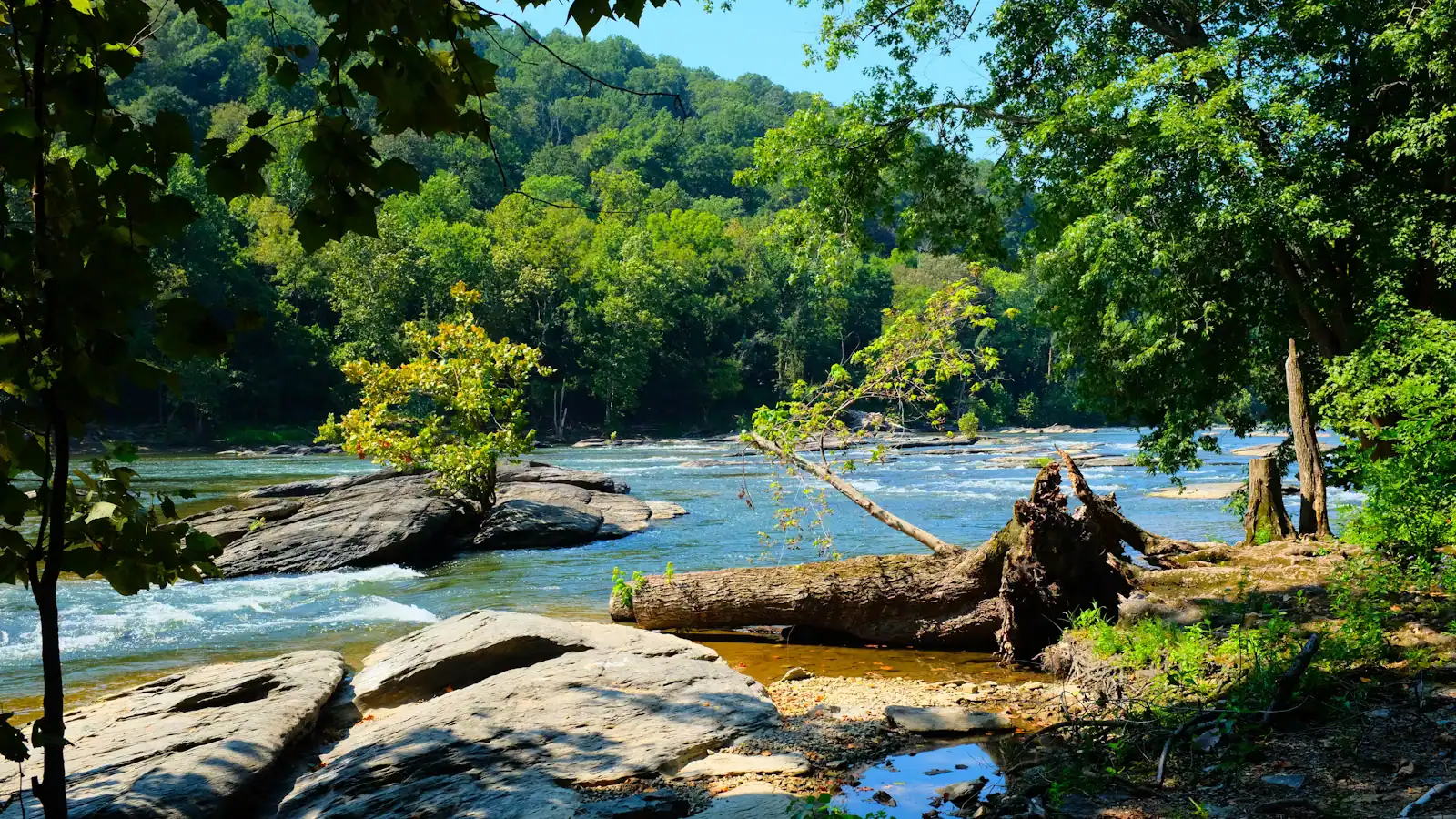
A river turning between steep wooded slopes in full summer leaf, seen from high groundUnsplash

Forget the temperature chart for a moment. Two variables decide what kind of day you get in Harpers Ferry, and neither of them is the thermometer.

The first is river level. The lower Shenandoah below Millville runs through the Staircase section — a set of ledges rated Class I to III with Bull Falls as the hardest single drop — and what the gauge says determines whether that is a genuine whitewater trip, a lazy float on a tube, or nothing at all because the outfitters have stood the day down. Spring snowmelt and rain give the biggest water of the year. By July the river usually drops into tubing flow, which is the family season. Nobody here books off a calendar; they book off a gauge.

The second is leaf cover, and it works in the opposite direction to most people's instincts. In high summer the canopy closes and the overlooks show you a green ridge. In winter the leaves are off, and from Jefferson Rock or the Camp Hill path you can suddenly read the shape of the place — the two water gaps, the three heights, the ground that made this town indefensible and unavoidable for four years of war. Some of the best photographs from Maryland Heights are taken in March.

Crowding follows a third pattern again. The peak is not July; it is the middle and end of October, when colour on the ridges and the Civil War anniversaries land in the same three weeks and the Cavalier Heights car park fills earlier than it does at any point in summer. The quietest months with the park fully open are January and February.

Then there is the clock. The park's shuttle runs its long schedule while daylight saving time is in force — first bus at nine, last bus up from the lower town at seven — and switches to a last bus at half past five for the standard-time season. That single change is what makes a November afternoon here feel abruptly short, and it catches out people who visited in August and assumed the same day was available.

The rest of this page puts those variables month by month, names the weeks we would actually choose, and says plainly which weekends to avoid.

The weeks we would actually choose

Mid-September. The single best fortnight. The humidity that sits in the bowl all summer breaks, air temperatures drop into the sixties and seventies, the rivers are still warm enough for a late float, and the colour has not yet brought the October crowds. The light down the Shenandoah gorge in the last hour of the day is at its best. If you have one week of flexibility a year, use it here.

Late April. The second choice, and the best one for anyone who wants both the water and the views. The Shenandoah is up and the rafting is real. Redbud and dogwood are out along the Maryland Heights switchbacks. The canopy has not yet closed, so the overlook still shows you the bones of the town.

Early November. The connoisseur's answer. Leaves half down, ridge lines showing through, almost nobody about, and the town back to something like its own size. The trade-off is the clock change: the last shuttle up from the lower town goes at half past five, so the day ends earlier than you expect.

Late May into early June, if you like people. This is when the northbound Appalachian Trail thru-hikers reach town and the Conservancy's front steps fill up with them. It is the most sociable three weeks of the year here.

A January weekday, if you want the place to yourself and can handle ice on the stone steps. The park is open every day except Thanksgiving, 25 December and 1 January.

The calendar that has nothing to do with weather

This town has dates the way other places have festivals, and they shape both the programming and the crowd.

16 to 18 October. John Brown and his men seized the federal armoury on the night of the 16th in 1859; Marines under Robert E. Lee broke into the engine house on the 18th. The anniversary falls inside the foliage peak, which is a large part of why October here is what it is.

15 and 17 September. The Union garrison of roughly 12,500 men surrendered on Bolivar Heights on the 15th in 1862, after Confederate guns were dragged onto all three heights — commonly cited as the largest surrender of United States troops until Bataan in 1942. Antietam was fought two days later, eleven miles north. Doing both in sequence on those dates is the best history weekend in the region.

2 December. Brown was hanged at Charles Town, eight miles west, in 1859. A quiet, cold, serious date, and the courthouse where he was tried still stands.

August. The Niagara Movement held its first meeting on American soil at Storer College in 1906, and the delegates walked down to John Brown's Fort. The campus on Camp Hill is part of the park and open to walk.

Living-history and trades programming runs in event weekends through the year rather than on a fixed annual schedule, so check what is on with the park rather than planning a trip around a specific program.

What the clock change does to your afternoon

When to go

This is the most practical seasonal fact on the page and the one most likely to catch you out.

On the long summer schedule — which the park published as 9 March to 1 November for 2026, tracking daylight saving time — the shuttle's first bus leaves the visitor center at nine and the last bus up from the lower town goes at seven in the evening. That gives you a genuine evening: Jefferson Rock in the last hour of light, then a ride back up the hill.

Through the standard-time season, the last bus from the lower town goes at half past five. The exhibit buildings still close at five, and sunset comes early enough that your afternoon effectively ends when the museums do.

Two things hold steady all year. Museums, exhibits and lower-town restrooms run nine to five. Trails and parking lots open thirty minutes before sunrise and close thirty minutes after sunset, which makes an early start legal in any season and an evening ridge walk not.

The practical consequence: in winter, arrive at nine and treat the day as five hours rather than nine. In summer, the sensible shape is an early climb, the middle of the day in the exhibit rooms or on the water, and the last hour on the hill. And in any season, if you are still down in the lower town when the last bus goes, the way back up is the Visitor Center to Lower Town Trail on foot.
If a weekend is your only option

Local tips

  • Pick the weekend, not just the month. Early October is nearly as good as late October for colour on the ridges and noticeably quieter. The first weekend after the foliage peak is emptier than the one before it.
  • Arrive for the nine o'clock first shuttle. On a busy Saturday this is worth more than any other single decision: the lot has space, the bus has seats, and the lower town is quiet for the first hour.
  • Do the climb first, the town second. Everyone else does it the other way round, which is why the overlook queues at noon.
  • Eat at half eleven or after two. The kitchens here are small and the middle of the day is when several hundred people come off the shuttle hungry.
  • Use Bolivar Heights as your overlook if the Maryland Heights trailhead looks busy or the footbridge is closed for construction. Own parking, level ground, wide view.
  • Stay the night if you possibly can. After the last bus the lower town belongs to whoever is still in it, and that hour is the best of the weekend.
  • Check the park's conditions page on the Friday. Exhibit closures, trail work and high water all go up there, and a five-minute check on Friday saves an hour on Saturday.

Month by month

How they compare

Averages rather than forecasts. Crowd levels assume a weekend; a weekday is always quieter.

MonthTypical feelRiverCrowdsWhat it is good for
JanuaryCold, bare, 41/26 °F averageToo cold and high for commercial tripsLowest of the yearRidge lines visible; ice on the steps
FebruaryCold, clear lightNothing runningLowThe bare-ridge version of the overlooks
MarchVariable; the clocks changeRising fast; season startingLow to moderateWhitewater opening, still-bare views
April63/41 °F average, redbud and dogwoodHighest water of the yearModerateRafting, the heights before the canopy closes
MayWarm, green, thru-hikers arrivingStrong, dropping lateModerate to highThe Appalachian Trail wave; long light
JuneHumid, canopy closedFalling toward float levelsHighLong days, living-history programming
July85/64 °F average, heat in the bowlTubing flowHighThe family water season
AugustHot, storm-prone afternoonsLow and warmHighEarly starts, late evenings, the river
SeptemberHumidity breaks, water still warmLow; late float tripsHighThe best weather-to-crowd ratio of the year
October66/45 °F average, peak colourCooling; season winding downPeak, and it showsFoliage, anniversaries, and queues
NovemberLeaves down, clocks backEffectively overModerate, then lowHalf-bare ridges and empty streets
DecemberCold, short afternoonsNothing runningLowThe 2 December anniversary; quiet town

The weekends to avoid, and how to dodge them

Before you book

Saturdays in mid to late October. The worst crowding of the year, by a distance, and it is a collision of two unrelated things: peak colour on the ridges and the Civil War anniversaries either side of it. The Cavalier Heights lot fills by the middle of the morning, the shuttle queue builds behind it, the Maryland Heights overlook genuinely queues for the rock, and the handful of small kitchens in the lower town are overwhelmed between noon and two.

Summer Saturdays. Not as bad as October, but the lot still fills by mid-morning, and the heat in the bowl makes waiting unpleasant in a way it is not in autumn.

Fee-free days. The National Park Service waives entrance fees on a handful of days a year, and those days are reliably among the busiest in their month. The fee here is $20 a vehicle; consider whether saving it is worth the crowd.

The dodges, in order of effectiveness. Come on a weekday — it is a bigger difference here than at most destinations, because a third of the crowd is a day trip from Washington or Baltimore. Take the nine o'clock first shuttle, which buys you the lower town before the coaches. Go to Bolivar Heights instead of Maryland Heights for the ridge view: its own parking area, level walking, a fraction of the traffic. And save Jefferson Rock for the last hour of light, when the day visitors have gone.

On the ground

Where to go

Every place below has its own page — hours, parking, what it costs and what to expect when you get there.

  • A plain church with a steep roof and a spire standing above a wooded slope

    Historic site

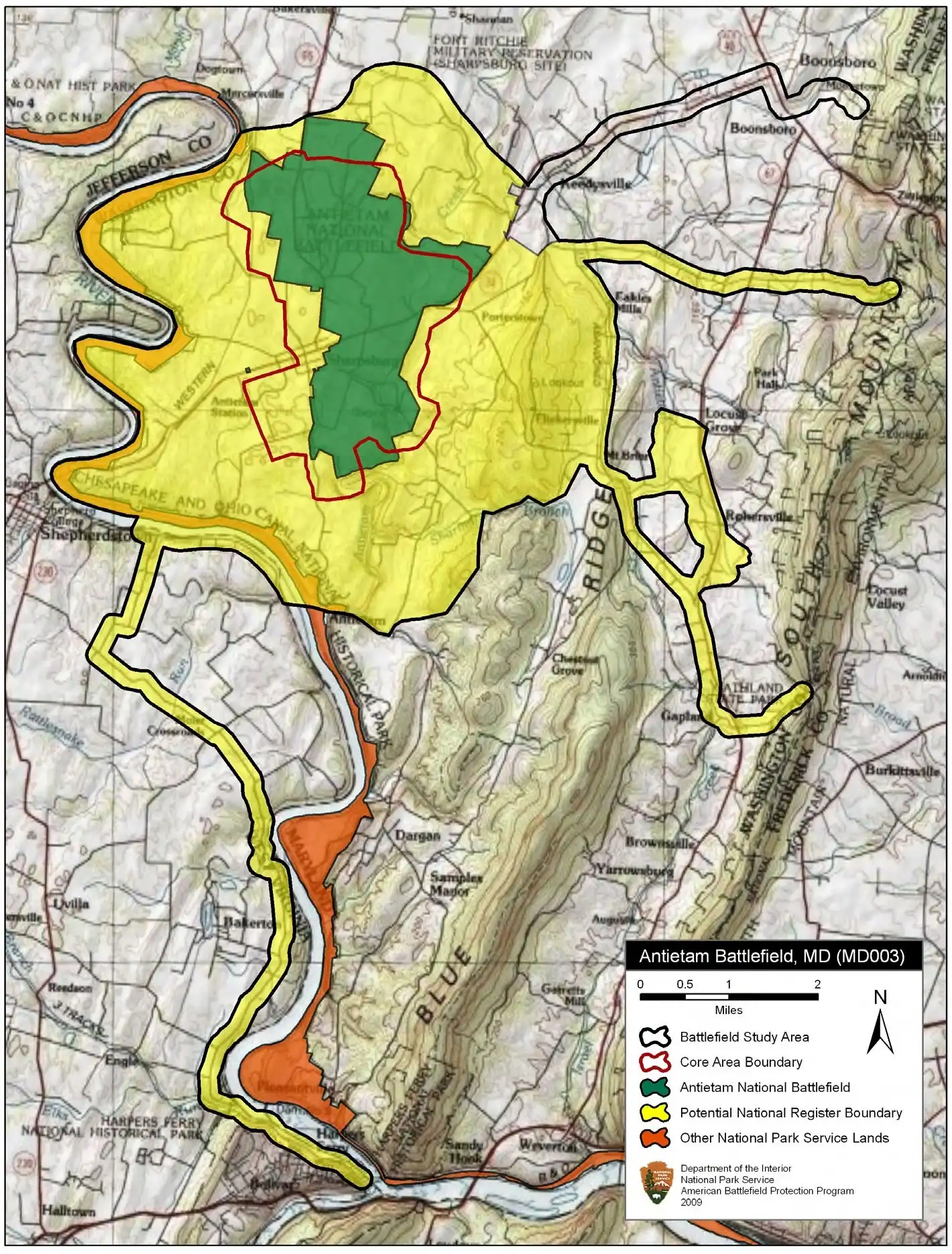
    Antietam National Battlefield

    Roughly 23,000 casualties in one September day, half an hour north of Harpers Ferry, and the same campaign that took this town.

    2.5–6 hoursAt the time of writing: $20 per private vehicle, $15 per motorcycle, $10 per person on foot or bicycle, each valid three consecutive days

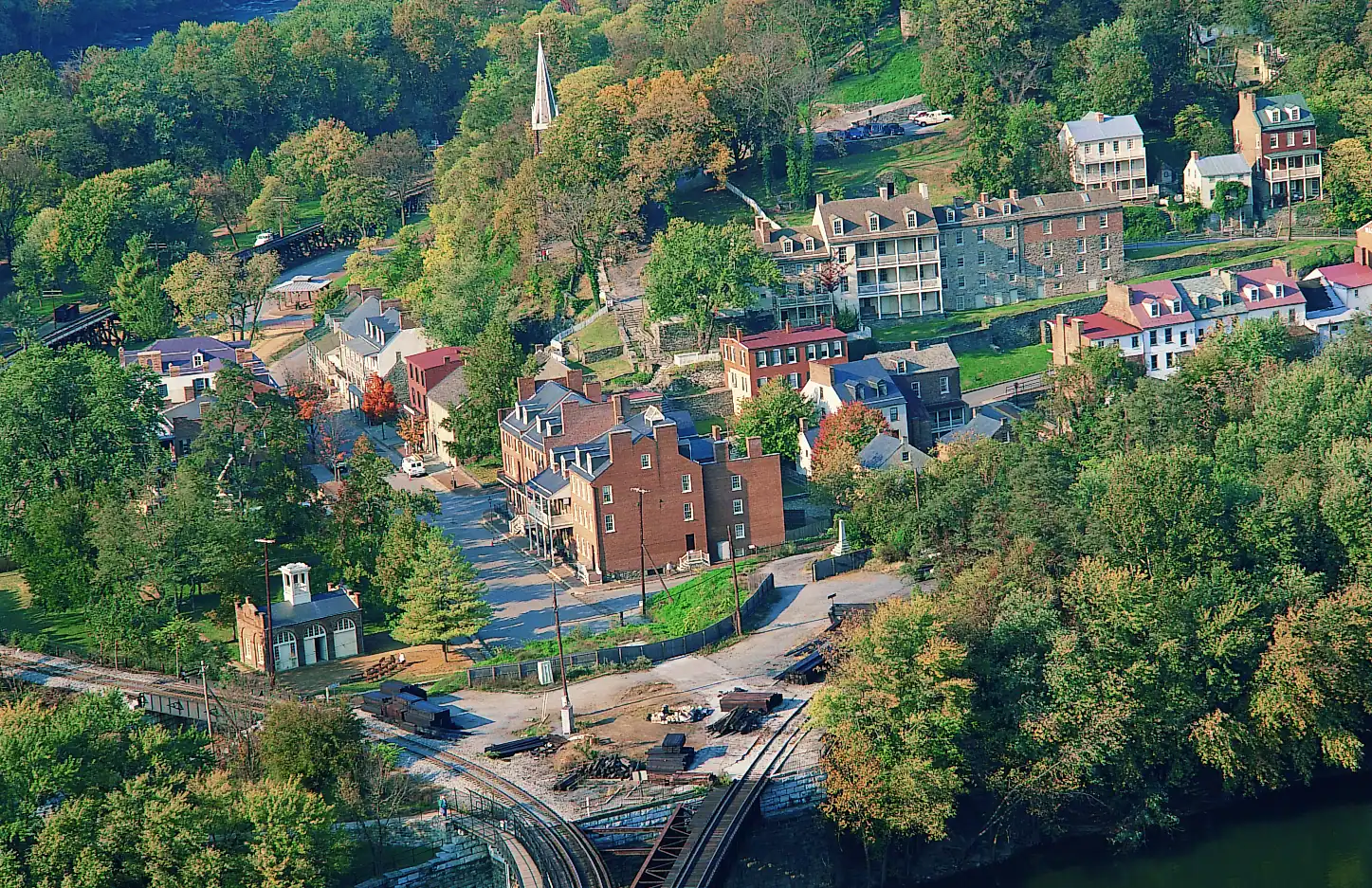
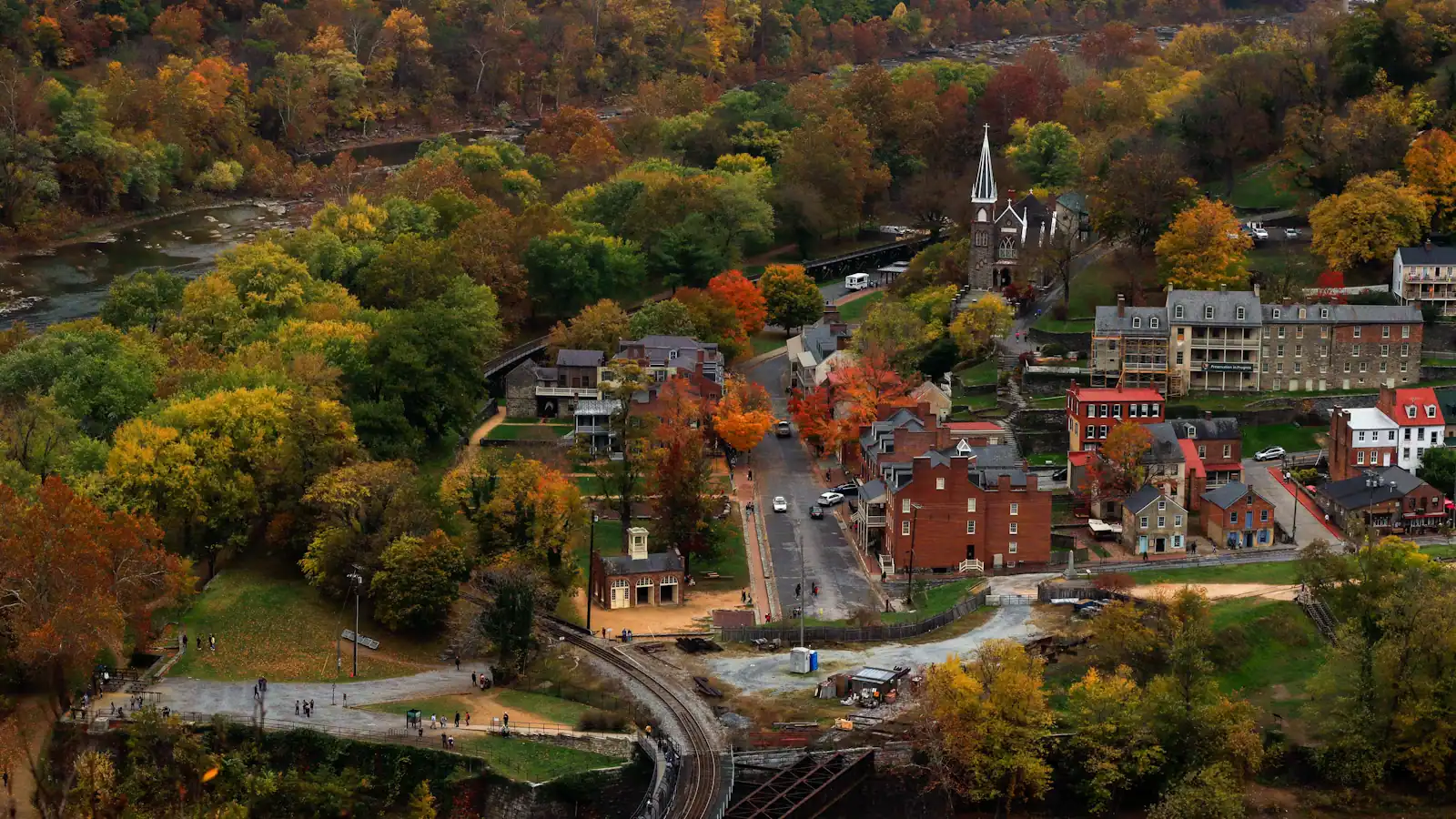
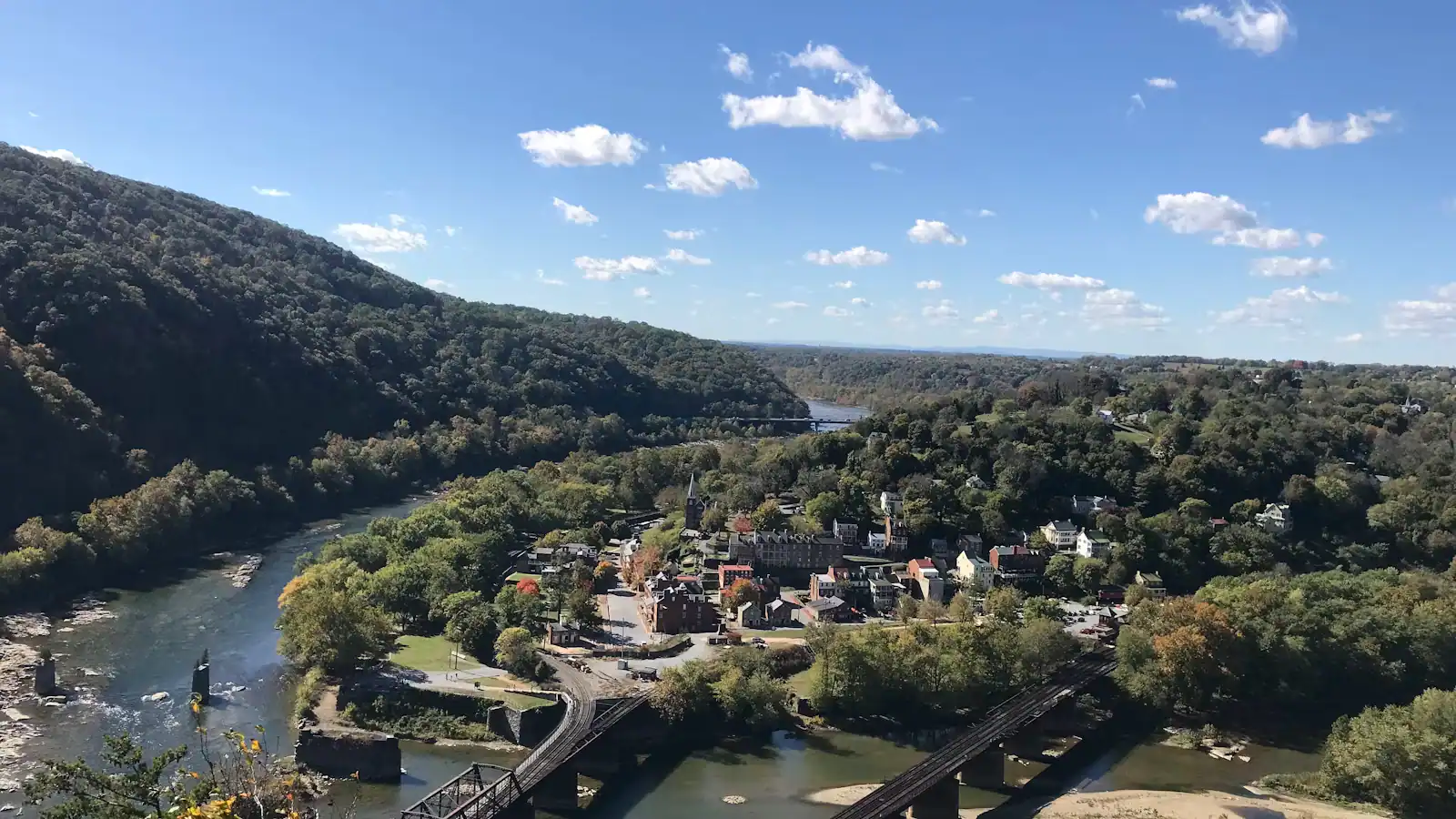
  • A small town of pale rooftops and a church spire seen from above, wrapped by wooded hills and river water

    Trail

    Free

    Maryland Heights Trail

    The cliff ledge that produces the photograph everyone has seen of this town, and about a thousand feet of climbing to reach it.

    3–5 hoursNo charge for the trail; the park entrance fee applies to your vehicle

  • A river turning between steep wooded slopes in full summer leaf, seen from high ground

    Viewpoint

    Free

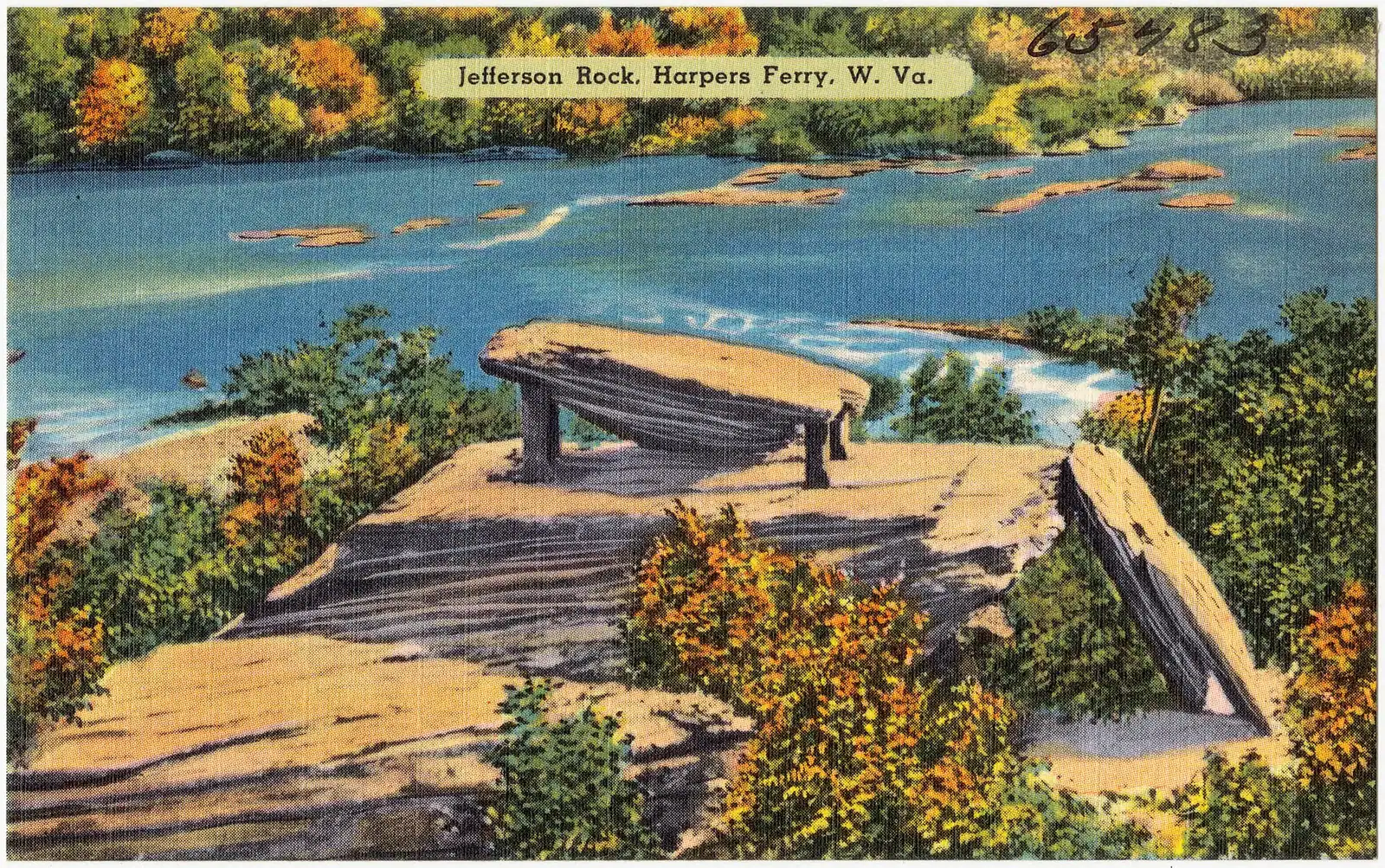
    Jefferson Rock

    A propped shale slab above the Shenandoah gorge, and the spot that gave American travel writing its first great sentence.

    0.5–1.5 hoursFree once you are inside the park; the park entrance fee still applies to your vehicle

  • A narrow street of nineteenth-century shopfronts running uphill between stone kerbs

    Neighbourhood

    Lower Town Harpers Ferry

    Two streets and a flight of stone steps, all of it inside a national park, with the high-water marks still on the walls.

    2–5 hoursPark entrance fee applies; National Park Service exhibit buildings are then free to enter

  • Broken ledges of rock running across a shallow river between wooded banks

    Water feature

    Free

    The Shenandoah River

    Class I to III through the Staircase, Bull Falls at the bottom, and the only thing in this town with much to book.

    2–5 hoursFree to look at and walk beside; guided rafting, tubing and kayak trips are priced by the outfitter

  • A whitewashed stone-walled house on a steep bank, its garden held up by a dry stone retaining wall

    Historic site

    Free

    Bolivar Heights

    Flat, open and five minutes from the car park: the battlefield where a Union garrison of 12,500 surrendered in two days.

    1–1.5 hoursNo separate charge; covered by the park entrance fee, which is valid three consecutive days

Straight answers

Questions people actually ask

What is the best time of year to visit Harpers Ferry?

Mid-September, on a weekday. The summer humidity that sits in the river bowl has broken, air temperatures settle into the sixties and seventies, the rivers are still warm enough for a late float, and the October crowds have not yet arrived. Late April is the close second if you want high water for rafting and open views before the canopy closes. Mid-October is the most beautiful and the most crowded.

When is peak fall foliage in Harpers Ferry?

Usually the middle to the end of October on the ridges, though it moves a week or so either way with the year and we would not print a date for a specific season. It is also when the Civil War anniversaries fall, so the two peaks compound: the Cavalier Heights lot fills by mid-morning and the Maryland Heights overlook queues. Come on a weekday, or come in early November when the ridge lines show through.

Is Harpers Ferry worth visiting in winter?

Yes, and it is underrated. With the leaves off you can read the terrain from Jefferson Rock and the Camp Hill path in a way August completely hides, the town is quiet, and the park is open every day except Thanksgiving, Christmas Day and New Year's Day. Two caveats: the last shuttle up from the lower town goes at half past five in the standard-time season, and ice sits on the stone steps and the switchbacks long after the streets have cleared.

When can you go rafting at Harpers Ferry?

Roughly April to October, with the character changing entirely across the season. Spring snowmelt and rain give the lower Shenandoah its highest water, and the Staircase section runs as genuine Class I to III whitewater. By July it usually drops to tubing and funyak levels. Outfitters run off the river gauge rather than the calendar, so an early or late trip can be moved or cancelled at short notice.

What is the busiest time in Harpers Ferry?

Saturdays in the middle and end of October. Peak colour and the Civil War anniversaries land in the same stretch, and the result is a car park that fills by mid-morning, a shuttle queue behind it and a genuine wait for the overlook rock on Maryland Heights. Summer Saturdays are the second peak. Fee-free days are reliably among the busiest days of their month. Weekdays are dramatically quieter.

How hot does Harpers Ferry get in summer?

Summer averages run around 85 °F by day and 64 °F at night, but the number that matters is the geography rather than the average: the town sits at about 509 feet in a bowl with ridges on three sides, and it holds heat and humidity that the ridge road above does not. Climb before ten in the morning, keep the middle of the day for the shaded streets and exhibit rooms, and carry more water than feels necessary.

When do Appalachian Trail thru-hikers come through Harpers Ferry?

The northbound wave generally reaches town from late May into early June, which is when the Appalachian Trail Conservancy's front steps fill with people stopping to be photographed after a thousand miles. Southbound hikers come through later in the season in far smaller numbers. If you enjoy talking to strangers, those three weeks in early summer are the most sociable time of the year to be here.

How long does the park stay open each day?

It depends which part. Museums, exhibits and the lower-town restrooms run 9 a.m. to 5 p.m. year round. Trails and parking lots are open from thirty minutes before sunrise to thirty minutes after sunset. The shuttle's first bus is at nine, with the last bus up from the lower town at seven while daylight saving time is in force and half past five through the standard-time season. The park closes only on Thanksgiving, 25 December and 1 January.