Historic site
Free
Storer College
A college founded to educate people who had been enslaved, closed in 1955 by the consequences of a civil rights victory.
0.5–1.5 hoursFree; covered by the park entrance fee charged on your vehicle
A booking made through these earns us a commission from Viator. The price is the same, and the commission had no bearing on what is recommended.
Things to Do
What is free in Harpers Ferry: everything one $10 park fee already covers, the sites outside the boundary that cost nothing, and the fee-free days.
 Unsplash
Harpers Ferry is one of the cheapest good days out in the mid-Atlantic, and it is worth being precise about why, because the word free does two different jobs here.
Most of what you came for sits inside Harpers Ferry National Historical Park, and the park charges one entrance fee: $20 for a private vehicle, $15 for a motorcycle or $10 a head if you walk or cycle in, each valid for three consecutive days, with under-16s free. That single payment covers the shuttle bus, the lower town, the exhibit buildings, John Brown's Fort, the 1810 stone steps, Jefferson Rock, Camp Hill and the old Storer College grounds, Virginius Island, Bolivar Heights, Maryland Heights and whatever ranger talks and living-history programming are running that day. There is no second ticket for anything. The park does not take cash, so pay online or by card.
Put like that, the arithmetic is unusual. A solo visitor arriving on foot from the train pays ten dollars for three days of access to a national park that recorded over four hundred thousand visits in 2022. Two adults and two children in a car pay twenty for the same. There is no equivalent of a resort town's per-attraction ticketing here, and that is the single most useful budget fact about the place.
Then there is the genuinely free layer: the things outside the fee boundary altogether. The Appalachian Trail Conservancy visitor centre up on Washington Street, which you can walk into for nothing. The shops, churches and streets of the town and of Bolivar above it, which the Park Service is explicit are outside the park. The C&O Canal towpath on the Maryland bank, which belongs to a different national historical park and carries no entrance fee at this end. And watching freight trains cross the river and disappear into the tunnel in the rock, which is free everywhere and unusually good here.
The rest of this page separates the two properly, adds the fee-free days and the federal passes that apply, and sets out a free day in the order that works. One caveat throughout: the footbridge over the Potomac was listed closed from 27 July 2026 for stairway construction, which affects the towpath and Maryland Heights. Check the park's conditions page before you build a day around either.
This is the list people underestimate, so here it is in full.
The shuttle bus, every ten to fifteen minutes between the Cavalier Heights visitor center and the lower town, first departure at nine. No separate charge, ramps or lifts fitted.
The lower town exhibit buildings — fifteen or more rooms of interpretation along Shenandoah Street, open nine to five, covering the armoury, the raid, the trades, the wartime town and the rebuilding.
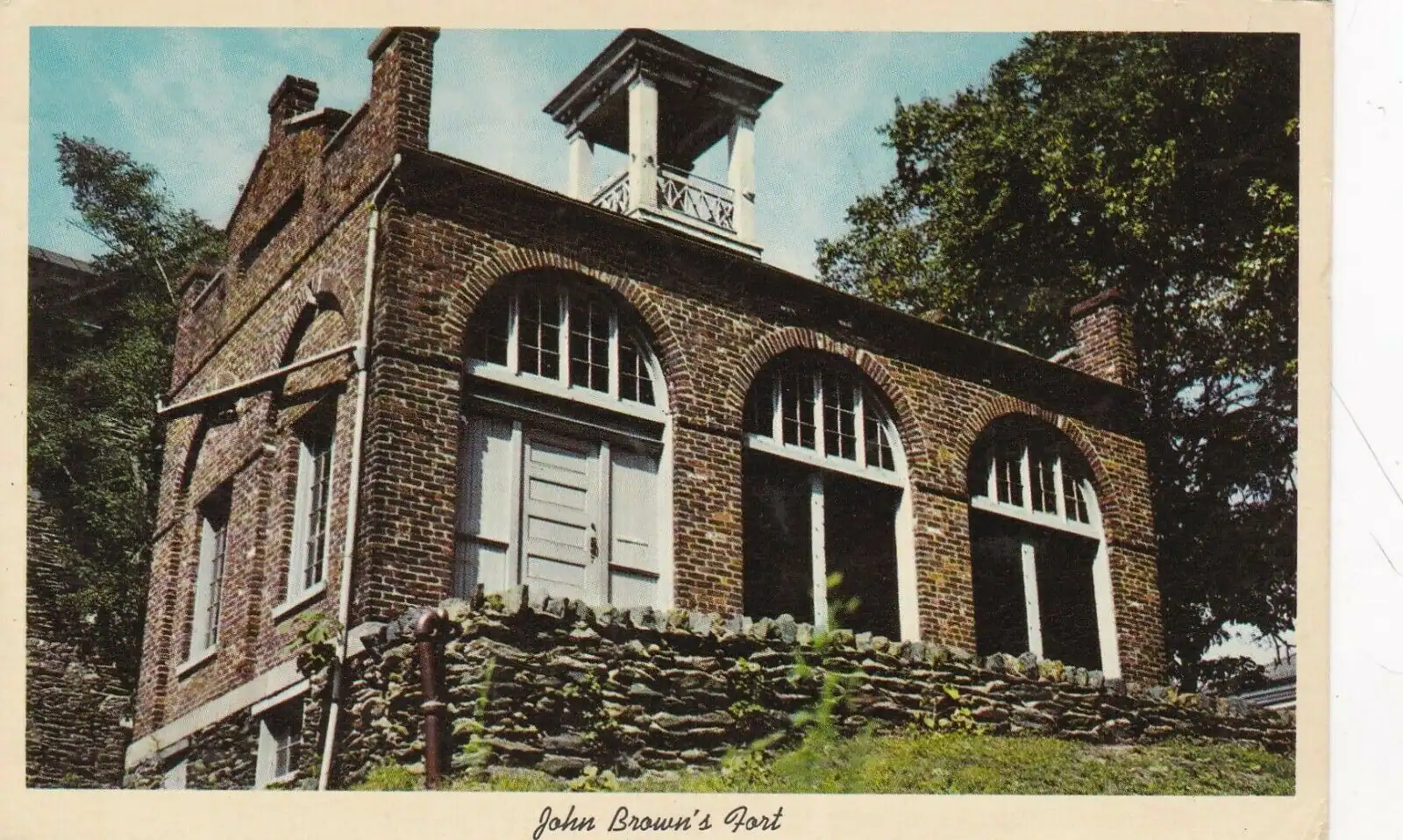
John Brown's Fort, the armoury's 1848 fire engine house, which you can walk up to and around.
Ranger talks and living history. Blacksmithing, open-hearth cooking, tin-making, gardening and themed event weekends. The best interpretation in town costs nothing beyond the fee, which is why paid walking tours here have to work harder than they do elsewhere.
Every trail and every viewpoint. The 1810 stone steps, Jefferson Rock, Camp Hill and the Storer College grounds, Virginius Island, Bolivar Heights, Loudoun Heights, Maryland Heights, Murphy Farm, Schoolhouse Ridge. Over twenty miles of them.
The Point, where the Shenandoah meets the Potomac with three states in view.
Three consecutive days of all of it. If you are staying in the area, that turns one fee into three mornings.
The Appalachian Trail Conservancy visitor centre. On Washington Street up on Camp Hill, free to walk into, staffed by people who know the trail properly, and home to the album of photographs of thru-hikers who have stopped here. If you want ten minutes of expert conversation for nothing, this is where to get it.
The C&O Canal towpath. Across the Potomac on the Maryland bank, a separate national historical park with no entrance fee at this end: 184.5 miles of flat crushed stone from Georgetown to Cumberland, with this town at about mile 61. Normally reached by the footbridge and a spiral staircase, which is the access currently affected by construction.
The town itself. High Street, Potomac Street, the churches, the bookshops and the outfitters are outside the park boundary — the Park Service says so plainly — so wandering them costs nothing. So does the twenty-minute walk up to Bolivar, which is where the area's everyday life happens.
Trains. A working freight line through the middle of a historic town, over a river bridge, into a tunnel bored through Maryland Heights. Children will wait for one. So, in practice, will most adults.
The view from the road. US 340 crosses the Shenandoah south of town, and the approach gives you the water gap and the ridges for the price of the drive.
What it costs
The National Park Service designates a handful of days each year when entrance fees are waived at every fee-charging park, this one included. The pattern has been consistent for years — Martin Luther King Jr Day in January, the first day of National Park Week in April, Juneteenth, the anniversary of the Great American Outdoors Act in early August, National Public Lands Day in late September and Veterans Day in November — but the exact dates move, so check the current year's published list rather than trusting a date printed here.
They are genuinely free days, and they are also the busiest days of their respective months. On a fee-free Saturday in autumn the Cavalier Heights lot fills early and the shuttle queue builds behind it. Arrive for the nine o'clock first bus or accept that you are part of the crowd.
Several federal passes apply here and are worth knowing about if you are in one of the categories:
Bring a card whichever applies. The park is cashless, including at the entrance station.
When to go
Assume you have paid the $10 on foot or the $20 for the car and nothing else all day.
9.00. First shuttle down. Straight to the Point while the lower town is still quiet and the light is on both rivers.
9.20. Shenandoah Street, working along the exhibit buildings as they open. John Brown's Fort at the end of it. Ask at a staffed building what ranger programming is running and when.
11.00. Up High Street and the 1810 stone steps past St Peter's to Jefferson Rock. Fifteen minutes of climbing, and the best view you will get without a serious hike.
11.45. Camp Hill: the Storer College grounds, and the Appalachian Trail Conservancy, which costs nothing to enter. Give this an hour rather than a glance.
13.00. Picnic on the grass up here rather than queueing for a small kitchen at the busiest hour of the day. Remember the shuttle takes no coolers or open food.
14.00. Virginius Island loop, or a stretch of the Appalachian Trail out of the lower town, or the towpath if the footbridge is open.
16.30. Back into the lower town for the bookshop and the last of the exhibit rooms before they close at five.
Golden hour. Back up to Jefferson Rock or out to Bolivar Heights, both free, both better at the end of the day than in the middle of it. Then the last bus: seven in summer, half past five in winter.
What it costs
The entrance fee is charged per vehicle or per person, and which is cheaper depends entirely on how many of you there are.
One adult: arriving on foot or by bicycle costs $10 against $20 for a car. Arriving by train and walking off the platform into the lower town is the cheapest possible version of this day.
Two adults: $20 either way. The car wins on flexibility.
Two adults and children under 16: $20 for the vehicle, children free. The car is the clear answer.
Anyone staying three days: one payment covers all three, whichever way you came.
The train is worth a hard look for a solo or a couple travelling from Washington or Baltimore, because the station platform sits inside the historic lower town rather than a taxi ride from it. The catch is frequency: MARC's Brunswick Line runs weekdays only and mostly in the commuter peak direction, and Amtrak calls once each way per day. Check the current timetable before you plan around it — the service is real, the frequency is not.
And if you would rather not use the shuttle at all, the Visitor Center to Lower Town Trail walks you down from Cavalier Heights for nothing. It is a pleasant descent and an honest climb on the way back.
A budget page that pretends nothing here is worth paying for would be doing you a disservice, so here is the short list in order of value.
A river trip. The one genuine argument for spending money in this town. You are buying equipment, a shuttle to the put-in, a licensed guide and somebody reading a gauge you cannot see. Spring rafting and summer tubing are different products at different prices; neither is replaceable with a free alternative, because swimming at the confluence is a bad idea and improvising a float is worse.
An evening lantern or history walk. Worth it because it happens after five, when the park's own free interpretation has finished for the day.
The privately run wax museum on High Street. Outside the park, its own admission, and a genuinely old-fashioned telling of the raid in tableaux. A curiosity, and cheap.
A night in town. Not free by any measure, but the thing that most changes the visit: the lower town after the last shuttle belongs to whoever stayed.
What to skip. A general paid orientation of the lower town during opening hours, when rangers are doing the same job for nothing. And any listing that treats this town as an add-on to a Washington itinerary and gives it ninety minutes at the Point.
On the ground
Every place below has its own page — hours, parking, what it costs and what to expect when you get there.
Historic site
A college founded to educate people who had been enslaved, closed in 1955 by the consequences of a civil rights victory.
0.5–1.5 hoursFree; covered by the park entrance fee charged on your vehicle
Neighbourhood
The terrace above the lower town: Storer College, the 1906 Niagara Movement meeting, and the view without the queue.
1–1.5 hoursIncluded with park entrance; the grounds carry no separate charge
Viewpoint
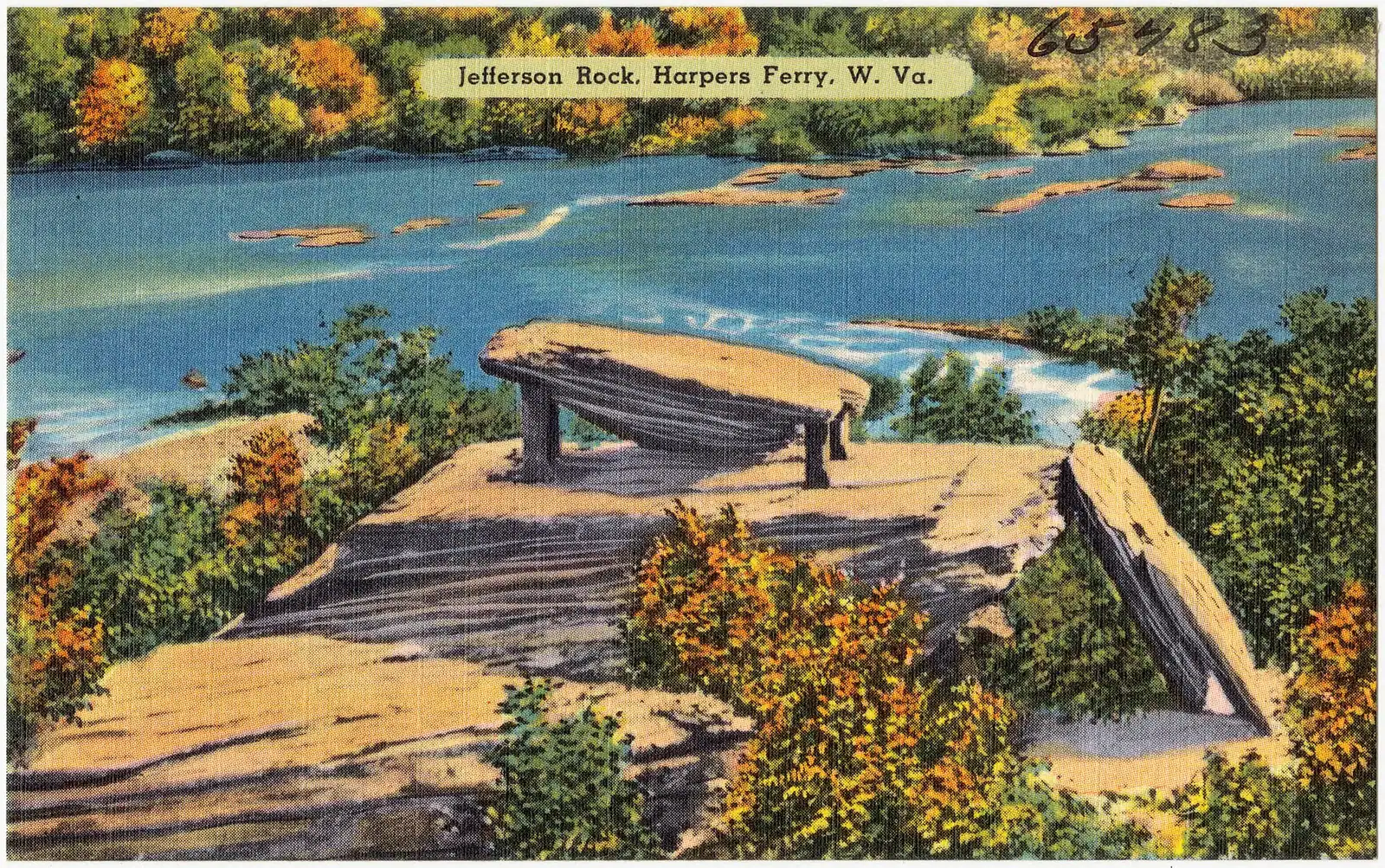
A propped shale slab above the Shenandoah gorge, and the spot that gave American travel writing its first great sentence.
0.5–1.5 hoursFree once you are inside the park; the park entrance fee still applies to your vehicle
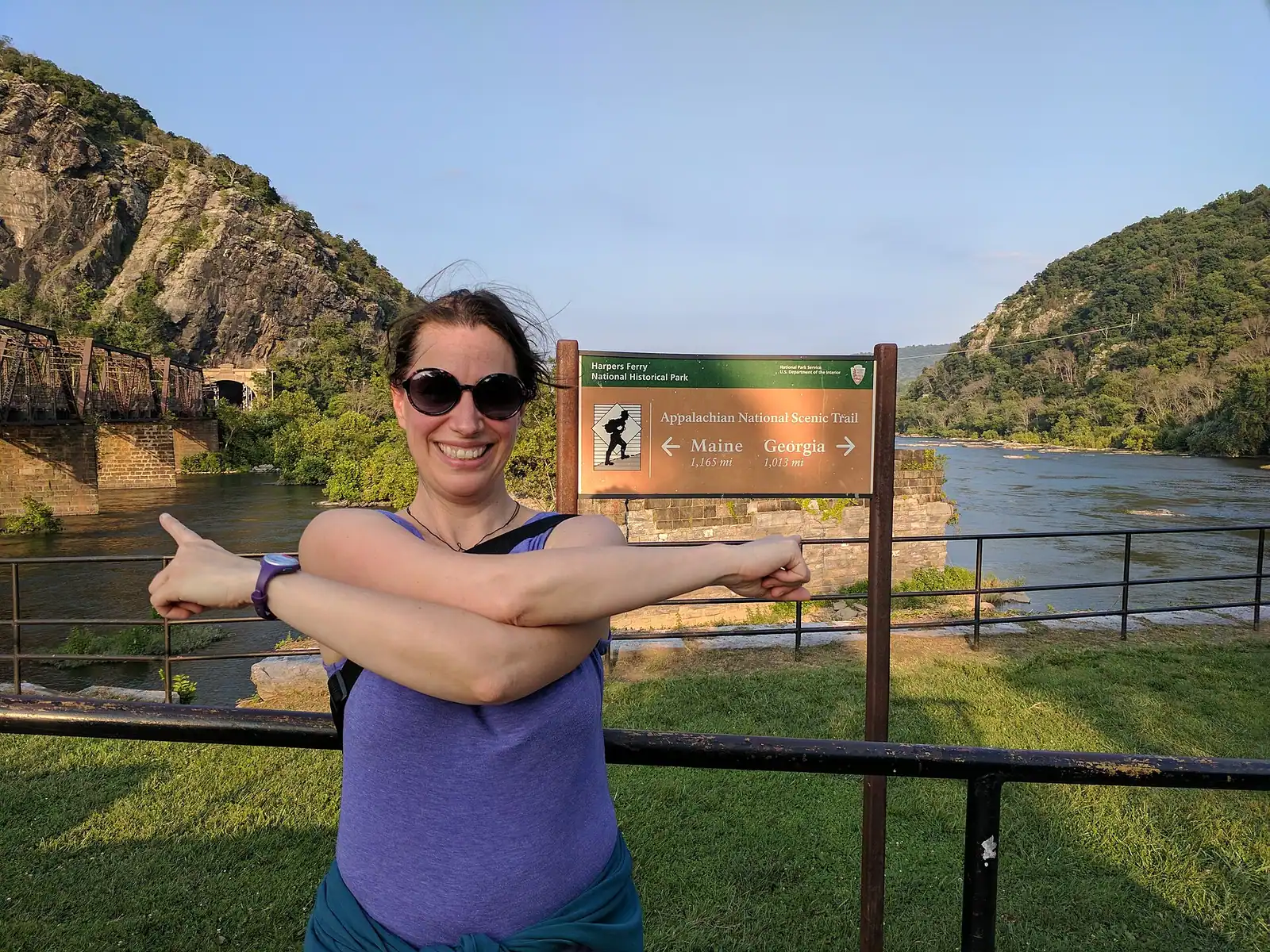
Viewpoint
Ninety seconds from the shuttle stop, level the whole way, and the only spot where the town's geography explains itself.
10–30 minutesFree; covered by the park entrance fee already charged on your vehicle
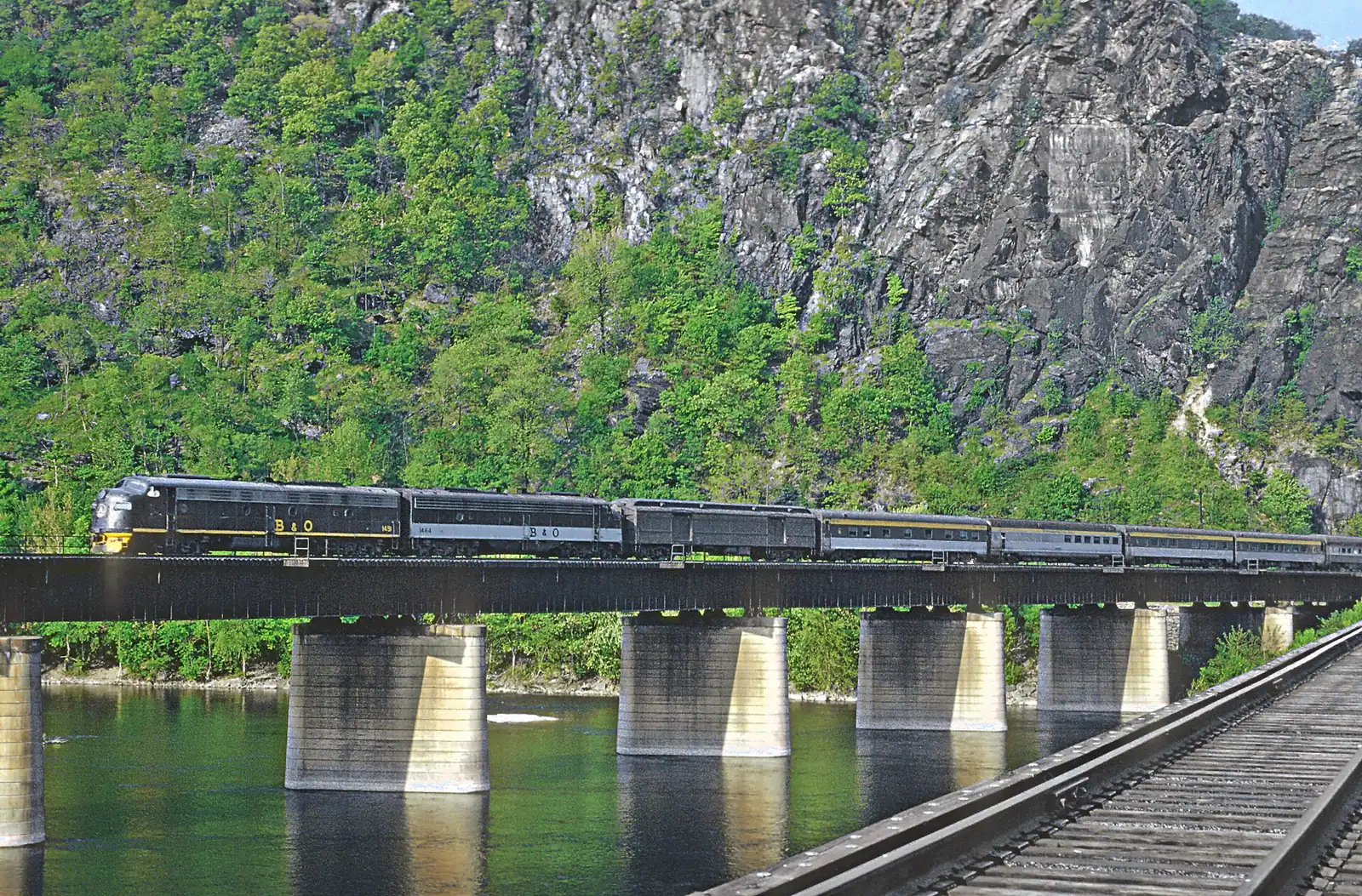
Water feature
The larger of the two rivers, the one that cut the gap through the Blue Ridge, and legally Maryland right up to the West Virginia bank.
0.5–2 hoursFree to look at; reaching the banks inside the park requires a park entrance fee

Museum
Where thru-hikers get photographed and numbered, in albums going back decades — and where the midpoint myth gets corrected.
0.5–1 hoursFree to enter; the Conservancy is a non-profit and donations are welcomed
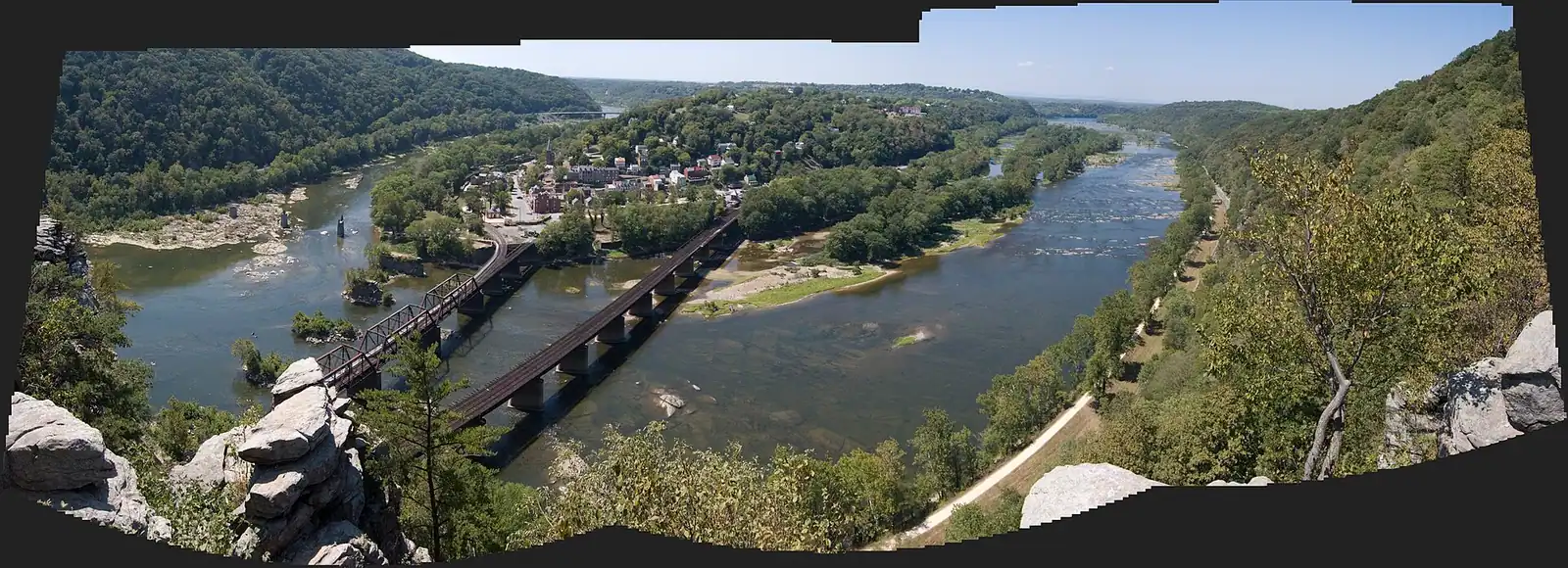
Trail
184 miles of level crushed stone on the Maryland bank, reached by a footbridge and an awkward spiral staircase.
1–5 hoursFree. The towpath itself carries no entrance fee
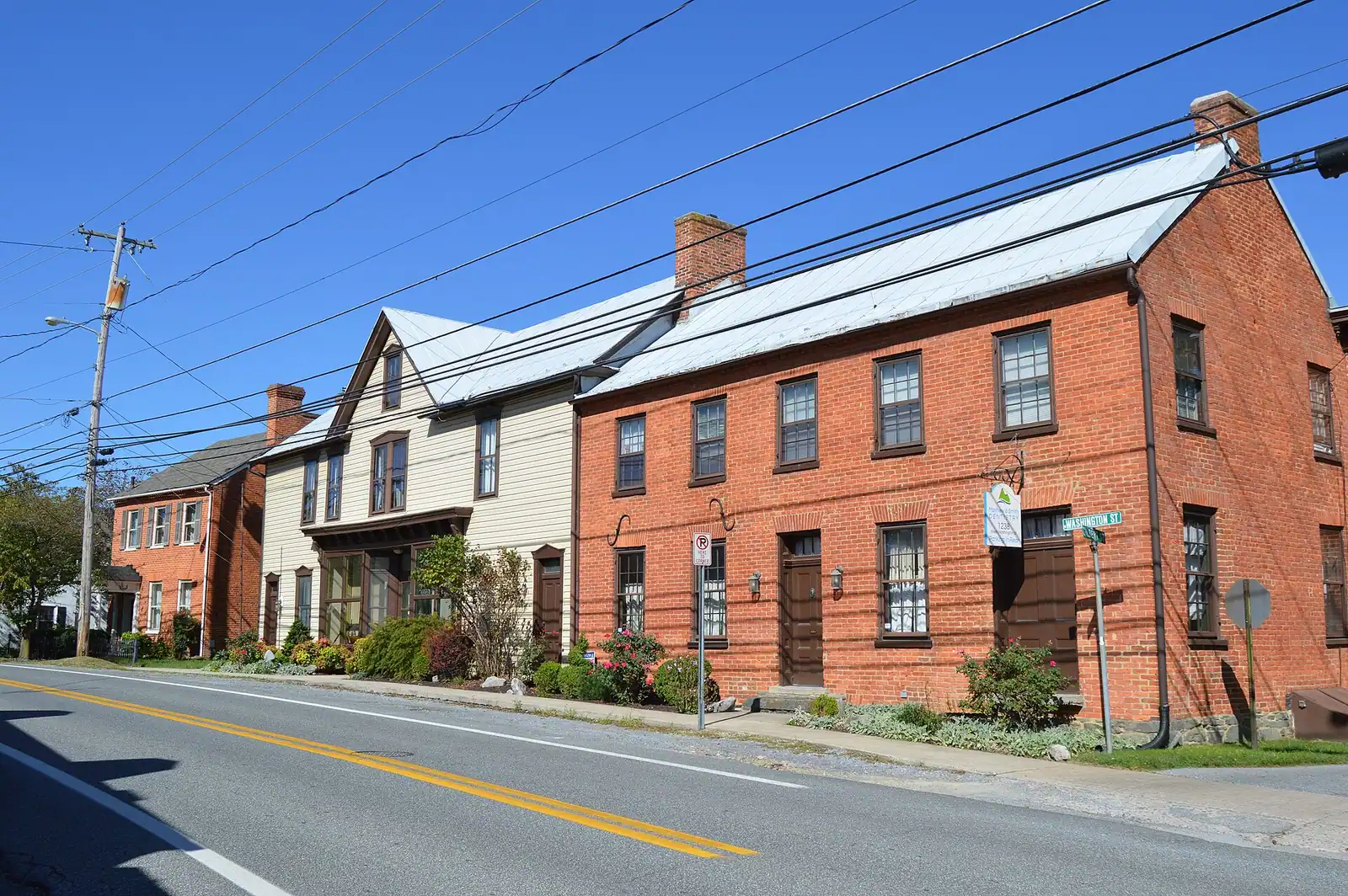
Historic site
Flat, open and five minutes from the car park: the battlefield where a Union garrison of 12,500 surrendered in two days.
1–1.5 hoursNo separate charge; covered by the park entrance fee, which is valid three consecutive days
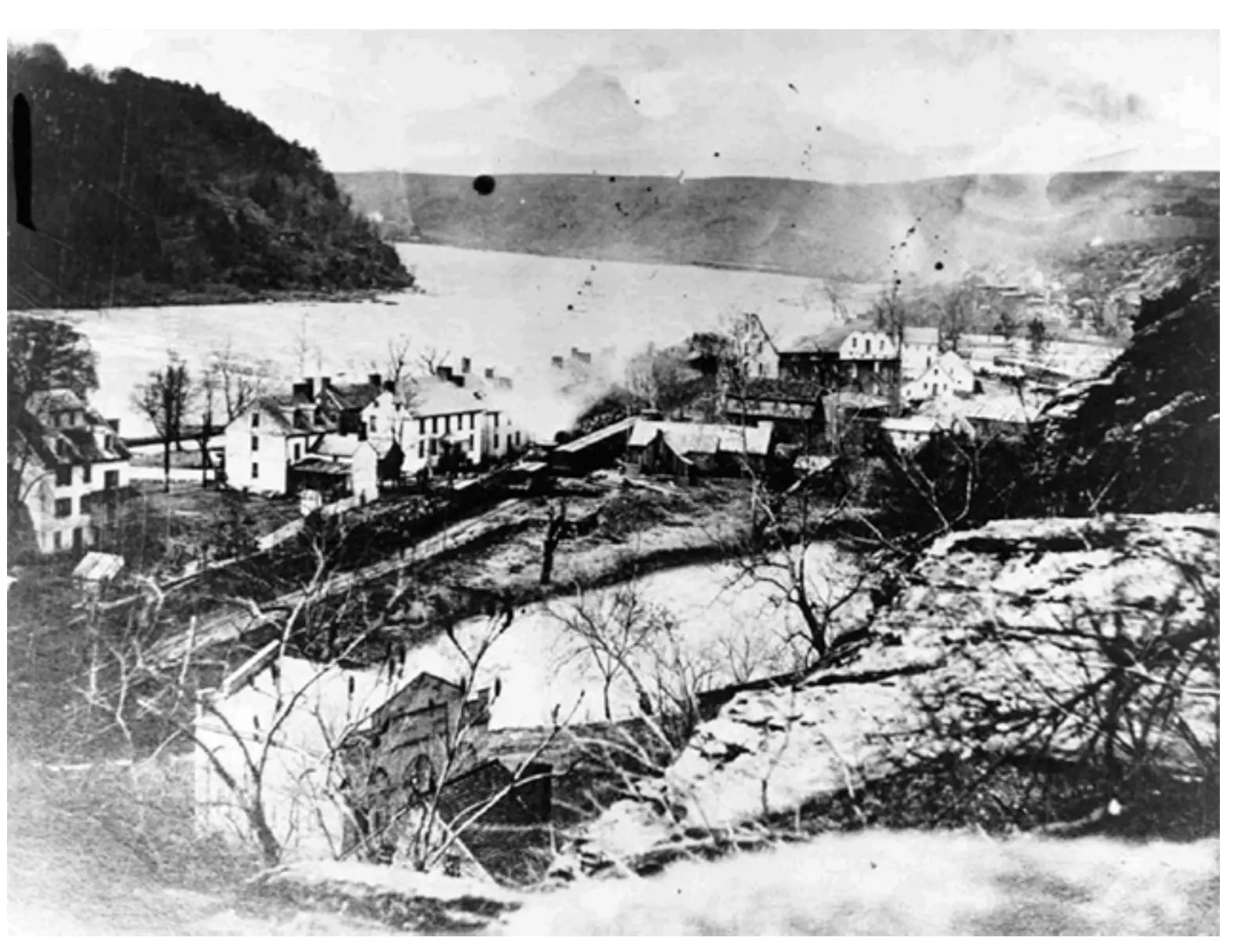
Historic site
A vanished factory town on the Shenandoah: mill walls, a canal race and 180 residents, all of it taken by flood.
0.5–1.5 hoursIncluded with park entrance; no separate charge for the island
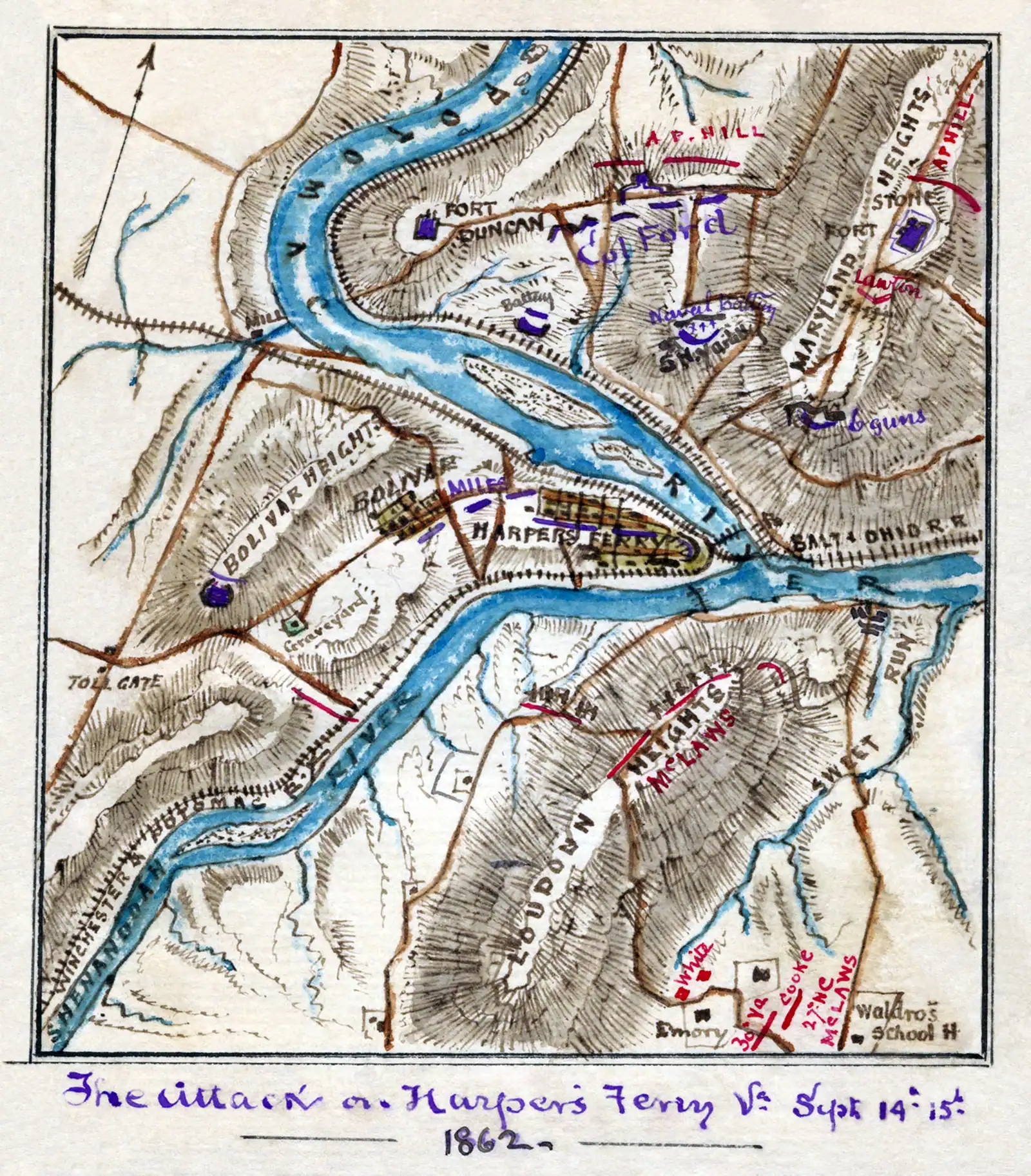
Landmark
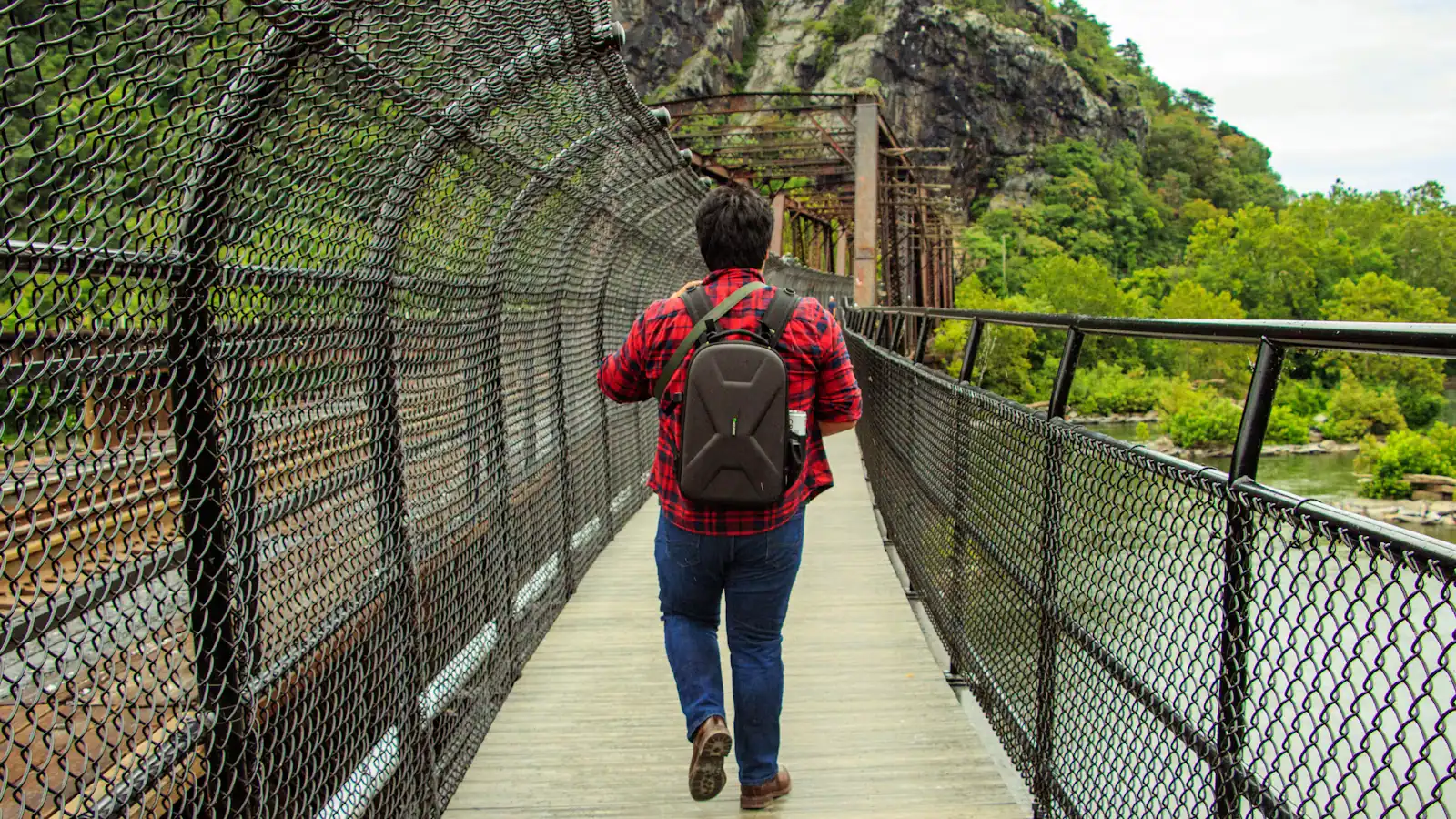
The walkway bolted to a working railroad bridge that carries the Appalachian Trail over the Potomac — closed since July 2026.
10–25 minutesFree to cross when open; the park entrance fee applies to your vehicle
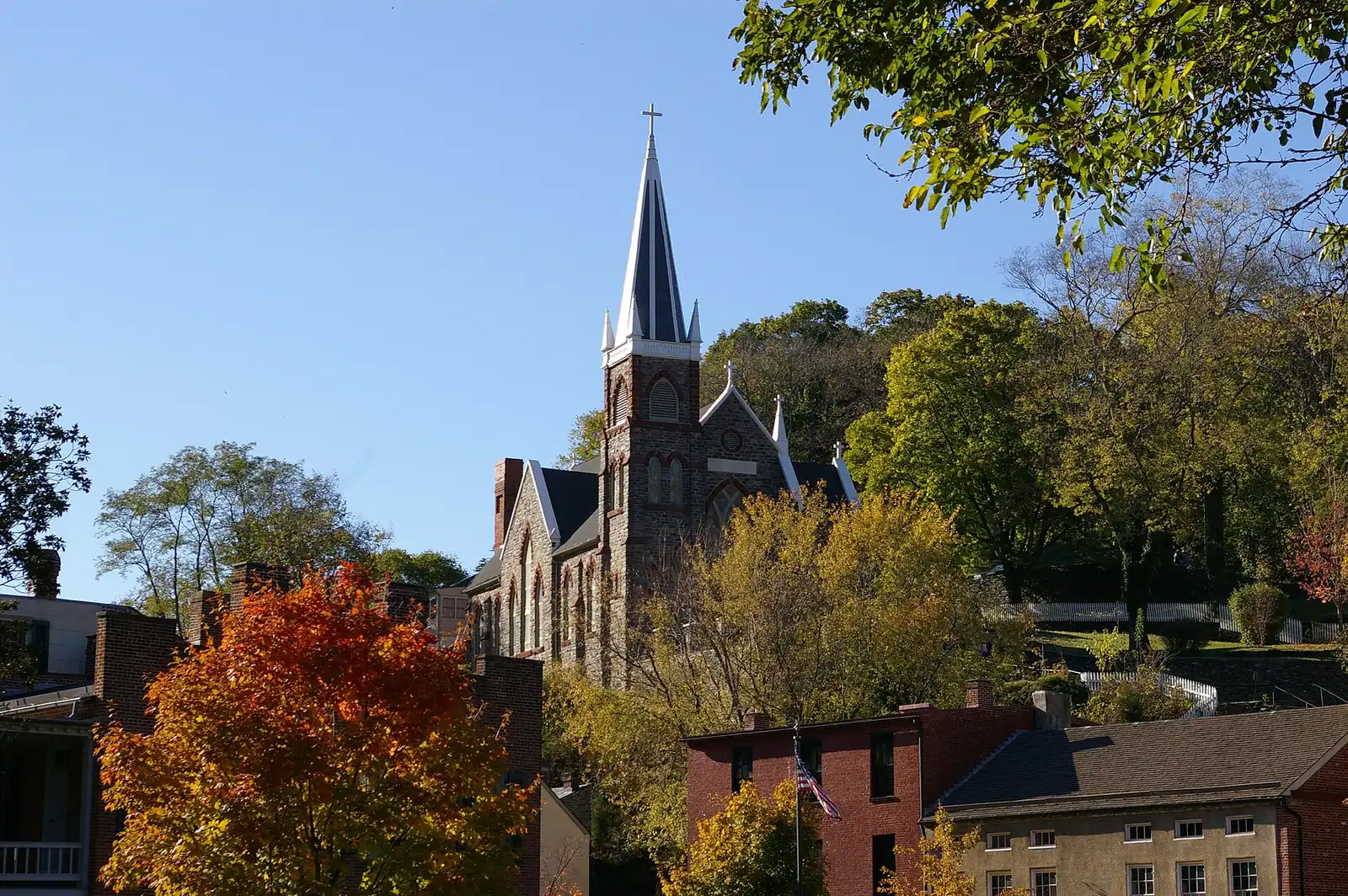
Historic site
The spire in every aerial photograph of this town, and the only church here that came through the war standing.
10–30 minutesFree; the park entrance fee applies to your vehicle but the church charges nothing
Neighbourhood
A separate town on the ridge above the lower town, four times the size of Harpers Ferry, where the rooms and the kitchens actually are.
1–3 hoursFree. Bolivar is a town, not a park site, and carries no entrance fee
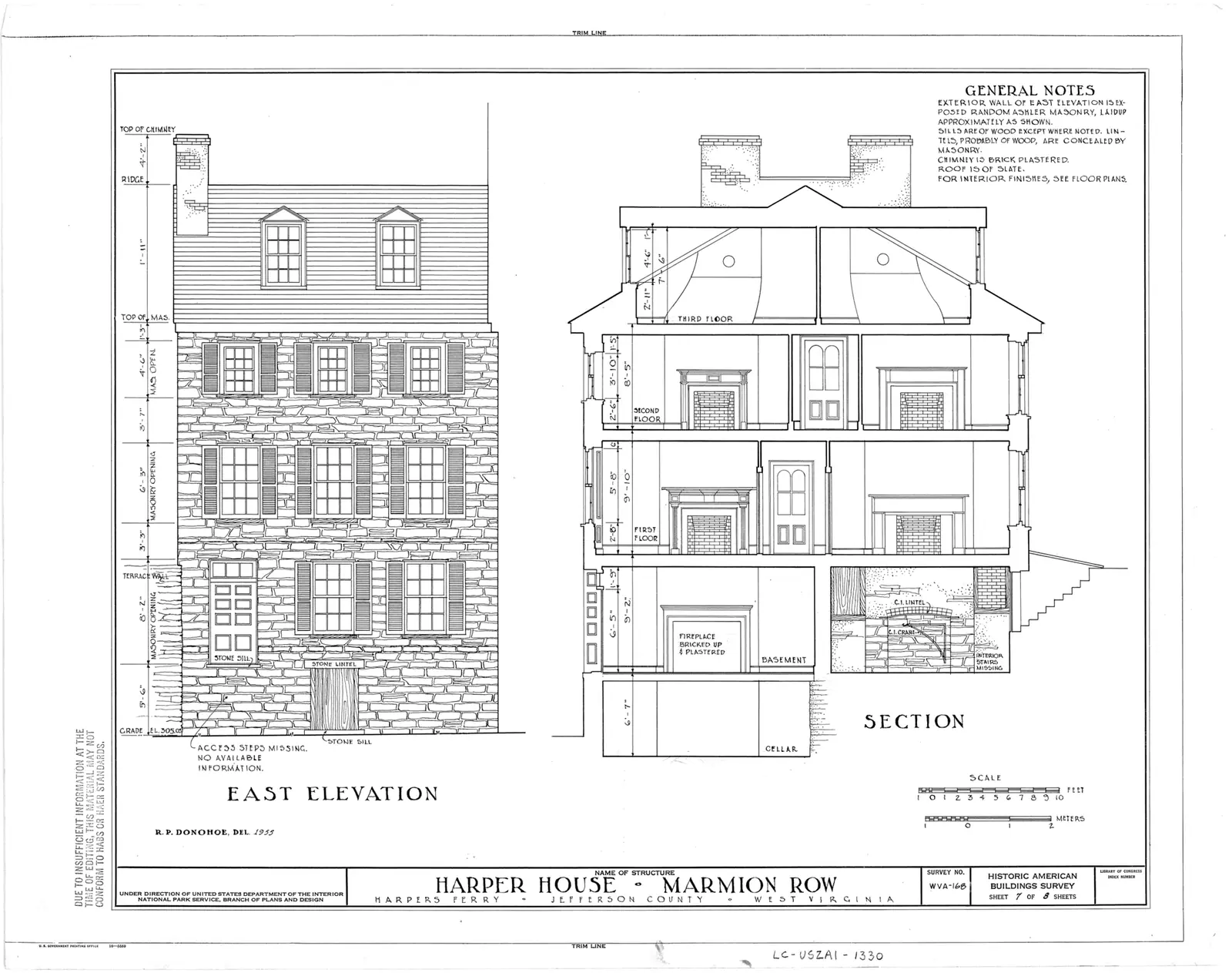
Historic site
The stone house the ferryman never finished, the oldest building in town — and shut for repairs at the moment.
15–40 minutesNo separate charge when open; covered by the park entrance fee
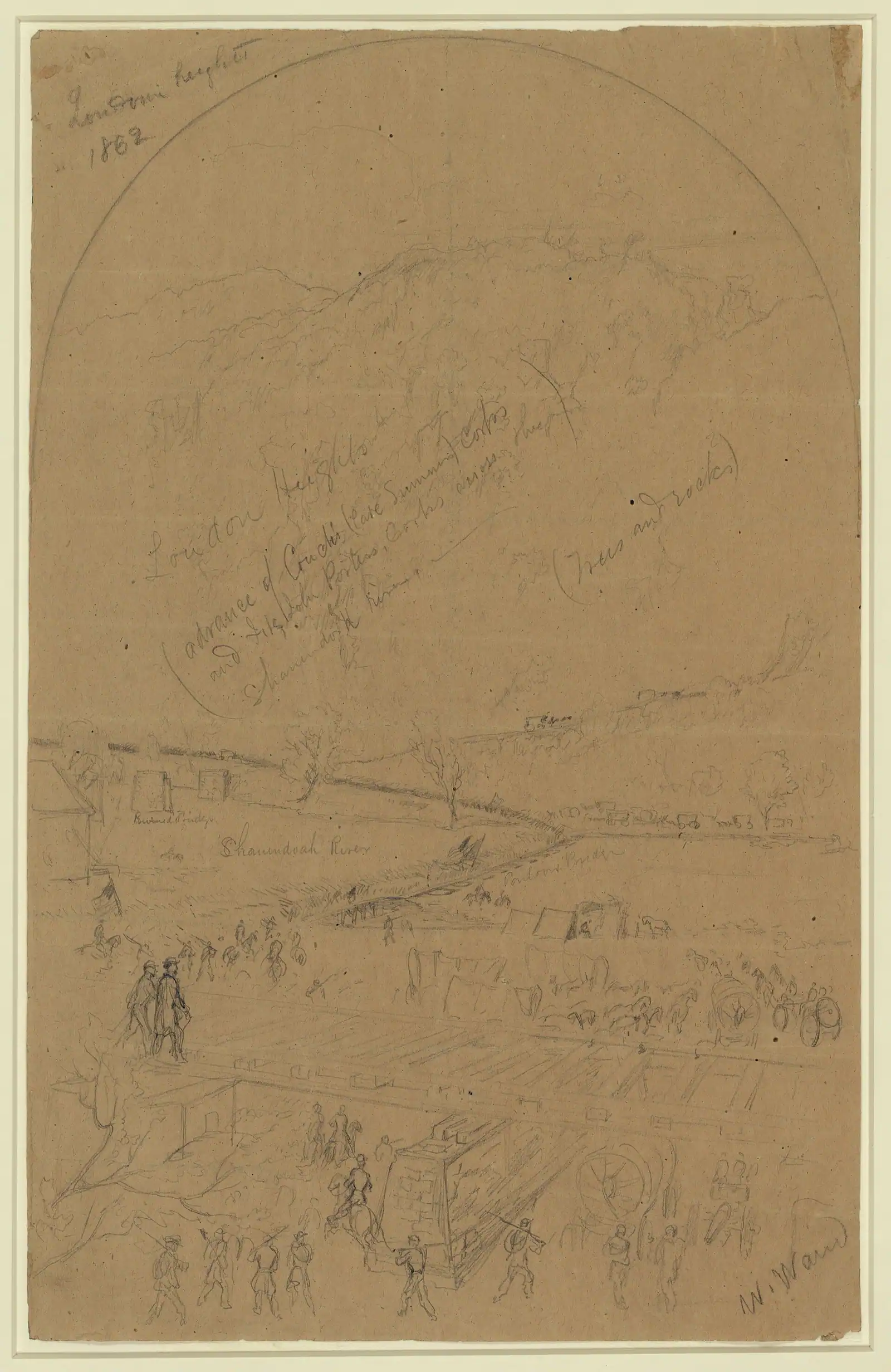
Trail
The Virginia ridge across the Shenandoah: more climbing than Maryland Heights, fewer views, and almost nobody on it.
4–5.5 hoursFree to walk; the park entrance fee applies to your vehicle at the visitor centre
Straight answers
The town is; the national park charges. At the time of writing entrance is $20 per private vehicle, $15 per motorcycle or $10 per person on foot or by bicycle, each valid three consecutive days, with under-16s free. That one fee covers the shuttle, the exhibit buildings, John Brown's Fort, every trail and the ranger programming. The streets, shops and churches of the town and of Bolivar sit outside the boundary and cost nothing.
Walk the town and Bolivar, visit the Appalachian Trail Conservancy centre, watch freight trains cross the river and enter the tunnel, walk the C&O Canal towpath on the Maryland bank, and browse the shops on High Street — none of which is inside the fee boundary. Everything else worth doing is inside the park and covered by a single entrance fee that works out at $10 a head if you arrive on foot.
Yes. The National Park Service waives entrance fees on a handful of days each year across all fee-charging parks, typically including Martin Luther King Jr Day, the opening day of National Park Week in April, Juneteenth, the Great American Outdoors Act anniversary in August, National Public Lands Day in September and Veterans Day. The exact dates change annually, so check the current list. Expect those days to be busy.
Not separately. John Brown's Fort stands in the lower town inside Harpers Ferry National Historical Park, and it is covered by the park entrance fee along with the exhibit buildings and the shuttle that gets you there. There is no ticket, no queue system and no timed entry. It is a single room, it takes about fifteen minutes, and the building has been moved four times since 1859.
Yes. The Conservancy's visitor centre on Washington Street is free to walk into. It sells maps and guidebooks, keeps the numbered album of photographs of thru-hikers who have stopped here, and is staffed by people who know the trail in detail. It is one of the few places in town where a day visitor and someone a thousand miles into a walk end up in the same room.
You can walk into the town without paying, because the shops, streets and churches are outside the park boundary. You cannot use the park without paying: entrance stations cover the visitor center, Bolivar Heights, Maryland Heights, the train station and the river access lot, and the fee for anyone 16 or over arriving on foot or by bicycle is $10 for three consecutive days.
Parking at the national park's Cavalier Heights visitor center is included in the entrance fee you pay for the vehicle, so there is no separate parking charge. The lower town is different: street parking is minimal and largely spoken for, and the few small private lots around the edges set their own prices and fill early. The park's own advice is to park once on Cavalier Heights and take the shuttle.
Arrive by train and walk. The station platform is inside the historic lower town, and on foot the park fee is $10 a head rather than $20 for a car, which makes a solo trip half the price of driving. The catch is the timetable: MARC's Brunswick Line runs weekdays only and mostly in the commuter peak direction, and Amtrak calls once in each direction daily, so plan around a specific train.
Keep exploring
Guide hub
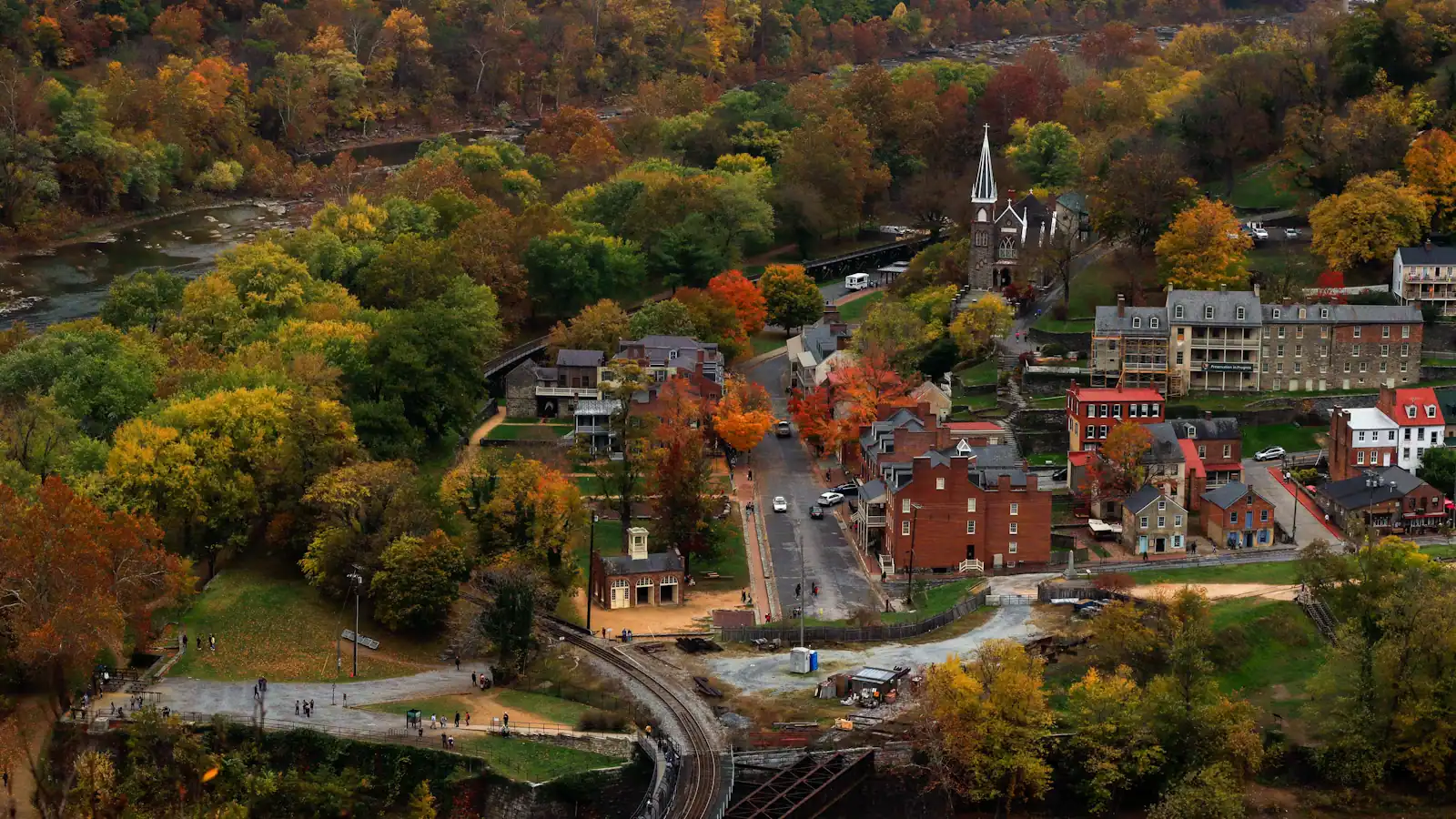
Two hundred and sixty-nine people lived here at the 2020 census. That number is the key to the whole day. Harpers Ferry is not a town with a…
Guide hub
At most national parks the town is outside the gate. Here the town is the park. Harpers Ferry National Historical Park covers roughly 3,660 acres in…
Things to do
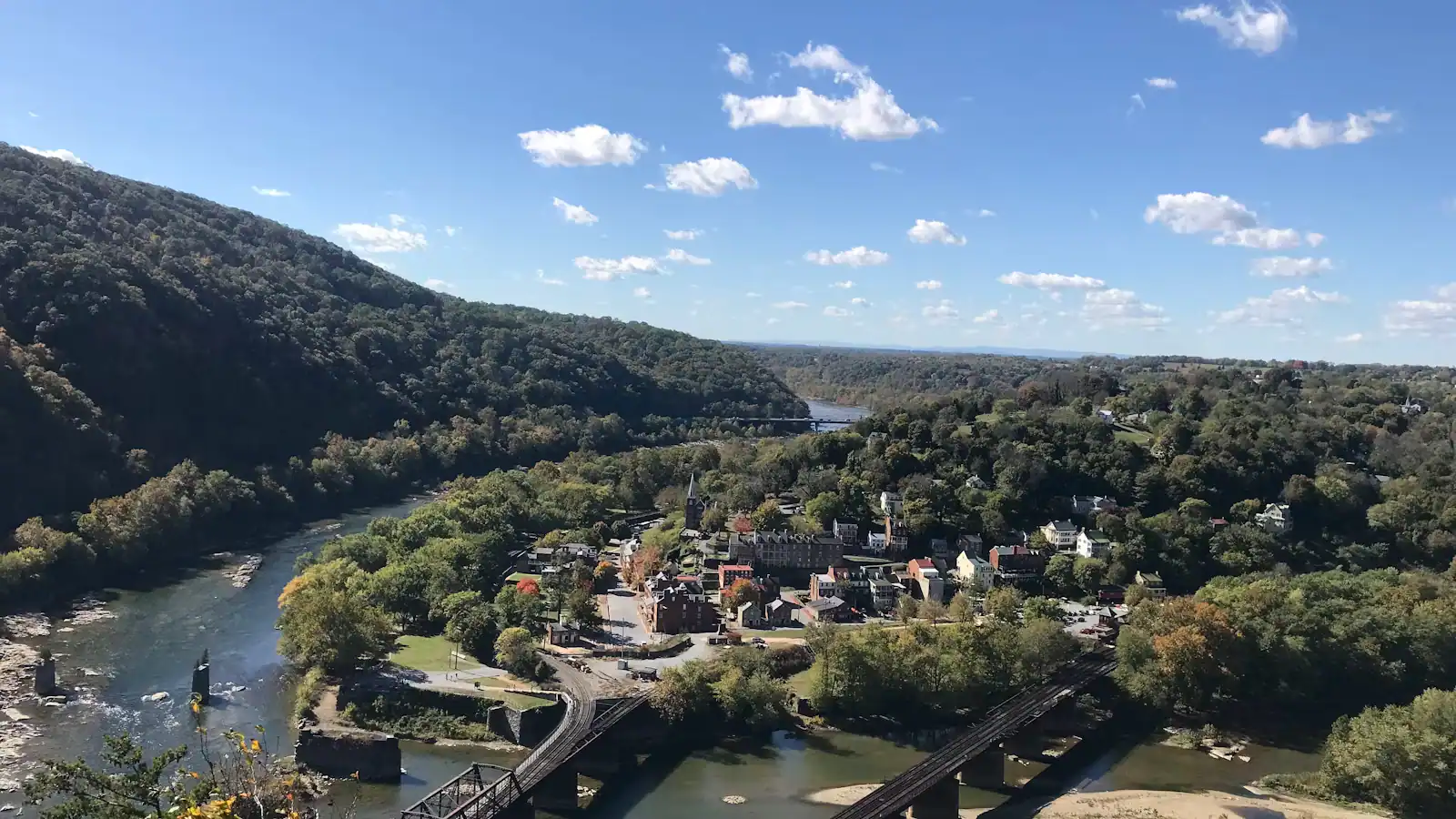
The hiking here is entirely a consequence of the geology, and ten minutes understanding that will save you picking the wrong trail. Two rivers cut…
Things to do
Start with the correction, because it saves an afternoon. The photograph you have seen of Harpers Ferry — the whole town laid out on its spit of…
Plan your trip
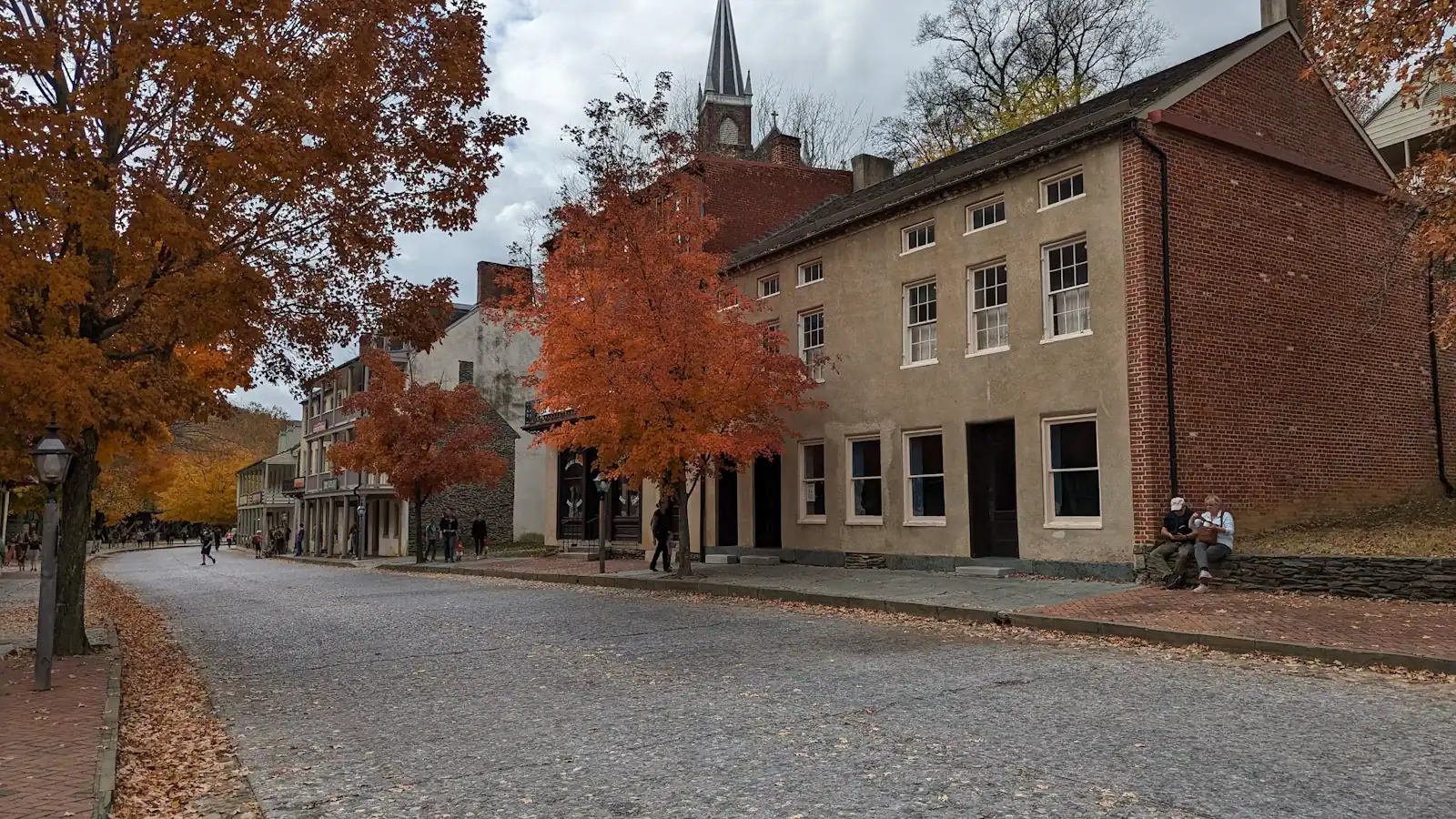
Learn one thing before you set off and the rest of the day looks after itself: you do not drive into the lower town. The streets that John Brown's…
Who it suits
Children do well here, and the reason is not the history. It is that a national park has been laid over a town small enough to walk across in…
Read next
Guide
A town of 269 people where two rivers and three states meet, and most of the streets are a national park. Three unrelated crowds arrive here every weekend. Work out which one you are first.
9 min readPrudence Ashby
Guide
The lower town read in geographical order tells the story backwards. Here is the day arranged chronologically instead, from the armoury grounds at nine to Jefferson Rock at dusk.
9 min readLoretta Sims
Guide
The platform is inside the national historical park. No lot, no shuttle, no hill. The catch is that the commuter timetable runs the wrong way for a day-tripper, and the workaround is worth knowing.
9 min readPrudence Ashby
Guide
The lower town has nowhere to leave a car. Park at 171 Shoreline Drive off US 340, pay at the entrance station, and ride the bus down. The last bus back is the only deadline that matters.
8 min readPrudence Ashby