Skip to content
Menu

A booking made through these earns us a commission from Viator. The price is the same, and the commission had no bearing on what is recommended.

Things to Do

Rafting and Tubing the Shenandoah at Harpers Ferry

Last updated

Rafting and tubing in Harpers Ferry: the Class I-III Staircase section of the lower Shenandoah, when the river runs, what a trip costs and who each one suits.

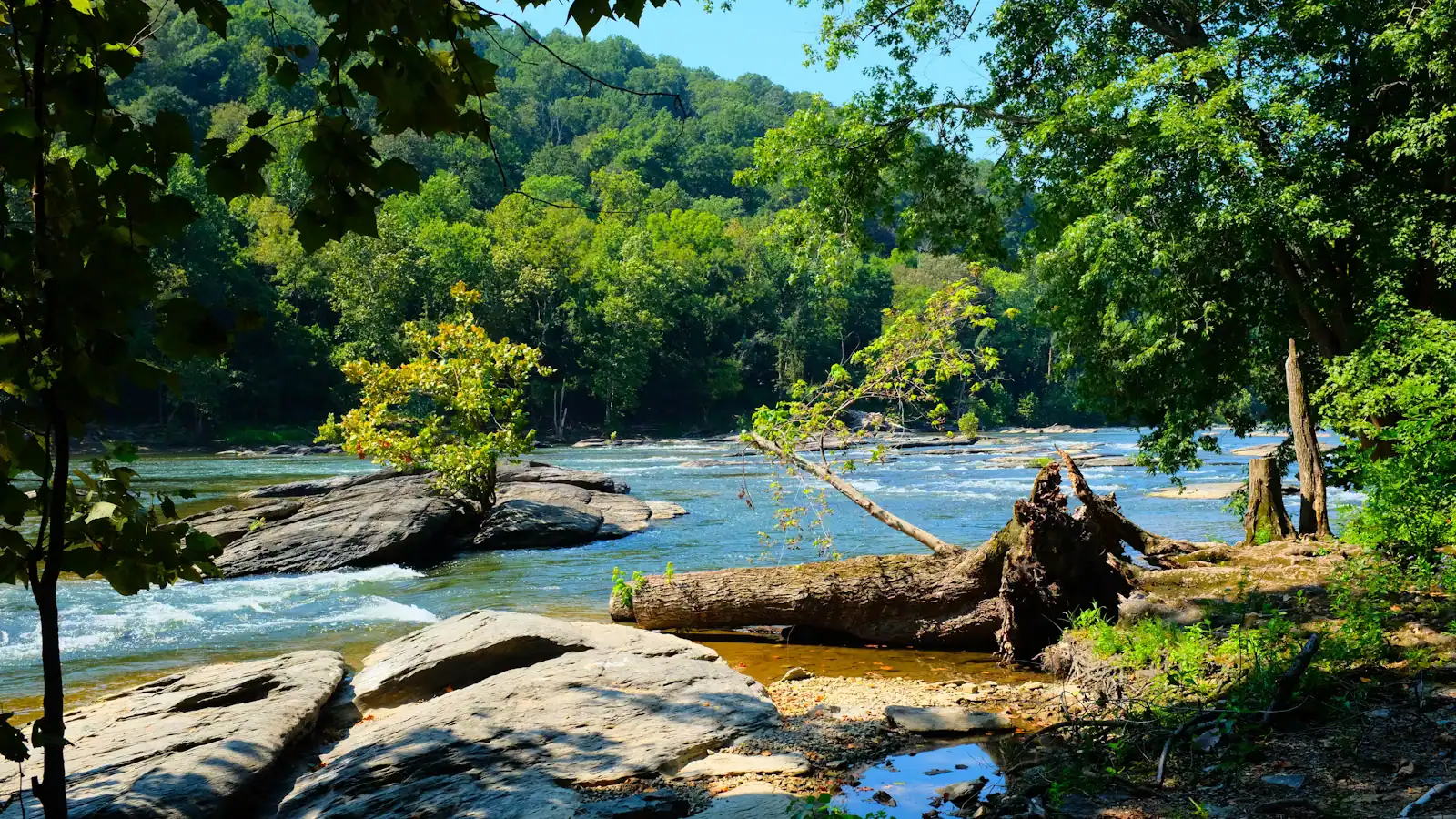
Broken ledges of rock running across a shallow river between wooded banksUnsplash

The rivers are the reason there is a town here, and they are also the only thing in Harpers Ferry you can really book. Almost everything else on this site is free or costs ten dollars at a park gate. The whitewater is a working local industry, and it has been since long before anyone thought of the lower town as a heritage site.

The run itself is the lower Shenandoah below Millville, a few miles upstream of the confluence. Guides call it the Staircase, and the name is literal: the river crosses a series of bedrock ledges in quick succession, each dropping a few feet, and you go down them one after another. It is rated Class I to III, with Bull Falls the hardest single drop on the section. That grading is worth understanding rather than skipping. Class III means real whitewater — waves that break over the tube, a raft that needs paddling rather than steering, and a guide who will brief you on what to do if you come out. It does not mean the Gauley or the Upper Yough. On most summer days this is a river a reasonably fit first-timer with no experience handles perfectly well, and finishes grinning.

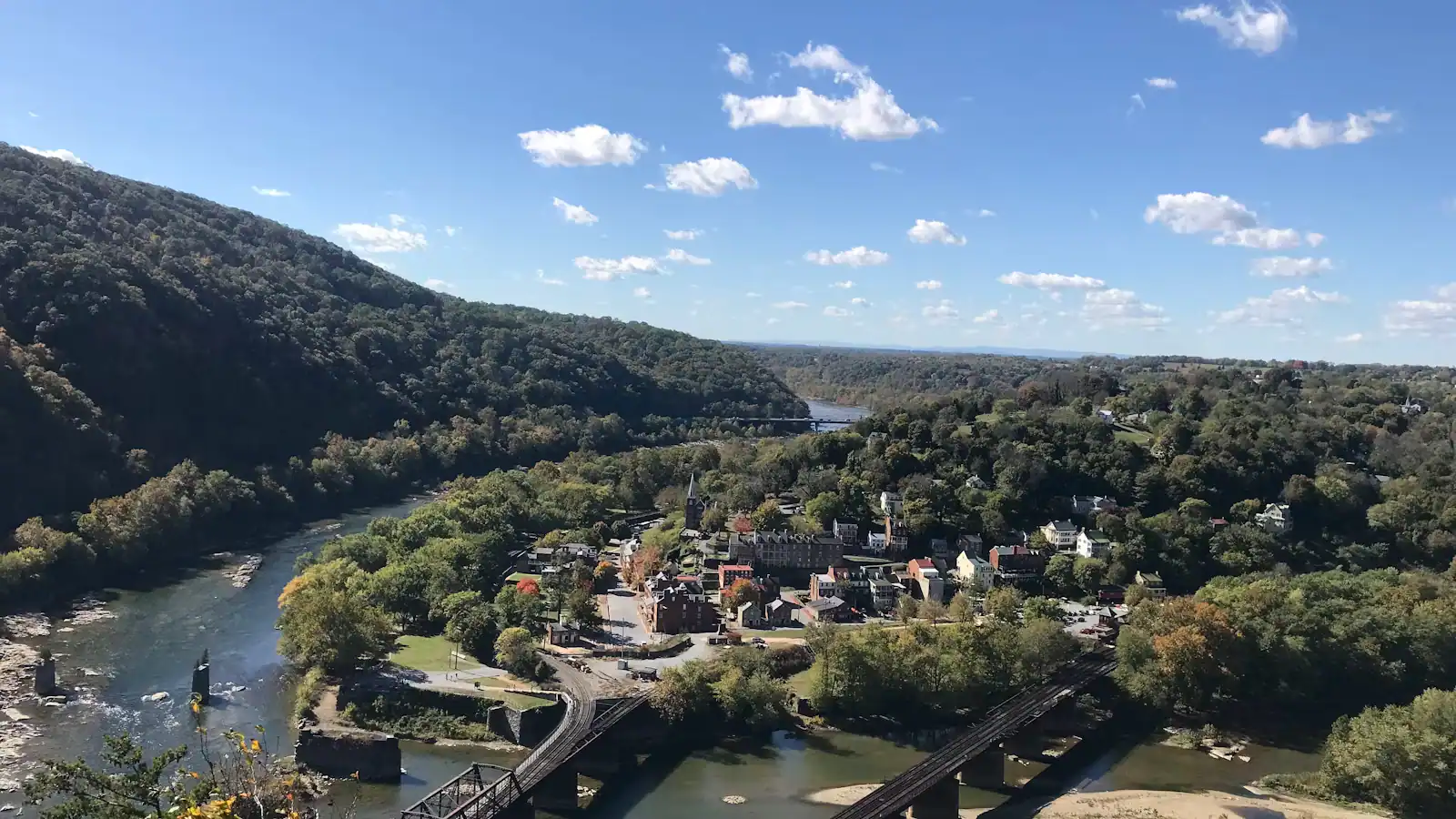
What makes it unusual is the finish. The take-out is at the confluence in the lower town, which means the last ten minutes of a raft trip are spent looking up at Maryland Heights, the railroad bridge and the spire of St Peter's from water level. You float out of a national historical park. There is nowhere else in the mid-Atlantic that ends a river trip like that.

The season runs roughly April to October, and the single most useful thing to know is that it is governed by the gauge and not by the calendar. Spring snowmelt and rain off the Blue Ridge give the biggest water of the year, which is why April and May are the months for people who actually want whitewater. By July the river has dropped into tube flow — slower, warmer, shallower — which is why that is the month for families, funyaks and floating with a cooler strapped to a spare tube. Outfitters read the gauge daily and will move you, upgrade you or call the day off, and the right response to that is gratitude rather than argument.

One more thing before the detail. This is the page where this site actually sells something, and the market is small. Four honest options beat twelve padded ones, so the block below is deliberately short.

Our picks

The ones we would book

  • Editor's Pick

    Guided half-day raft down the Staircase

    Why we chose it

    The trip this town is actually known for: put in above the ledges, work down through them with a guide who knows where today's water is, and take out at the confluence under Maryland Heights. Book it in April or May if you want whitewater rather than scenery. First departure of the day is least likely to be pulled by weather.

  • Best for Families

    Summer tube float when the river drops

    Why we chose it

    July and August, low warm water, three hours of drifting with your backside in the Shenandoah. Suits people who want to be in the river rather than fought by it. Ask the outfitter directly about minimum ages for the week you are coming — they vary by company and by river level. Shoes with heel straps, and cans not glass.

    Tree Tops Zip Line Canopy Tour

    Low Supplier Cancellation Rate

    Best for FamiliesFree cancellationLikely to sell out

    Tree Tops Zip Line Canopy Tour (opens in a new tab)

    36 reviews

    Experience a world-class tree-top zip line canopy tour through the endangered hemlock forest of West Virginia’s New River Gorge. With…

    3 hours

    Prices checked

    from $102.64
  • Best for Beginners

    Inflatable kayaks for a first go at steering yourself

    Why we chose it

    Funyaks put you in charge of your own boat on water forgiving enough to make that a good idea. You get the ledges one at a time with a guide alongside rather than a raft captain calling strokes, which is a genuinely different and more absorbing day. Best in June and early July, when the river is neither pushy nor bony.

  • Small Group

    Kayak instruction on a ledge river

    Why we chose it

    The Staircase is an unusually good teaching river: short features with flat recovery pools between them, close to the bank, and rarely committing. A half or full day of instruction here is worth more than the same money spent on a guided float, and it is the one product in this market that sends people home with a skill.

    New River Gorge Jeep Tour (Half Day)

    Likely to Sell Out

    Small GroupLikely to sell outSmall group

    New River Gorge Jeep Tour (Half Day) (opens in a new tab)

    22 reviews

    Leave the pavement behind and explore America’s newest National Park by Jeep! In the heart of the Appalachian Mountains, the New River…

    4 hours

    Prices checked

    from $465
  • Best Value

    An early-season trip on high water

    Why we chose it

    April and May carry the biggest water of the year off Blue Ridge snowmelt, and the town is still quiet enough that the shuttle queue has not started. The trade-off is cold water and a schedule that moves on the gauge. Pack for being wet at sixty degrees and treat a rescheduled departure as ordinary rather than as a problem.

    Fayette Station Rapid and New River Gorge Bridge

    White Water Rafting

    Best ValueFree cancellationLikely to sell out

    Lower New River Whitewater Rafting Trip (opens in a new tab)

    188 reviews

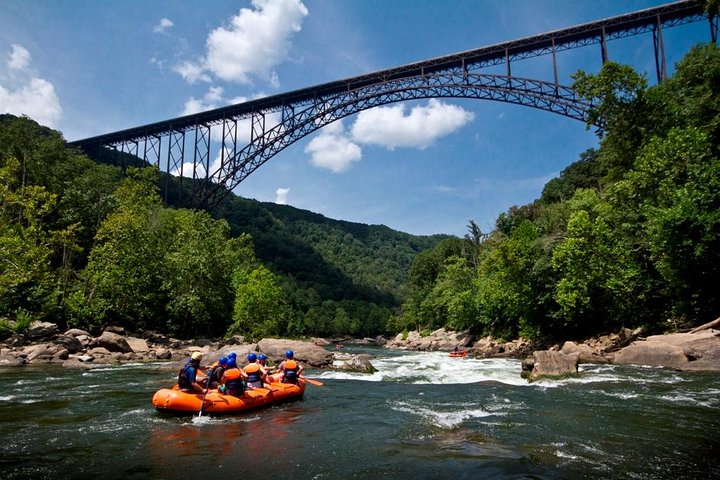
    With the help of an expert guide, your crew will navigate the most exciting stretch of the New River. The Lower New is one of the most…

    5 hours

    Prices checked

    from $153.34

What the Staircase actually feels like

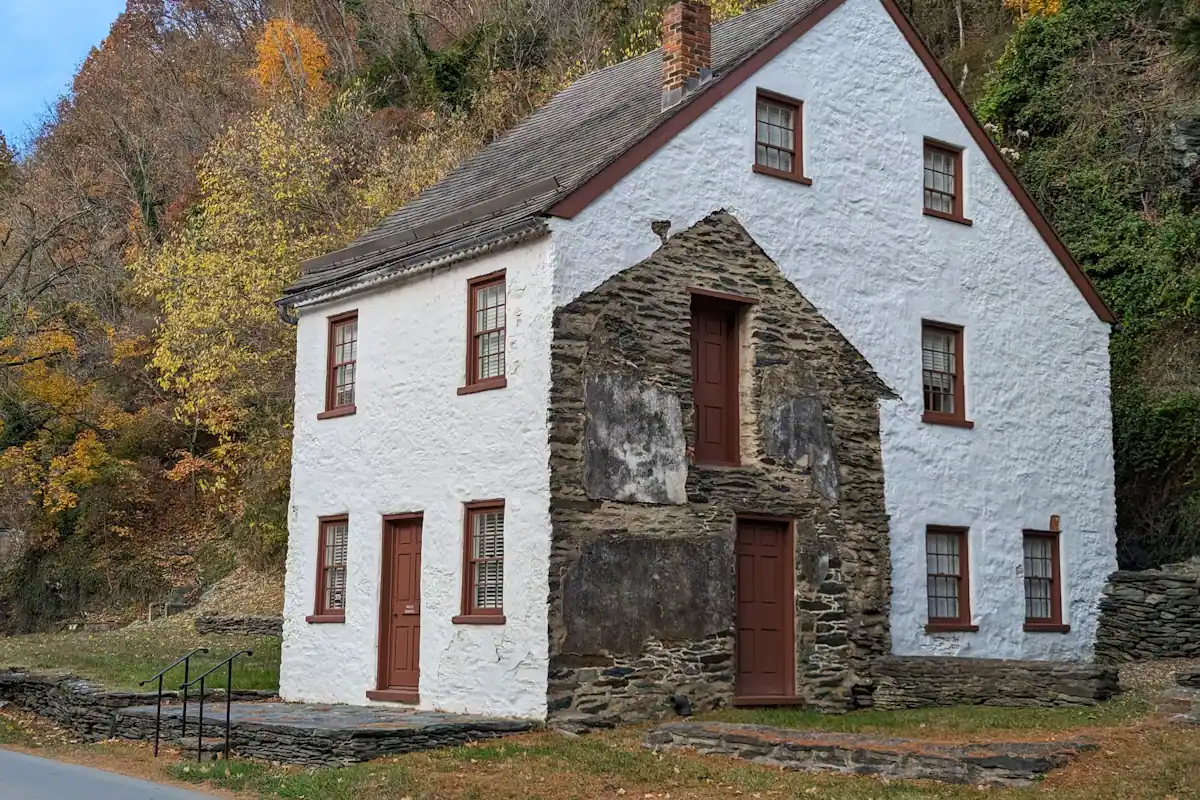
A whitewashed stone-walled house on a steep bank above the water, its garden held up by a dry stone retaining wallUnsplash
A whitewashed stone-walled house on a steep bank above the water, its garden held up by a dry stone retaining wall

A bedrock ledge river behaves differently from a river of boulders and drops, and it is worth knowing what you are getting into.

The ledges run across the channel in roughly parallel lines, so the river does not meander through obstacles — it steps down over them. Guides will point out named features as you go: the Needles, where the water threads between ribs of rock, and Bull Falls, the biggest single drop on the section and the one the photographers sit above. Between them are flat stretches where nothing happens at all and you can look up at the ridge.

That rhythm is what makes the run so forgiving as an introduction. You get a burst of whitewater, then a minute or two to sort yourself out, then another. Nothing is continuous, nothing is long, and nothing is remote — you are never far from a bank.

In April the ledges are washed out and the whole thing runs faster and pushier, with bigger waves and fewer rocks showing. In August the same ledges are exposed and the run becomes technical and bony, which is when outfitters switch people into inflatable kayaks, or onto tubes, or onto the Potomac instead. Same river, entirely different day, three months apart.

Wear shoes that stay on your feet. Bedrock ledges are hard, and a bare foot on one at the wrong moment is the injury that actually happens here.

Book the water, not the date

When to go

This is the advice that separates a good trip from a disappointing one, and almost nobody follows it.

April and May. Highest water of the year, off snowmelt and spring rain in the Blue Ridge. The commercial season opens on the gauge rather than on a fixed date, so an early-April booking can be moved at short notice. Water is cold, wetsuits may be advised, and the whitewater is the real thing. If you came for rapids, come now.

June. The transition month and often the sweet spot: water still moving, air warm enough to enjoy being wet, and the school-holiday crowds not yet at full strength.

July and August. Low, warm and slow. This is tube season, funyak season and family season, and it is when the local market has the most inventory. It is also the season of afternoon thunderstorms that build fast over the ridge and pull outfitters off the water at short notice.

September and October. The quiet half of the good weather. Air in the sixties and seventies, water still warm from summer, humidity broken, and colour coming onto the ridges from the middle of October. Fewer trips run as the season winds down, so book rather than turn up.

November to March. Commercially closed. The river is still there and it is not a beginner proposition.

Rain upstream changes everything within a day, in both directions. Ring the outfitter the morning of your trip rather than the week before.

Tubing, and who it is genuinely for

Tubing here is not a watered-down raft trip. It is a different activity with a different appeal, and confusing the two is how people end up bored or terrified.

A tube trip is slow. You sit in an inner tube with your backside in the river, you drift, and the current does the work. Three hours can cover a surprisingly short distance. That is the point: it suits people who want to be in the water on a hot day rather than people who want to be thrown around by it. Groups tie together, somebody brings a tube for the cooler, and the afternoon disappears.

It needs low, warm water, which is why the season is effectively July and August and why an outfitter will cancel a June tube trip that they would happily run as a raft. It also needs sun. A cloudy seventy-degree day in a wet tube is colder than it sounds.

Two practical points that come up constantly. Footwear: you will be standing on bedrock and gravel to get in and out, and flip-flops come off. Wear something with a heel strap. And glass is banned on every outfitter's river trip in this valley — bring cans if you bring anything.

If you have children under about eight, ask the outfitter directly what they run rather than assuming. Minimum ages and swimming requirements vary between companies and between river levels, and the honest answer on any given week comes from them, not from a website.

What it costs and what is included

What it costs

Prices move with the season and with the company, so treat everything here as a shape rather than a quote, and confirm before you book.

The measured median across the bookable inventory reachable from Harpers Ferry sits at roughly $60 a head. That is a median across everything — half-day guided rafting, tube rentals, funyak trips, kayak instruction, a handful of walking tours — rather than the price of any one thing. Guided whitewater sits above it. Tube hire sits below it. Multi-hour instruction and private trips sit well above.

What is normally included: the craft, paddles, a personal flotation device you are expected to wear, a guide on guided trips, and the shuttle between the put-in and the take-out. What is normally not: transport to the outfitter, food, a wetsuit in cold months unless stated, and anything waterproof for your phone.

Two things worth paying for. A guided trip rather than a rental, if it is your first time on this river — guides know where the ledges are at today's level, which is not where they were last week. And an early departure, because the afternoon thunderstorm risk in July is real and the first trip of the day is the one least likely to be pulled.

One thing worth knowing about money in general here: Harpers Ferry National Historical Park itself is cashless. That does not govern the outfitters, who are separate businesses, but it is a reasonable signal to bring a card rather than a roll of notes.

Book it

Everything else we track

A booking made through these earns us a commission from Viator. The price is the same, and the commission had no bearing on what is recommended.

Sharing, or having it to yourselves

Most of what is bookable here sells two ways, and the cheaper one is not always the cheaper one. A shared departure is priced per person; a private booking is priced for the party, so the arithmetic flips somewhere around four to six people — and it is the only version where you pick the time. Check the party size each listing actually covers before you decide.

  • Book a seat

    A shared departure, priced per person. The cheapest way to do this for one or two people.

    Gravity New River Gorge Zip Lines

    Weather Dependent - Moderate

    Free cancellation

    Gravity New River Gorge Zip Lines (opens in a new tab)

    54 reviews

    If you have a need for speed, check out this six-zip racing course that zigs and zags across the ridgeline of a mountain bowl. You’ll soar…

    3 hours

    Prices checked

    from $113.24
  • Book the whole thing

    Priced for the party rather than the seat, and you choose the departure time.

    New River Gorge Side by Side Family Tour

    Extreme Sports

    Likely to sell outPrivate tour

    New River Gorge Side by Side Family Tour (opens in a new tab)

    49 reviews

    Bring the kids for an awesome family experience! Our Side by Side's seat up to 4 guests and allow those as young as 8 to take part in a…

    3 hours

    Prices checked

    from $435

Two rivers, two completely different days

How they compare

People book "Harpers Ferry rafting" and land on one of two quite separate experiences. Know which you want.

Lower ShenandoahPotomac above and below town
CharacterBedrock ledges in quick succession — the StaircaseWider, slower, broken by long flat pools
GradeClass I–III, Bull Falls the hardest dropMostly easier water, a few named rapids
Best forWhitewater rafting, guided funyaks, spring tripsTubing, flat paddling, families, low-water summer
FinishThe confluence in the lower townVaries by outfitter
Season peakApril and May on high waterJuly and August on low, warm water

The Shenandoah is the one the industry is built on. Trips put in near Millville, work down through the ledges and finish under the bridges at the confluence. The Potomac is the broader, gentler water, and it is where a good deal of the tubing happens when the Shenandoah is too low or too busy.

A guided trip will often combine them: down the Shenandoah, round the point where the two rivers meet, and a short stretch of the Potomac to the take-out. That is the classic version and the one most first-timers should book.

Whichever you end up on, you are in a gorge with ridges rising to roughly 1,448 feet directly above you. The scenery is not incidental to the trip — for a lot of people it is the trip, and the rapids are a bonus.

The things that actually go wrong

Before you book

The rivers look benign from The Point. They are not, and the difference between a good day and a bad one here is almost always a decision made on the bank.

Do not swim at the confluence. People do, and the bottom of the Shenandoah where it meets the Potomac has current stronger than it appears, uneven bedrock, and levels that swing hard with rain that fell somewhere you cannot see. The number of other people doing it is not evidence that it is safe.

Accept a cancellation. Outfitters here call trips off for high water, low water and thunderstorms, and they are reading a gauge and a radar you are not. A company that runs whatever the river is doing is not the one to book.

Wear the vest they give you, properly done up. On a Class III ledge river the swim is short and the rock is hard.

Thunderstorms build fast over the Blue Ridge in summer, usually in the afternoon. Morning departures are less exposed to it.

Shoes stay on. Sandals with heel straps or old trainers. The one injury that recurs here is a foot on a ledge.

Ticks are widespread in the grass at every put-in and take-out, and tick-borne illness is a real local concern. Check afterwards.

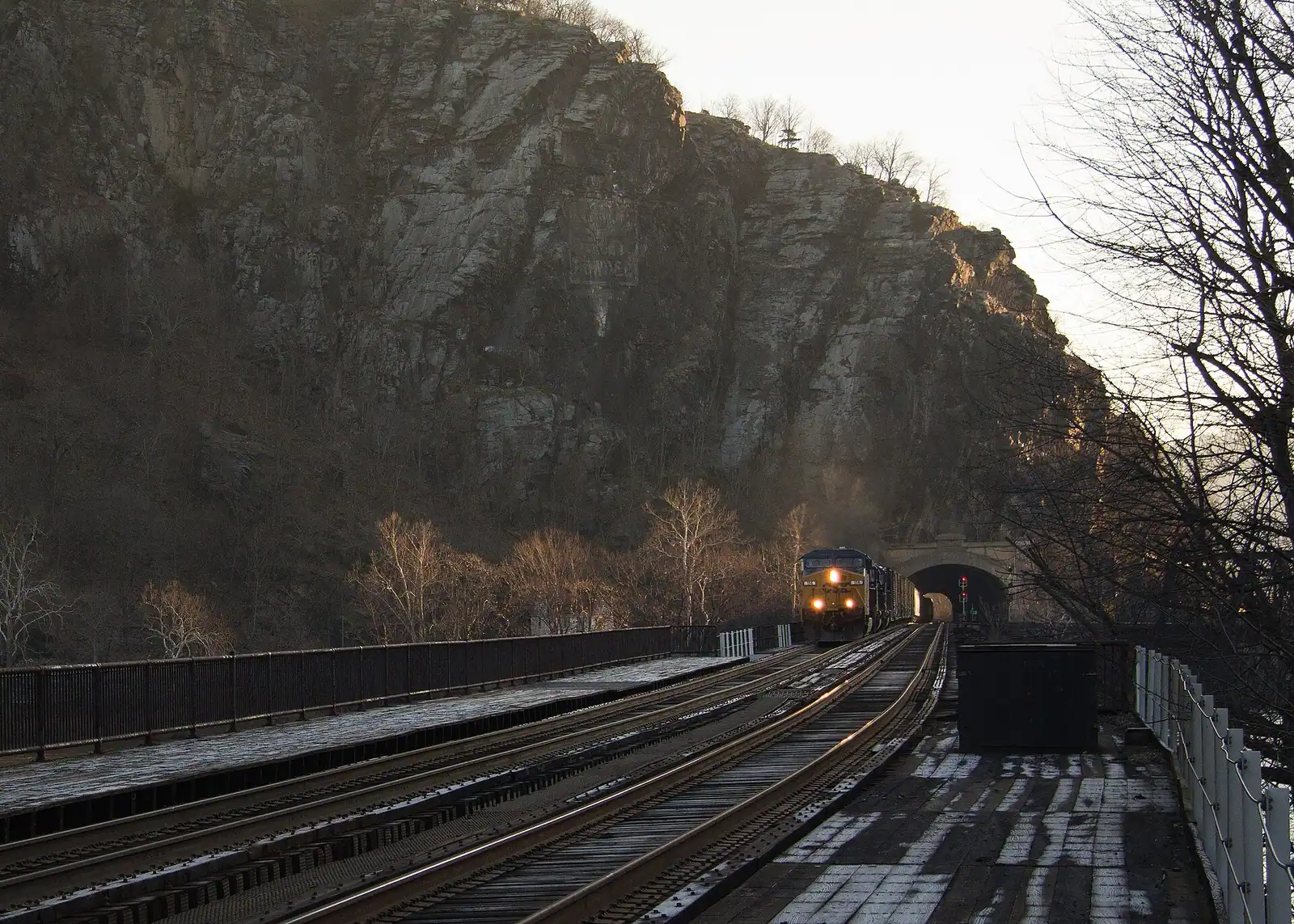
And keep off the railroad. The bridge and the tracks through the lower town carry active freight daily, and the footbridge beside them exists precisely so nobody has to be on them.

On the ground

Where to go

Every place below has its own page — hours, parking, what it costs and what to expect when you get there.

  • A small town of pale rooftops and a church spire seen from above, wrapped by wooded hills and river water

    Park

    Harpers Ferry National Historical Park

    Three thousand acres across three states, with no gate and no loop road — because most of the park is a working town.

    4–10 hoursAround $20 per private vehicle, $15 per motorcycle or $10 per person on foot, valid three consecutive days

  • A narrow street of nineteenth-century shopfronts running uphill between stone kerbs

    Neighbourhood

    Lower Town Harpers Ferry

    Two streets and a flight of stone steps, all of it inside a national park, with the high-water marks still on the walls.

    2–5 hoursPark entrance fee applies; National Park Service exhibit buildings are then free to enter

  • A long steel bridge carrying a walkway across a wide river, with a forested ridge rising behind it

    Viewpoint

    Free

    The Point

    Ninety seconds from the shuttle stop, level the whole way, and the only spot where the town's geography explains itself.

    10–30 minutesFree; covered by the park entrance fee already charged on your vehicle

  • A wide river bending away between steep wooded slopes in full leaf, seen from high ground

    Water feature

    The Potomac River

    The larger of the two rivers, the one that cut the gap through the Blue Ridge, and legally Maryland right up to the West Virginia bank.

    0.5–2 hoursFree to look at; reaching the banks inside the park requires a park entrance fee

  • Broken ledges of rock running across a shallow river between wooded banks

    Water feature

    Free

    The Shenandoah River

    Class I to III through the Staircase, Bull Falls at the bottom, and the only thing in this town with much to book.

    2–5 hoursFree to look at and walk beside; guided rafting, tubing and kayak trips are priced by the outfitter

  • A stone-walled building on a steep bank with a dry stone retaining wall holding up the ground beside it

    Historic site

    Virginius Island

    A vanished factory town on the Shenandoah: mill walls, a canal race and 180 residents, all of it taken by flood.

    0.5–1.5 hoursIncluded with park entrance; no separate charge for the island

Straight answers

Questions people actually ask

How hard is the whitewater at Harpers Ferry?

The commercial run on the lower Shenandoah is rated Class I to III, with Bull Falls the hardest single drop. That means real whitewater on bedrock ledges, but short features with flat recovery water between them and never far from a bank. A reasonably fit first-timer with no experience handles it on a normal summer day. April and May run faster and pushier off spring snowmelt.

When is the rafting season in Harpers Ferry?

Roughly April to October, but the river decides rather than the calendar. Spring snowmelt and rain off the Blue Ridge give the highest water, so April and May are the whitewater months. By July the Shenandoah has dropped into tube flow — slower, warmer, shallower. Outfitters read the gauge daily and will move, upgrade or cancel trips at short notice, particularly around summer thunderstorms.

Can you go tubing in Harpers Ferry?

Yes, and it is effectively a July and August activity because it needs low, warm water. A tube trip is slow by design: you drift with the current for a couple of hours rather than paddling through rapids. Wear shoes with heel straps, because you will be standing on bedrock getting in and out, and bring cans rather than glass, which outfitters here ban.

How much does rafting cost in Harpers Ferry?

Rates move with the season and the company, so confirm before booking. The measured median across all bookable inventory in this market is around $60 a head, which spans tube rentals at the lower end and guided whitewater and instruction at the upper. A trip normally includes the craft, paddles, a flotation device and the shuttle between put-in and take-out, and normally excludes food and wetsuit hire.

Can you swim in the rivers at Harpers Ferry?

Swimming at the confluence is a bad idea regardless of how many people you see doing it. Levels swing hard with rain that fell upstream where you cannot see it, the current where the Shenandoah meets the Potomac is stronger than it looks, and there are ledges, strainers and sharp bedrock through the Staircase section. Go with a licensed outfitter and wear the vest they give you.

What should you bring on a Shenandoah river trip?

Shoes that stay on your feet — sandals with a heel strap or old trainers, never flip-flops, because you will stand on bedrock. Sunscreen, because the gorge offers little shade at midday. A waterproof case if you want your phone at all. Cans rather than glass. In April and May, layers for cold water. Leave anything you would mind losing in the car.

What happens if the river is too high or too low?

The outfitter moves you. High water in spring can push a trip to a different section or a different day; low water in late summer can switch a raft booking to inflatable kayaks or tubes, or onto the Potomac instead. Thunderstorms pull trips off the water at short notice in July and August. A company that runs regardless of the gauge is the wrong company.