Skip to content
Menu

A booking made through these earns us a commission from Viator. The price is the same, and the commission had no bearing on what is recommended.

Things to Do

Shopping in Harpers Ferry: Small Shops, Short Streets and Where the Antiques Really Are

Last updated

The short retail streets of Harpers Ferry, the trail outfitters, a candy shop arranged by century — and why real antiquing means driving to Shepherdstown.

A narrow street of nineteenth-century shopfronts running uphill between stone kerbsUnsplash

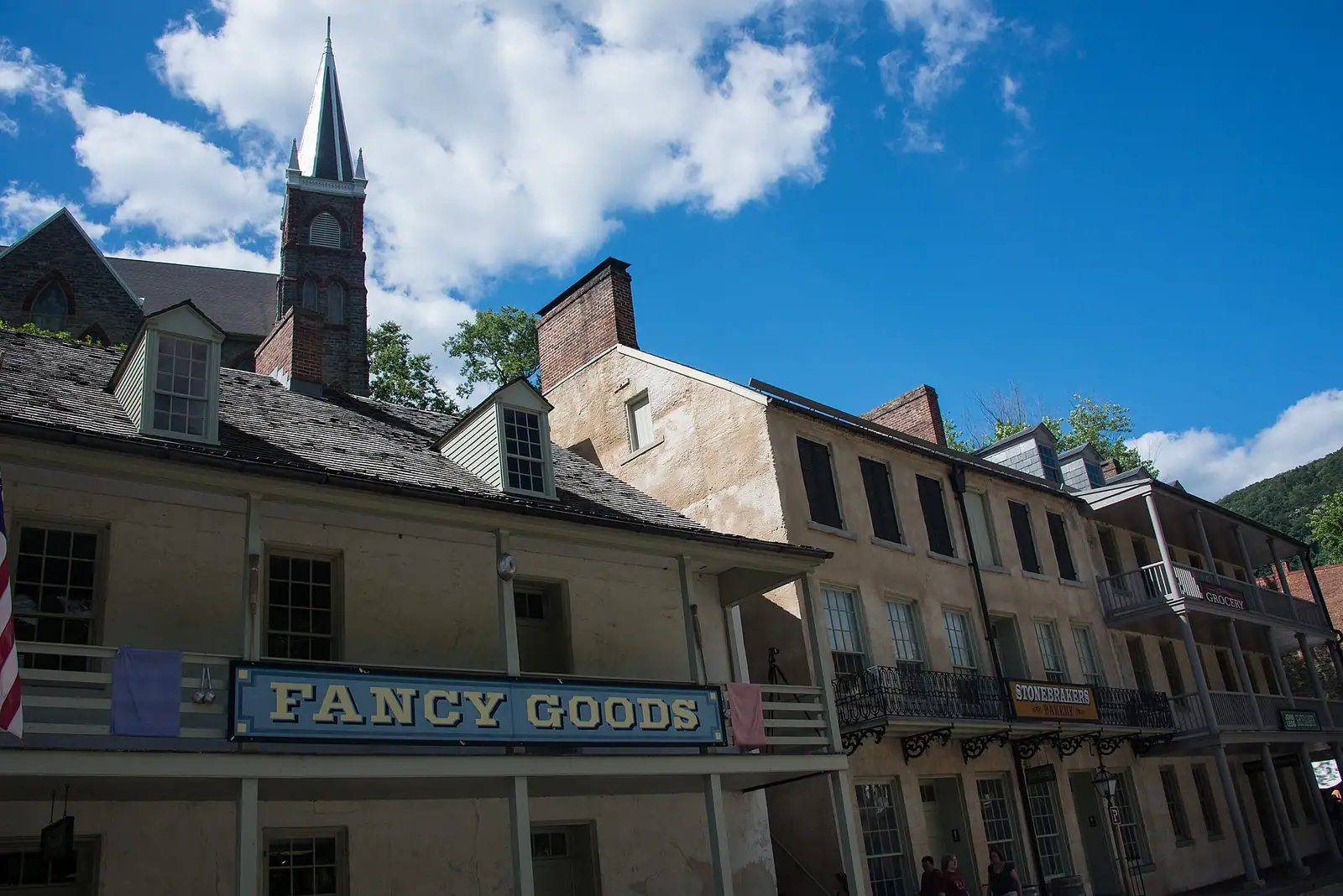
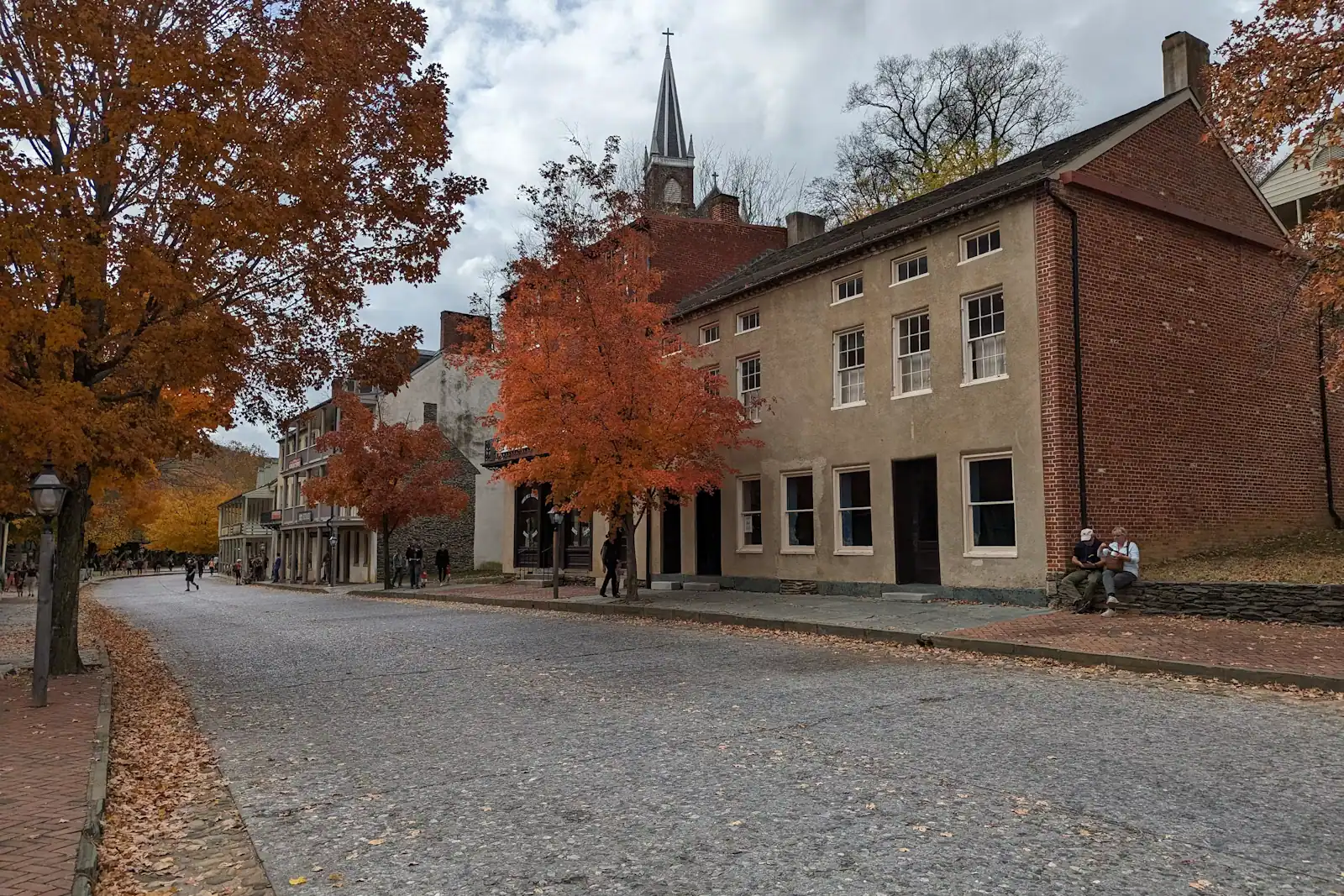
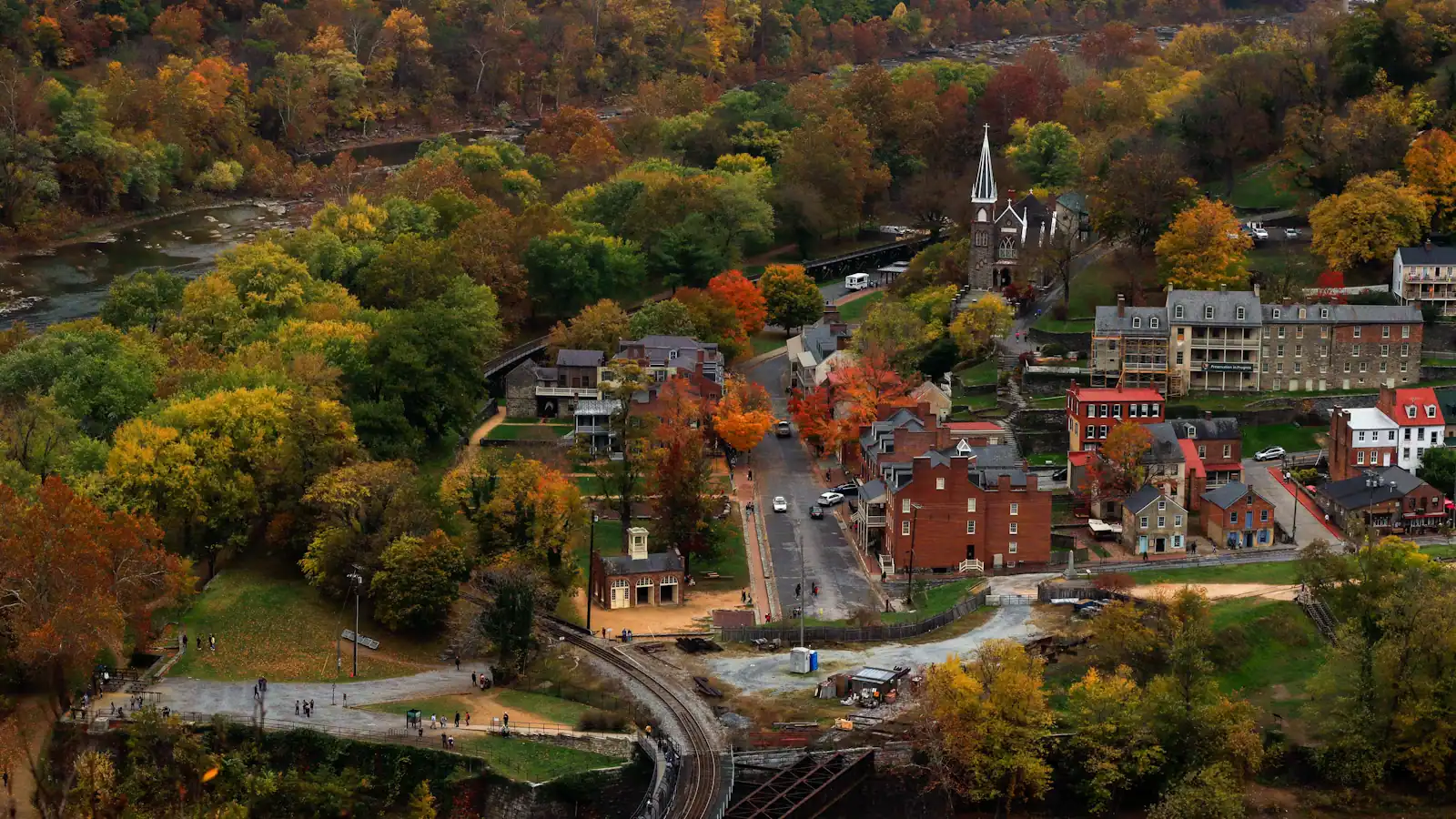
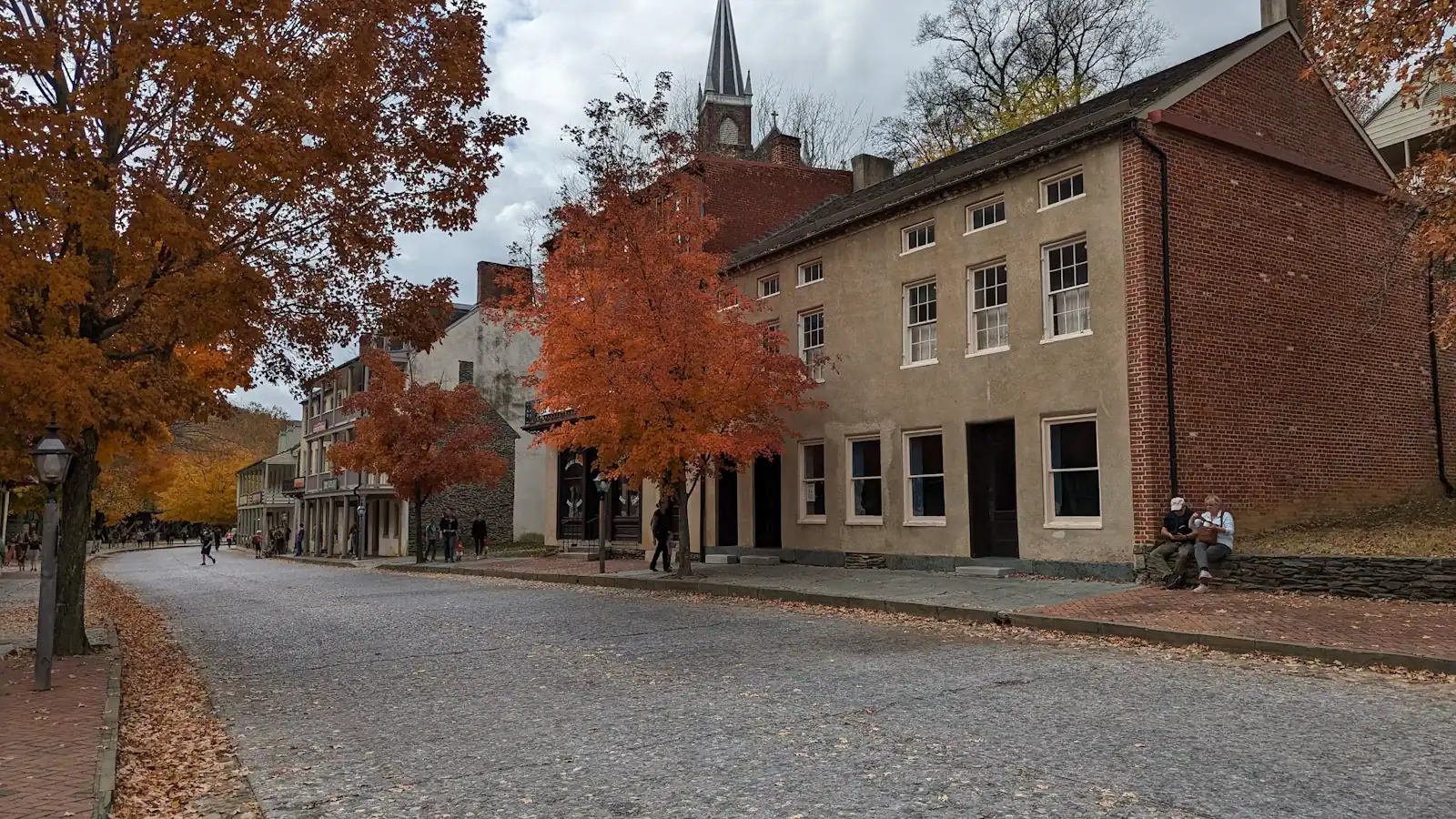
Set the scale first. The municipality has 269 residents. The commercial frontage runs a couple of hundred yards along Potomac Street and up the bottom of High Street, in buildings put up before the Civil War, on a slope, inside the boundary of a national park, on ground that has been under water repeatedly — the record crest is 36.5 feet, set in March 1936, and the river came through again in 1942 and 1996. Nothing about that produces a shopping district, and this page is not going to pretend one exists.

What it produces instead is quite specific and rather good: a short row of small, owner-run specialist shops that survive because four hundred thousand people a year walk past the door, plus an outfitting trade that exists because the Appalachian Trail comes down the main street and thru-hikers arrive needing socks, fuel and a resupply. The units are tiny because the buildings are. The stock is light, portable and sells to people carrying it uphill afterwards. And every ground-floor business here knows what a flood watch on the Shenandoah gauge means, which is why you will not find heavy antique furniture at the bottom of the hill.

The best single shop in town is a candy shop, which sounds like a joke until you are in it. True Treats, at 144 High Street, arranges confectionery by historical period — ancient world, colonial, Civil War era, early twentieth century — with the history of each printed alongside, and it was founded by a candy historian who writes books about the subject. In a town that interprets everything, somebody has interpreted sweets. It is a museum you are allowed to eat.

On antiques, the honest answer disappoints a certain kind of visitor and saves them an afternoon. Harpers Ferry has second-hand books, prints, reproduction militaria and craft, which is antique-adjacent rather than antique. The nearest concentrations of genuine dealers are out of town: Shepherdstown twelve miles north, Charles Town eight miles west, and Frederick in Maryland about twenty miles east, which has the largest cluster of the three. Build a morning here and an afternoon there rather than expecting both in one street.

One timing rule governs all of it. Retail in the lower town lives off the shuttle, and when the last bus goes — 7 p.m. in summer, 5.30 p.m. in winter — the customers go with it.
Why the shops are the size and shape they are

Three constraints shape retail here and all three are visible from the street.

The buildings. These are 1830s to 1850s commercial premises on a hill, with narrow frontages, low ceilings, awkward stairs and doorsteps. Nothing can be knocked through. A shop that needs three thousand square feet and a loading bay cannot exist in the lower town, which is why none does.

The water. The Shenandoah and the Potomac both rise fast with rain upstream, and the lower town has been flooded through its ground floors many times over — the March 1936 crest of 36.5 feet is the record, with 33.8 feet in October 1942 and serious damage again in 1996. Businesses at the bottom of the hill plan for it. That favours stock that can be carried up a staircase in an afternoon: books, prints, sweets, clothing, small goods. It disfavours exactly the heavy, low-value-per-cubic-foot merchandise that "antiques" usually means.

The park. A large part of the historic lower town sits inside Harpers Ferry National Historical Park, and commercial premises in that area operate under arrangements with the Park Service rather than as ordinary high-street tenancies. The practical consequences for a visitor are modest but real: signage is restrained, opening is conservative, and the shopfronts have been restored to look like shopfronts from 1859 rather than from 2026. It is a considerably more pleasant street to walk than its equivalent anywhere else, and it is not a place where a chain is going to open.

Add them up and you get twenty or so small independents, most of them run by the person behind the counter.

The trade that exists because of the trail

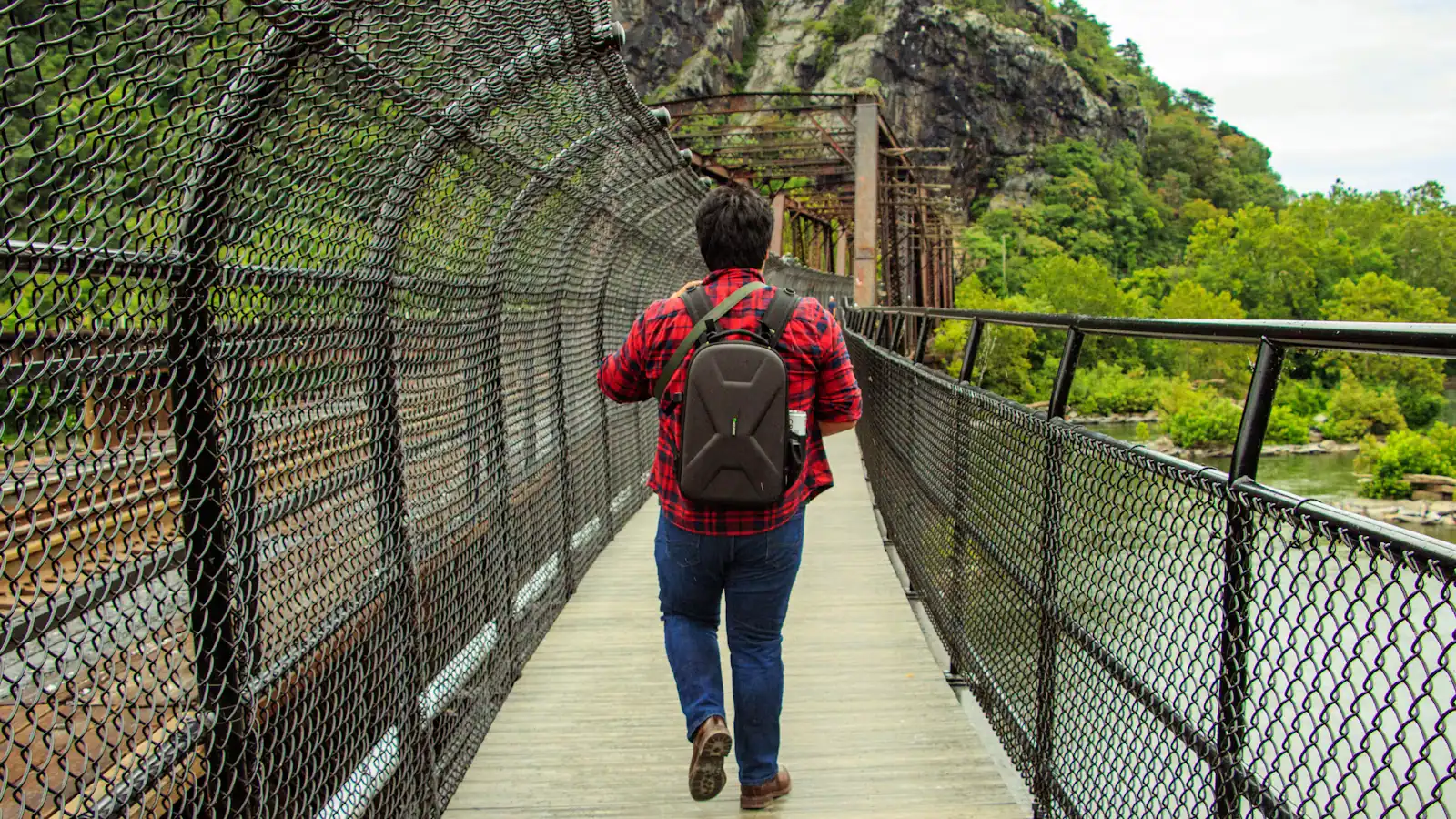
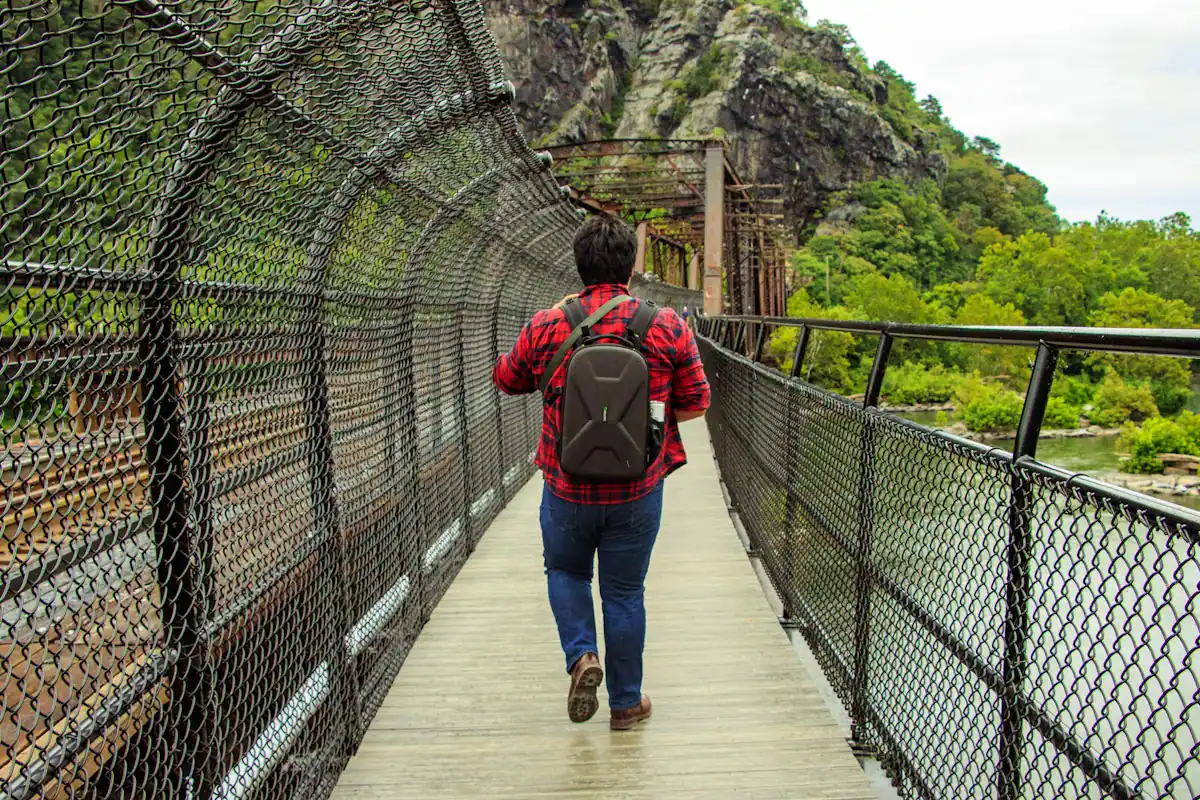
A walker crossing a river footbridge with a pack on their back, the far bank thick with treesUnsplash
A walker crossing a river footbridge with a pack on their back, the far bank thick with trees

This is the part of Harpers Ferry retail that has no equivalent in a comparable small town, and it is worth understanding even if you have never carried a pack.

The Appalachian Trail comes off Loudoun Heights, crosses the Shenandoah, runs along Shenandoah Street through the middle of the lower town, climbs past the Appalachian Trail Conservancy's headquarters on Washington Street, and leaves over the Potomac footbridge. Several thousand people a year walk the whole thing, and a large share of them come through here between late spring and early summer, roughly a thousand miles into the walk, at the point where morale and equipment are both running thin.

That produces a very specific retail demand: replacement socks, stove fuel, resupply food in small quantities, a needle and thread, new insoles, a package waiting at a post office. Shops here stock for it, and the effect on a non-hiking visitor is that you can buy a good pair of walking socks and a proper trail map in a town where you cannot buy a loaf of bread.

The Conservancy's centre is the hub of it. Staff there know the corridor in detail, the shop carries the maps and guides for the whole trail, and the doorstep is where thru-hikers are photographed and numbered in order of arrival — an archive going back decades that you can leaf through. Buy something there if you buy anything in town; the organisation maintains the footpath you walked in on.

May and June are when this side of town is at its most interesting, because the shops are full of people who have walked here from Georgia.

Antiques: the honest answer is that you drive

People arrive here expecting an antique town, presumably because it is old and it is in West Virginia. It is not one, and saying so is more useful than a list of shops that sell framed prints.

What Harpers Ferry has is second-hand books, period-style reproductions, prints and the occasional genuine small piece in a general gift shop. That can be rewarding — a nineteenth-century regional history off a High Street shelf is a better souvenir than anything made for the purpose — but it is not dealing, and there is no antique mall in town.

Where the trade actually is:

  • Shepherdstown, about twelve miles north. The oldest town in West Virginia, German Street lined with independents, a college in the middle of it, and the best single afternoon of browsing in the county. Pairs naturally with Antietam, which is close by.
  • Charles Town, about eight miles west. The county seat, where John Brown was tried and hanged. A working small town rather than a visitor one, with the shops that implies and lower prices than the tourist streets.
  • Frederick, Maryland, roughly twenty miles east. The largest concentration of dealers within easy reach, and the one to choose if antiques are the actual point of the day rather than a diversion from the park.
  • Winchester, Virginia, roughly thirty miles south, if you are heading down the Shenandoah valley anyway.

The practical version: give the park the morning while the light is good and the shuttle is running, and drive out at three. Trying to fit a serious antique hunt into the same streets as the history means doing neither properly.

Hours, season and paying for things

Local tips

  • The shuttle sets the closing time. The last bus out of the lower town goes at 7 p.m. under daylight saving and 5.30 p.m. under standard time, and shop trade goes with it. Assume the lower town has largely shut by late afternoon in winter. This is not a place for evening browsing.
  • Winter is weekends. Between roughly January and March, several shops and kitchens in the lower town and up in Bolivar drop to weekend trading or shut entirely. Do not build a weekday January afternoon around a particular shop without checking it is open.
  • Come on a weekday if you want to be served. On an October Saturday the shops are three deep and the staff are triaging. Midweek you get a conversation with the owner, which in a town this size is most of the value.
  • The park takes no cash — the shops are a different matter. Entrance fees and the visitor centre are card-only, but the shops are independent businesses setting their own terms, and some of the smallest lean the other way. Carry a card and a little cash, and do not assume a working cash machine is a short walk away.
  • Buy heavy things last. Everything in the lower town is at the bottom of a hill, and you are either climbing High Street or waiting for a bus with it.
  • Ask before you assume anything is original. Reproduction period goods are common and are usually labelled. Dealers here are straightforward about it when asked directly.

What is actually sold here

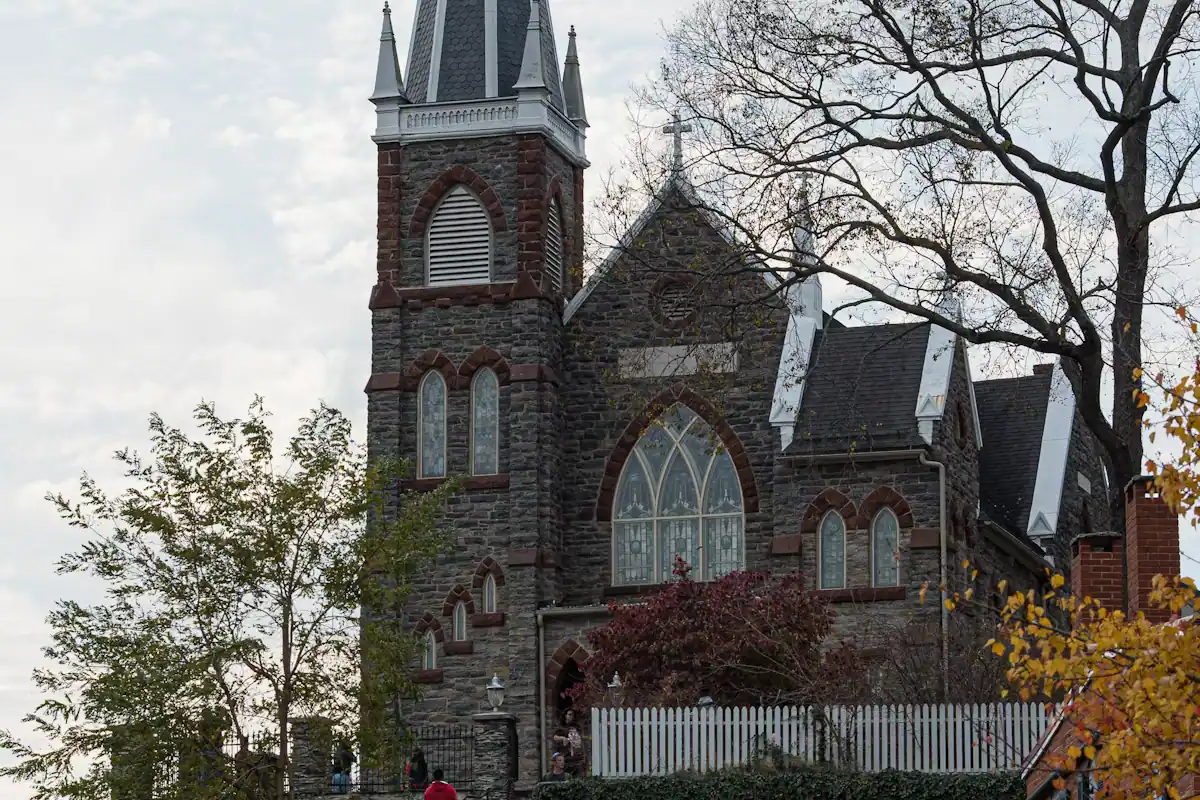
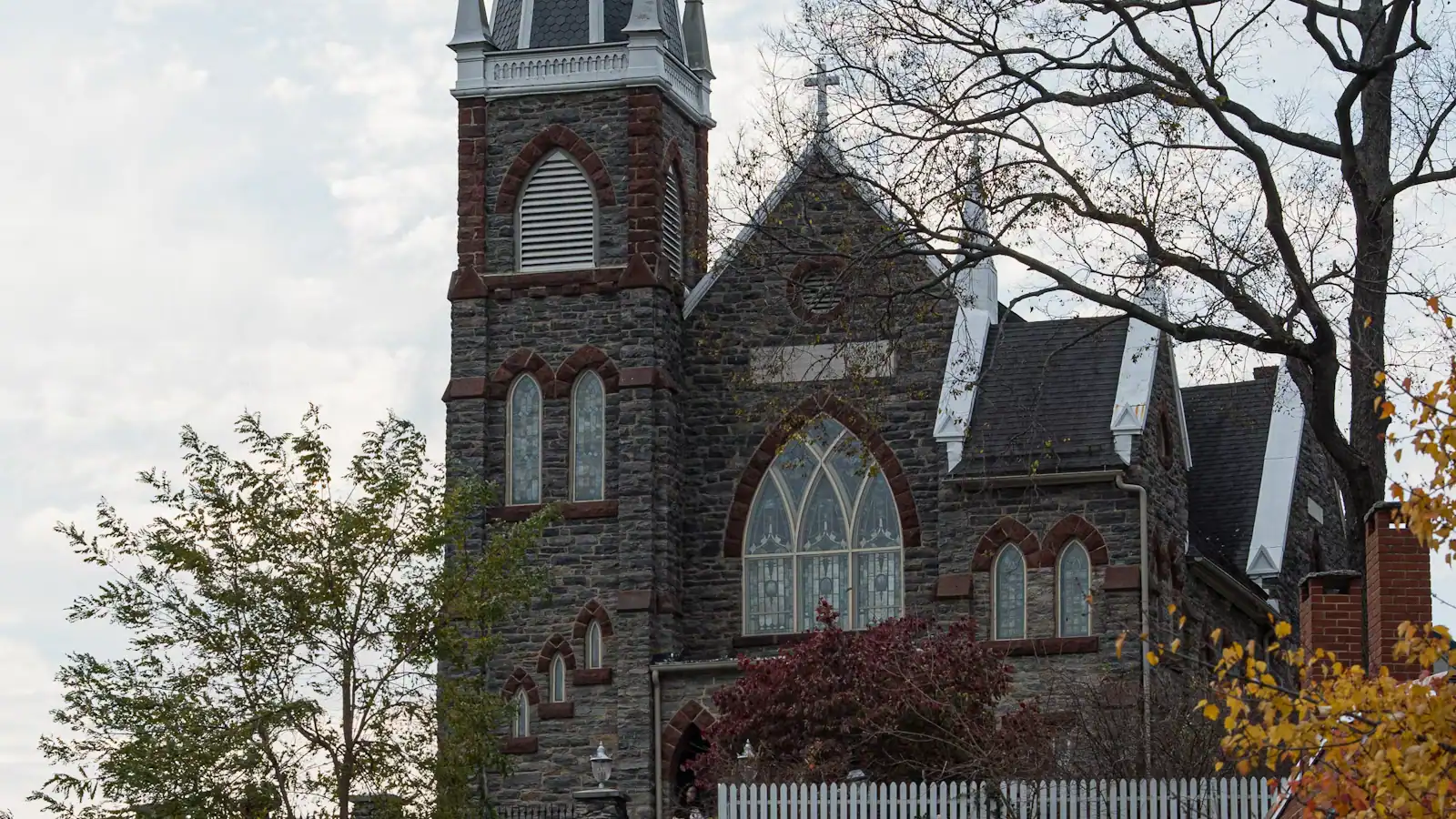
A brick church with a steep slate roof and a pointed steeple standing above a hillside of treesUnsplash
A brick church with a steep slate roof and a pointed steeple standing above a hillside of trees

How they compare

CategoryWhereWhat is on the shelves
Historic confectioneryHigh StreetTrue Treats, at number 144, arranged by period with the history alongside. The most distinctive retail in town by a distance
BooksLower town and the visitor centreThe park carries a serious history shelf — park-published and university-press titles on the raid, the armoury and Storer College. Better than any general bookshop nearby
Trail outfittingWashington Street and the lower townSocks, fuel canisters, maps, guidebooks, quick repairs. Stocked for people walking to Maine, not for a day hike
Prints, maps and militariaHigh StreetReproduction period pieces, framed prints, Civil War-adjacent goods. Ask what is original before assuming
Craft and giftsPotomac and High StreetsSmall-scale local work, pottery, jewellery, soap. Genuinely made nearby more often than not
Second-hand and antiquarian booksHigh StreetThe closest thing the town has to an antique trade, and the most likely place to find something worth carrying home

The Appalachian Trail Conservancy's centre on Washington Street also runs a shop — maps, data books, guides, and the trail-specific things that are hard to buy anywhere else in the region. It is free to walk into whether you buy anything or not.

Two things you will not find in the lower town: a supermarket and a pharmacy. Both are up on the US 340 corridor toward Charles Town. Do not plan on picking up a forgotten item after the shuttle has stopped.

On the ground

Where to go

Every place below has its own page — hours, parking, what it costs and what to expect when you get there.

  • A narrow street of nineteenth-century shopfronts running uphill between stone kerbs

    Neighbourhood

    Lower Town Harpers Ferry

    Two streets and a flight of stone steps, all of it inside a national park, with the high-water marks still on the walls.

    2–5 hoursPark entrance fee applies; National Park Service exhibit buildings are then free to enter

  • A street of nineteenth-century shopfronts with stone kerbs running between them

    Historic site

    Shenandoah Street

    The one level street in the lower town: park museums door by door, the shuttle stop, and the restored shopfronts of an 1860s street.

    1–2.5 hoursIncluded with park entrance; the museums along the street carry no separate charge

  • A walker crossing a river footbridge with a pack on their back, the far bank thick with trees

    Museum

    Free

    Appalachian Trail Conservancy Visitor Center

    Where thru-hikers get photographed and numbered, in albums going back decades — and where the midpoint myth gets corrected.

    0.5–1 hoursFree to enter; the Conservancy is a non-profit and donations are welcomed

  • A narrow street of nineteenth-century shopfronts climbing between stone kerbs

    Shopping

    High Street

    The lower town's one commercial street: a stone climb of shopfronts ending at the steps up to St Peter's and Jefferson Rock.

    0.5–1.5 hoursThe street is free to walk; reaching it means entering the national historical park

  • Brick commercial frontages of the nineteenth century lining a street with stone kerbs

    Neighbourhood

    Free

    Charles Town

    Eight miles west: the courthouse where John Brown was tried, the ground where he was hanged, and a Washington family town.

    1.5–4 hoursFree to walk. Individual museums and attractions charge separately

  • A street of nineteenth-century brick and stone frontages with stone kerbs

    Neighbourhood

    Free

    Shepherdstown

    Chartered in 1762, a university on the main street, and the town that absorbed the wounded from Antietam two days after the battle.

    1.5–4 hoursFree. There is no entrance fee to the town

Straight answers

Questions people actually ask

Is there much shopping in Harpers Ferry?

Not much, and that is the honest answer. The commercial frontage runs a couple of hundred yards along Potomac Street and the bottom of High Street, in pre-Civil-War buildings on a slope inside a national park. What is there is around twenty small independents — books, craft, prints, trail outfitting and one exceptional historic candy shop. There is no supermarket and no chain retail in the lower town.

Are there antique shops in Harpers Ferry?

Very few in any real sense. The town has second-hand books, prints and period-style reproductions rather than a dealing trade, and there is no antique mall. For genuine antiquing, drive: Shepherdstown is about twelve miles north with a street of independents, Charles Town about eight miles west, and Frederick in Maryland roughly twenty miles east with the largest concentration of dealers within easy reach.

What should you buy in Harpers Ferry?

Two things stand out. Historic confectionery from True Treats at 144 High Street, arranged by period with the history of each printed alongside — a shop founded by a candy historian and unlike anything else in the region. And a proper book: the park's shelves carry park-published and university-press histories of the raid, the armoury and Storer College that you will not find in a general bookshop.

What time do the shops in Harpers Ferry close?

Earlier than you expect, because they close when the visitors leave. The last shuttle out of the lower town goes at 7 p.m. between March and early November and at 5.30 p.m. the rest of the year, and trade follows it. Assume the lower town has largely shut by late afternoon in winter, and that several shops drop to weekends only between January and March.

Can you buy hiking gear in Harpers Ferry?

Yes, and better than the size of the town suggests, because the Appalachian Trail runs down the main street and thru-hikers arrive here needing to resupply. Expect socks, stove fuel, insoles, maps and small repairs rather than a full outdoor superstore. The Appalachian Trail Conservancy's centre on Washington Street carries maps and guides for the whole trail and is worth going into whether or not you buy.

Do shops in Harpers Ferry take cash?

Most do, but be careful about the distinction. The national park itself is cashless — entrance fees and the visitor centre take cards only, with no exceptions. The shops are independent businesses that set their own terms, and while nearly all take cards, a few of the smallest prefer cash. Carry both, and do not count on finding a cash machine within a short walk of the lower town.