Skip to content
Menu

A booking made through these earns us a commission from Viator. The price is the same, and the commission had no bearing on what is recommended.

Neighbourhood

Shepherdstown

Last updated

Chartered in 1762, a university on the main street, and the town that absorbed the wounded from Antietam two days after the battle.

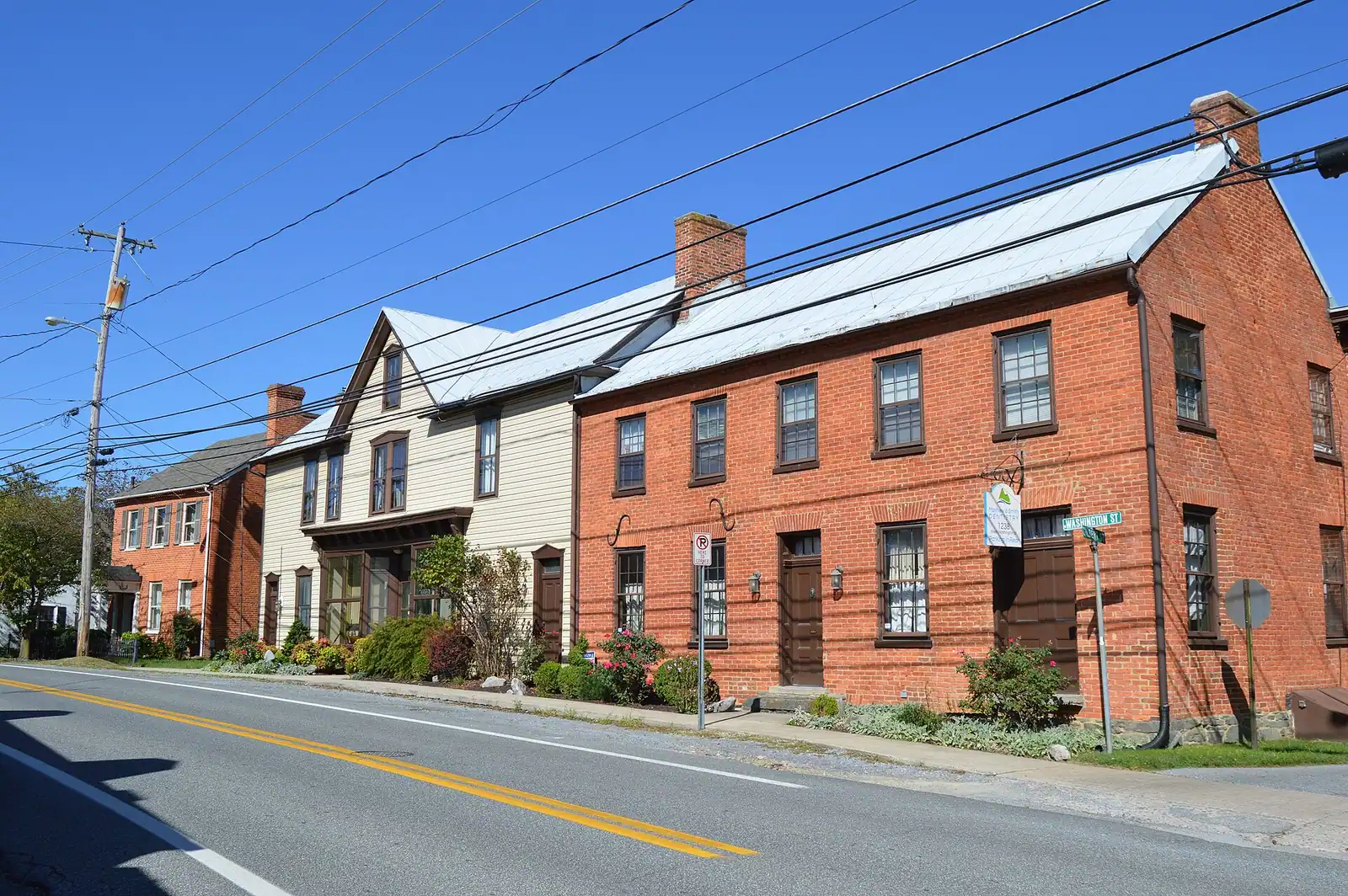
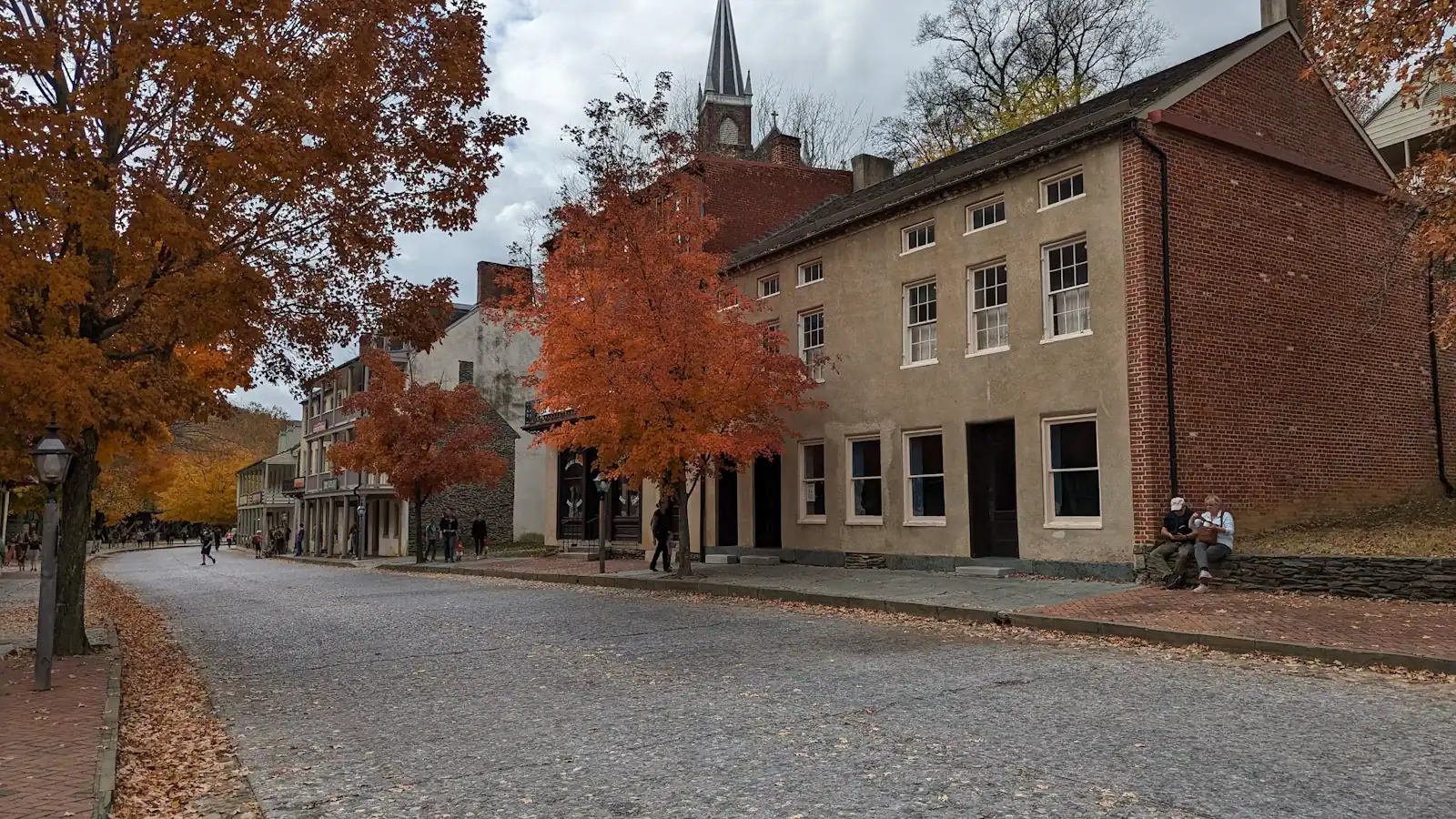
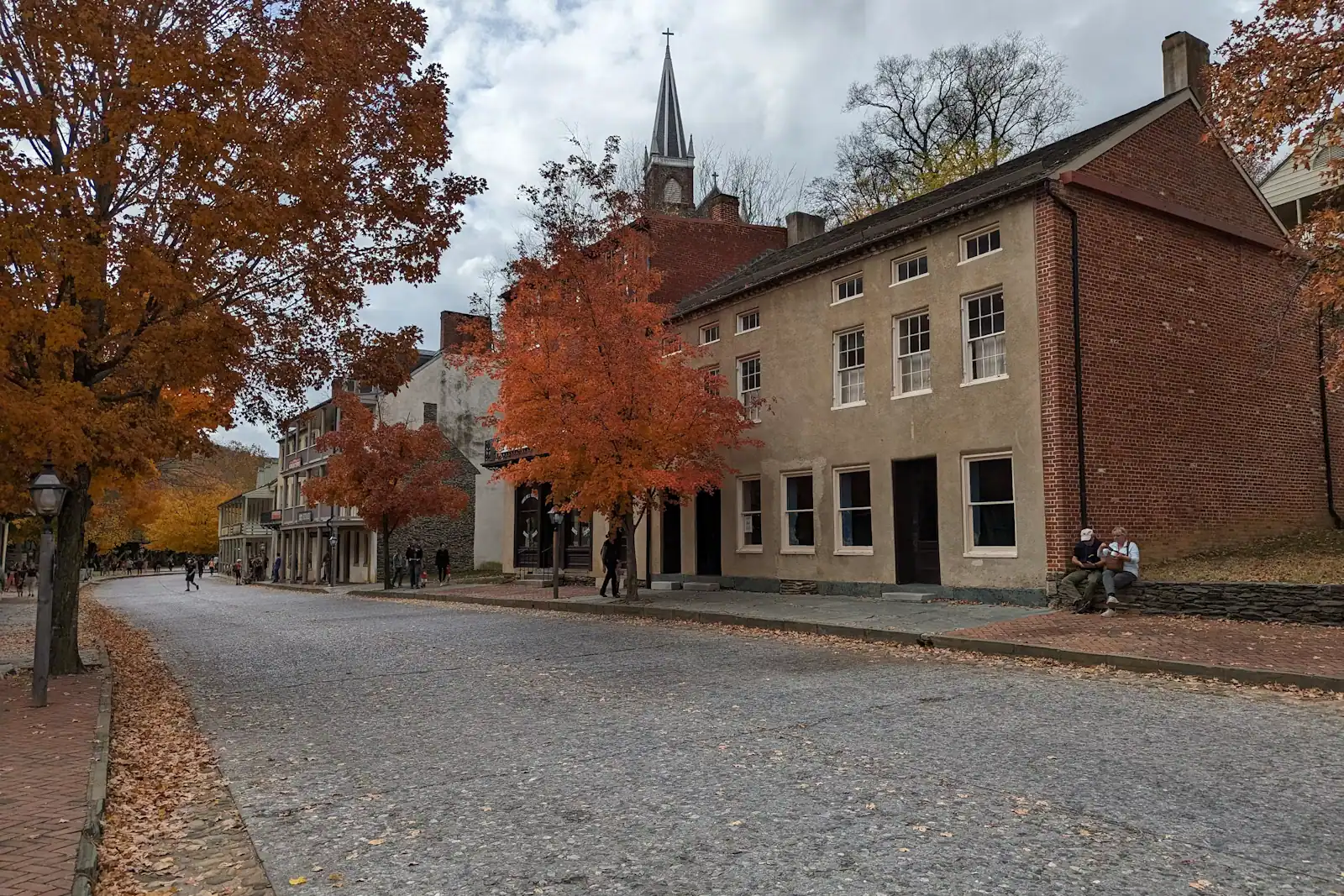
A street of nineteenth-century brick and stone frontages with stone kerbsUnsplash

Photo: UnsplashUnsplash License

If Harpers Ferry runs out of daylight before it runs out of interest, Shepherdstown is the obvious second act. It sits about twenty minutes upriver, has roughly 1,500 residents and a university, and is almost exactly what Harpers Ferry is not: flat, lived-in, open in the evening, and largely uninterested in visitors, which is a compliment.

It was chartered on 23 December 1762 as Mecklenburg, laid out by Thomas Shepherd on land he had held since the 1730s, and renamed for him afterwards. It and Romney were chartered the same day, and the two share the claim to be the oldest towns in West Virginia. Locals will tell you which of them they think really has it.

The centre is German Street, a few blocks of brick and stone frontages running east to west, and it works because it is a college main street rather than a heritage exhibit. Shepherd University, which began as Shepherd College in 1872 and became a university in 2004, puts a few thousand students at one end of it, which is why there are bookshops, a cinema, coffee at eight in the morning and food after nine at night. In this county that combination is genuinely hard to find.

Two pieces of history are worth arriving with. On 3 December 1787 James Rumsey demonstrated a steamboat on the Potomac at the north end of the town, several years before Fulton, and the town has been quietly annoyed about the credit ever since; a monument overlooking the river marks it.

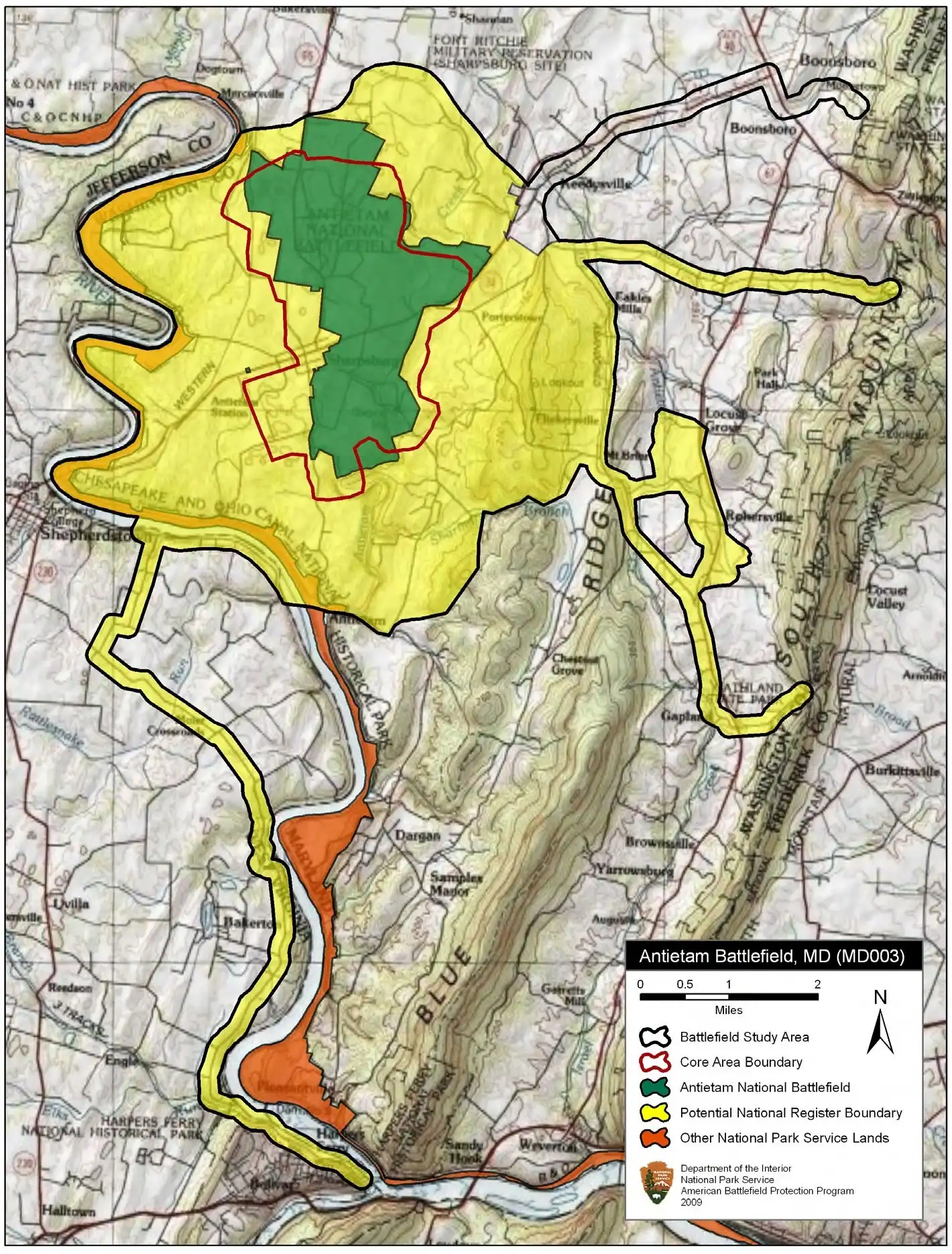
And on 19 and 20 September 1862, immediately after Antietam, the war arrived. Lee's army withdrew across the Potomac at Pack Horse Ford about a mile downstream, a rearguard action was fought on the bluffs, and the town absorbed thousands of wounded men into its churches, its houses and its public buildings.

Come for an evening meal. Stay for the walk down to the river.
Getting there and parking

About twenty minutes from Harpers Ferry by car and roughly twelve miles, north-west on WV 230 through the Jefferson County farmland. It is an easy, pretty drive on two-lane roads with no interstate involved.

From Antietam it is about fifteen minutes south across the Potomac bridge at Shepherdstown, which makes a battlefield-then-dinner evening straightforward.

Parking is on-street and in small lots around German Street, free or inexpensive, and it tightens on Friday and Saturday evenings and during university events.

There is no useful public transport link from Harpers Ferry. Rideshare operates in Jefferson County but coverage thins in the evening, so a visitor arriving by train should not count on it for the return.

German Street, and why it is open when Harpers Ferry is shut

The practical case for driving up here is simple: Harpers Ferry closes early and Shepherdstown does not.

The lower town's museums shut at five, the last shuttle up the hill leaves at seven in summer and half past five in winter, and the handful of High Street kitchens keep small-town hours in a town of 269 people. Shepherdstown has a university in it. A university means a population that eats late, drinks coffee early and expects a cinema, and the street has adjusted accordingly.

What you will find, without us naming names that may have changed: independent restaurants across a reasonable price range, at least one proper bookshop, cafés that open early, a small cinema, galleries, and the kind of hardware-and-groceries retail that means people actually live here.

The architecture is the other reason to walk it. Federal and Victorian brick, stone kerbs, a street that has been the main street since the eighteenth century and looks it, without being restored into a film set.

Parking is on-street and in small lots, and it gets tight on a Friday evening and during university events. It is free or cheap by city standards. Walk the four or five blocks end to end and you have seen the town centre; the interest is in going into things rather than covering distance.

James Rumsey and the steamboat nobody remembers

On 3 December 1787, on the Potomac at the north end of this town, James Rumsey ran a boat upstream against the current under steam power, with a crowd on the bank and, by most accounts, a good deal of scepticism in it.

Rumsey's system drove the boat by pumping water through the hull and out of the stern, which is jet propulsion rather than a paddlewheel, and the demonstration worked. George Washington, who had employed Rumsey on the Potomac Company, thought well of him. Rumsey went to England to pursue the work and died there in 1792, well before Robert Fulton made a commercial success of the steamboat two decades later.

The result is a town with a legitimate claim to a first and no share of the credit, which explains the size of the monument. The Rumsey Monument stands on the bluff above the river at the end of Mill Street, a short walk north from German Street, and the view over the Potomac from it is the best in the town.

It is a ten-minute detour and the most characteristic thing here: a genuine piece of engineering history, marked properly, visited by almost nobody, in a town that would rather talk about it than about the battle.

September 1862: the hospital town

Antietam is fifteen minutes north of here, and what happened on 17 September 1862 arrived in Shepherdstown within hours.

Lee's army withdrew across the Potomac at Pack Horse Ford, an ancient crossing about a mile downstream that had carried colonial settlers into the valley. On 19 and 20 September a rearguard action was fought on the bluffs on the Virginia side as Union troops pressed the crossing. It was not a large battle by the standards of that week and it was a bad one to be in.

The town itself became a hospital. Churches, the academy buildings, private houses and public rooms took in thousands of wounded from Antietam, and the people living here nursed them. Over a hundred Confederate dead were buried locally. That episode, rather than the skirmish, is the reason September 1862 is still present in this town.

Markers around the town and down at the ford explain it. If you have come from Antietam the same day, the sequence is worth doing in order: the battlefield first, then the ford, then the streets the wounded were carried into. It gives the numbers a destination, which a battlefield alone does not.

Take the riverside walk down to the ford if the weather allows. It is quiet, and it should be.

Fitting it into a Harpers Ferry day

Three ways this works, in ascending order of ambition.

The evening version. Do Harpers Ferry until the last shuttle, drive twenty minutes up, eat on German Street, walk it in the dark. This is the one most people should do, because it solves the problem of a town that closes at five.

The half-day version. Lower town in the morning, drive up at midday, spend the afternoon on German Street and at the Rumsey Monument, back for sunset at Jefferson Rock. Works well in spring and autumn when the light lasts.

The two-battlefield day. Harpers Ferry early, Antietam from late morning, Shepherdstown for the late afternoon and dinner. Fifteen minutes between Antietam and Shepherdstown. This is the fullest and most coherent day available in this corner of the country, and it is a long one.

Note for anyone without a car: there is no useful public transport between Harpers Ferry and Shepherdstown. Rideshare coverage in Jefferson County is decent around Charles Town and Ranson and thinner in the evening, which is precisely when you would want it. If you came by train, this is the trip you will have to give up or plan carefully.

Near Shepherdstown

Straight-line distances, so allow more on the road — the island is long and has one main parkway.

  • A plain church with a steep roof and a spire standing above a wooded slope

    Historic site

    Antietam National Battlefield

    Roughly 23,000 casualties in one September day, half an hour north of Harpers Ferry, and the same campaign that took this town.

    2.5–6 hoursAt the time of writing: $20 per private vehicle, $15 per motorcycle, $10 per person on foot or bicycle, each valid three consecutive days4.4 mi away

  • Brick commercial frontages of the nineteenth century lining a street with stone kerbs

    Neighbourhood

    Free

    Charles Town

    Eight miles west: the courthouse where John Brown was tried, the ground where he was hanged, and a Washington family town.

    1.5–4 hoursFree to walk. Individual museums and attractions charge separately10.2 mi away

  • A walker carrying a full pack on a trail above a river, trees thick on the far bank

    Neighbourhood

    Free

    Bolivar

    A separate town on the ridge above the lower town, four times the size of Harpers Ferry, where the rooms and the kitchens actually are.

    1–3 hoursFree. Bolivar is a town, not a park site, and carries no entrance fee8 mi away

  • Green trees lining the edge of flat, slow river water under a bright sky

    Trail

    Free

    C&O Canal Towpath

    184 miles of level crushed stone on the Maryland bank, reached by a footbridge and an awkward spiral staircase.

    1–5 hoursFree. The towpath itself carries no entrance fee8.2 mi away

Shepherdstown: common questions

How far is Shepherdstown from Harpers Ferry?

About twelve miles and twenty minutes by car, north-west on WV 230 through farmland. It is an easy two-lane drive with no interstate. From Antietam National Battlefield it is roughly fifteen minutes south across the Potomac bridge, which makes a battlefield afternoon followed by dinner in Shepherdstown a natural pairing. There is no useful public transport between the two towns.

Is Shepherdstown the oldest town in West Virginia?

It has a strong claim and it is shared. Shepherdstown was chartered on 23 December 1762 as Mecklenburg, laid out by Thomas Shepherd on land he had held since the 1730s. Romney, in Hampshire County, was chartered the same day, so the two are usually described jointly as the oldest towns in the state. Which of them truly holds the title is a local argument that has not been settled and probably never will be.

What is there to do in Shepherdstown in the evening?

Eat, mostly, and walk German Street. Shepherd University, founded as Shepherd College in 1872, keeps a few thousand students here, which sustains independent restaurants, cafés open early, a bookshop and a small cinema. That matters to a visitor because Harpers Ferry closes at five and this does not. Add the ten-minute walk to the Rumsey Monument on the bluff for the best river view in the town.

What happened at Shepherdstown in the Civil War?

Lee's army withdrew across the Potomac here at Pack Horse Ford immediately after Antietam, and a rearguard action was fought on the bluffs on 19 and 20 September 1862. More lastingly, the town became a hospital: churches, houses and public buildings took in thousands of wounded from the battlefield fifteen minutes north, and residents nursed them. Over a hundred Confederate dead were buried locally. Markers around the town and at the ford explain it.