Skip to content
Menu

A booking made through these earns us a commission from Viator. The price is the same, and the commission had no bearing on what is recommended.

Historic site

Antietam National Battlefield

Last updated

Roughly 23,000 casualties in one September day, half an hour north of Harpers Ferry, and the same campaign that took this town.

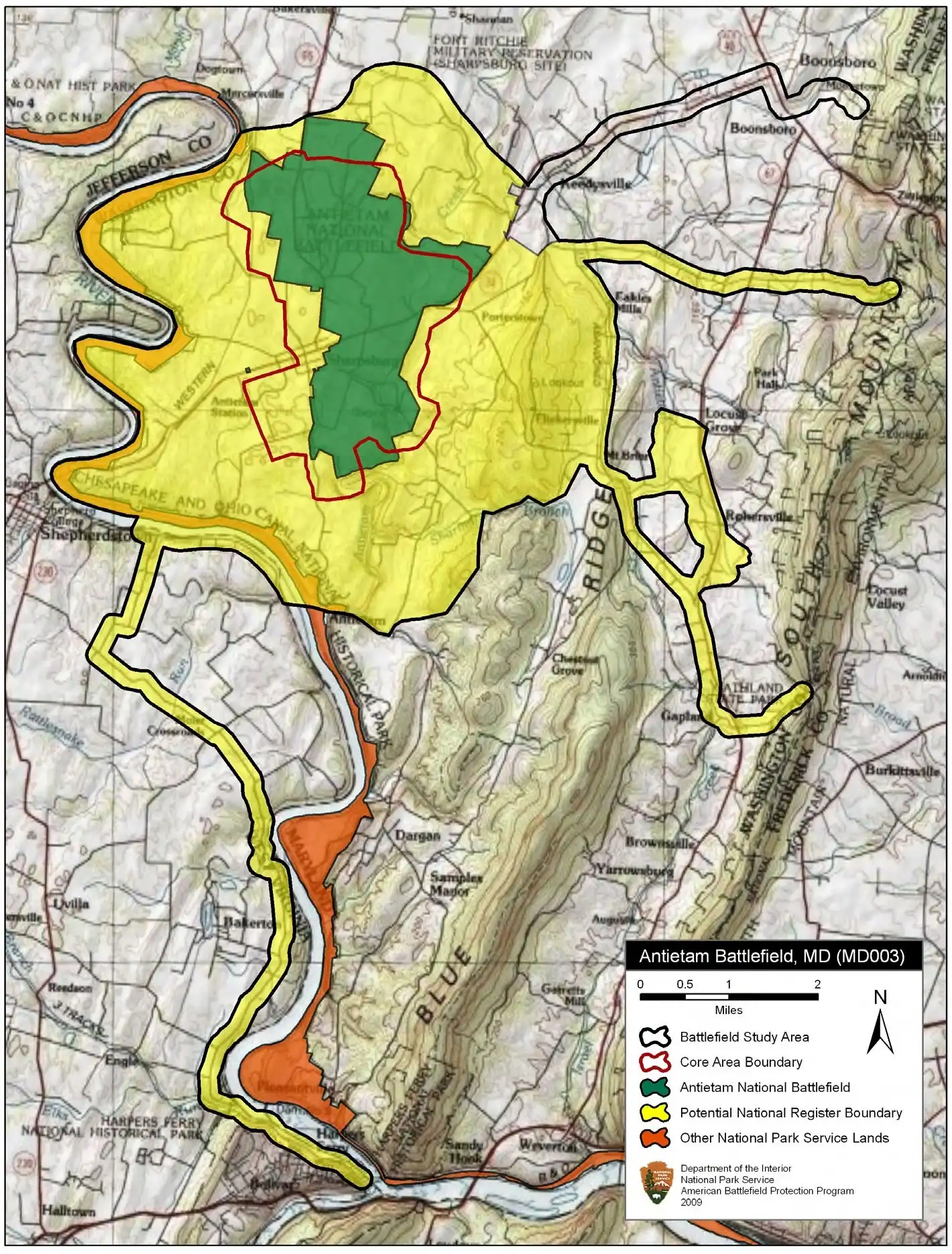
Photo: American Battlefield Protection ProgramPublic domain

Closed at the moment

The park and visitor center close on Thanksgiving, 25 December and 1 January.

On 17 September 1862, along a creek outside the Maryland village of Sharpsburg, something close to 23,000 men were killed, wounded or listed missing in about twelve hours. It remains the bloodiest single day in American history. Nothing that has happened since has come near it, and the ground where it happened lies about twenty-five minutes' drive north of Harpers Ferry.

The two places are not neighbours by coincidence. They are the same campaign. In September 1862 Lee moved north into Maryland and detached Stonewall Jackson to deal with the Union garrison at Harpers Ferry, which sat astride his supply line. Confederate guns took Maryland Heights, Loudoun Heights and Bolivar Heights, and on 15 September roughly 12,500 Federal troops surrendered in the gap below, a figure frequently cited as the largest surrender of United States forces until Bataan in 1942. Jackson marched most of his men north to join Lee. A. P. Hill's division stayed to handle the paroles and then covered seventeen miles from Harpers Ferry on the 17th, arriving on the field late in the afternoon in time to stop the final Union attack across the creek.

So the town you are standing in is why the battle happened where it did, and when.

What the battlefield looks like now is farmland. Rolling Maryland fields, a white church, a stone bridge over a small creek, a sunken farm lane, split-rail fences, and monuments. It is quiet, beautiful and extremely well preserved, which produces a peculiar and useful dissonance: the ground refuses to look like what happened on it, and the visitor has to do the work of imagining. Most people find that harder and more affecting than a reconstructed battlefield would be.

The result mattered beyond the casualty list. Lee withdrew to Virginia, and five days later Lincoln issued the preliminary Emancipation Proclamation, which he had held back waiting for something that could be called a victory.

Give it half a day. Give it a full one if you can.
Getting there and parking

About twenty-five minutes north of Harpers Ferry by car, roughly fifteen miles depending on which way you go. The pretty route follows the Maryland bank of the Potomac upstream from the bridge through Sandy Hook and Antietam Creek; the quicker route runs north on US 340 and MD 67 and then west on MD 34 into Sharpsburg.

There is no public transport between the two parks and no shuttle. This is the part of a Harpers Ferry trip that genuinely needs a vehicle, which is worth knowing if you came by train.

Parking is at the visitor center on Dunker Church Road and at the numbered stops along the tour route, and it is free once you have paid the entrance fee. Coming from Frederick or Baltimore, Antietam sits conveniently on the way in via I-70 and makes a two-battlefield weekend straightforward.

What happened, in the order it happened

The battle came in three phases, north to south, and the driving tour follows that sequence. Knowing it before you arrive makes the ground legible.

Dawn to mid-morning, the northern end. Union attacks came down the Hagerstown Pike through a farmer's cornfield that changed hands repeatedly through the early morning. The fighting in and around that single field was as concentrated as anything in the war. The whitewashed Dunker Church, a plain German Baptist meeting house belonging to a pacifist congregation, stood at the centre of it and became the landmark everything else was described in relation to.

Mid-morning to early afternoon, the centre. A sunken farm lane worn below the level of the fields made a natural trench, and Confederate troops held it against repeated frontal assaults. Something in the order of 5,600 men became casualties there between about half past nine and one o'clock. It has been called Bloody Lane ever since.

Afternoon, the southern end. Union troops under Burnside spent hours trying to force a narrow stone bridge over Antietam Creek against a few hundred defenders on the bluff above. When they finally crossed and pushed towards Sharpsburg, A. P. Hill's division arrived from Harpers Ferry and drove them back. Burnside Bridge still stands and is the most photographed structure on the field.

How to see it in half a day

The battlefield is toured by car along a signed route of roughly eight and a half miles with about a dozen numbered stops, which is the only practical way to cover ground this large. Allow two and a half to three hours for the tour with stops, or a full day if you want to walk as well.

A workable order for a visitor coming up from Harpers Ferry:

  1. Visitor center first, for the film and the orientation. It opens at nine and closes at five. Do not skip the map.
  2. Drive the tour in sequence, north to south, because the sequence is chronological and the battle makes no sense out of order.
  3. Walk three places: the Cornfield, the observation tower at Bloody Lane, and Burnside Bridge. Everything else can be seen from the road; these three need your feet.
  4. The national cemetery at the end, in Sharpsburg. It was established after the war for the Union dead and it is the quietest part of the visit.

Check at the desk for ranger programmes on the day. Talks here are unusually good, and a walk of the Sunken Road with a ranger is worth rearranging an afternoon for.

Early morning and late afternoon are the hours for this landscape: low light across open fields, mist off the creek, and very few cars.

Fees, hours and the cashless rule

At the time of writing Antietam charges $20 per private vehicle, $15 per motorcycle, or $10 per person arriving on foot or by bicycle, each valid for three consecutive days. Under-16s are free. A park annual pass is $35 and the America the Beautiful interagency passes are accepted.

The park does not accept cash. Bring a card, exactly as at Harpers Ferry.

Note that the two parks charge separately. A Harpers Ferry ticket does not admit you to Antietam and vice versa. If you plan to visit both, and especially if you are also going elsewhere, the $35 annual pass at either park or an interagency pass will usually pay for itself immediately.

The visitor center is open daily from nine to five, year round, and the park closes on Thanksgiving, 25 December and 1 January.

Antietam participates in the national fee-free days. If your dates are flexible and you would rather not pay, check the list. Be aware that a fee-free day at a site like this also means a busier one.

Fee schedules are revised. Confirm the current figures on the park's own website before you travel.

Taking children, and the tone of the place

This is a cemetery with a road through it, and it is worth saying so plainly before you arrive with a family.

Children generally do well here, better than at a museum, because it is outdoors, there is space to walk, and the story has a shape. The National Park Service's junior ranger programme is a genuine help for the seven to twelve age range and gives a child something to do at each stop.

What to prepare them for: the numbers are large and real, the Bloody Lane is exactly what it sounds like, and the national cemetery contains rows of graves of men whose names are unknown. Some children want to talk about that at length and some go quiet. Both are reasonable.

What helps. Walk Burnside Bridge, which is a bridge over a creek and reads as a place rather than a battlefield. Use the observation tower. Let the driving tour do the covering of distance, so the walking you do is short and purposeful.

Practical notes: limited shade on the open fields, no food service on the battlefield itself, restrooms at the visitor center, and ticks in the long grass. Sharpsburg village has a few places to eat and they keep small-town hours.

Tours that visit Antietam

Operators run these trips past Antietam, or stop there as part of a longer route. We list what the booking data supports — not everything that mentions the name.

A booking made through these earns us a commission from Viator. The price is the same, and the commission had no bearing on what is recommended.

Shared departurespriced per seat, best value for one or two

  • New River Gorge ATV Adventure Tour

    Curated Catalog

    Likely to sell outInstant confirmation

    New River Gorge ATV Adventure Tour (opens in a new tab)

    127 reviews

    With over 100 miles of trails ranging from beginner to expert, incredible guides, and top of the line ATV's, riders of all skill levels…

    3–4 hours

    Prices checked

    from $195

Private and small-group optionsoften cheaper per head for a family or a group of six

Near Antietam

Straight-line distances, so allow more on the road — the island is long and has one main parkway.

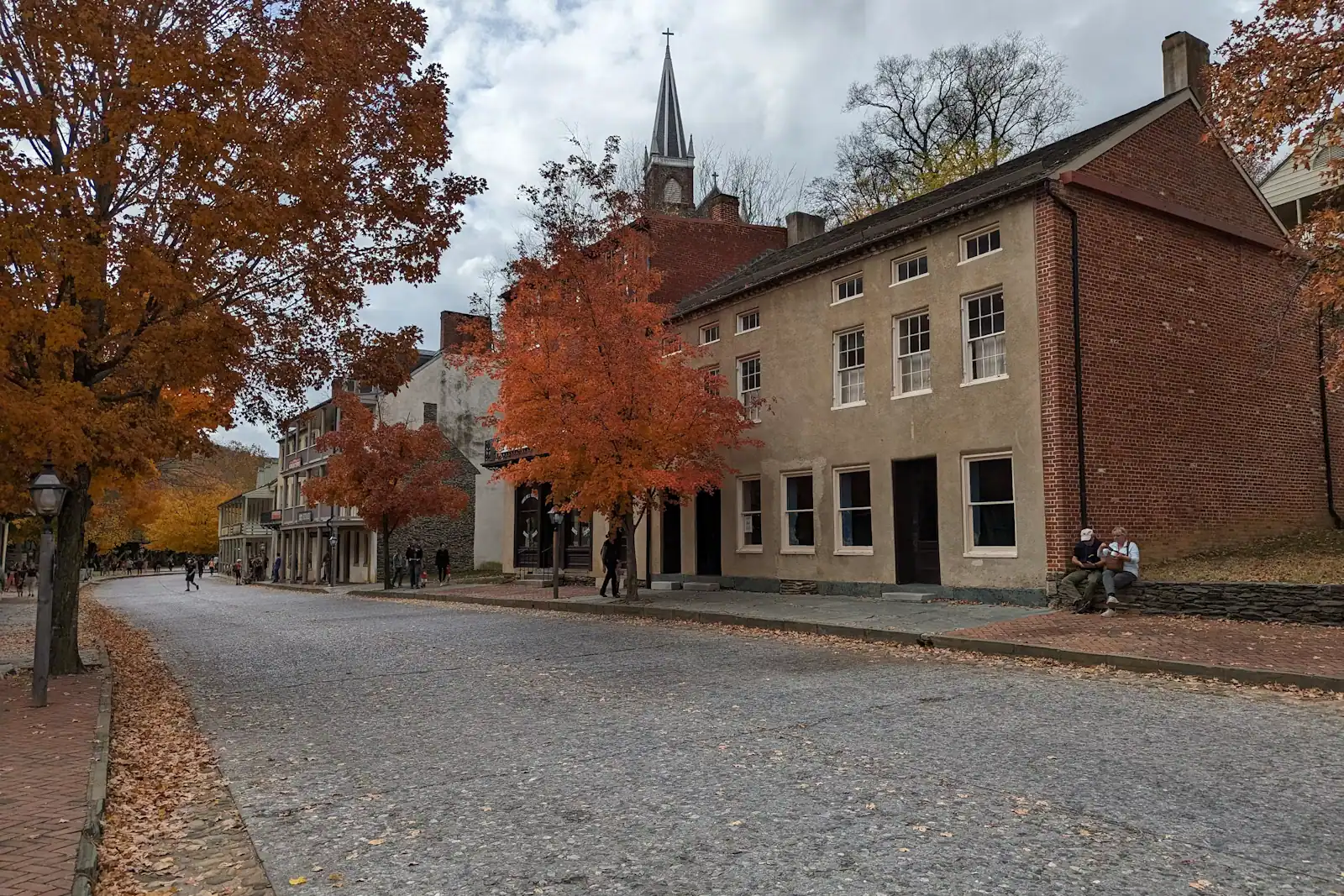
  • A street of nineteenth-century brick and stone frontages with stone kerbs

    Neighbourhood

    Free

    Shepherdstown

    Chartered in 1762, a university on the main street, and the town that absorbed the wounded from Antietam two days after the battle.

    1.5–4 hoursFree. There is no entrance fee to the town4.4 mi away

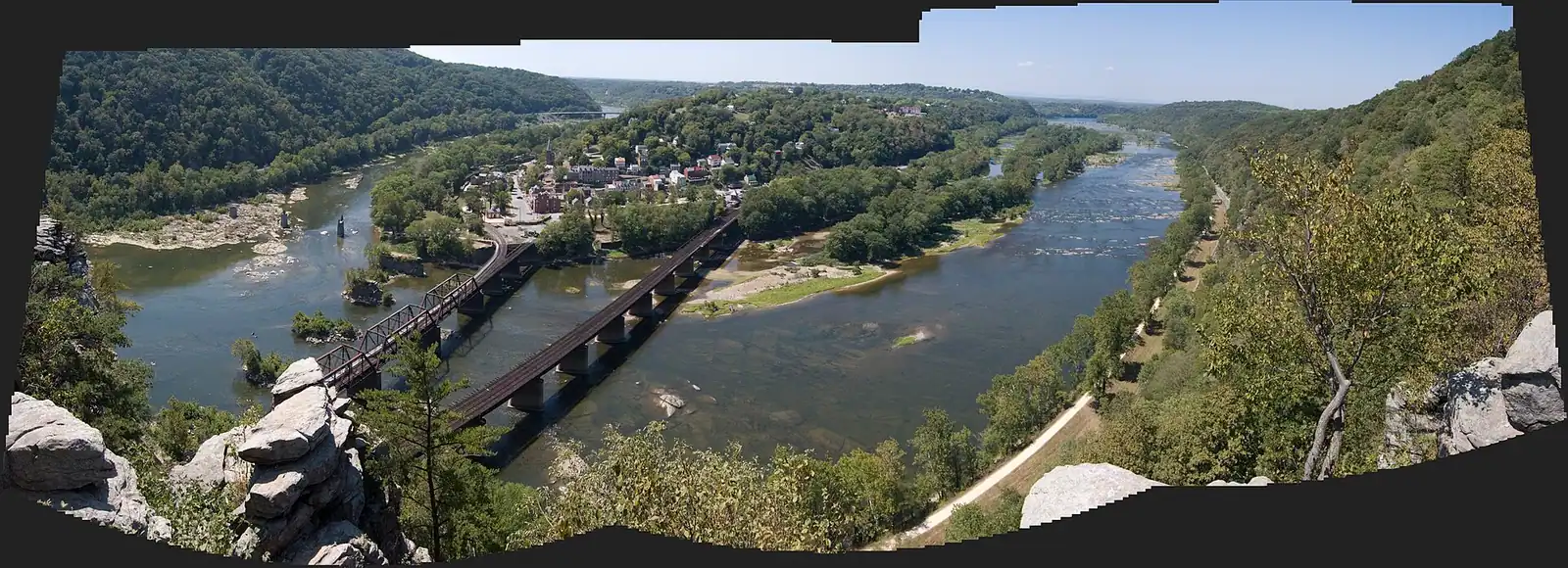
  • Green trees lining the edge of flat, slow river water under a bright sky

    Trail

    Free

    C&O Canal Towpath

    184 miles of level crushed stone on the Maryland bank, reached by a footbridge and an awkward spiral staircase.

    1–5 hoursFree. The towpath itself carries no entrance fee10.2 mi away

  • A whitewashed stone-walled house on a steep bank, its garden held up by a dry stone retaining wall

    Historic site

    Free

    Bolivar Heights

    Flat, open and five minutes from the car park: the battlefield where a Union garrison of 12,500 surrendered in two days.

    1–1.5 hoursNo separate charge; covered by the park entrance fee, which is valid three consecutive days10.3 mi away

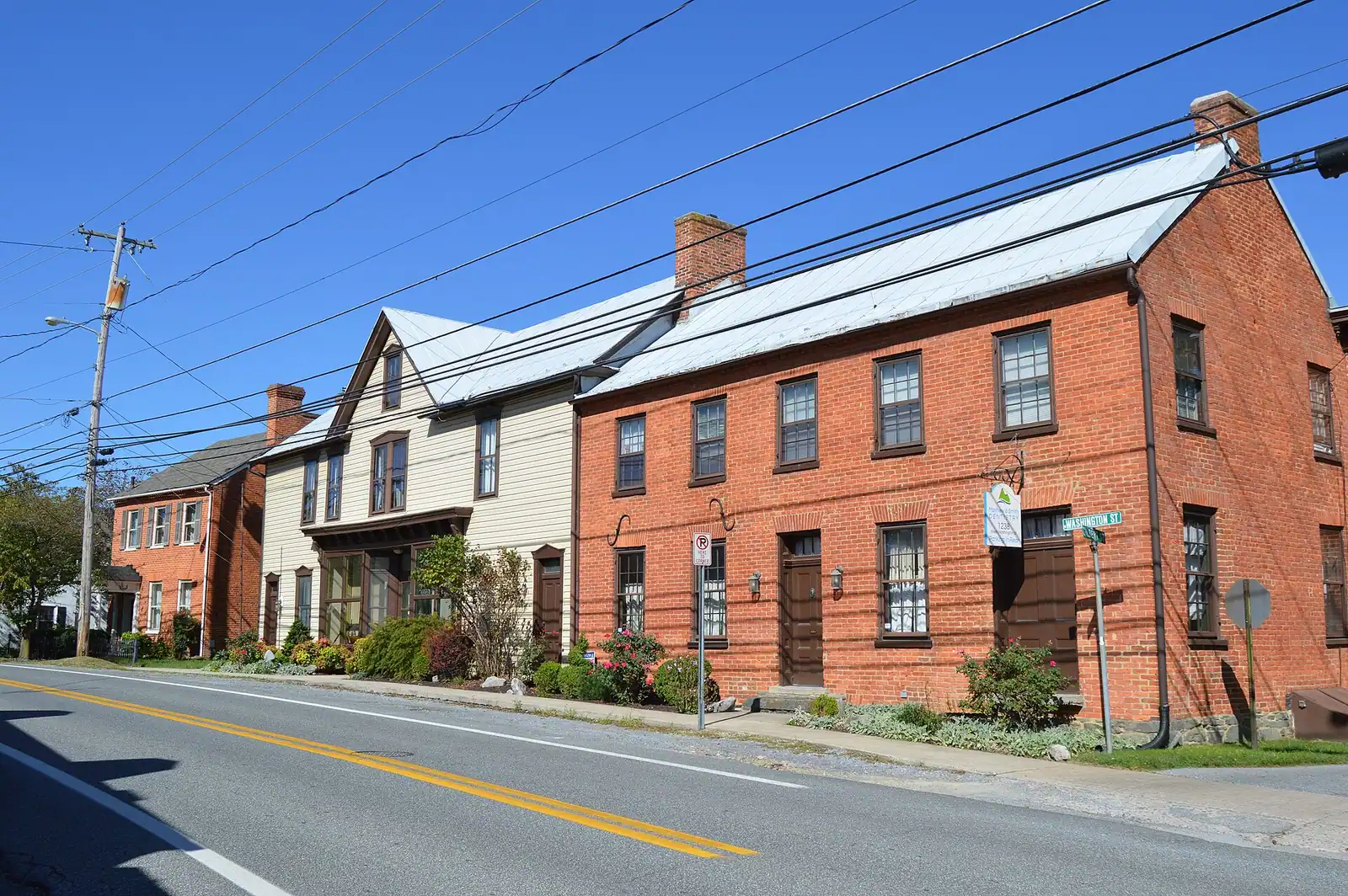
  • Brick commercial frontages of the nineteenth century lining a street with stone kerbs

    Neighbourhood

    Free

    Charles Town

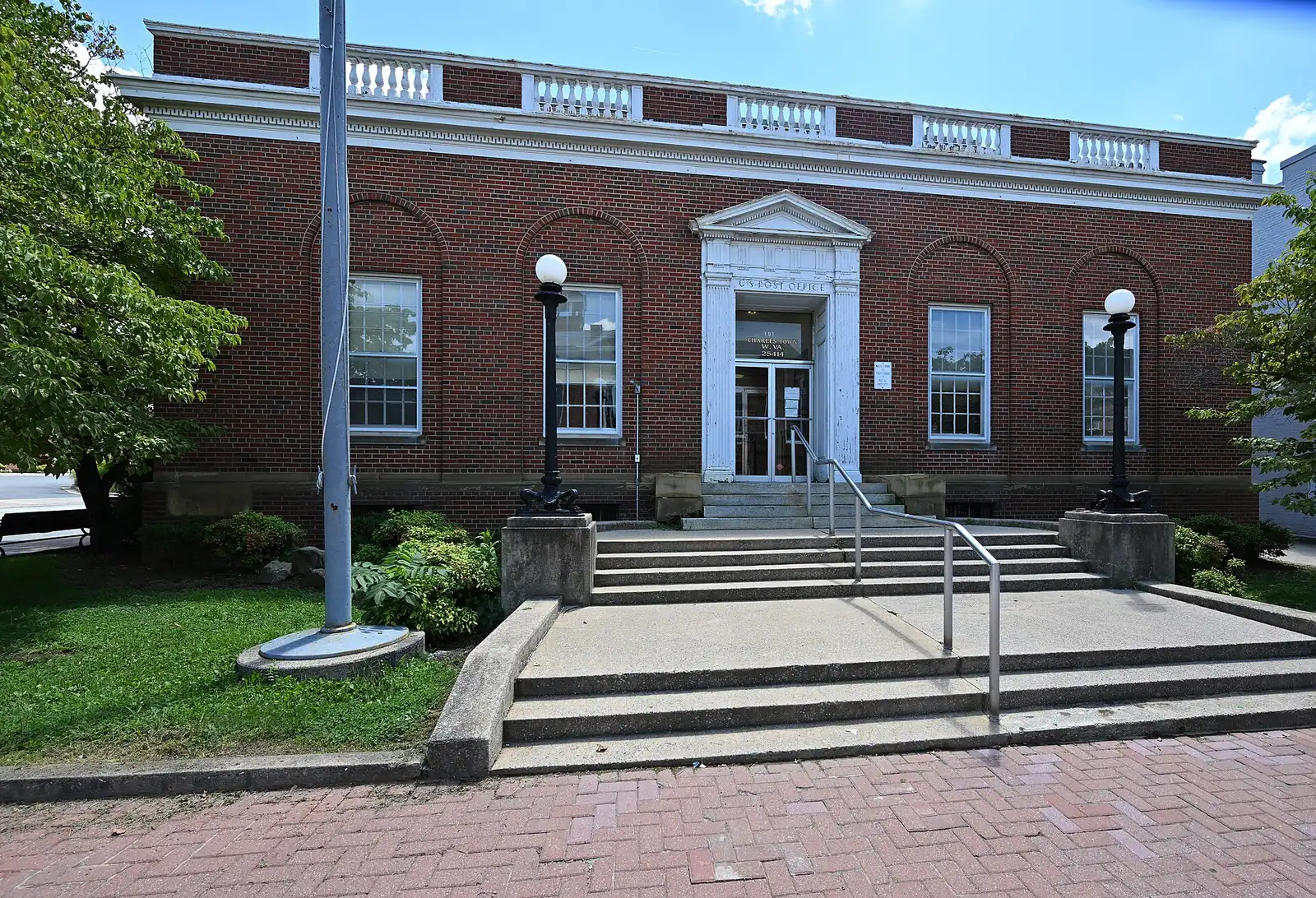
    Eight miles west: the courthouse where John Brown was tried, the ground where he was hanged, and a Washington family town.

    1.5–4 hoursFree to walk. Individual museums and attractions charge separately14.2 mi away

Antietam: common questions

How far is Antietam from Harpers Ferry?

About twenty-five minutes by car, roughly fifteen miles depending on route. The scenic way follows the Maryland bank of the Potomac upstream through Sandy Hook; the faster way runs north on US 340 and MD 67 then west on MD 34 into Sharpsburg. There is no public transport or shuttle between the two parks, so this leg genuinely needs a vehicle if you arrived by train.

How many died at Antietam?

Combined casualties on 17 September 1862 came to roughly 22,700, commonly rounded to 23,000, split about 12,400 Union and 10,300 Confederate. Casualties include killed, wounded, captured and missing rather than deaths alone. It remains the bloodiest single day in American history, and the figure is what it is because all of it happened in about twelve hours on one relatively small piece of Maryland farmland.

How much does Antietam National Battlefield cost?

At the time of writing, $20 per private vehicle, $15 per motorcycle, or $10 per person on foot or bicycle, each valid for three consecutive days. Under-16s are free, a park annual pass is $35 and interagency passes are accepted. The park does not accept cash. Antietam and Harpers Ferry charge separately, so if you are doing both, an annual or interagency pass usually pays for itself straight away.

How long do you need at Antietam?

Half a day is the realistic minimum. The signed driving tour runs roughly eight and a half miles with about a dozen stops and takes two and a half to three hours with the visitor center film and short walks at the Cornfield, Bloody Lane and Burnside Bridge. A full day lets you add the national cemetery in Sharpsburg and a ranger programme, which here is worth rearranging an afternoon for.

What is the connection between Harpers Ferry and Antietam?

They are the same campaign, days apart. In September 1862 Lee sent Stonewall Jackson to take the Union garrison at Harpers Ferry, which sat on his supply line. Confederate guns on the three heights forced the surrender of roughly 12,500 Federal troops on 15 September. Jackson marched north to Sharpsburg, and A. P. Hill's division covered seventeen miles from Harpers Ferry on the 17th to arrive late in the battle and halt the final Union attack.