Skip to content
Menu

A booking made through these earns us a commission from Viator. The price is the same, and the commission had no bearing on what is recommended.

Things to Do

Harpers Ferry with Children

Last updated

Harpers Ferry with children: the shuttle, the flat walks, trains, blacksmiths and summer tubing, plus the climbs and the stone steps to skip.

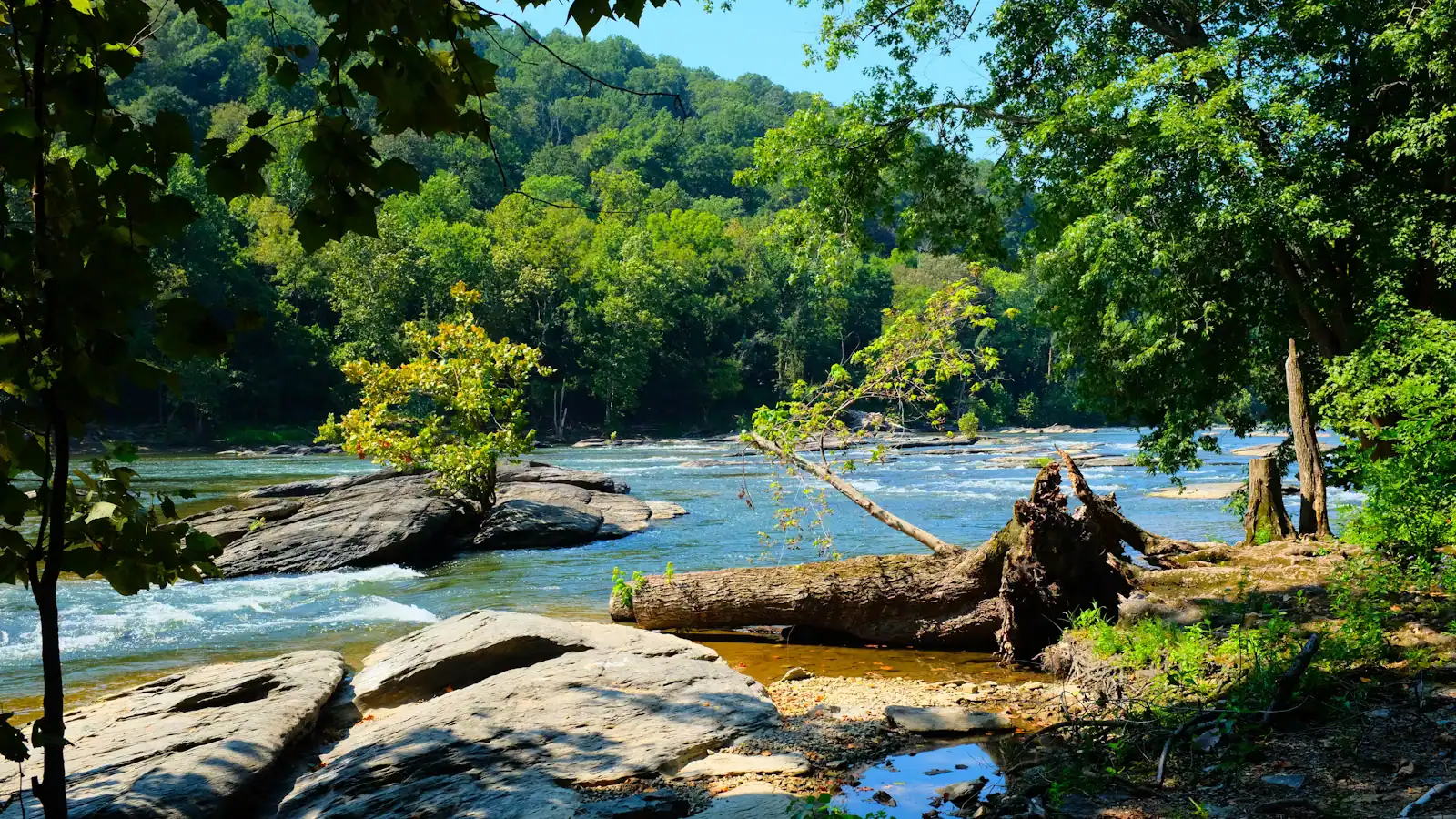
Green trees crowding down to the edge of still river water under a bright skyUnsplash

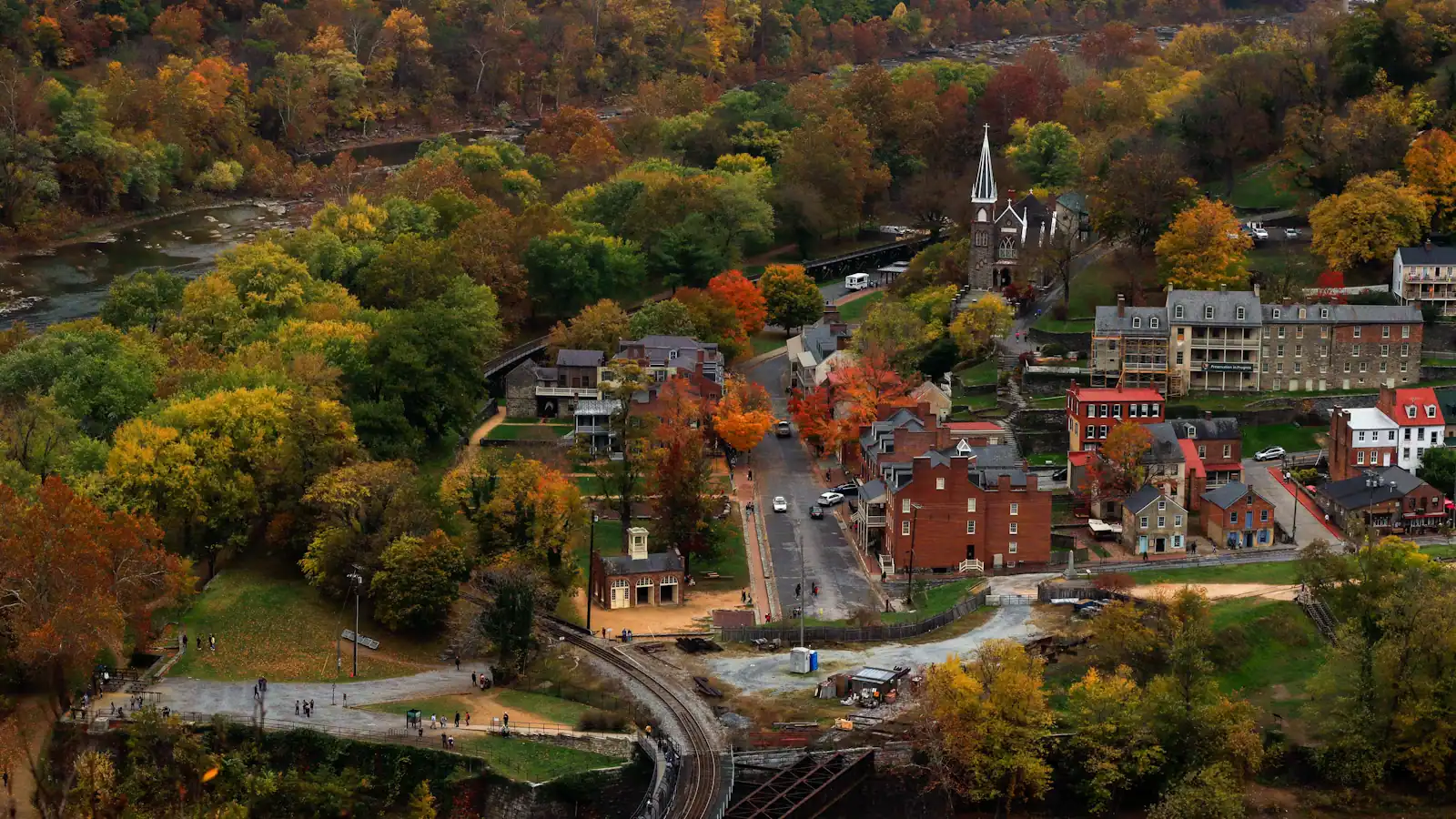
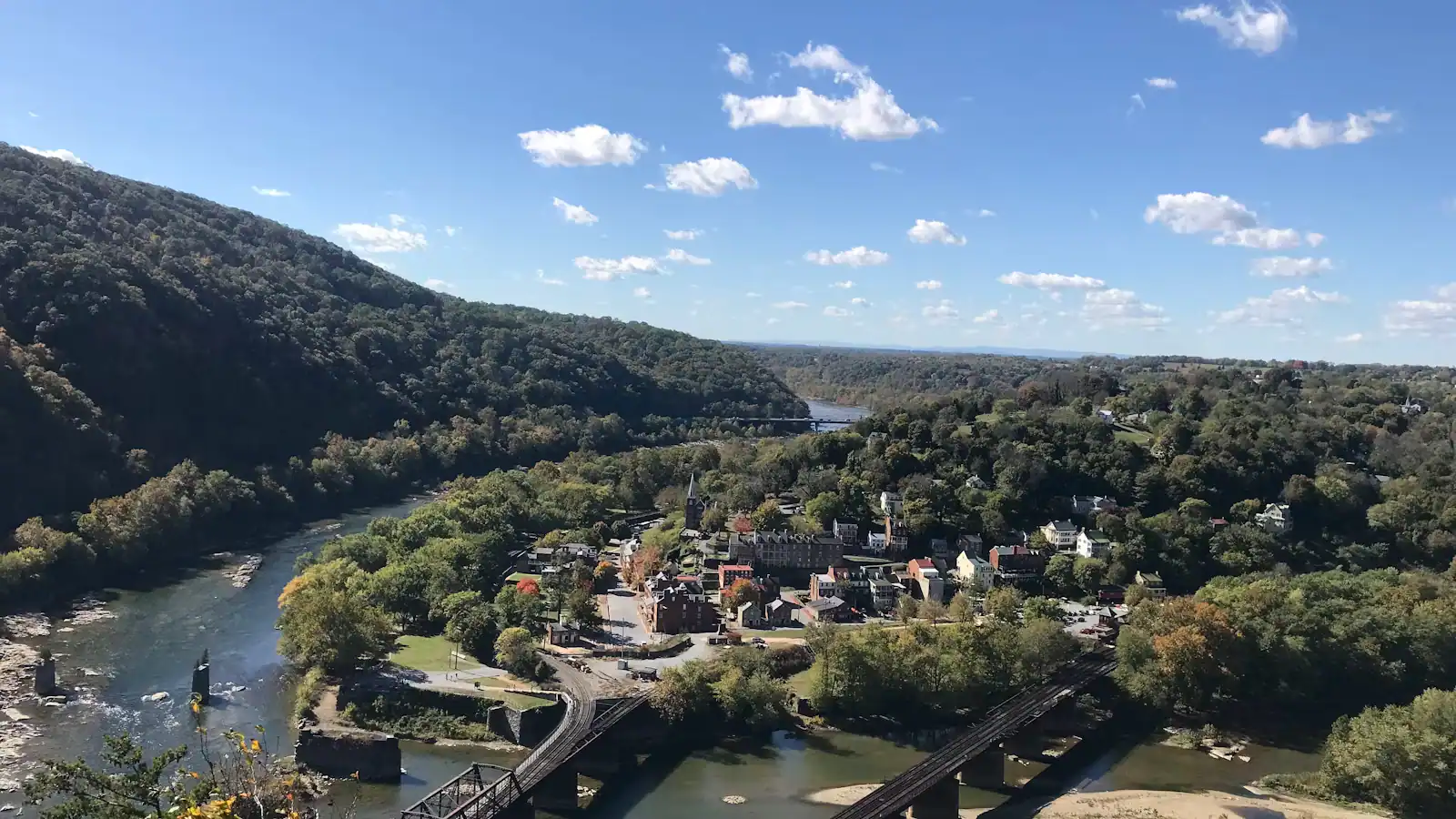
Children do well here, and the reason is not the history. It is that a national park has been laid over a town small enough to walk across in fifteen minutes, with a bus, a working railroad, two rivers and a blacksmith in it. Everything is close together, most of it is outdoors, and almost none of it requires standing quietly in a queue.

The first thing in your favour is the price. Under-16s enter free, and the adult fee is $20 for a car or $10 a head on foot, valid three consecutive days. That covers the exhibit buildings, the shuttle bus, the trails and whatever ranger programming is running. There is no per-attraction ticketing to negotiate, which removes the usual family-holiday arithmetic entirely.

The second is the shuttle. Most eight-year-olds regard a bus that arrives every ten to fifteen minutes as an attraction in its own right, and it solves the parking problem for you. Two rules catch parents out: pushchairs have to be folded before boarding, and coolers and open food and drink are not allowed aboard.

The third is that the good stuff needs no interpretation. A freight train crossing the river bridge. A blacksmith working in an open doorway. Two rivers meeting at a point you can stand on. Stone steps cut in 1810 that go up and up. A canal towpath flat enough for a five-year-old on a bike, when the footbridge that reaches it is open.

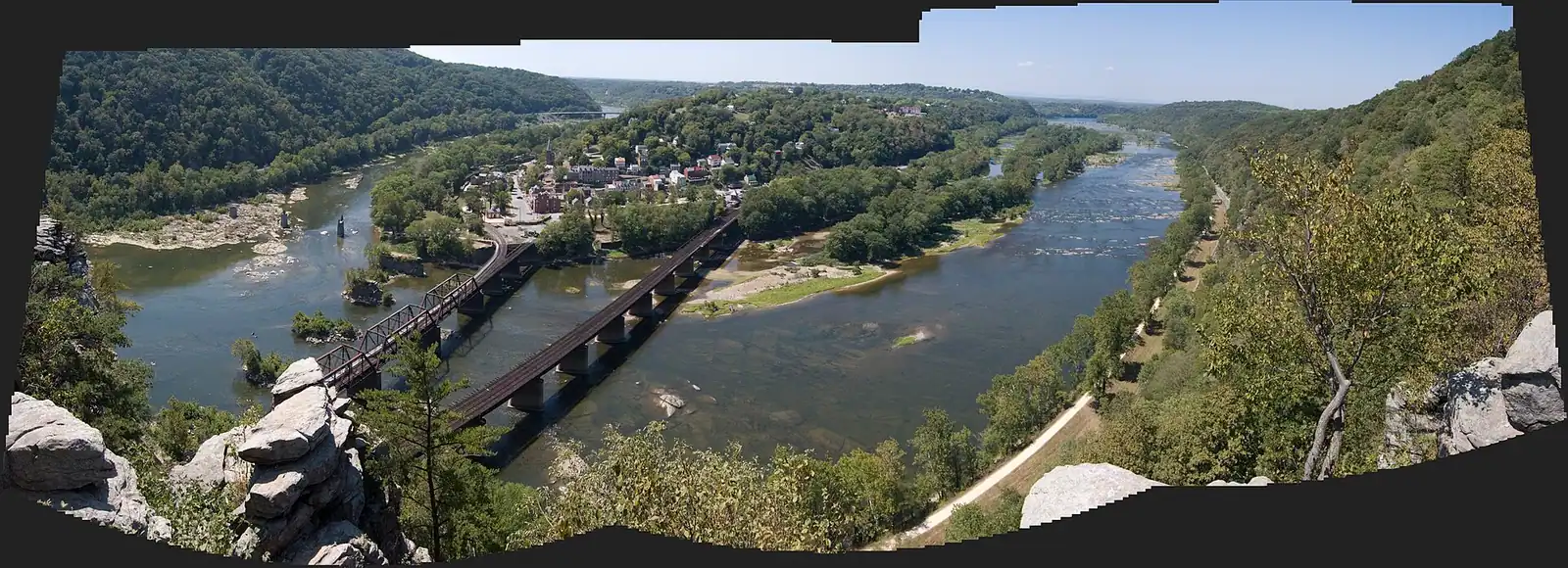
What you plan around is gradient and heat. The town sits in a bowl at about 509 feet with ridges on three sides, and on a July afternoon it holds warmth and humidity that the road above it does not. The lower town is flat; everything above it is not, and the surfaces are worn stone and cobble. Carriers beat pushchairs above Shenandoah Street. Water matters more than snacks. And Maryland Heights — three to four hours, up to 1,788 feet of climbing, no water and no restroom on the trail — is not a young child's hike, whatever the photograph at the top has made you think.

The last consideration is the subject itself. This is a town whose fame rests on a raid, a hanging and a war, and it is also the town where a college for freed people stood on the hill. Both of those can be told to a child honestly. There is a section below on how.
Our picks

The ones we would book

  • Best for Families

    Best tube float once the river drops

    Why we chose it

    From July the Shenandoah usually runs at a speed an eight-year-old enjoys, and a tube trip becomes a lazy two hours rather than an adventure sport. The listings worth booking state a minimum age and include the shuttle back to the put-in. Take the earliest slot of the day and you are off the water before the storms build.

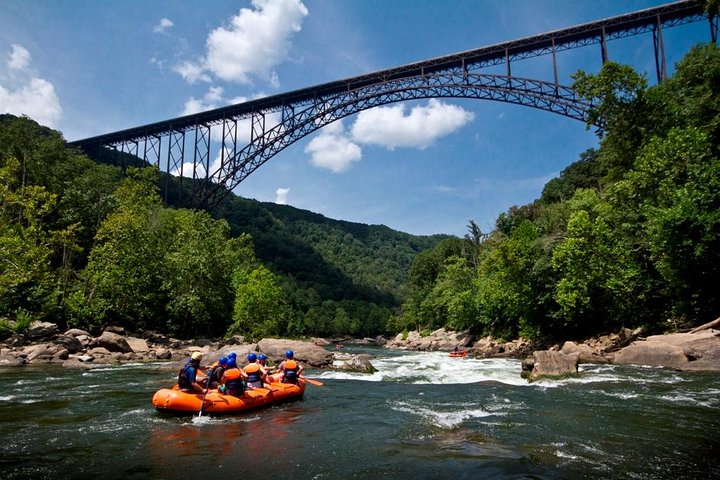
    Fayette Station Rapid and New River Gorge Bridge

    White Water Rafting

    Best for FamiliesFree cancellationLikely to sell out

    Lower New River Whitewater Rafting Trip (opens in a new tab)

    188 reviews

    With the help of an expert guide, your crew will navigate the most exciting stretch of the New River. The Lower New is one of the most…

    5 hours

    Prices checked

    from $153.34
  • Best for Beginners

    Best funyak trip for children who want to steer

    Why we chose it

    An inflatable kayak with a guide alongside gives an older child a job to do, which is the difference between a good day and a bored one. It suits ten and up in summer water. Ask what the age limit is on your date, because it moves with the river level rather than staying fixed through the season.

  • Best Value

    Best short guided walk that holds a child's attention

    Why we chose it

    Ninety minutes is about the ceiling for most children, and the walks that work keep moving and stop at things they can touch. Worth choosing over a longer history tour, and worth checking that the meeting point is at the lower-town shuttle stop rather than at the visitor center up on Cavalier Heights.

    New River Gorge Side by Side Family Tour

    Extreme Sports

    Best ValueLikely to sell outPrivate tour

    New River Gorge Side by Side Family Tour (opens in a new tab)

    49 reviews

    Bring the kids for an awesome family experience! Our Side by Side's seat up to 4 guests and allow those as young as 8 to take part in a…

    3 hours

    Prices checked

    from $435
  • Small Group

    Best small-group river trip for one family

    Why we chose it

    Small outfitters here run boats that suit a single family rather than a coach party, which matters when your six-year-old needs to get out halfway. Look for a trip that states the boat size and carries child flotation as standard, and ask what happens to the booking if the gauge comes up overnight.

    Tree Tops Zip Line Canopy Tour

    Low Supplier Cancellation Rate

    Small GroupFree cancellationLikely to sell out

    Tree Tops Zip Line Canopy Tour (opens in a new tab)

    36 reviews

    Experience a world-class tree-top zip line canopy tour through the endangered hemlock forest of West Virginia’s New River Gorge. With…

    3 hours

    Prices checked

    from $102.64

The parts children actually like

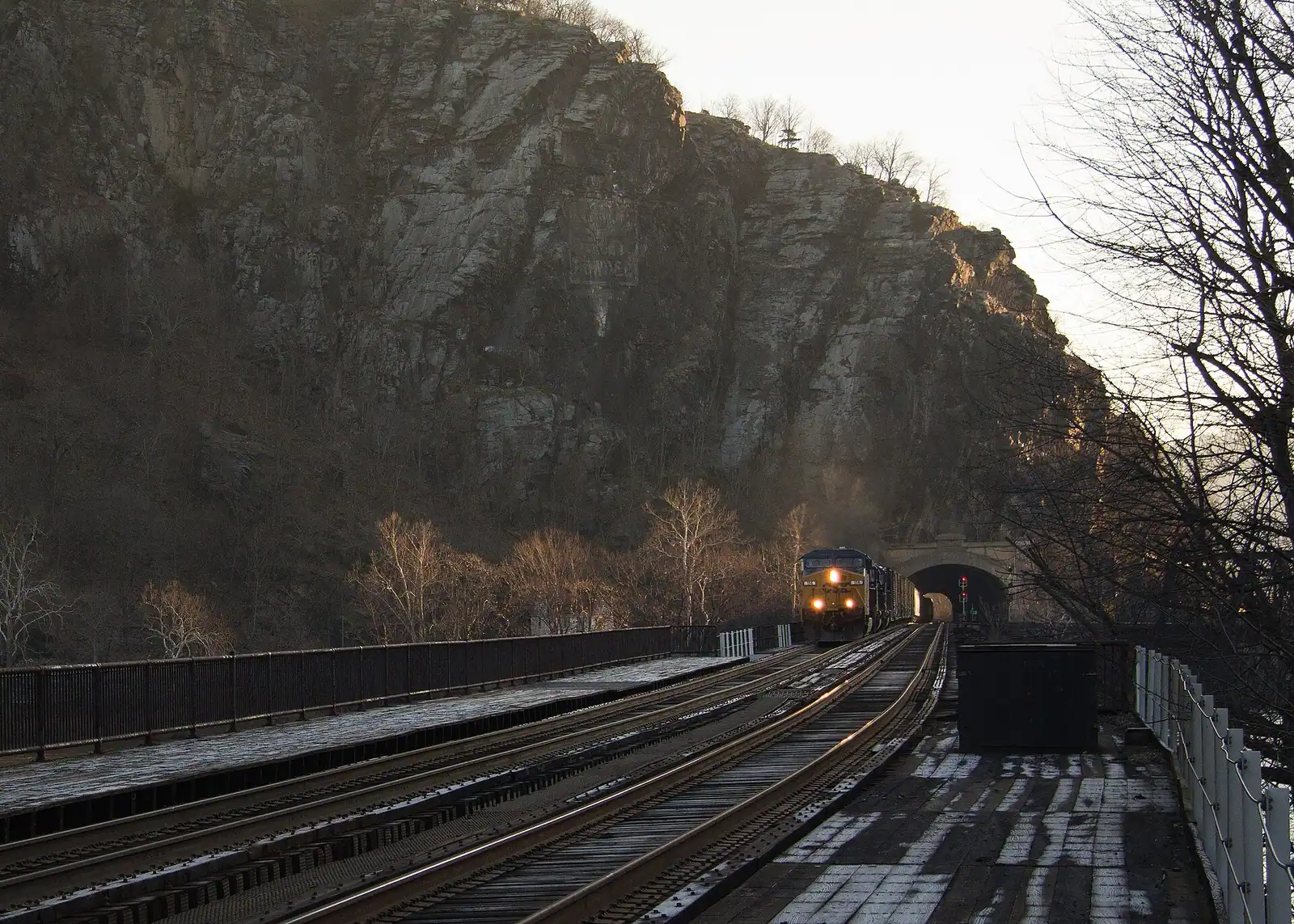
The trains. This is a working freight railroad running through the middle of a historic town, across a bridge, and straight into a tunnel in the rock of Maryland Heights. Trains come through often enough that waiting for one is a reasonable plan rather than a hope. The passenger station is right there too, which makes arriving by train a small event in itself.

The blacksmith and the trades. The park's living-history programming — blacksmithing, open-hearth cooking, tin-making, gardening — is the single best thing here for children under about twelve, because it is loud, hot, physical and happening two feet away rather than behind glass. Ask at the visitor center what is running that day; schedules move with the season.

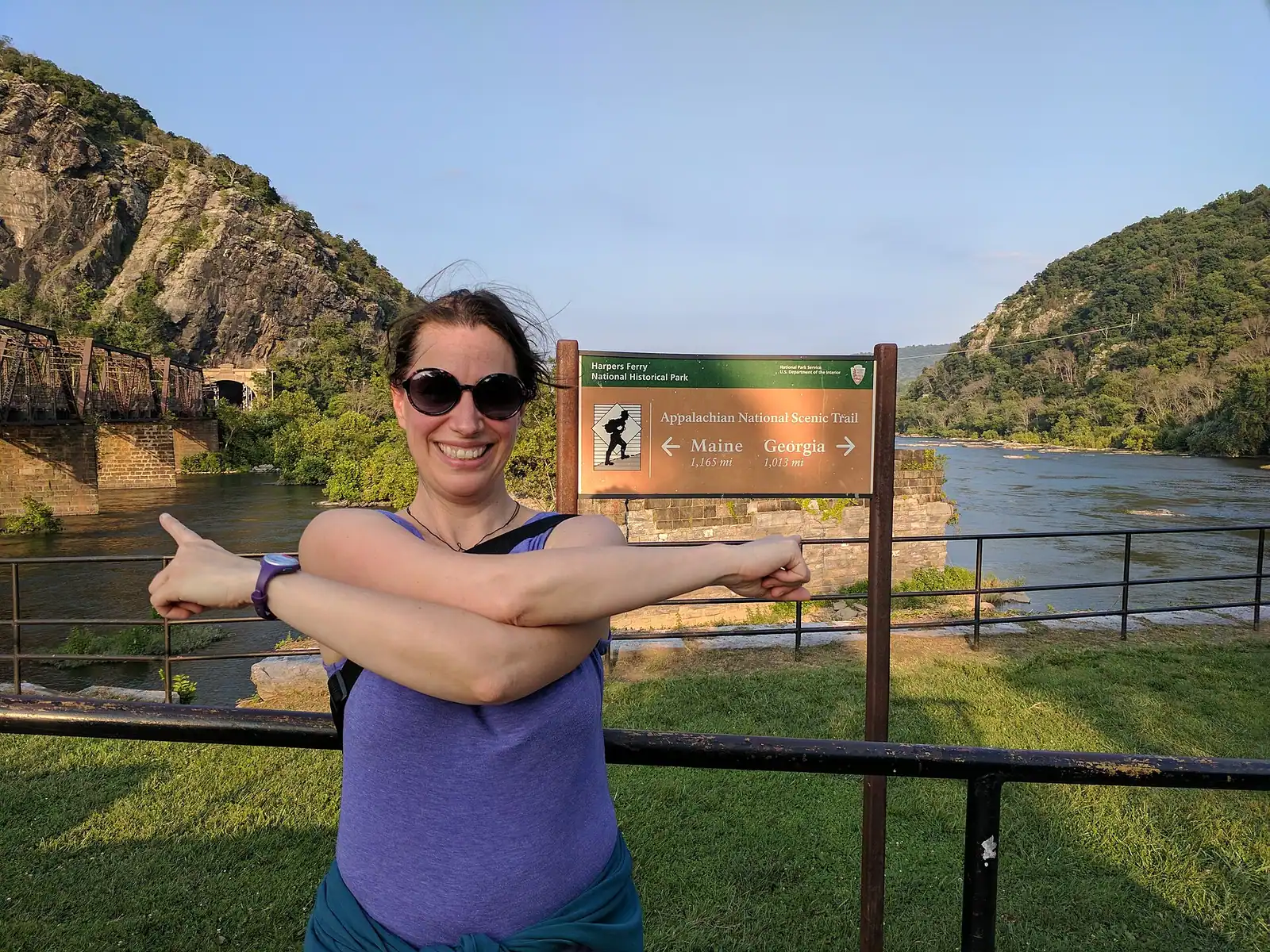
The Point. Two rivers meeting, three states visible at once, and a shoreline of rock to scramble on at the edge. Four minutes from the shuttle stop and free.

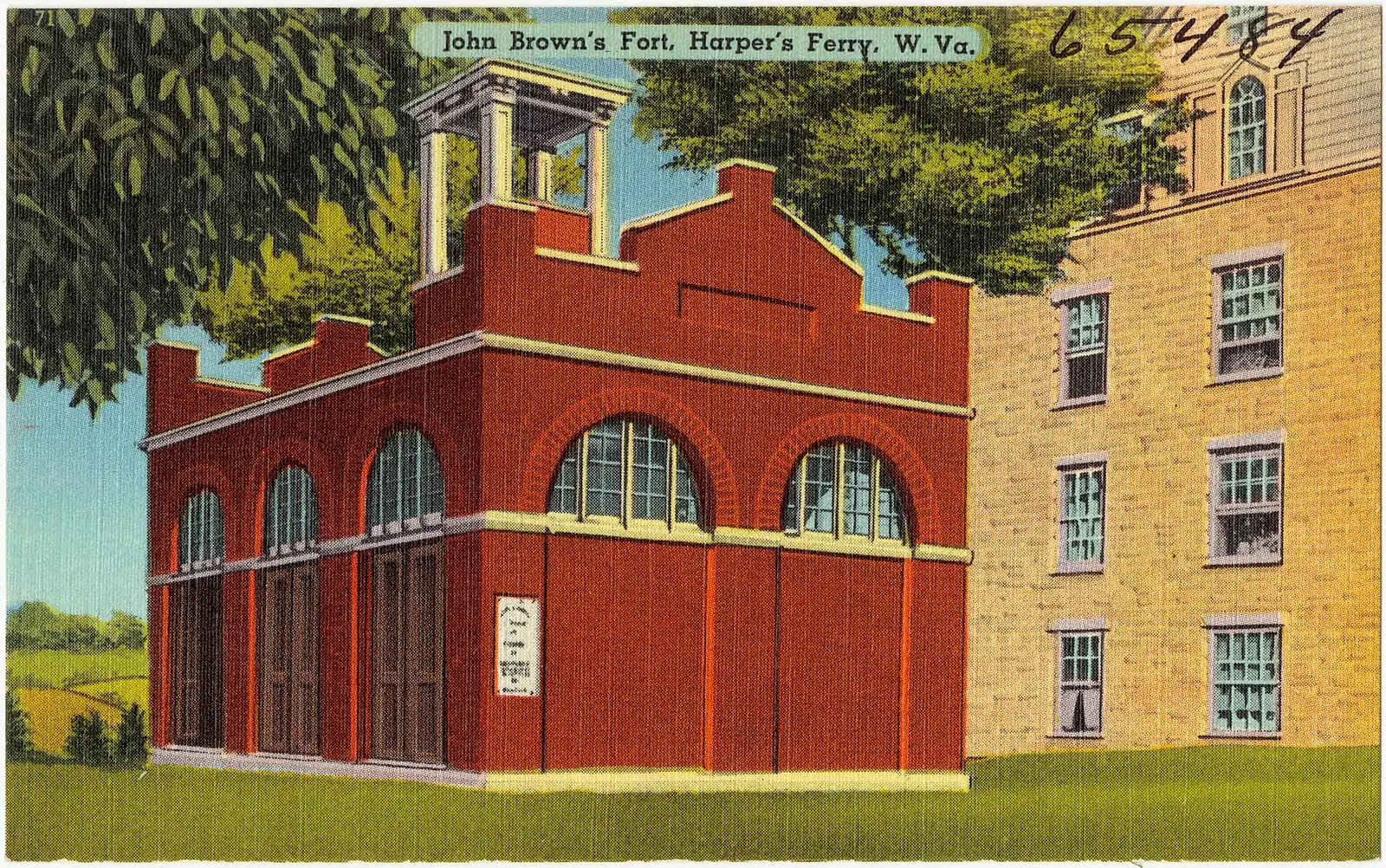
John Brown's Fort. Small, brick, one room, and the story attached to it is short enough to tell standing outside it. Children like that it has been moved four times, which is a fact adults usually find more surprising than they do.

The stone steps. Going up a staircase cut into rock in 1810 is, to a certain kind of seven-year-old, the entire point of the day. Count them on the way up. It shortens the complaining.

Pushchairs, stone and the five o'clock problem

Local tips

  • Carriers beat pushchairs. Shenandoah Street is flat and manageable. Everything above it — High Street, the 1810 steps, the path to Jefferson Rock — is gradient and worn stone. A pushchair turns the best part of the town into a struggle.
  • The shuttle needs pushchairs folded. Plan for it at the stop rather than discovering it with a queue behind you.
  • No coolers or open drinks on the bus. Repack lunch into a bag, or walk down the Visitor Center to Lower Town Trail, which is a pleasant descent and a genuine climb on the way back.
  • Restrooms follow museum hours, nine to five, in the lower town, with facilities at the visitor center. There is nothing on the trails.
  • The exhibit buildings close at five and the last bus leaves the lower town at seven in summer, half past five in winter. With children, aim to be back up the hill an hour before the last bus rather than relying on it.
  • Take the first shuttle at nine. The lot on Cavalier Heights fills by mid-morning on summer and autumn Saturdays, and a queue in the sun is the worst possible start.
  • Check for ticks after any walk off pavement. They are widespread in the grass on all three heights and tick-borne illness is a genuine local concern rather than a theoretical one.

The flat walks, and the one that is worth the bike

Two level options make this town work with short legs.

Virginius Island is a twenty-minute loop on the Shenandoah side through the ruins of an industrial village — mill foundations, a race, stonework in the trees — that the rivers eventually took back. The 1936 flood crested at 36.5 feet and ended people living there. For a child it is a ruin in a wood, which needs no further selling, and it is the quietest corner of the park.

The C&O Canal towpath on the Maryland bank is flat crushed stone running 184.5 miles from Georgetown to Cumberland, with this town at roughly mile 61. No traffic, no hills, water on both sides. It is the best family cycling within an hour of Washington, and an out-and-back of two or three miles suits a small child perfectly.

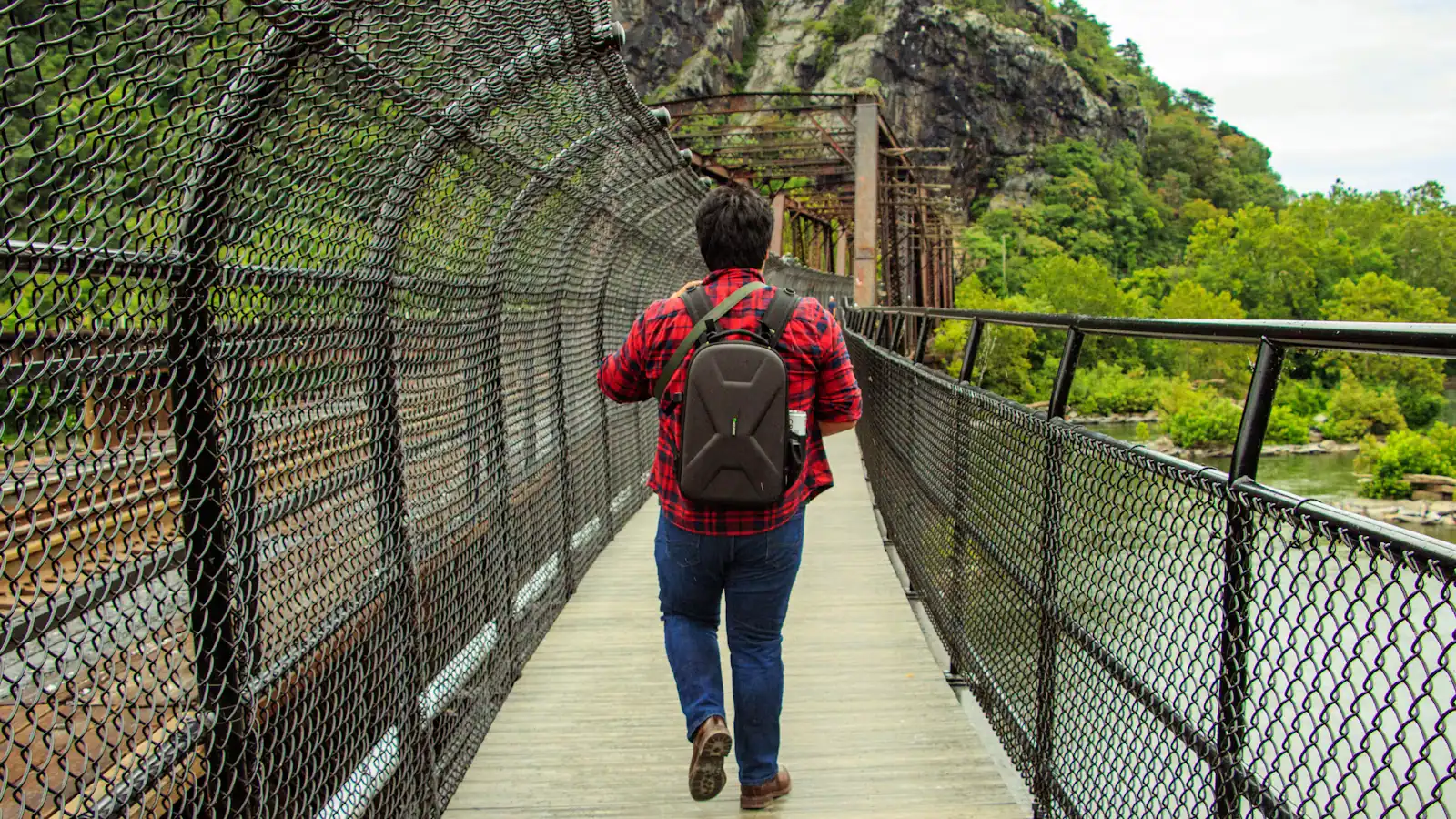
The catch as this page was written: the towpath is normally reached by the footbridge over the Potomac and a spiral staircase, and the park listed that bridge as closed from 27 July 2026 while a better stairway is built. Getting a bike down those stairs was always awkward and impossible with a trailer; while the bridge is shut the towpath is not a walk-across proposition at all. Check the park's current conditions page before you load bicycles into the car.

Bolivar Heights is the third flat option and the easiest view in the area: its own parking area, open ground, a wide look down over the gap, and enough space for children to run.

How to tell a child what happened here

You cannot really visit this town without the question coming up, and the answer is better given straight than dodged.

The short version that works for most primary-school children: slavery was legal in this country and a man named John Brown believed it had to be ended by force. In October 1859 he and a small group seized the government gun factory in this town, hoping enslaved people would join them. They did not, in the numbers he expected. Soldiers broke down the door of that little brick building, most of his men were killed, and Brown was tried and hanged eight miles away in Charles Town. Sixteen months later the country was at war with itself.

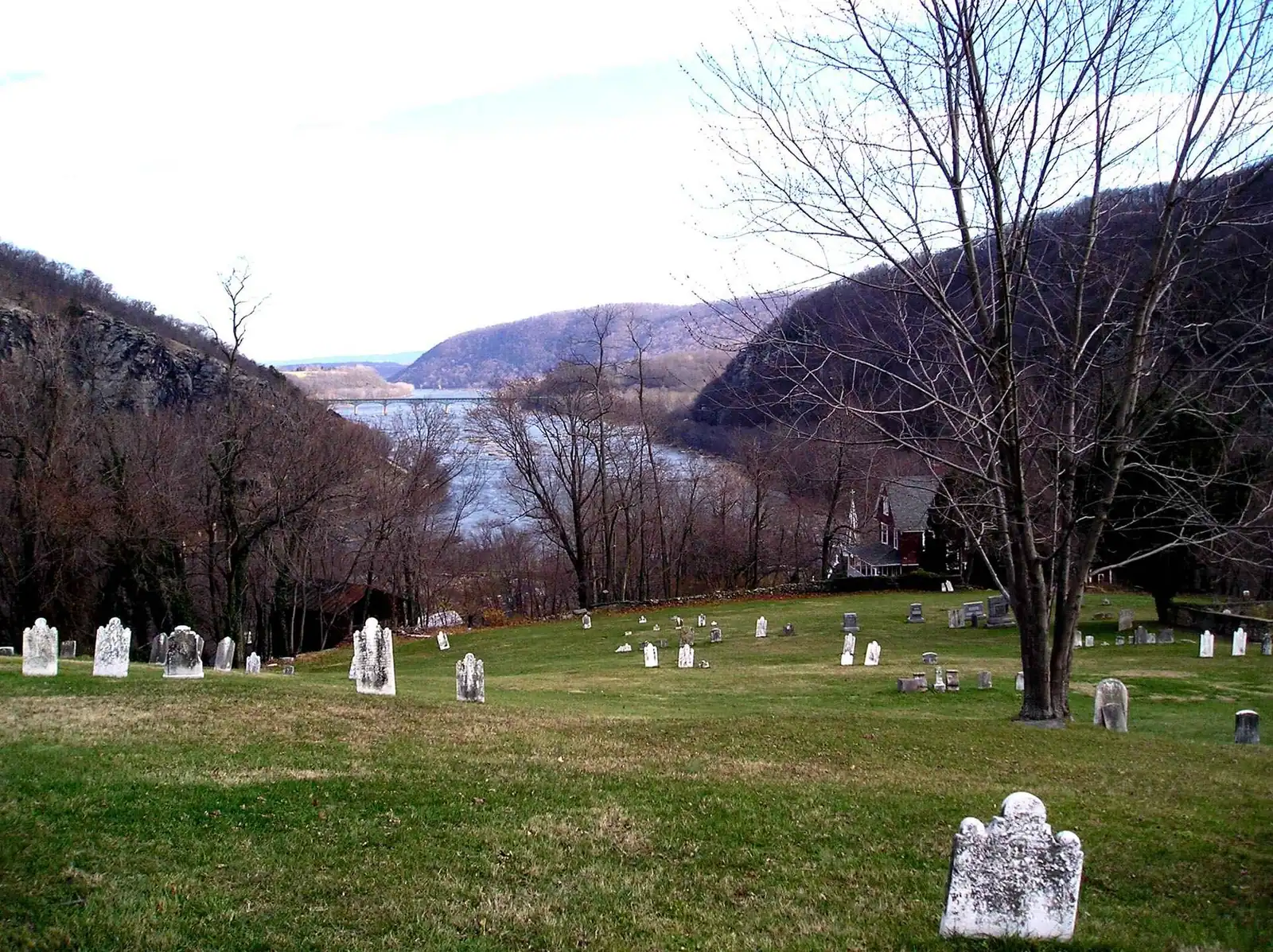
Children ask two things after that. Was he right, which is a conversation rather than an answer and is the same conversation adults were having in 1859. And what happened to the enslaved people, which is where Camp Hill comes in and why the hill matters as much as the fort. In 1865 a school for freed people opened up there, and it grew into Storer College, which taught over seven thousand students of every race until it closed in 1955. In 1906 a group of Black civil rights leaders met on that campus and walked down to look at John Brown's Fort.

That sequence — raid, war, school, movement — is the whole of this town in four sentences, and it is genuinely comprehensible to a nine-year-old.

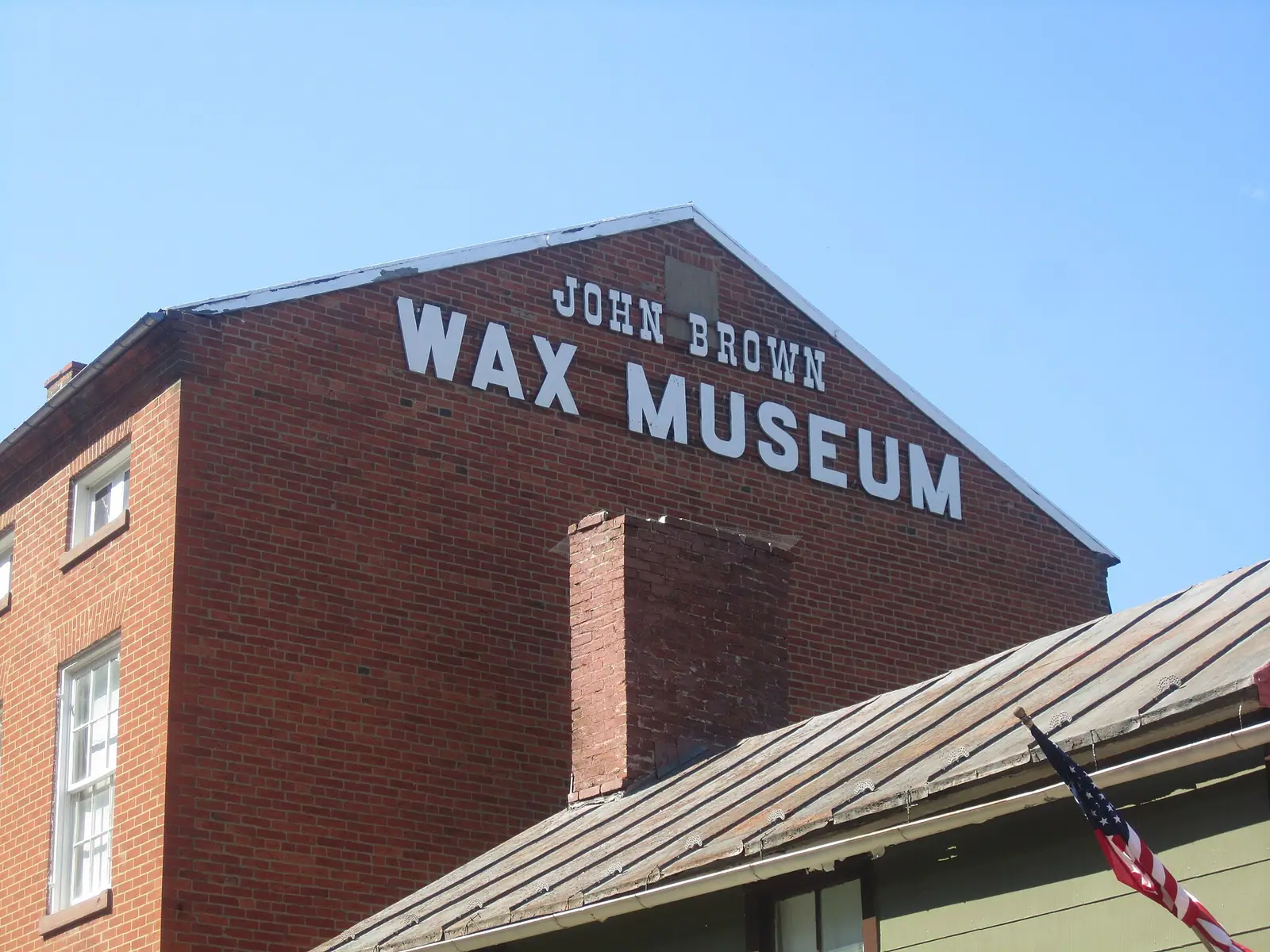
One warning for younger children: the privately run wax museum on High Street tells the raid in tableaux and some of them are grim. It suits older children and delights a certain kind of eleven-year-old. It is not a toddler destination.

July on the river

From about July the lower Shenandoah usually drops to tubing level, and that is when this destination turns into a summer holiday rather than a history lesson.

A tube float is a slow drift with a cooler, minimal instruction and a lot of standing about in the shallows. Funyaks — inflatable kayaks you steer yourself with a guide alongside — are the next step up and suit children old enough to want a job to do. Guided rafting on the Staircase ledges is a different proposition and generally carries a higher minimum age, particularly in spring when the water is up.

Three questions to ask before you book with children: what the minimum age is on that specific date rather than in general, whether the return shuttle to the put-in is included, and what happens if the outfitter cancels for high water or thunderstorms. They do cancel, and in July the storms build over the Blue Ridge fast.

What not to do is improvise. The confluence looks benign from the bank and is not: the current where two rivers meet is stronger than the surface suggests and the bed is ledge and bedrock rather than sand. Swimming there is a bad idea however many people you see doing it. Go with an outfitter, wear the vest they hand you, and let them choose the stretch.

Book it

Everything else we track

A booking made through these earns us a commission from Viator. The price is the same, and the commission had no bearing on what is recommended.

An open departure, or a small group

The same experience sells two ways here. An open departure fills every seat and is priced accordingly; a small-group departure caps the numbers, which costs more per person and buys you room, quiet and a guide who can answer you. Both are priced per person, so compare the cap, not just the price.

  • Book a seat

    A shared departure, priced per person. The cheapest way to do this for one or two people.

    Half Day New River Gorge Whitewater Rafting

    Best Conversion

    Free cancellationInstant confirmation

    Half Day New River Gorge Whitewater Rafting (opens in a new tab)

    44 reviews

    There is no adventure like whitewater rafting and there is no river trip like a Lower New River Gorge whitewater rafting trip. Rafting the…

    4 hours

    Prices checked

    from $109
  • Book a small group

    Numbers are capped rather than filled: you still share, with far fewer people, and still pay per person.

    New River Gorge Jeep Tour (Half Day)

    Likely to Sell Out

    Likely to sell outSmall group

    New River Gorge Jeep Tour (Half Day) (opens in a new tab)

    22 reviews

    Leave the pavement behind and explore America’s newest National Park by Jeep! In the heart of the Appalachian Mountains, the New River…

    4 hours

    Prices checked

    from $465
  • New River Gorge ATV Adventure Tour

    Curated Catalog

    Likely to sell outInstant confirmation

    New River Gorge ATV Adventure Tour (opens in a new tab)

    127 reviews

    With over 100 miles of trails ranging from beginner to expert, incredible guides, and top of the line ATV's, riders of all skill levels…

    3–4 hours

    Prices checked

    from $195
  • Gravity New River Gorge Zip Lines

    Weather Dependent - Moderate

    Free cancellation

    Gravity New River Gorge Zip Lines (opens in a new tab)

    54 reviews

    If you have a need for speed, check out this six-zip racing course that zigs and zags across the ridgeline of a mountain bowl. You’ll soar…

    3 hours

    Prices checked

    from $113.24

What to skip with young children

Before you book

Maryland Heights. The park rates it moderate to strenuous: 4.5 to 6.5 miles round trip, 990 to 1,788 feet of climbing, three to four hours, no water and no restroom anywhere on it, and an unfenced rock ledge at the top above a long drop. It is a fine hike for a fit twelve-year-old who wants it. It is a bad afternoon with anyone younger, and the descent is where tired legs get into trouble. Loudoun Heights is the same answer.

Jefferson Rock in winter ice. The stone steps hold ice long after the streets have cleared, and going down them is the problem rather than going up.

A full day starting after lunch. With the museums closing at five and the shuttle stopping soon after, an afternoon arrival gives you perhaps three usable hours and no margin at all. Come at nine or make it a short visit on purpose.

Building the day around one exhibit building. Closures here are routine — four lower-town exhibit spaces were listed shut in September 2026, including the Civil War Museum and Harper House. Check the park's conditions page, and have the trains, the trades and the Point as your reliable core.

July at two in the afternoon on the uphill side of town. The bowl holds heat. Do the climbing before ten, and keep the middle of the day for the shaded streets and the exhibit rooms.

On the ground

Where to go

Every place below has its own page — hours, parking, what it costs and what to expect when you get there.

  • A squat brick building with a small square tower and an arched doorway, standing alone on open ground

    Historic site

    John Brown's Fort

    An 1848 fire engine house, the only armoury building to survive the war, and it does not stand where any of this happened.

    10–30 minutesCovered by the park entrance fee; no separate charge

  • A narrow street of nineteenth-century shopfronts running uphill between stone kerbs

    Neighbourhood

    Lower Town Harpers Ferry

    Two streets and a flight of stone steps, all of it inside a national park, with the high-water marks still on the walls.

    2–5 hoursPark entrance fee applies; National Park Service exhibit buildings are then free to enter

  • A long steel bridge carrying a walkway across a wide river, with a forested ridge rising behind it

    Viewpoint

    Free

    The Point

    Ninety seconds from the shuttle stop, level the whole way, and the only spot where the town's geography explains itself.

    10–30 minutesFree; covered by the park entrance fee already charged on your vehicle

  • Broken ledges of rock running across a shallow river between wooded banks

    Water feature

    Free

    The Shenandoah River

    Class I to III through the Staircase, Bull Falls at the bottom, and the only thing in this town with much to book.

    2–5 hoursFree to look at and walk beside; guided rafting, tubing and kayak trips are priced by the outfitter

  • Green trees lining the edge of flat, slow river water under a bright sky

    Trail

    Free

    C&O Canal Towpath

    184 miles of level crushed stone on the Maryland bank, reached by a footbridge and an awkward spiral staircase.

    1–5 hoursFree. The towpath itself carries no entrance fee

  • A whitewashed stone-walled house on a steep bank, its garden held up by a dry stone retaining wall

    Historic site

    Free

    Bolivar Heights

    Flat, open and five minutes from the car park: the battlefield where a Union garrison of 12,500 surrendered in two days.

    1–1.5 hoursNo separate charge; covered by the park entrance fee, which is valid three consecutive days

  • A stone-walled building on a steep bank with a dry stone retaining wall holding up the ground beside it

    Historic site

    Virginius Island

    A vanished factory town on the Shenandoah: mill walls, a canal race and 180 residents, all of it taken by flood.

    0.5–1.5 hoursIncluded with park entrance; no separate charge for the island

  • A narrow street of nineteenth-century shopfronts climbing between stone kerbs

    Museum

    John Brown Wax Museum

    A privately run wax tableau of the raid on High Street. Not the free National Park Service museum, and often confused with it.

    20–35 minutesSeparate admission, charged by the operator. Not covered by your park entrance fee

Straight answers

Questions people actually ask

Is Harpers Ferry good for kids?

Yes, with the right plan. It is compact, mostly outdoors, free for under-16s, and full of things that need no explanation: freight trains crossing the river, a blacksmith working in a doorway, two rivers meeting, stone steps cut in 1810. What it is not is stroller-friendly above the flat street by the water, and the headline hike up Maryland Heights is too much for young children.

How much does Harpers Ferry cost for a family?

At the time of writing, $20 for a private vehicle, valid three consecutive days, with children under 16 free. That one payment covers the shuttle bus, the trails, the exhibit buildings and any ranger programming running that day. Walking or cycling in costs $10 a head for anyone 16 and over. The park does not take cash, so bring a card or buy online before you arrive.

Can you take a stroller in Harpers Ferry?

On Shenandoah Street, yes — it is flat and the exhibit buildings are along it. Above that, a carrier is far better. High Street is a real gradient on worn stone, the 1810 steps to Jefferson Rock have no alternative route, and the cobbles and uneven kerbs fight a pushchair the whole way. Note too that the park shuttle requires pushchairs to be folded before you board.

What can kids do in Harpers Ferry when it is hot?

Get on the water or stay low and shaded. From July the Shenandoah usually drops to tubing level, which is the best hot-weather answer here. Failing that, the exhibit buildings along Shenandoah Street are indoors and open nine to five, Virginius Island is shaded and flat, and the towpath across the river is level and tree-lined when the footbridge is open. Save any climbing for before ten in the morning.

Is the Maryland Heights hike suitable for children?

Not for young ones. The park rates it moderate to strenuous — 4.5 to 6.5 miles round trip, 990 to 1,788 feet of climbing, three to four hours, with no water or restrooms on the trail and an unfenced ledge at the overlook. A fit twelve-year-old who wants to do it will be fine with plenty of water. Below that age, take Bolivar Heights instead: flat, open and a genuinely wide view.

How do you explain John Brown's raid to a child?

Straightforwardly. Slavery was legal here; a man named John Brown believed only force would end it; in October 1859 he and a small band seized the government gun factory in this town, expecting enslaved people to join them. Soldiers broke into the engine house, most of his men died, and he was hanged at Charles Town. Then take them up to Camp Hill, where a school for freed people opened in 1865.

Is there a Junior Ranger program at Harpers Ferry?

Ask at the visitor center on Cavalier Heights or at a staffed exhibit building when you arrive — this park runs children's activity material as most National Park Service sites do, and the rangers will tell you what is currently available and what it takes to earn a badge. Because the format and the programming schedule change, we would rather point you at the desk than print something that may be out of date.