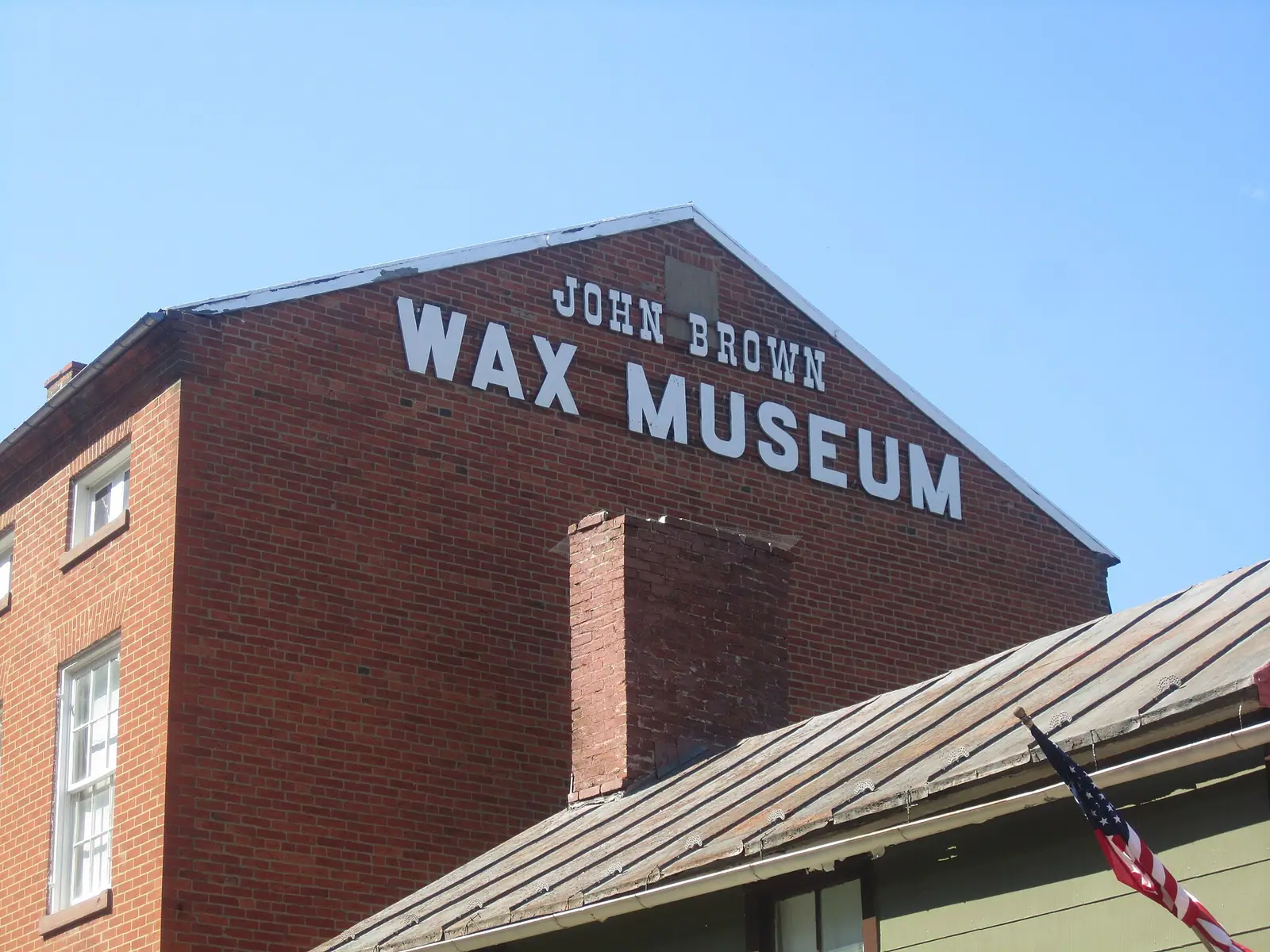
Start with the thing that costs people money. There are two John Brown museums in Harpers Ferry. One is the John Brown Museum on Shenandoah Street, run by the National Park Service, included in your entrance fee, staffed by rangers and built on scholarship. The other is the John Brown Wax Museum on High Street, which is a private attraction, charges separately, and is a different proposition entirely. Visitors routinely do the second thinking they have done the first.
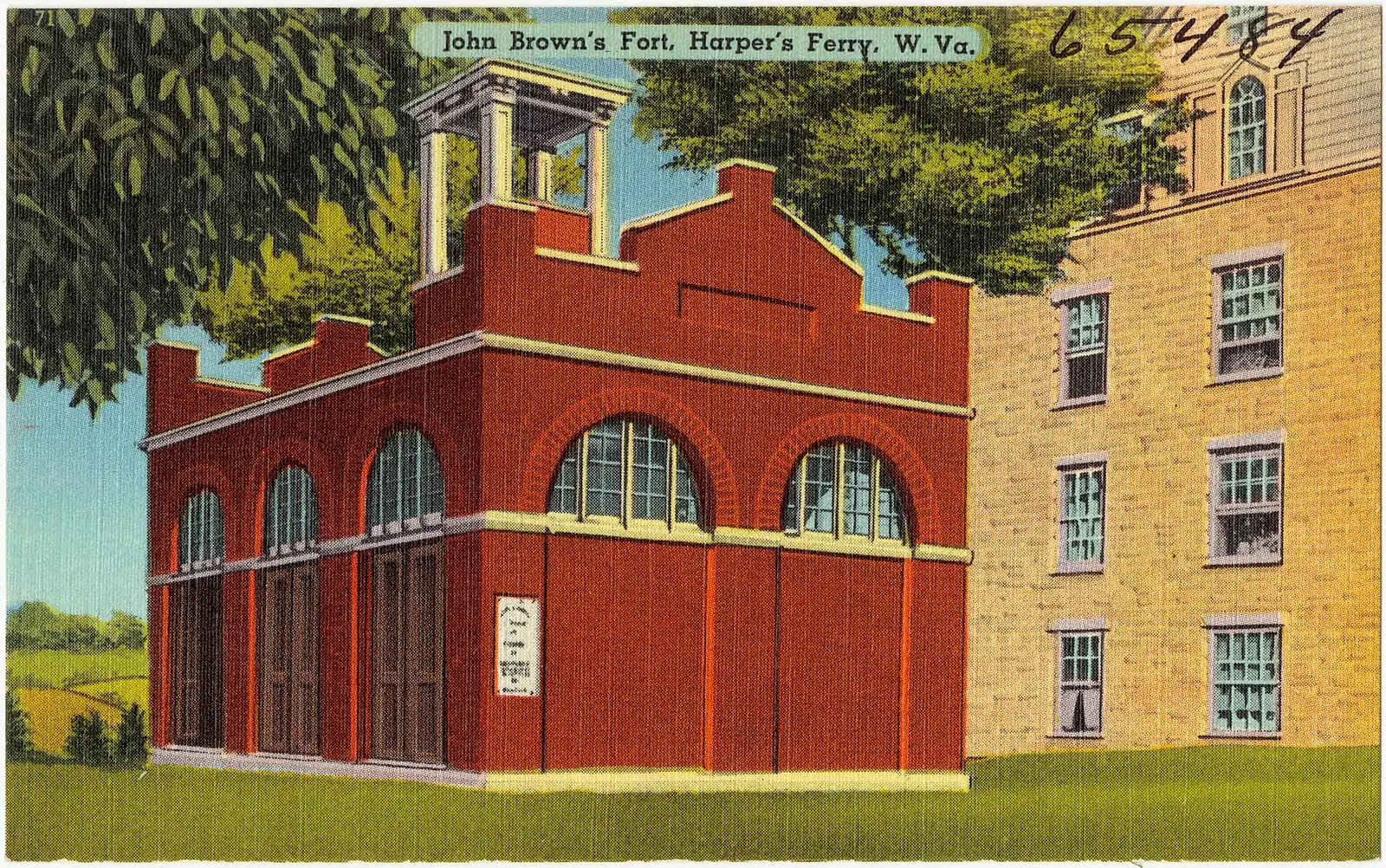
The wax museum is an old-fashioned thing and makes no secret of it. Wax figures in period dress, arranged into tableaux with recorded narration and lighting cues, walking you through the raid of October 1859: the farmhouse on the Maryland side, the seizure of the armoury, the engine house, the Marines at the door, the trial at Charles Town, the gallows. It belongs to a family of American roadside attractions that has mostly disappeared, and part of its appeal now is that it survived.
Is it good? It depends entirely on what you want. As history it is a summary, and a dramatic one. As an experience it is genuinely atmospheric, occasionally unintentionally funny, and the execution sequence is grim enough that some parents wish they had thought about it first. Children of about eight upward tend to enjoy it enormously. Adults who have just come from the park museum sometimes find the tonal gap jarring.
What it does well is narrative order. The park's exhibits are excellent and scattered across several buildings, and a first-time visitor can leave the lower town with facts but no sequence. Twenty minutes of tableaux fixes that for a child in a way a display case does not.
Treat it as a supplement rather than a substitute, do it after the free museum rather than before, and check the door for hours, because a small independent attraction in a town of 269 people keeps the hours it can.