Skip to content
Menu

A booking made through these earns us a commission from Viator. The price is the same, and the commission had no bearing on what is recommended.

Shopping

High Street

Last updated

The lower town's one commercial street: a stone climb of shopfronts ending at the steps up to St Peter's and Jefferson Rock.

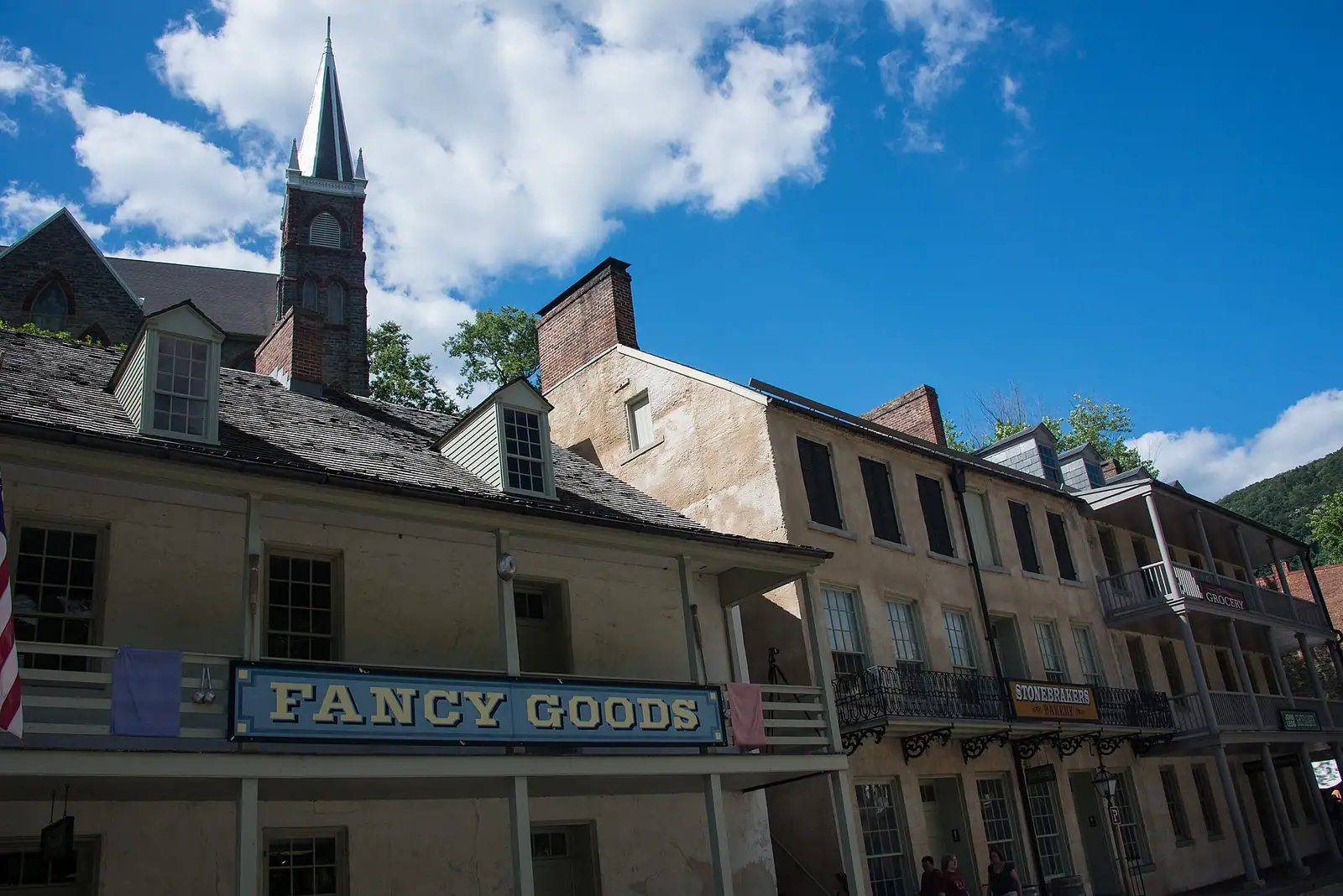
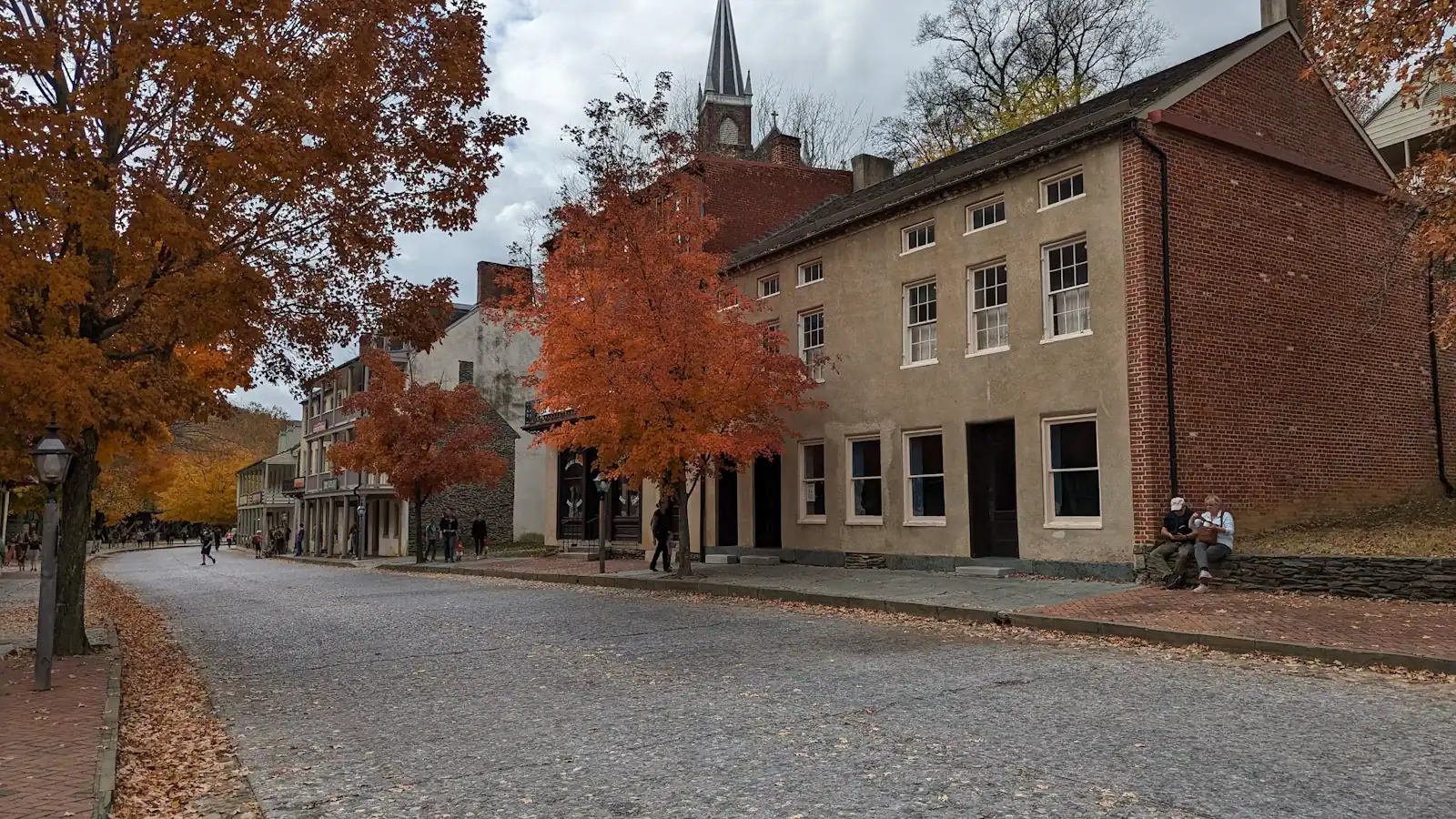
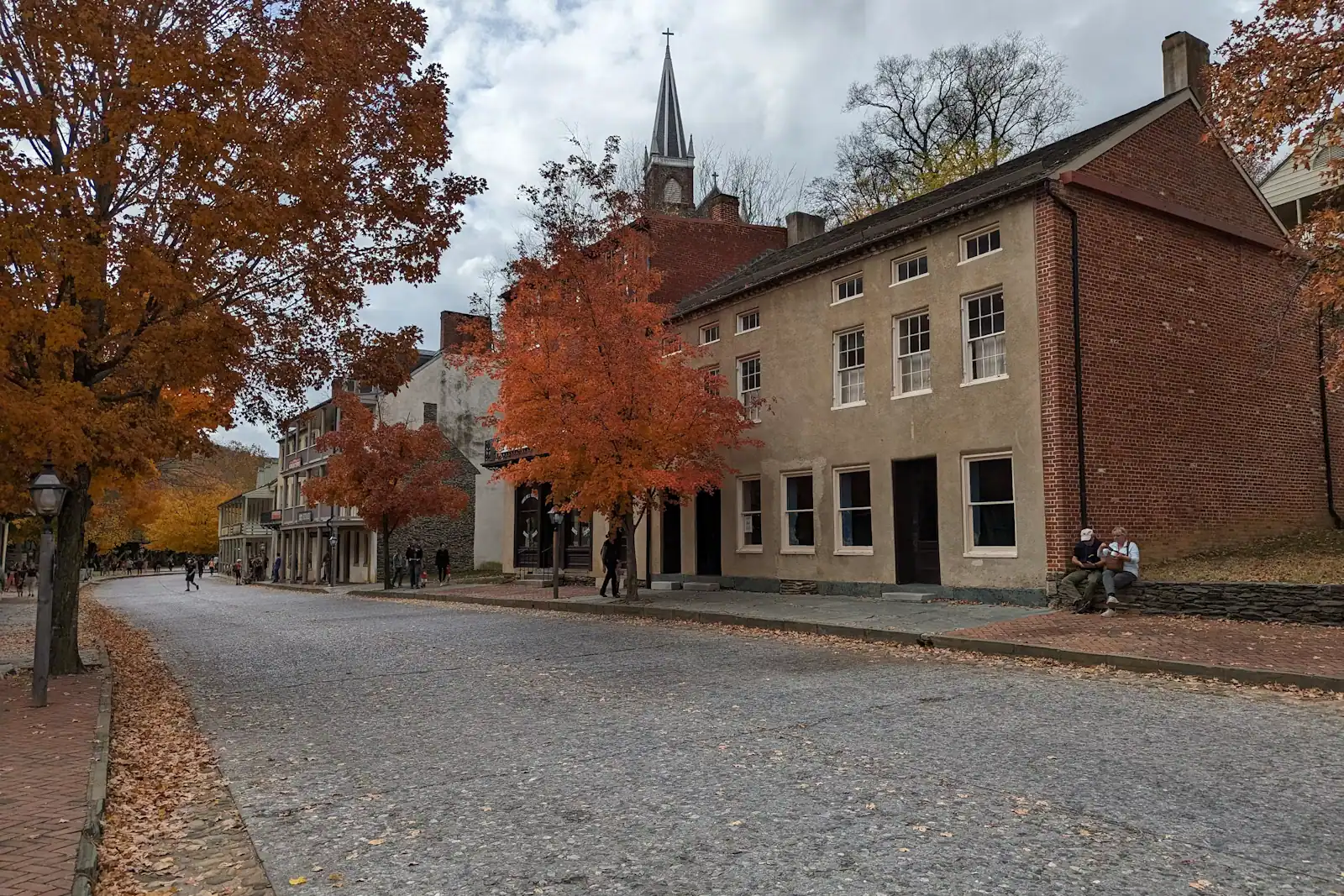
A narrow street of nineteenth-century shopfronts climbing between stone kerbsUnsplash

Photo: UnsplashUnsplash License

High Street is the hill. Shenandoah Street runs flat along the water and holds the museums; High Street turns up from it and holds everything you can spend money on, which in a town of 269 people is a short list kept by a small number of stubborn independents.

It is a proper gradient, not a gentle rise, and the surface is nineteenth-century throughout: worn stone, brick, stone kerbs of uneven height, and a camber that catches people looking at the buildings rather than their feet. Take it slowly. This is the street where visitors turn an ankle, and it is also the street where everybody stops halfway up to photograph the view back down towards the confluence, which is genuinely the best free photograph in the lower town and the reason there is always a small traffic jam of people outside the same doorway.

The buildings are the interest. Federal and Victorian shopfronts stacked into a slope, several of them owned by the National Park Service and leased out, others privately held, most of them narrow, tall and built to fit a plot that had no business supporting a building at all. Some house park exhibits, some house shops, some are homes, and the mix changes.

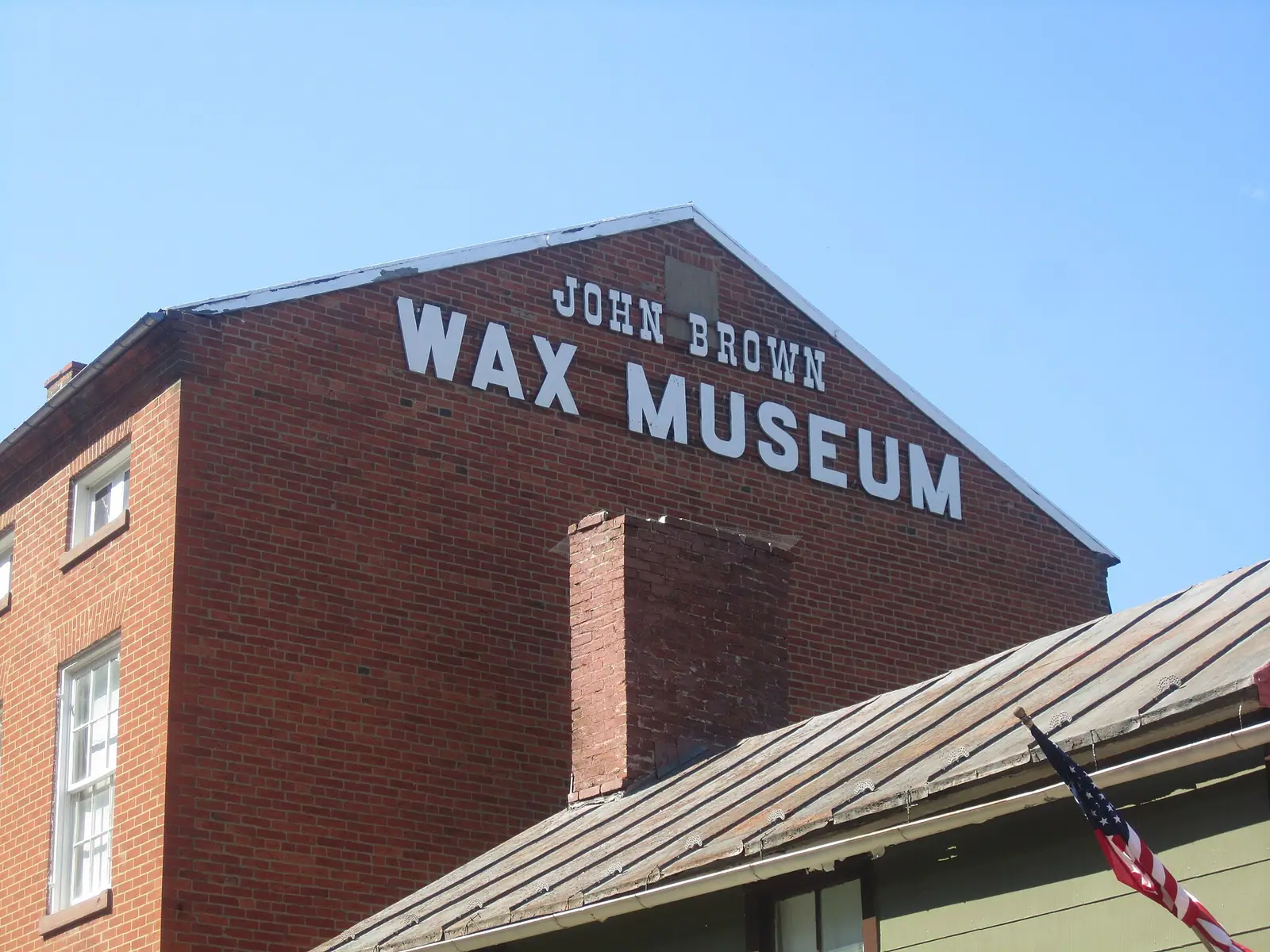
What trades here at any given moment: outfitter storefronts booking rafting and tubing, a couple of restaurants and a coffee place, gift and antique shops, the John Brown Wax Museum, the meeting points for the ghost walks that assemble here after dark, and the sort of small independent retail that survives on four good months of the year.

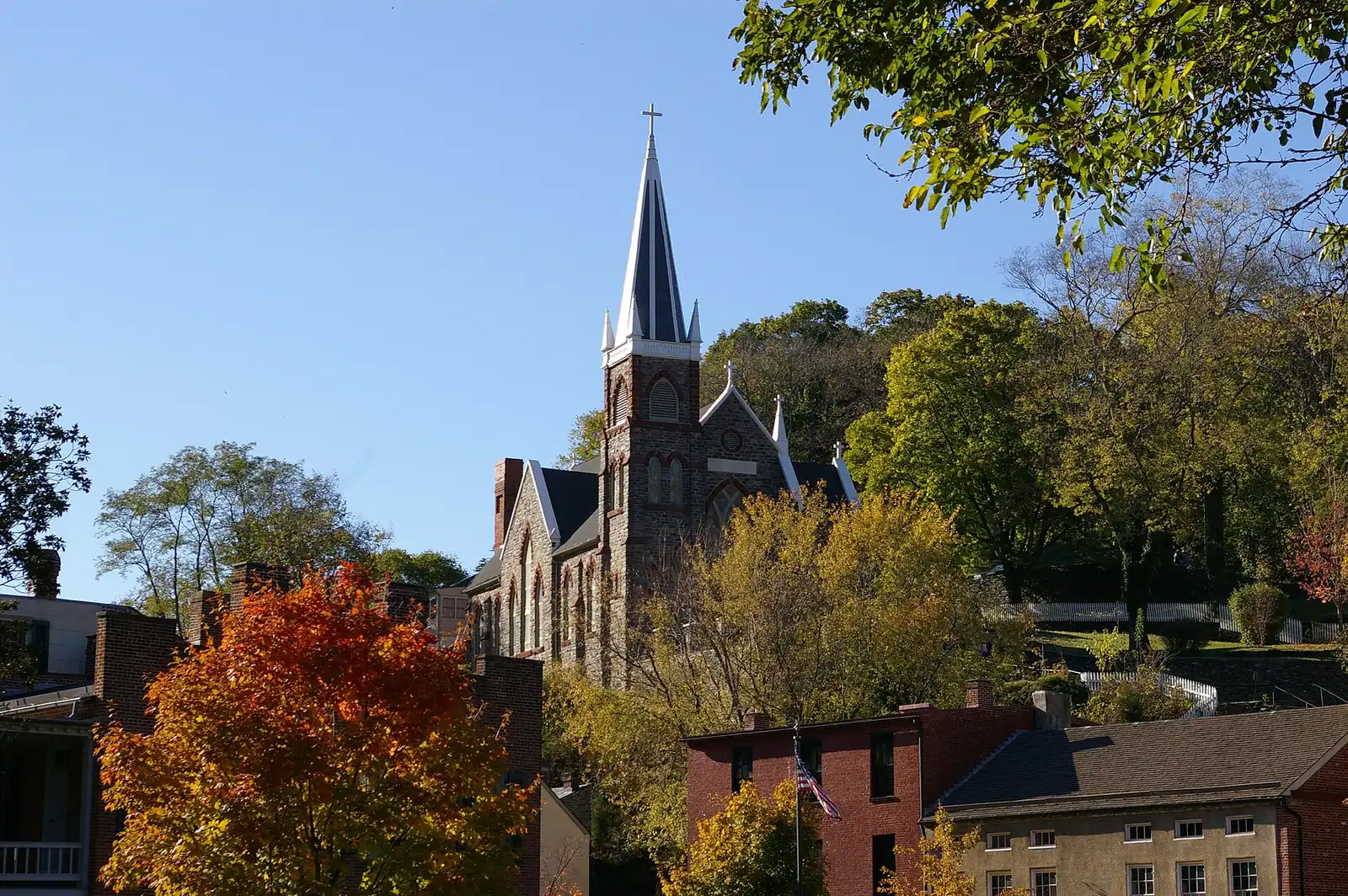
At the top the street runs out and becomes stone steps. Those steps climb past St Peter's Roman Catholic Church with its slate roof and spire, past the ruins of St John's Episcopal above it, and on to Jefferson Rock. Most of the good stuff in Harpers Ferry is up those steps, and High Street is how you get to them.
Getting there and parking

High Street turns uphill off Shenandoah Street in the lower town, two or three minutes from the shuttle stop.

There is no parking on it and none worth attempting anywhere nearby. Leave the car at the visitor center on Cavalier Heights, 171 Shoreline Drive, and ride the shuttle down.

Coming off the train, walk up Potomac Street from the station to Shenandoah Street and turn up the hill. Coming down from Bolivar on foot, you arrive at the top of High Street instead, which is a much easier way to do it and means the climb is on the way home rather than at the start.

The climb, and the view halfway up

From Shenandoah Street to the steps at the top is a few hundred yards and about a hundred feet of climbing. It takes five minutes at a stroll and ten if you stop, which you will.

Stop about halfway. Turn round. What you get is the roofline of the lower town falling away to the point where the rivers meet, with the railroad bridge and the Maryland ridge behind it, framed by shopfronts on both sides. It is a better composition than the open view at The Point because the buildings give it scale, and it needs no walk, no fee and no climb beyond what you have already done.

The light matters. Morning throws the street into shadow with the far ridge lit. Late afternoon does the reverse and warms the brick. Midday is flat and unhelpful, which is when most people are here.

Footwear is a serious point rather than a throwaway. Worn stone is slick when wet, the kerbs are irregular, and in winter ice sits on this street after the roads have cleared. The descent is when people come unstuck, not the climb.

What trades here, and when it is shut

We will not print the name and hours of individual businesses, because in a town this size that information is wrong within a season and a visitor who plans lunch around it ends up standing at a locked door.

What we will say is the shape of it.

  • Peak season is roughly April to October, with October the busiest weeks of the year.
  • Winter thins out hard. Several shops and kitchens cut back to weekends only from January into March. Some close altogether for a stretch.
  • Weekdays out of season are quiet enough that you may find two doors open on the whole street.
  • Weather closes things. A wet Tuesday in February is not a day when a one-person shop opens up.

So: eat before you come, or eat in Bolivar up the hill where there is more choice and more reliability, or come at a weekend if browsing the shops is part of why you are here. If you want a specific place, telephone it on the morning of your visit. The rangers at the visitor center generally know what is trading.

None of this is a complaint about the businesses. It is arithmetic in a town of 269 people that gets its income in four months.

The steps at the top, and what they lead to

High Street does not end at a junction. It ends at stone steps cut into the hillside, and those steps are the spine of the upper half of the lower town.

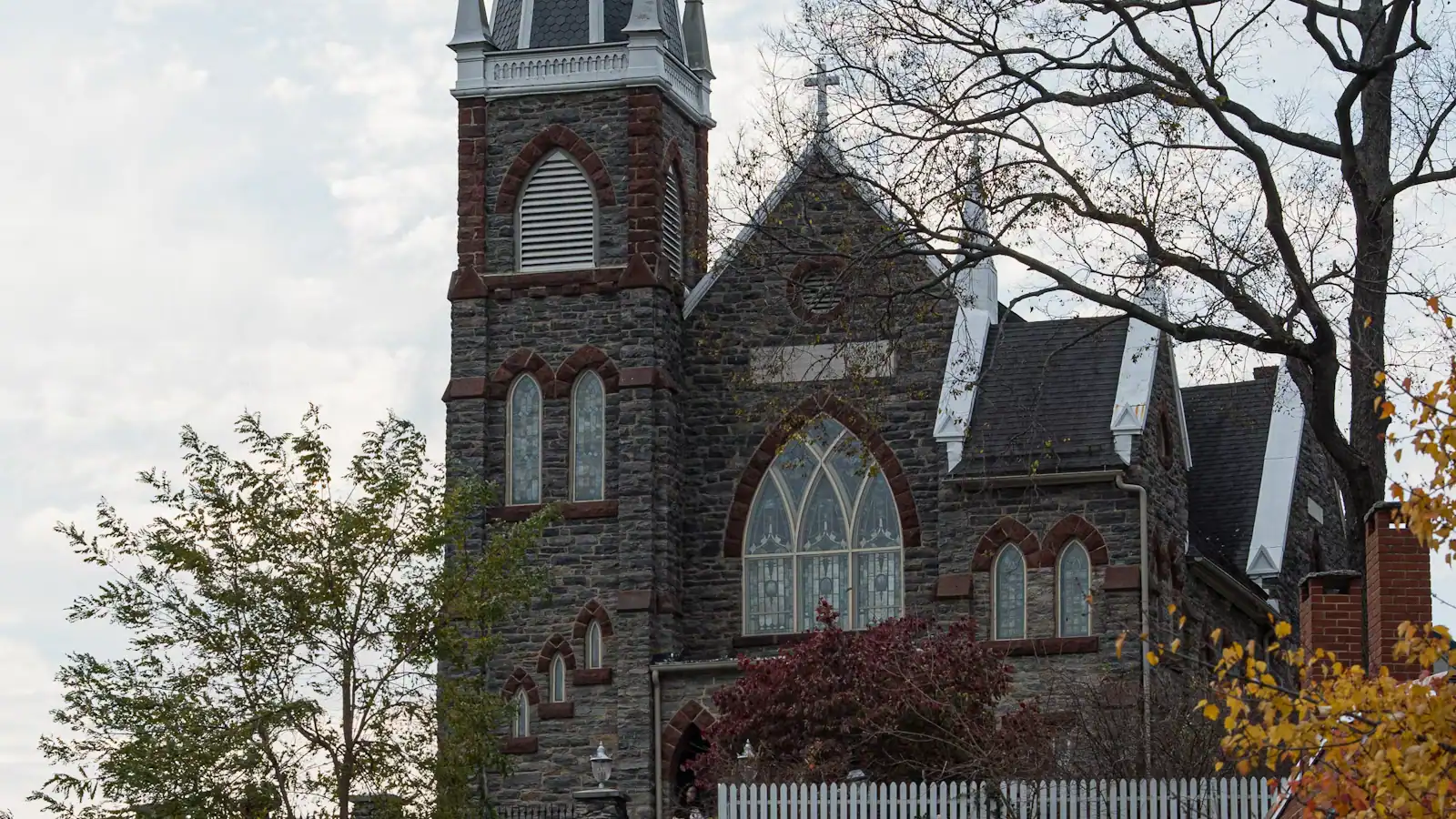
First comes St Peter's Roman Catholic Church, the building with the steep slate roof and the pointed spire that appears in every photograph of Harpers Ferry taken from across the river. It survived the Civil War in better shape than most of the town.

Above it stand the ruins of St John's Episcopal Church, roofless and open, which is a quieter and stranger place to stand than the intact church below it.

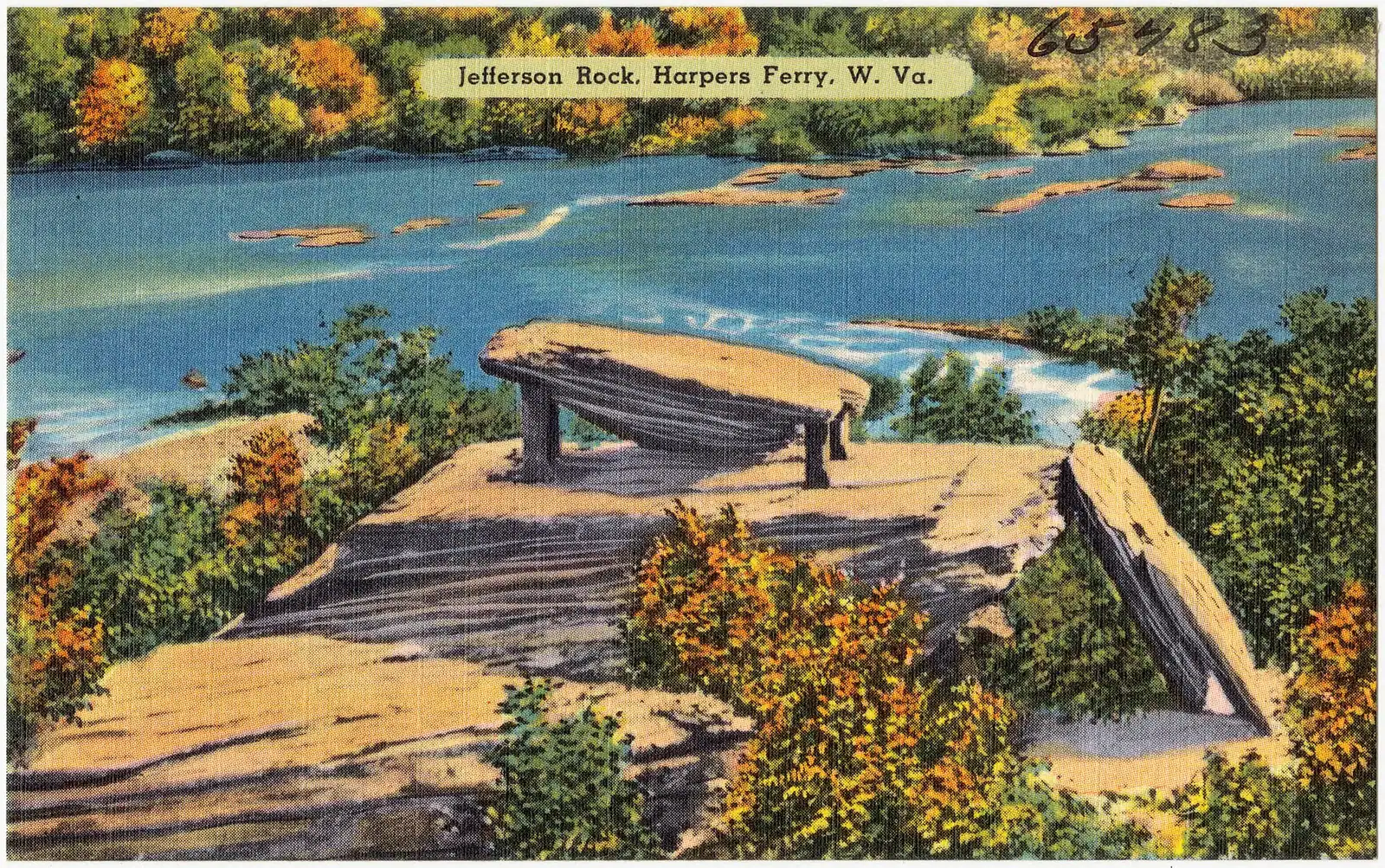
Then Jefferson Rock, a shale outcrop where Thomas Jefferson stood in October 1783 and looked down the Shenandoah gorge, publishing the description two years later in Notes on the State of Virginia and calling the scene worth a voyage across the Atlantic. The view from it is the one to save for the last hour of daylight.

Beyond that the path continues up to Camp Hill and the old Storer College grounds, which is where the town's story goes after 1865 and where most visitors never get to.

The steps are stone, uneven and unavoidable. There is no step-free route to Jefferson Rock.

After dark on High Street

Harpers Ferry runs a serious trade in evening ghost walks, and High Street is where most of them assemble.

The reason they work here is not the theatrics. It is that the town genuinely empties. The last shuttle back up the hill leaves at seven under daylight saving time and half past five under standard time, so by mid-evening the lower town has almost nobody in it, no traffic, very little lighting, and a great deal of nineteenth-century stone. A guide with a lantern and a decent delivery does not need much help.

Practical notes. Walks operate seasonally, and October is both the best month for atmosphere and the hardest to get a place on. The routes cover uneven stone and steps in the dark, which is worth thinking about for anyone unsteady on their feet. Bring a layer: the river bowl cools quickly once the sun is off it, in a way the daytime temperature does not predict.

And check how you are getting back up the hill. If you drove and parked at the visitor center, the shuttle will have stopped running by the time an evening walk finishes, and the walk up the Visitor Center to Lower Town Trail in the dark is a genuine climb.

Tours that visit High Street

Operators run these trips past High Street, or stop there as part of a longer route. We list what the booking data supports — not everything that mentions the name.

A booking made through these earns us a commission from Viator. The price is the same, and the commission had no bearing on what is recommended.

Shared departurespriced per seat, best value for one or two

  • New River Gorge ATV Adventure Tour

    Curated Catalog

    Likely to sell outInstant confirmation

    New River Gorge ATV Adventure Tour (opens in a new tab)

    127 reviews

    With over 100 miles of trails ranging from beginner to expert, incredible guides, and top of the line ATV's, riders of all skill levels…

    3–4 hours

    Prices checked

    from $195

Private and small-group optionsoften cheaper per head for a family or a group of six

Near High Street

Straight-line distances, so allow more on the road — the island is long and has one main parkway.

  • A street of nineteenth-century shopfronts with stone kerbs running between them

    Historic site

    Shenandoah Street

    The one level street in the lower town: park museums door by door, the shuttle stop, and the restored shopfronts of an 1860s street.

    1–2.5 hoursIncluded with park entrance; the museums along the street carry no separate charge520 ft away

  • A brick church with a steep slate roof and a pointed steeple standing above a hillside of trees

    Historic site

    Free

    St Peter's Catholic Church

    The spire in every aerial photograph of this town, and the only church here that came through the war standing.

    10–30 minutesFree; the park entrance fee applies to your vehicle but the church charges nothing180 ft away

  • A river turning between steep wooded slopes in full summer leaf, seen from high ground

    Viewpoint

    Free

    Jefferson Rock

    A propped shale slab above the Shenandoah gorge, and the spot that gave American travel writing its first great sentence.

    0.5–1.5 hoursFree once you are inside the park; the park entrance fee still applies to your vehicle420 ft away

  • A narrow street of nineteenth-century shopfronts climbing between stone kerbs

    Museum

    John Brown Wax Museum

    A privately run wax tableau of the raid on High Street. Not the free National Park Service museum, and often confused with it.

    20–35 minutesSeparate admission, charged by the operator. Not covered by your park entrance fee90 ft away

High Street: common questions

What is there to do on High Street in Harpers Ferry?

It is the lower town's one commercial street: outfitter storefronts, a handful of restaurants and a coffee place, gift and antique shops, the privately run John Brown Wax Museum, and the assembly point for evening ghost walks. It is also the route to the stone steps that climb to St Peter's Roman Catholic Church, the ruins of St John's above it, Jefferson Rock and eventually Camp Hill. Allow half an hour to an hour.

Are the shops in Harpers Ferry open in winter?

Many are not, or not every day. Peak trading runs roughly April to October, and from January into March a good number of High Street shops and kitchens cut back to weekends only while some close altogether for a stretch. A wet weekday in February can leave two doors open on the whole street. Eat before you come or eat up in Bolivar, and telephone ahead if you want a particular place.

How steep is High Street in Harpers Ferry?

Steep enough to notice and short enough to manage: a few hundred yards and roughly a hundred feet of climbing from Shenandoah Street to the steps at the top. The surface is the real issue rather than the gradient, being worn stone and brick with uneven kerbs that get slick in rain and hold ice in winter after the roads have cleared. Most people find the descent harder than the climb.

Where is the best photograph of Harpers Ferry from the town itself?

Halfway up High Street, looking back down. The roofline of the lower town falls away towards the confluence with the railroad bridge and the Maryland ridge behind it, framed by shopfronts on both sides, and the buildings give the view a sense of scale that the open panorama at The Point does not. Late afternoon light warms the brick. It costs nothing and requires no climb beyond the street itself.