Skip to content
Menu

A booking made through these earns us a commission from Viator. The price is the same, and the commission had no bearing on what is recommended.

Things to Do

Harpers Ferry in the Rain

Last updated

What to do in Harpers Ferry when it rains: the short indoor list, what high water closes, and why Antietam eleven miles north is the best wet-day plan.

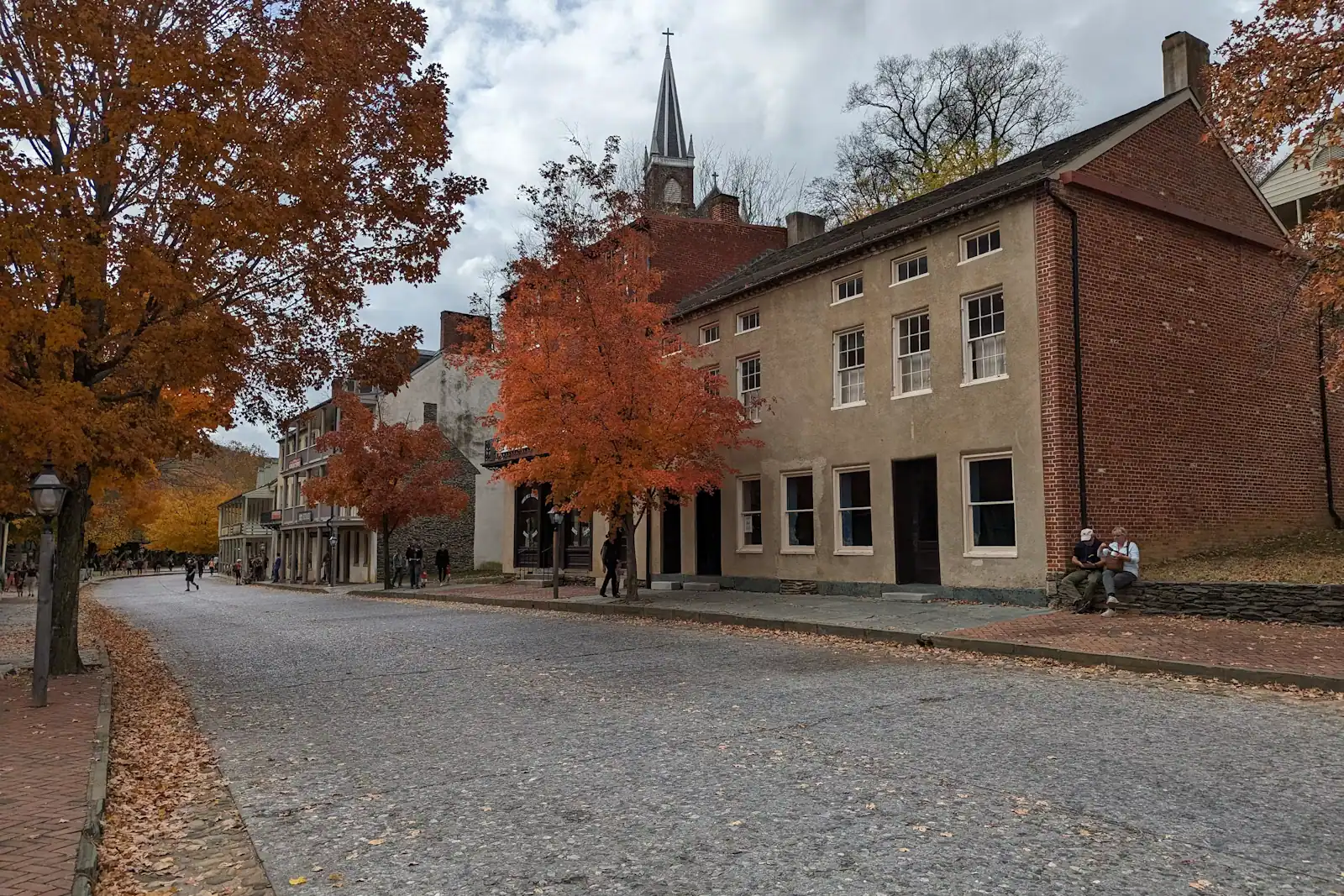
A brick church with a steep slate roof and a pointed steeple standing above a hillside of treesUnsplash

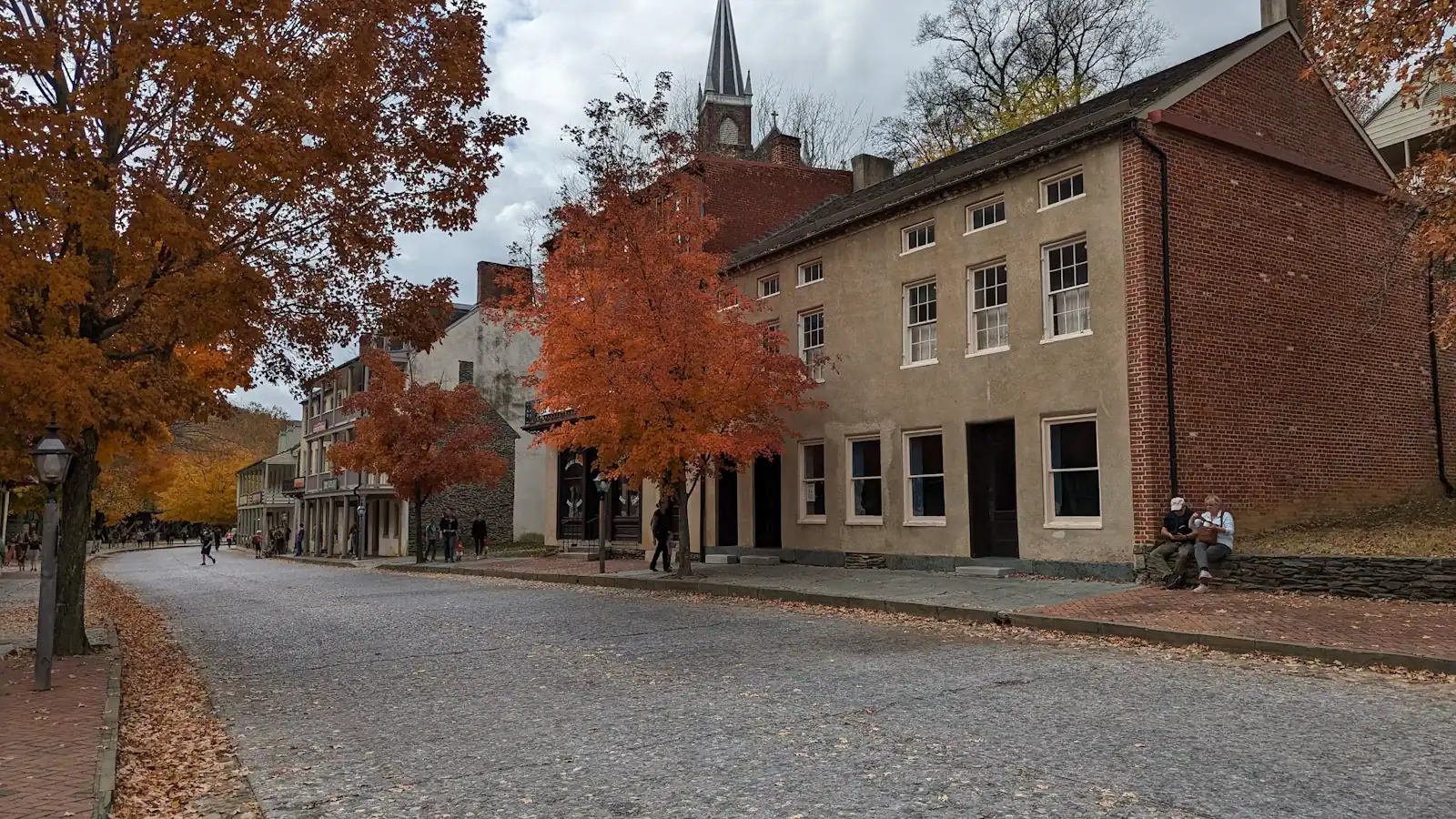
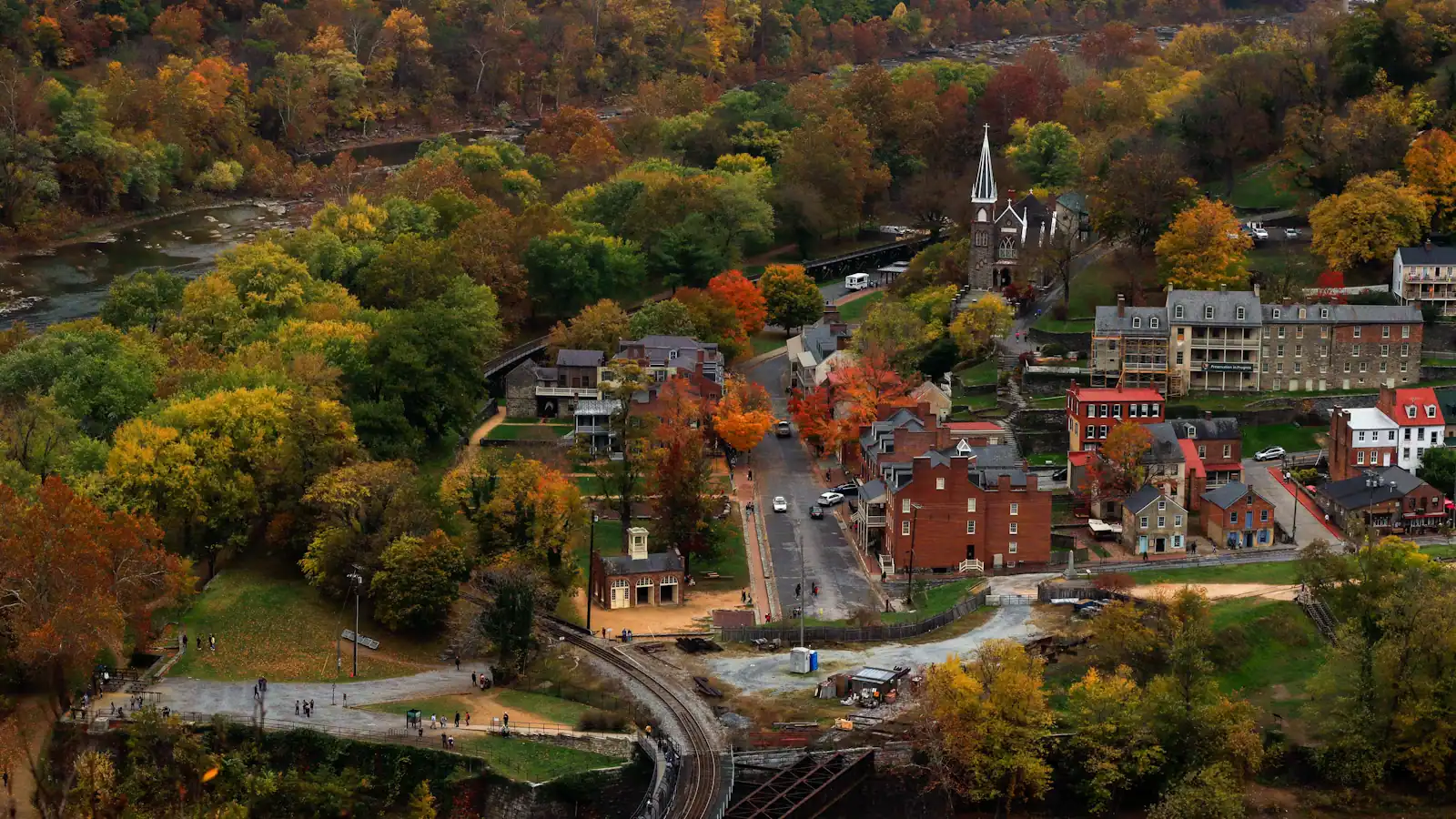
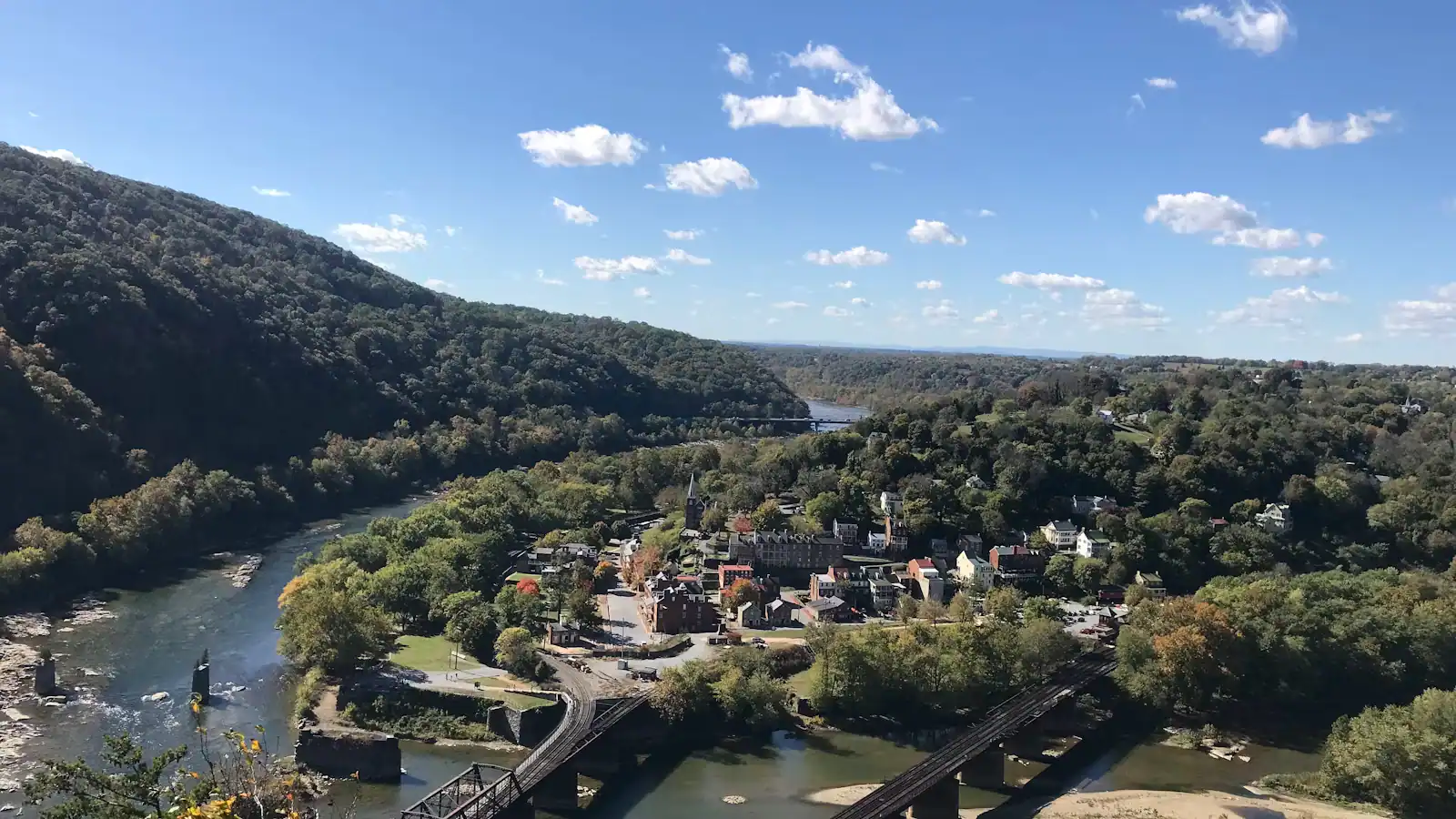
Start with the truth, because it saves you a disappointing morning: Harpers Ferry is an outdoor destination and rain genuinely changes the plan. The visit here is walking — a lower town of four streets, a flight of stone steps cut in 1810, a rock with a view down the Shenandoah gorge, a campus on the hill, three ridges and a canal towpath. Almost none of that improves under an umbrella, and some of it becomes a bad idea.

The indoor list is short and we are not going to inflate it. The park keeps a run of small exhibit rooms along Shenandoah Street, open nine to five; there is a bookshop; there is a privately run wax museum up on High Street; and the Appalachian Trail Conservancy has a visitor centre on Camp Hill that is free to walk into. Two to three hours in total if you are reading everything properly, and less if you are not. Four of the park's exhibit spaces — the Civil War Museum, Harper House, the Master Armorer's Quarters and the Black Voices exhibit — were listed as temporarily closed when this page was last checked in September 2026, which shortens the list further.

Rain does two other things here that are worth understanding before you set off. It makes the rock slick, which matters more than it sounds on the stone steps and on the Maryland Heights switchbacks, where the descent is where people come unstuck. And what falls on the Shenandoah valley today is what the rivers are doing here tomorrow: outfitters cancel for high water, and the park closes the lower town and the towpath outright when the water comes up. This town has been flooded repeatedly — the record crest was 36.5 feet in March 1936 — and the closures are not precautionary theatre.

So the honest advice is this. A light shower is nothing; the town is atmospheric in mist and the photographs are better than they are in flat sunshine. A wet day is a two-hour visit plus a drive, and the drive should be to Antietam, eleven miles north, which is largely a driving tour with short walks. A properly wet week is a reason to come back.

The indoor list, in full

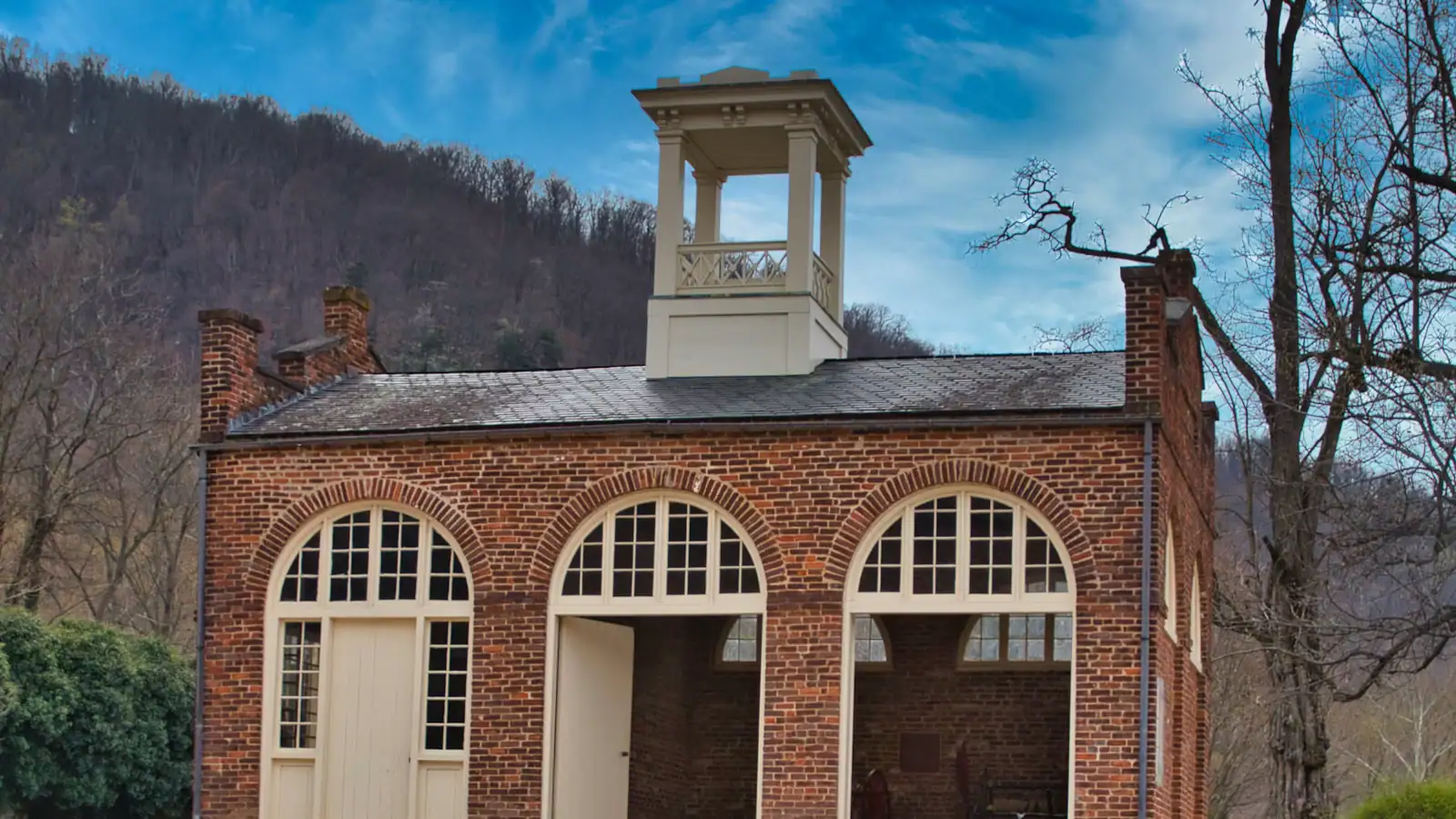
The exhibit buildings on Shenandoah Street. The park's interpretation lives in a series of small preserved rooms along the flat street by the water: the armoury as an industrial operation, the raid, the trades, the wartime town, the rebuilding. They are close enough together that you can move between them in a shower without getting properly wet. Open nine to five, included in the entrance fee. Check which are open before you plan the day around a particular one.

The bookshop. In the lower town, run in support of the park: the serious Civil War shelf, trail guides, maps and the passport stamps. Better than it needs to be and genuinely somewhere to stand for twenty minutes.

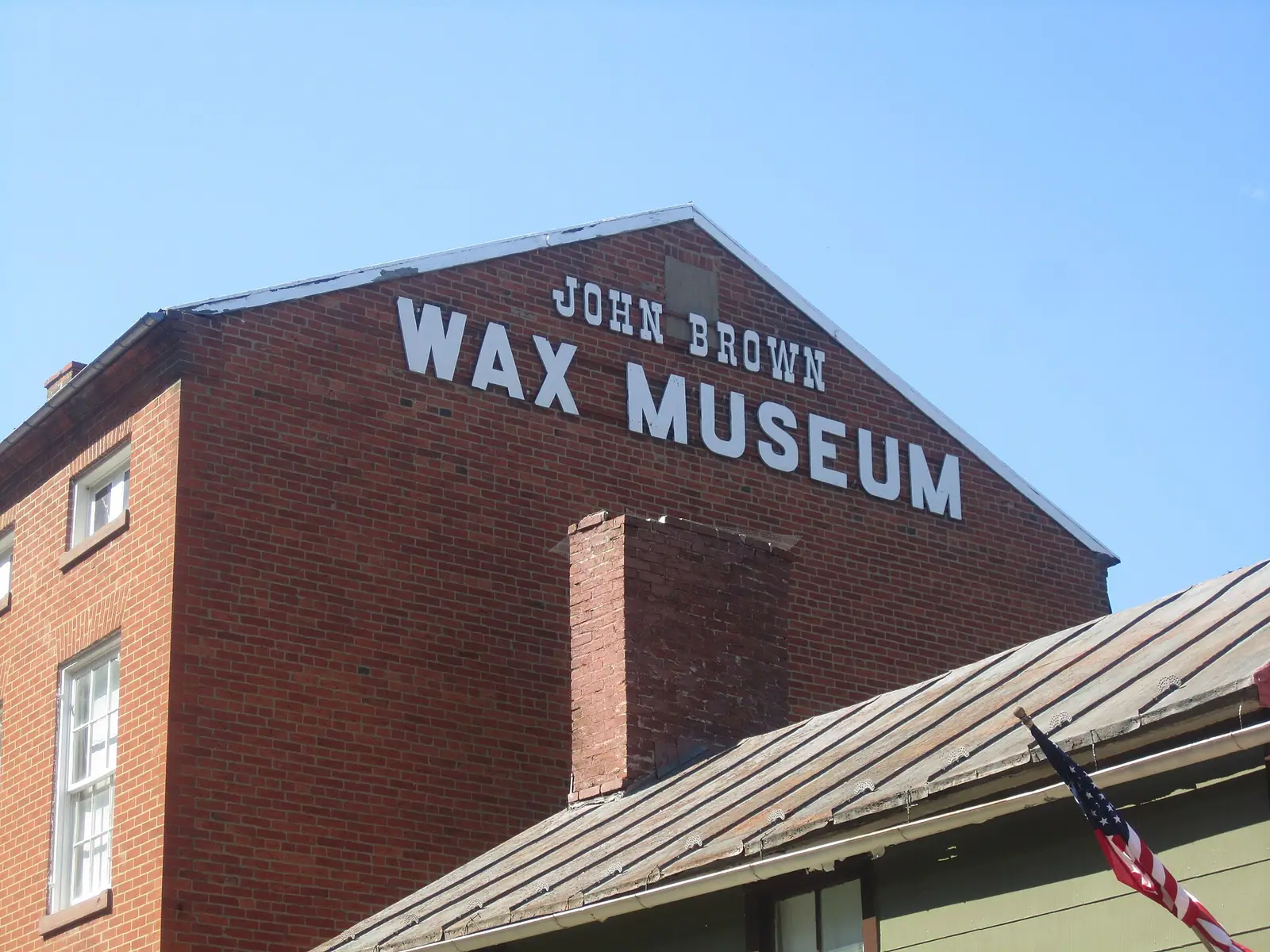
The John Brown Wax Museum. Privately run, on High Street, its own admission, and an old-fashioned telling of the raid in tableaux. It is either a curiosity or a highlight depending on who you are, and it is indoors, which on this particular day is the relevant criterion.

The Appalachian Trail Conservancy centre. Free to enter, up on Washington Street, with maps, guidebooks and people who know the trail. The walk up is uphill in the wet, which is the only argument against it.

That is the list. The visitor center on Cavalier Heights has a film and an information desk as well, which is a reasonable place to start a wet morning while you decide.

The best wet-day plan is a drive

Antietam National Battlefield, about eleven miles north near Sharpsburg, is the answer. It is mostly a driving tour with short walks from pull-offs, which means you can do the whole thing from a car in weather that would ruin a day here, and it is the right history: the surrender on Bolivar Heights happened on 15 September 1862, the battle there on the 17th. The visitor centre has a film and exhibits. Allow half a day.

Shepherdstown, roughly twelve miles away, is the oldest town in West Virginia, has a university in the middle of it and, crucially for this particular day, has the restaurants, coffee places and shops that a village of 269 residents cannot support. A wet afternoon there is a genuinely pleasant one.

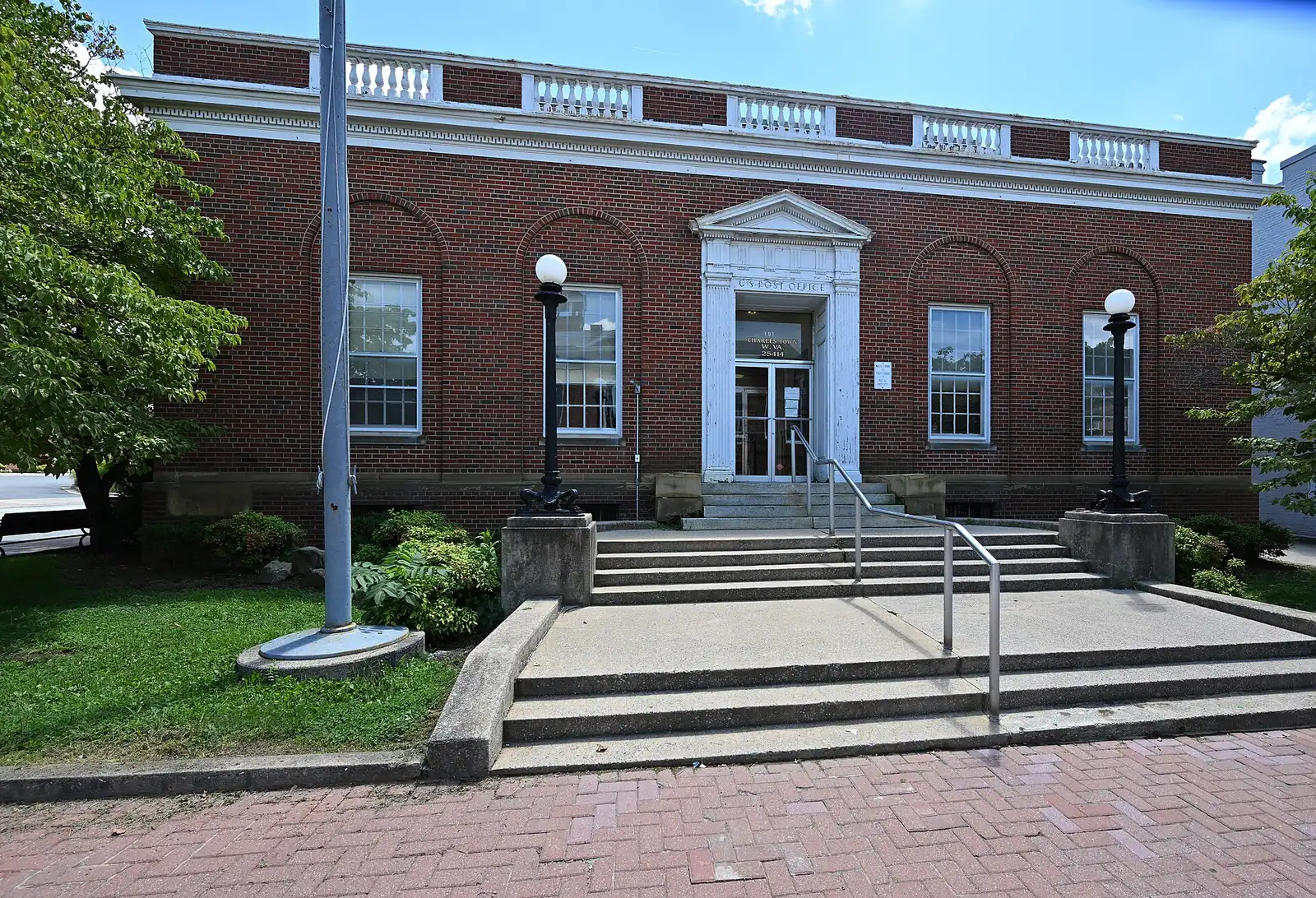
Charles Town, eight miles west, has the courthouse where John Brown was tried and hanged in 1859, plus the practical shops and the later hours. An hour indoors there changes the register of everything you saw in the lower town.

Frederick, Maryland, about twenty miles off, is the largest option, with a serious restaurant scene and museums of its own. That is a whole day rather than an afternoon.

All of it argues for having a car on a day with weather in it. Visitors who came by train are more constrained, which is worth knowing when you pick your day.

If this is your only day and it is raining

Local tips

  • Go anyway, and go early. The nine o'clock first shuttle puts you in the exhibit rooms before anyone else has decided the weather is survivable.
  • Do the indoor list first, in case the afternoon clears. Weather in this gorge changes faster than a forecast for the county suggests.
  • Take the flat route. Shenandoah Street, John Brown's Fort and the Point are level and take about ninety minutes even in the wet.
  • Skip the heights entirely. Maryland Heights and Loudoun Heights in rain are a poor trade: the view is gone and the descent is slick.
  • Do the stone steps with care or not at all. Wet worn stone and a handrail that is not continuous.
  • Then drive to Antietam and let the afternoon be a driving tour with a roof over it.
  • Photograph the mist. A gorge with cloud sitting in it between two ridges is a better picture than the same view in flat midday sun, and it is the one thing a wet day gives you that a clear one does not.
  • Check the park's current conditions page before you leave. High water closures and exhibit closures both go up there, and it is the only source worth trusting on the day.

What the weather actually closes

Before you book

High water closes the lower town. When the rivers come up, the park shuts the lower town and the C&O towpath, and that closure is the whole of the advice. This is a town at the meeting of two rivers with a flood record of 36.5 feet in 1936 and 33.8 feet in 1942, and the 1936 flood ended people living on Virginius Island altogether.

Rain takes the outfitters off the water. Not always for the obvious reason. A trip can be cancelled for a rise that happened yesterday sixty miles upstream, under a blue sky here. Outfitters read a gauge rather than a window, and when they call it off, take it seriously.

Wet rock is the real hazard on the heights. Maryland Heights is rated moderate to strenuous, climbs up to 1,788 feet, and ends at an unfenced ledge above a long drop. In the wet, the descent on rock and root is where injuries happen. The 1810 stone steps are the same problem in miniature, and in winter they hold ice long after the streets have cleared.

Thunderstorms in summer build fast over the Blue Ridge and arrive with little warning. Being on an exposed ridge when one does is worse than being wet.

What does not close: the park itself, which opens every day except Thanksgiving, 25 December and 1 January, and the shuttle, which runs on every day the park is open.
On the ground

Where to go

Every place below has its own page — hours, parking, what it costs and what to expect when you get there.

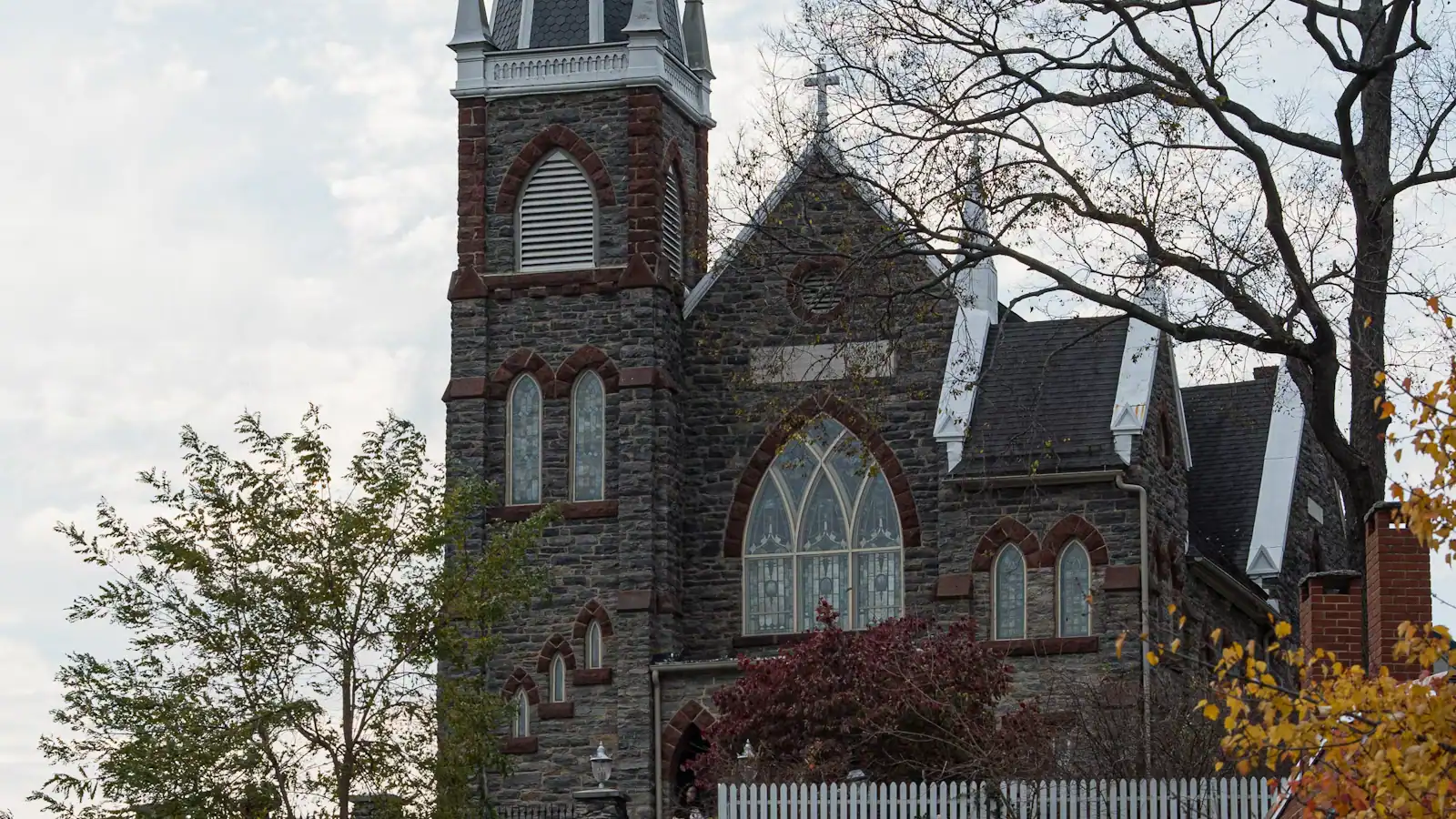
  • A plain church with a steep roof and a spire standing above a wooded slope

    Historic site

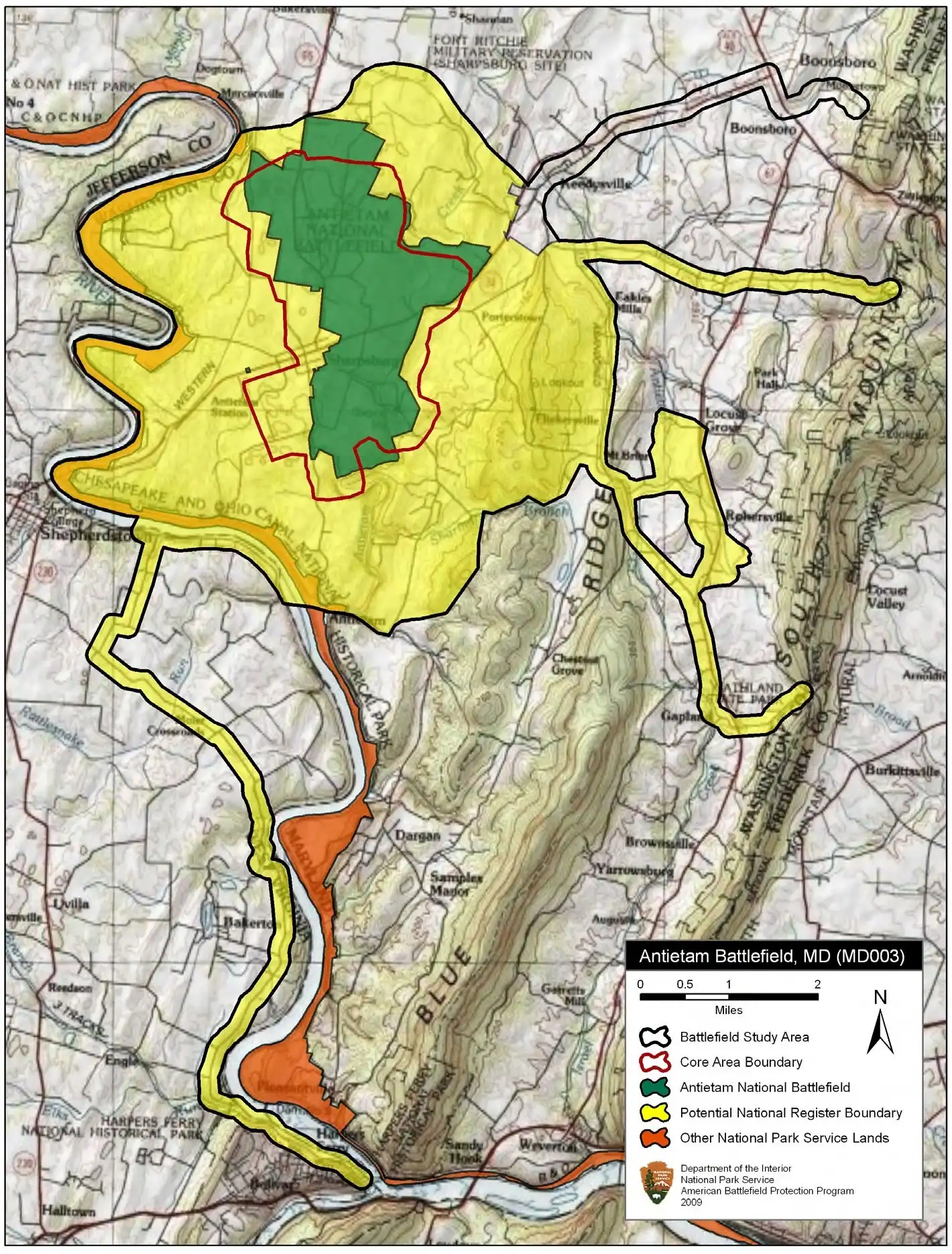
    Antietam National Battlefield

    Roughly 23,000 casualties in one September day, half an hour north of Harpers Ferry, and the same campaign that took this town.

    2.5–6 hoursAt the time of writing: $20 per private vehicle, $15 per motorcycle, $10 per person on foot or bicycle, each valid three consecutive days

  • A narrow street of nineteenth-century shopfronts running uphill between stone kerbs

    Neighbourhood

    Lower Town Harpers Ferry

    Two streets and a flight of stone steps, all of it inside a national park, with the high-water marks still on the walls.

    2–5 hoursPark entrance fee applies; National Park Service exhibit buildings are then free to enter

  • A street of nineteenth-century shopfronts with stone kerbs running between them

    Historic site

    Shenandoah Street

    The one level street in the lower town: park museums door by door, the shuttle stop, and the restored shopfronts of an 1860s street.

    1–2.5 hoursIncluded with park entrance; the museums along the street carry no separate charge

  • A walker crossing a river footbridge with a pack on their back, the far bank thick with trees

    Museum

    Free

    Appalachian Trail Conservancy Visitor Center

    Where thru-hikers get photographed and numbered, in albums going back decades — and where the midpoint myth gets corrected.

    0.5–1 hoursFree to enter; the Conservancy is a non-profit and donations are welcomed

  • A small town of pale rooftops and a church spire below wooded hills and river water, seen from above

    Landmark

    Cavalier Heights Visitor Center

    The park's only real car park, the fee station and the shuttle stop. Set your navigation here, not to the town.

    20–45 minutesPark entrance at the time of writing: $20 per vehicle, $15 per motorcycle, $10 per person on foot or bicycle, each valid three consecutive days

  • Brick commercial frontages of the nineteenth century lining a street with stone kerbs

    Neighbourhood

    Free

    Charles Town

    Eight miles west: the courthouse where John Brown was tried, the ground where he was hanged, and a Washington family town.

    1.5–4 hoursFree to walk. Individual museums and attractions charge separately

  • A squat brick building with a small square tower and an arched doorway standing alone on open ground

    Museum

    Black Voices from Harpers Ferry

    The park exhibit on African American Harpers Ferry, from the armoury town to Storer College. Confirm it is open before you plan around it.

    20–45 minutesIncluded with park entrance; no separate charge

  • A street of nineteenth-century brick and stone frontages with stone kerbs

    Neighbourhood

    Free

    Shepherdstown

    Chartered in 1762, a university on the main street, and the town that absorbed the wounded from Antietam two days after the battle.

    1.5–4 hoursFree. There is no entrance fee to the town

  • A narrow street of nineteenth-century shopfronts climbing between stone kerbs

    Museum

    John Brown Wax Museum

    A privately run wax tableau of the raid on High Street. Not the free National Park Service museum, and often confused with it.

    20–35 minutesSeparate admission, charged by the operator. Not covered by your park entrance fee

Straight answers

Questions people actually ask

What is there to do in Harpers Ferry when it rains?

Not a great deal indoors, and it is better to know that in advance. The park's exhibit rooms along Shenandoah Street, the bookshop, the privately run wax museum on High Street and the free Appalachian Trail Conservancy centre add up to about two or three hours. After that the sensible plan is to drive eleven miles north to Antietam National Battlefield, which is largely a driving tour with short walks.

Are Harpers Ferry museums open in bad weather?

Yes. The lower-town exhibit buildings keep their usual nine to five hours in any weather, the visitor center on Cavalier Heights is open, and the shuttle runs on every day the park is open — which is every day except Thanksgiving, Christmas Day and New Year's Day. The exception is high water: when the rivers come up, the park closes the lower town and the towpath entirely.

Does Harpers Ferry flood?

Repeatedly, and it has shaped what stands there. The record crest was 36.5 feet in March 1936, with 33.8 feet in October 1942, and the 1936 flood ended habitation on Virginius Island. A later flood in 1996 closed the island to visitors until 2003. When heavy rain upstream pushes the rivers up, the Park Service closes the lower town and the C&O towpath, and those closures are absolute rather than advisory.

Is it worth visiting Harpers Ferry in the rain?

For half a day, yes; for a full one, only with a car. The exhibit rooms and the bookshop are good for a couple of hours, the town is genuinely atmospheric in mist, and cloud sitting in the gorge photographs better than flat sunshine. What you should not do is attempt Maryland Heights or the stone steps on wet rock, or expect the town to fill a whole wet day.

Do river trips run when it rains at Harpers Ferry?

Sometimes, and the decision has less to do with the rain falling on you than with rain that fell upstream yesterday. Outfitters on the lower Shenandoah run off the gauge, and they will move or cancel a trip for high water or for thunderstorms building over the Blue Ridge. Ask about the high-water policy when you book, and take the cancellation seriously — they are reading water you cannot see.

Where can you go near Harpers Ferry on a wet day?

Antietam National Battlefield, about eleven miles north near Sharpsburg, is the best answer: mostly a driving tour with short walks and a visitor centre, and the correct sequel to the surrender at Bolivar Heights two days before the battle. Shepherdstown, twelve miles away, has the cafés and shops for an indoor afternoon. Frederick, Maryland, twenty miles on, has the largest choice of museums and restaurants.