A family day at Harpers Ferry runs into two problems that nobody warns you about, and both of them are solvable if you know about them before you park.
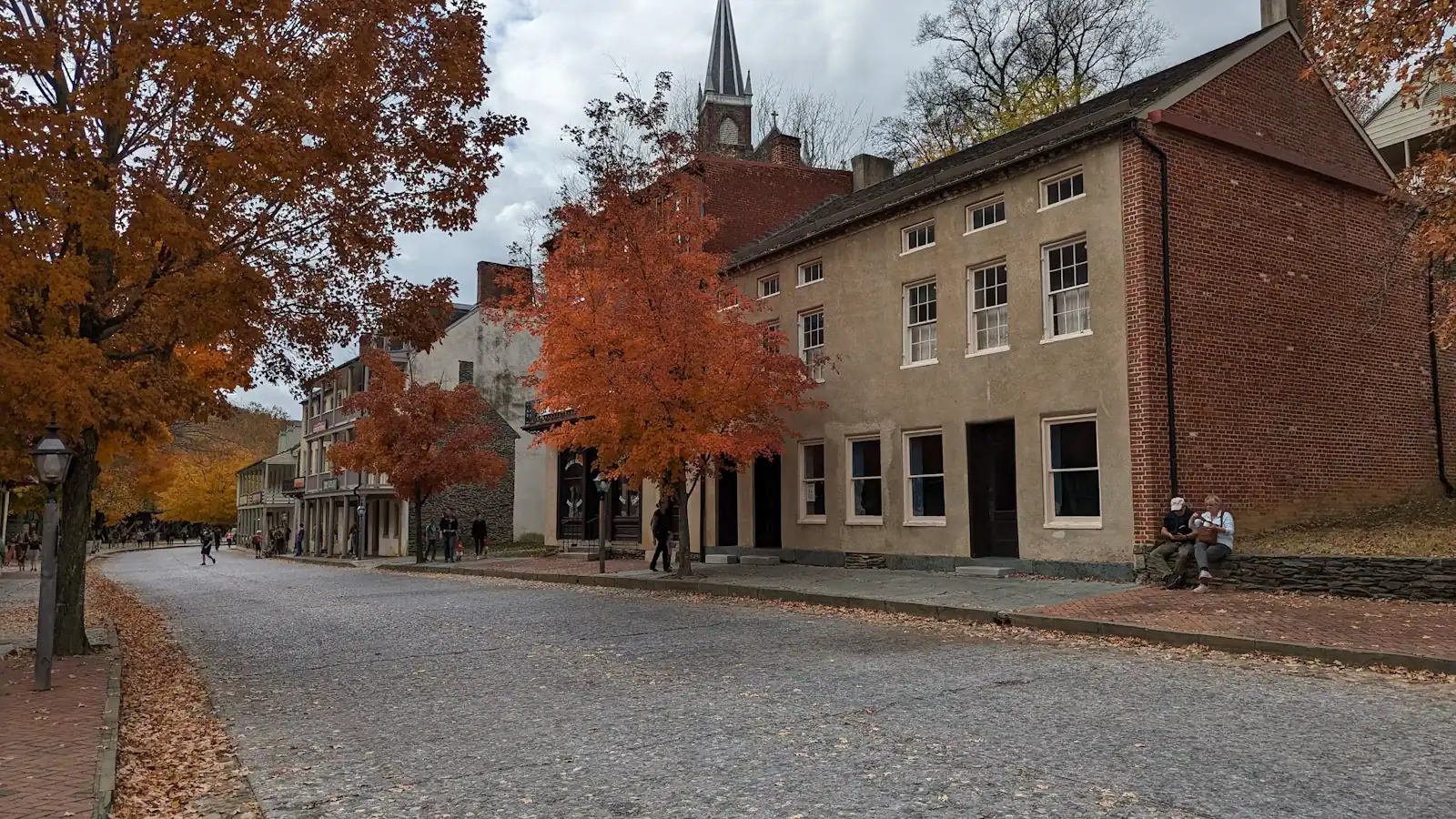
The first is the ground. This town has almost no flat surface. The historic streets are cobbled and cambered, the route up to Jefferson Rock is a flight of stone steps cut in 1810 and worn concave since, and the three ridges around the town are proper climbs. A pushchair is awkward in the lower town and useless above it.
The second is the subject. This is a national historical park about an armed raid on a federal armoury, a trial, a hanging, and a siege that ended with twelve thousand men surrendering. It is not a place that softens well, and children generally notice when the adults are dodging something.
What works, by age
| Age | Best of the day | Leave it |
|---|---|---|
| Under 4 | the shuttle bus itself, the Point, the towpath in a carrier | steps, exhibits, any ridge |
| 4–7 | the train station and the trains, the footbridge, Virginius Island ruins, ice cream on High Street | Maryland Heights, long exhibit rooms |
| 8–11 | John Brown's Fort, Junior Ranger activities, the stone steps, the towpath by bicycle | the fort loop on Maryland Heights |
| 12+ | the raid properly, Storer College on Camp Hill, Maryland Heights overlook, tubing in summer | nothing, if they are willing walkers |
The parts children actually like
The bus
Small children rate the shuttle above most of what it takes them to. It is free, included in the entrance fee, and it runs every ten to fifteen minutes, which means a bored four-year-old is never more than a quarter of an hour from another ride.
The trains
Real ones, close up. The line runs through the lower town, across the bridge over the Potomac and into a tunnel in the rock face on the Maryland side. Freight comes through regularly and passenger services stop at the platform on Potomac Street. Stand on the footbridge and wait, and something will happen.
The Point
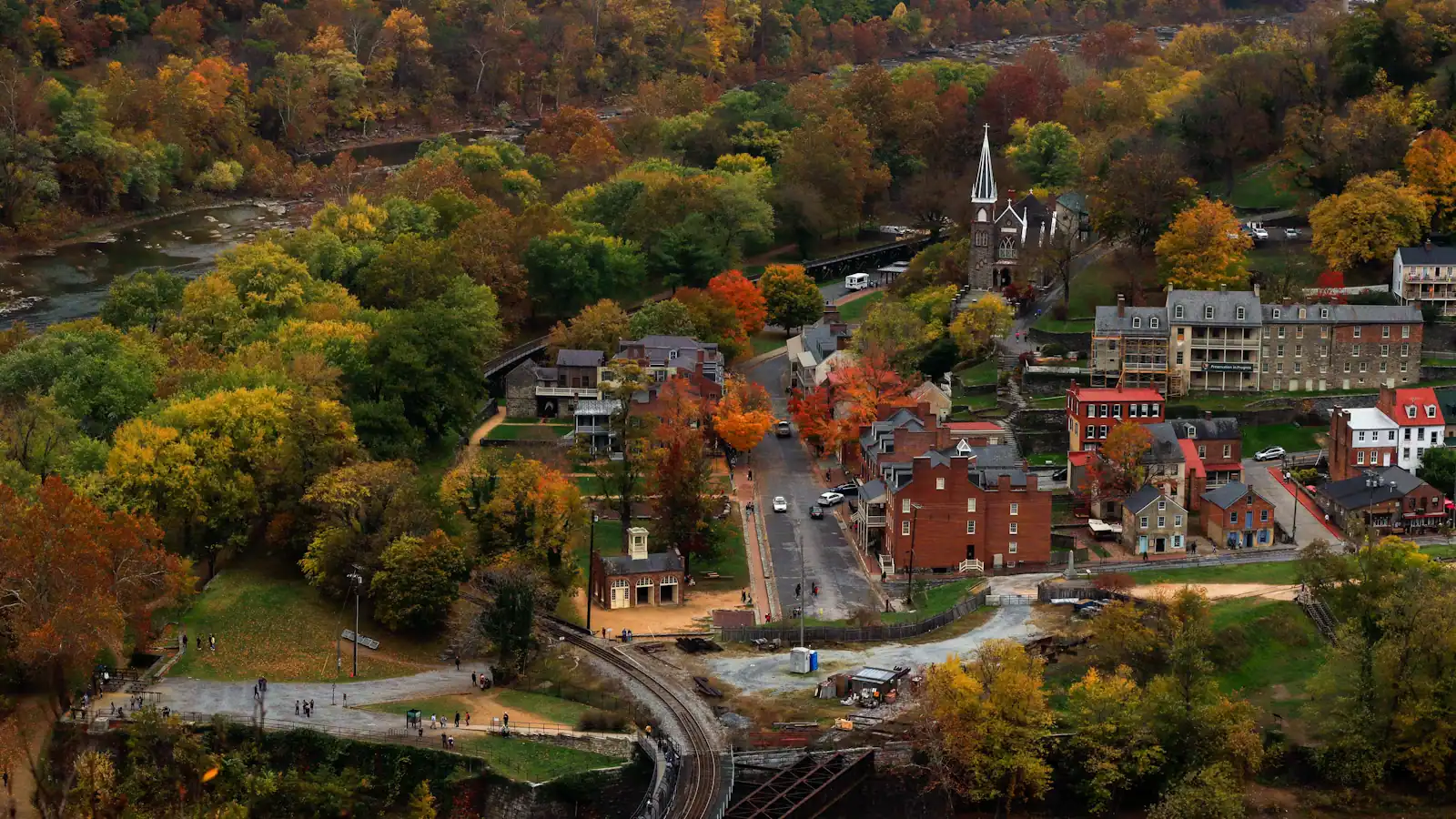
Four minutes' walk from the shuttle stop, downhill. Two rivers running together, and you can tell a child they are looking at three states at once without exaggerating.
Virginius Island
A mile of flat gravel and grass through the foundations of a flour mill, a cotton mill and a workers' settlement, all of it wrecked by floods and abandoned. Ruins in trees with nobody on them beat an exhibit room at almost any age.
The towpath
Across the footbridge on the Maryland bank, level, shaded and going on for miles. This is the only pushchair-friendly walking here, and the only place you can let a child on a bicycle go ahead without worrying.
The pushchair problem, honestly
Getting a pushchair into the lower town is fine — the shuttle takes them and the streets are navigable if bumpy. Getting it anywhere else is not.
- Stone steps to Jefferson Rock: no.
- Camp Hill and Storer College: only by road, the long way round, and it is steep.
- The footbridge to the towpath: reached by stairs. You can carry a folded buggy up them, and plenty of people do, but know that before you set off.
- All three heights: no.
If someone in the party is in a pushchair or cannot manage steps, build the day around Shenandoah Street, the exhibit buildings, the Point and the train station, and accept that Jefferson Rock and the heights are for another year. That is a perfectly good four hours.
A carrier changes everything, and if your child is still carrier-sized, bring it rather than the buggy.
How to tell a child what happened here
Do not start with John Brown. Start with the rivers.
The armoury was here because the water turned machinery. The town grew because of the armoury. The armoury was worth seizing because it held guns. Children follow cause and effect more readily than they follow a person's motives, and the geography is standing in front of them.
Then the raid, plainly. A man believed slavery was so wrong that he was willing to kill to end it. He and twenty-one others took the gun works one night in October 1859. Nobody came to join them. Most were killed or captured within two days, and he was hanged that December. Then the country went to war about the same question six years later.
Two things are worth not skipping. The first person killed in the raid was Heyward Shepherd, a free Black man working as a railway baggage handler, which children find as difficult as adults do and which is part of what happened. The second is that the story does not end in 1859: Storer College opened on the hill above the town in 1867 to educate people freed by the Thirteenth Amendment, and in 1906 the Niagara Movement met on its campus. Climbing the hill to see where that happened turns an argument about one man into something larger, and older children get it immediately.
Age ten and up can take the whole thing. Under about seven, the rivers, the trains and the bus are plenty and there is no rush.
Summer, and the river
Between roughly April and October the Shenandoah is a working recreation river, and tubing is the version that suits families. It is not whitewater rafting — it is drifting, with a few riffles — and for a lot of children it is the best two hours of the trip.
Minimum ages and weights are set by each outfitter and change with river level, so ask when you book rather than turning up hopeful. Book ahead for summer weekends. And treat a river level warning as final: outfitters cancel on water rather than on weather, and a sunny day after heavy rain upstream is exactly when trips come off.
Practical things that make the day work
The last shuttle back is 7 p.m. in summer and 5.30 p.m. once the clocks go back, and there is no later option. Exhibit buildings close at five. Toilets are at the visitor centre and in the lower town, and there is none on any trail. The park takes no cash anywhere. Kitchens here are small and get overwhelmed at one o'clock, so eat at noon. And a $20 vehicle pass covers everyone in the car for three consecutive days, which makes a second morning almost free.
The four-hour family version
9 a.m. First shuttle. Let the children ride it as the event it is.
9.20. Downhill to the Point. Two rivers, three states, four minutes' walk, and it sets up everything else.
9.45. The train station and the footbridge. Wait for a train. One will come.
10.15. Across the footbridge and twenty minutes out on the towpath. Flat, shaded, and the best view back at the town.
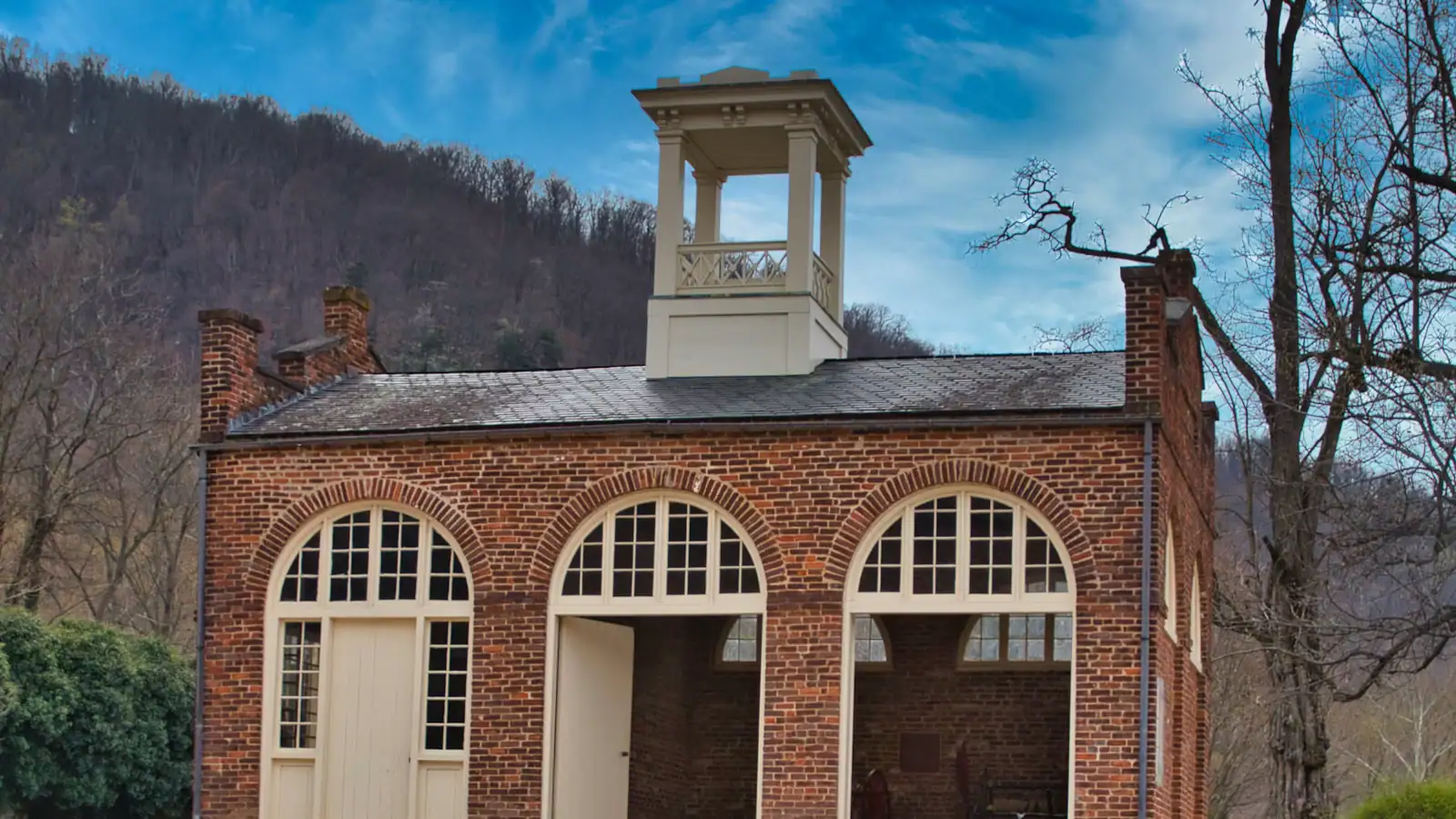
11.00. John Brown's Fort and the obelisk, then one exhibit building on Shenandoah Street. One, not four.
11.45. Junior Ranger activity if the visitor centre desk has one running, or Virginius Island if energy is holding.
12.15. Eat, before the kitchens fill.
1.00. Shuttle back up. Everybody is still in a good mood, which is the entire point of leaving at one rather than at three.
The three things to actually watch
The rivers. The Shenandoah and the Potomac look calm at the Point and are not. There are ledges, undercut rock and strong current at the confluence, and the water level changes quickly after rain upstream. Swimming is not the thing to do here. Hold hands on the rocks.
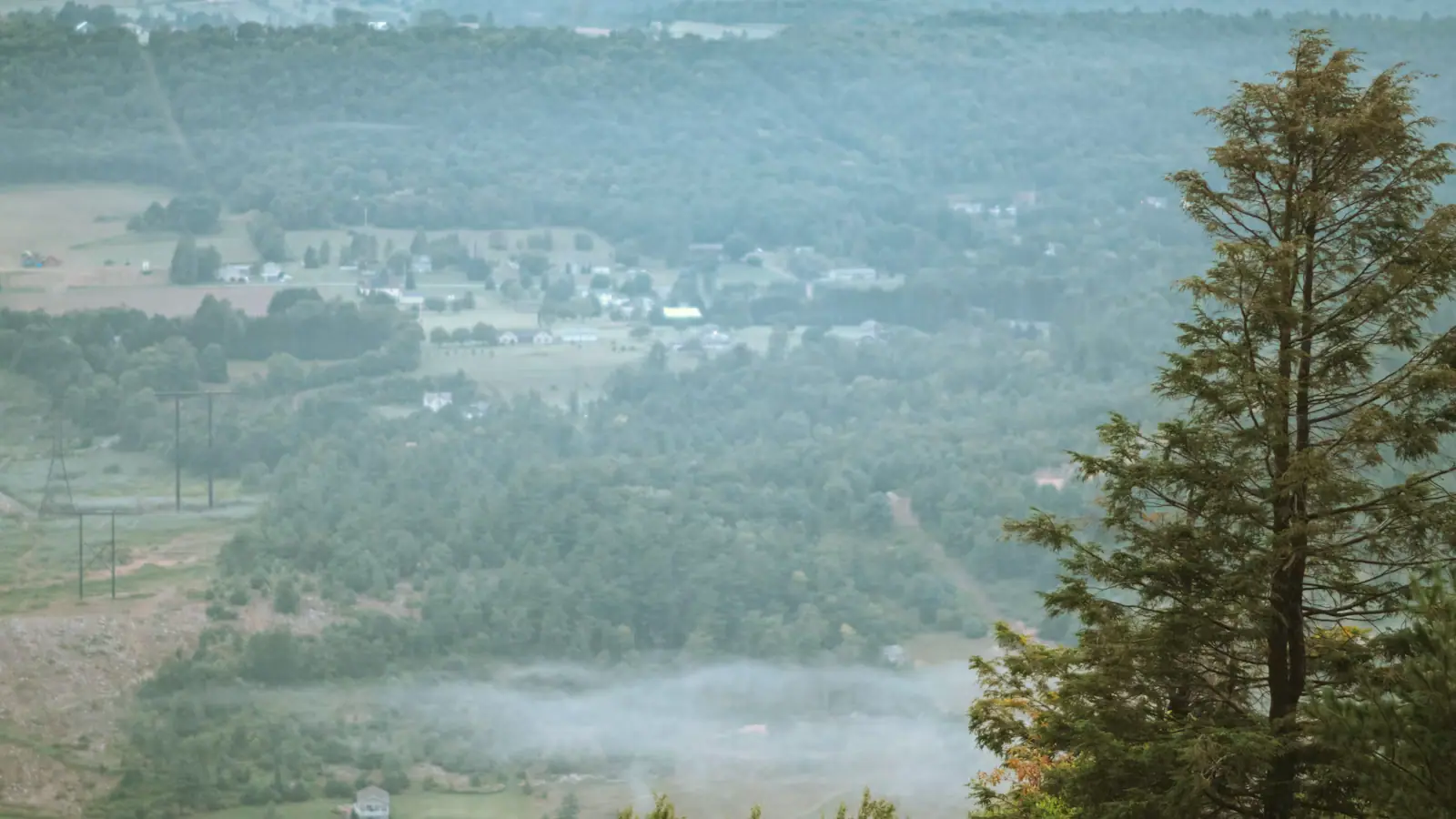
The overlook ledge on Maryland Heights. It is bare, sloping shale with a long drop and no railing, and it is where people take the photograph. If you take children up there, the rule is set before you arrive at it, not on the ledge.
Ticks. Year-round in this part of West Virginia and a genuine issue rather than a formality. Long trousers on any trail, tuck socks, and check properly the same evening.
Add two minor ones: the cobbles in the lower town turn ankles, particularly wet, and the 1810 stone steps are worn smooth and slippery under leaf litter in autumn.
Last updated
Opening hours, ordinances and prices move with the season. We re-check this guide rather than rewrite it, and the date above is the last time someone did. How we research and correct.