Viewpoint
Free
The Point
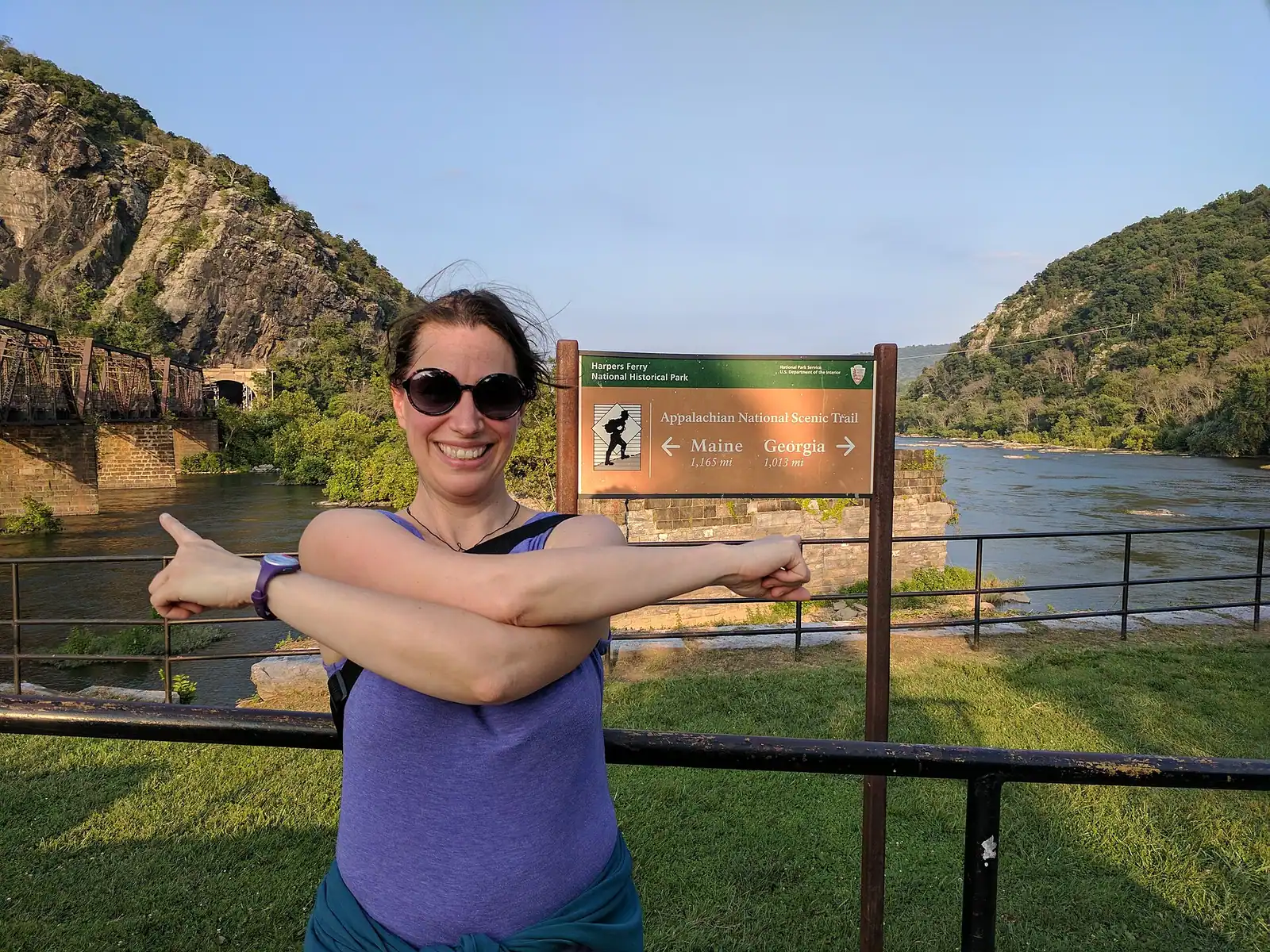
Ninety seconds from the shuttle stop, level the whole way, and the only spot where the town's geography explains itself.
10–30 minutesFree; covered by the park entrance fee already charged on your vehicle640 ft away
A booking made through these earns us a commission from Viator. The price is the same, and the commission had no bearing on what is recommended.
Landmark
Last updated
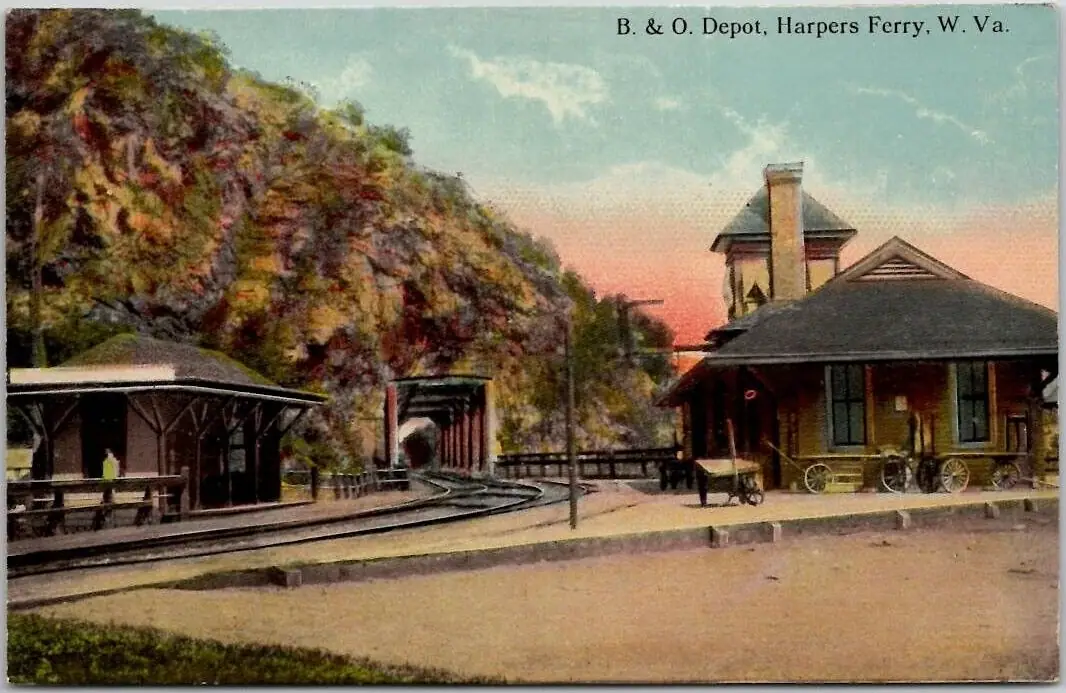
An 1894 B&O station whose platform sits inside the historic district, served by weekday MARC trains and one Amtrak each way.
Photo: Unknown authorUnknown authorPublic domain
Timetables change. Check MARC and Amtrak directly before planning a car-free visit rather than relying on published third-party schedules.
Almost no American historic site can be reached properly by train. This one can, and the platform is not near the attraction, it is in it. Step off at Harpers Ferry and you are standing on Potomac Street, a hundred yards from The Point, with John Brown's Fort in sight and the footbridge over your shoulder. No taxi, no park-and-ride, no shuttle from a lot three miles out. That is unusual enough to be worth planning a day around.
The building is a Baltimore & Ohio station that opened in the autumn of 1894, designed by E. Francis Baldwin, the architect responsible for a great many of the B&O's smaller stations. It is a long single-storey structure with a tower at one end, and it is not standing where it was built: the railroad realigned its tracks in 1931 and the station was moved to suit. The National Park Service has owned it since 2001, which is why a working commuter platform sits inside a national historical park.
Now the honest part, because this is the fact most often oversold by people who have never tried it. Two operators call here and neither runs the kind of service that lets you turn up and go.
MARC's Brunswick Line, the Maryland commuter railway, serves Harpers Ferry on weekdays only. There is no weekend service at all. The trains are also built around commuters: most run toward Washington in the morning and back out in the evening, which is precisely the wrong shape for a day-tripper who wants to arrive mid-morning and leave at teatime. Some patterns work. Read the current timetable and build the day around the train rather than the other way round.
Amtrak's Floridian, which replaced the Capitol Limited on this route in November 2024, calls once in each direction every day, weekends included. One train each way is a real service and a fragile one; a delay upstream is your whole plan.
The platform is not step-free, which matters if anyone in your group cannot manage steps.
The station sits on Potomac Street at the foot of the lower town, beside the railroad bridge over the Potomac. From the Shenandoah Street shuttle stop it is a three or four minute walk downhill and flat at the end.
Arriving by train, you are already there: the platform is inside the historic district and The Point is a hundred yards away.
Arriving by car, do not attempt to park near the station. Set your navigation to the park visitor center at 171 Shoreline Drive on Cavalier Heights and take the shuttle down, as the park intends. There is no visitor parking on Potomac Street and satellite navigation routinely sends drivers down here anyway.
The Brunswick Line runs between Washington Union Station and points west through Maryland, with Harpers Ferry near the far end of it. Two things about it decide whether a car-free day works.
It does not run at weekends. Not a reduced service, not a Saturday-only pattern. No service. Every article that suggests taking the train out for a Saturday in Harpers Ferry is wrong about this, and it is the commonest planning mistake made here.
It is peak-directional. This is commuter infrastructure built for people who live out here and work in Washington, so the flow is inbound in the morning and outbound in the evening. A visitor wants the opposite, and while some services do run in the useful direction, the pattern is thin and it changes.
What this leaves is a genuine weekday option for anyone with flexibility. Take an early outbound train from Washington, spend the day, take an evening service back. When it lines up it is excellent: about an hour and a quarter of Potomac valley scenery each way, no parking fee, no traffic on US 340, and no entrance fee beyond the per-person walk-in rate.
Check the current timetable on MARC's own site before you commit to anything. Do not plan from a schedule you found in an article.
The Floridian is a long-distance train running between Chicago and Miami by way of Washington, and it took over this section of route from the Capitol Limited in November 2024. It calls at Harpers Ferry once in each direction daily, weekends included, which makes it the only rail option on a Saturday or Sunday.
Long-distance trains are long-distance trains. A service that has been running since the previous morning arrives when it arrives, and building a tight connection onto one is asking for disappointment. If you use it, treat the return as the fixed point of the day and be on the platform early.
The useful pattern for most people is Washington Union Station to Harpers Ferry and back, and it works best as an overnight rather than a day trip, because one train each way gives you very little control over the hours in between.
Fares behave like ordinary Amtrak fares, which is to say they move with demand. Book ahead if the date is fixed.
Assume you have arrived on foot, which changes several things in your favour.
Give the station five minutes even if you arrived by car. It is a good example of a small B&O station of its period, and the setting does the rest: a working freight main line through the middle of a nineteenth-century town, with trains passing close enough to feel.
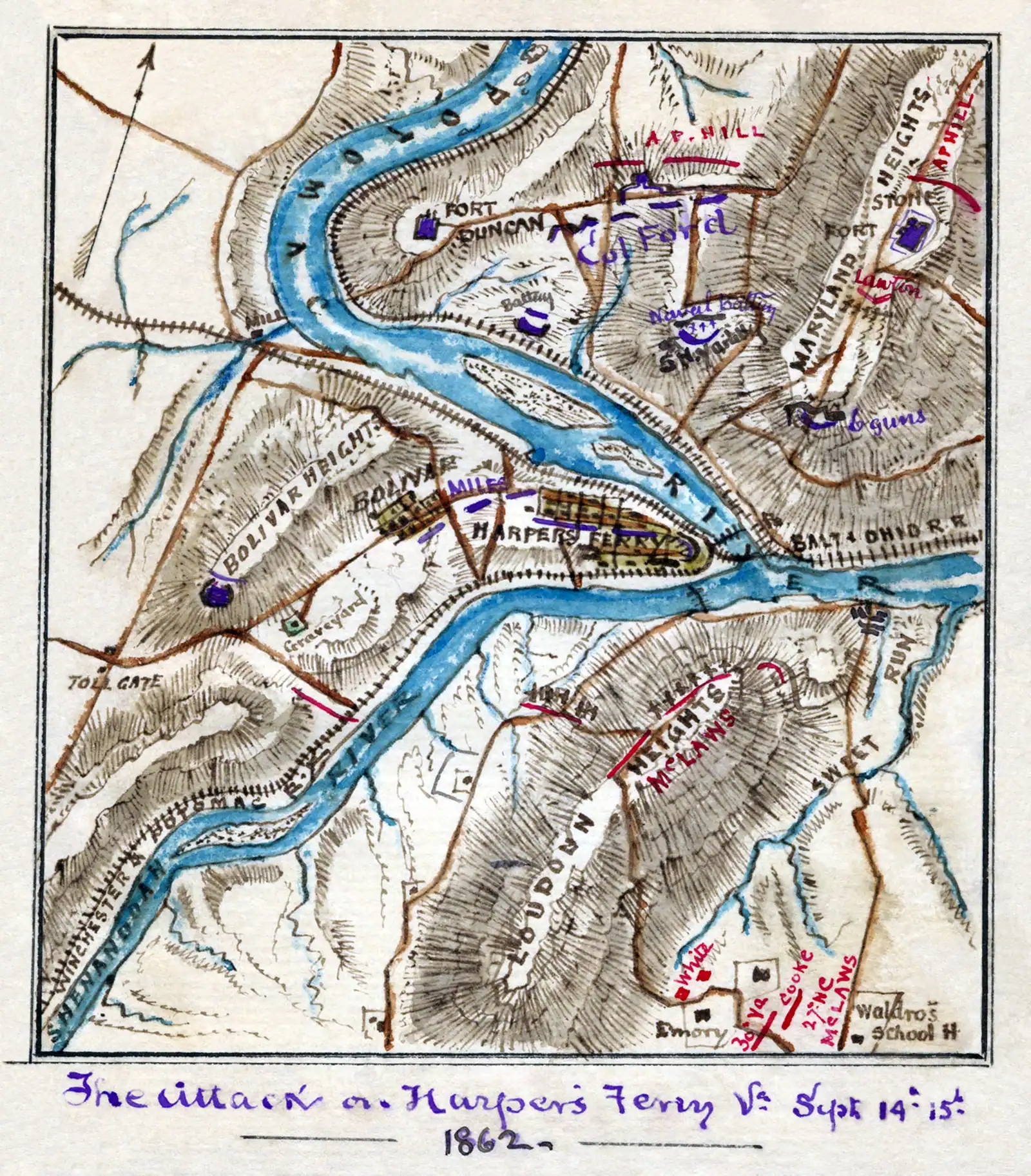
The railroad bridge beside it carries the line across the Potomac into a tunnel driven straight through the base of Maryland Heights. The Goodloe Byron Memorial Footbridge is cantilevered off the side of it, which is why the Appalachian Trail and a CSX freight line share the same crossing. Watching a coal train come out of the tunnel and onto the bridge from the footbridge deck is one of the better free experiences in the town.
Two safety points that get ignored. The tracks are not a shortcut and the railroad bridge is not a walkway; the footbridge exists so that nobody needs to be on either. And the platform edge is a platform edge on an active freight route, where trains that do not stop come through at speed.
Straight-line distances, so allow more on the road — the island is long and has one main parkway.
Viewpoint
Ninety seconds from the shuttle stop, level the whole way, and the only spot where the town's geography explains itself.
10–30 minutesFree; covered by the park entrance fee already charged on your vehicle640 ft away
Landmark
The walkway bolted to a working railroad bridge that carries the Appalachian Trail over the Potomac — closed since July 2026.
10–25 minutesFree to cross when open; the park entrance fee applies to your vehicle510 ft away
Neighbourhood
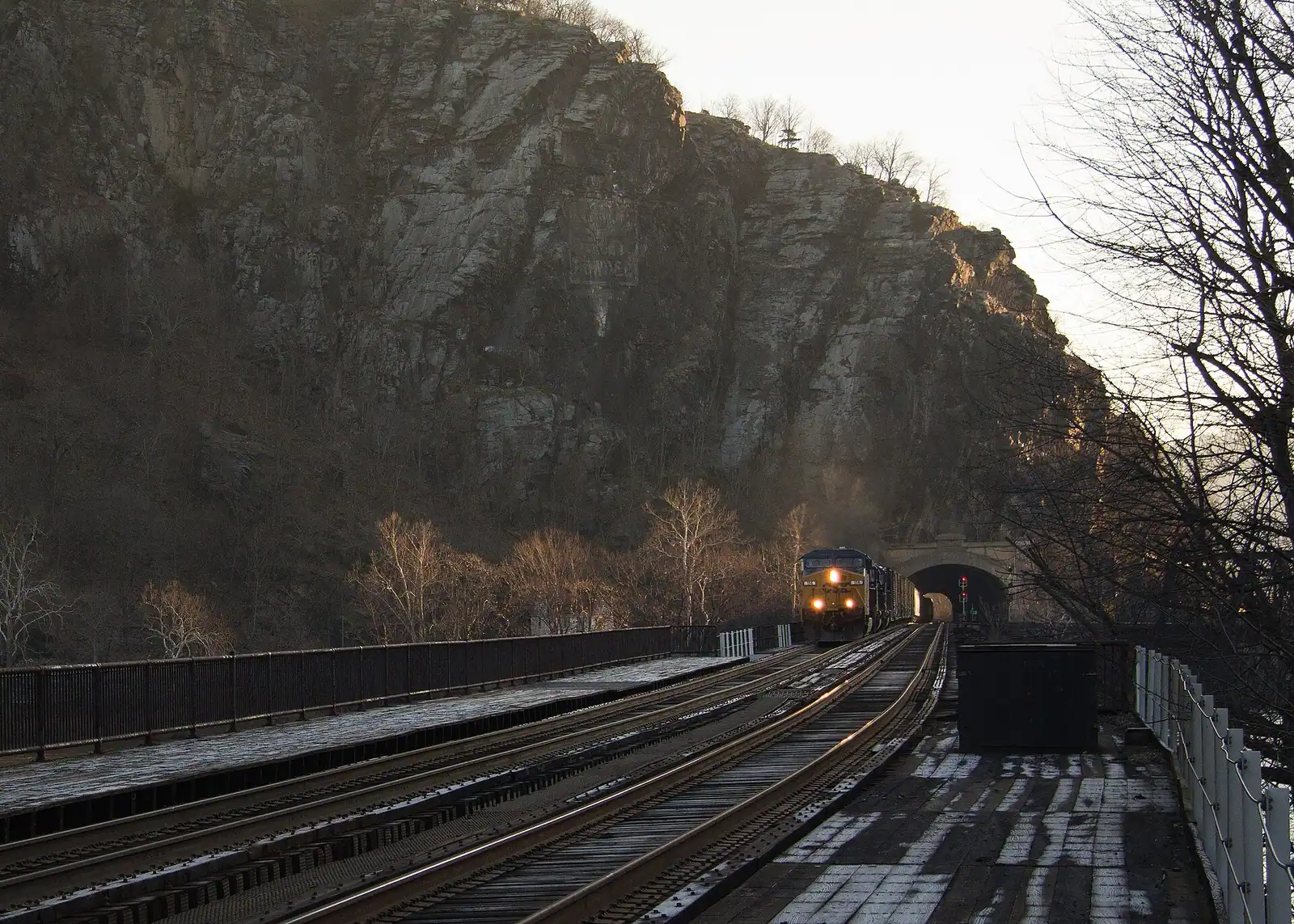
Two streets and a flight of stone steps, all of it inside a national park, with the high-water marks still on the walls.
2–5 hoursPark entrance fee applies; National Park Service exhibit buildings are then free to enter360 ft away
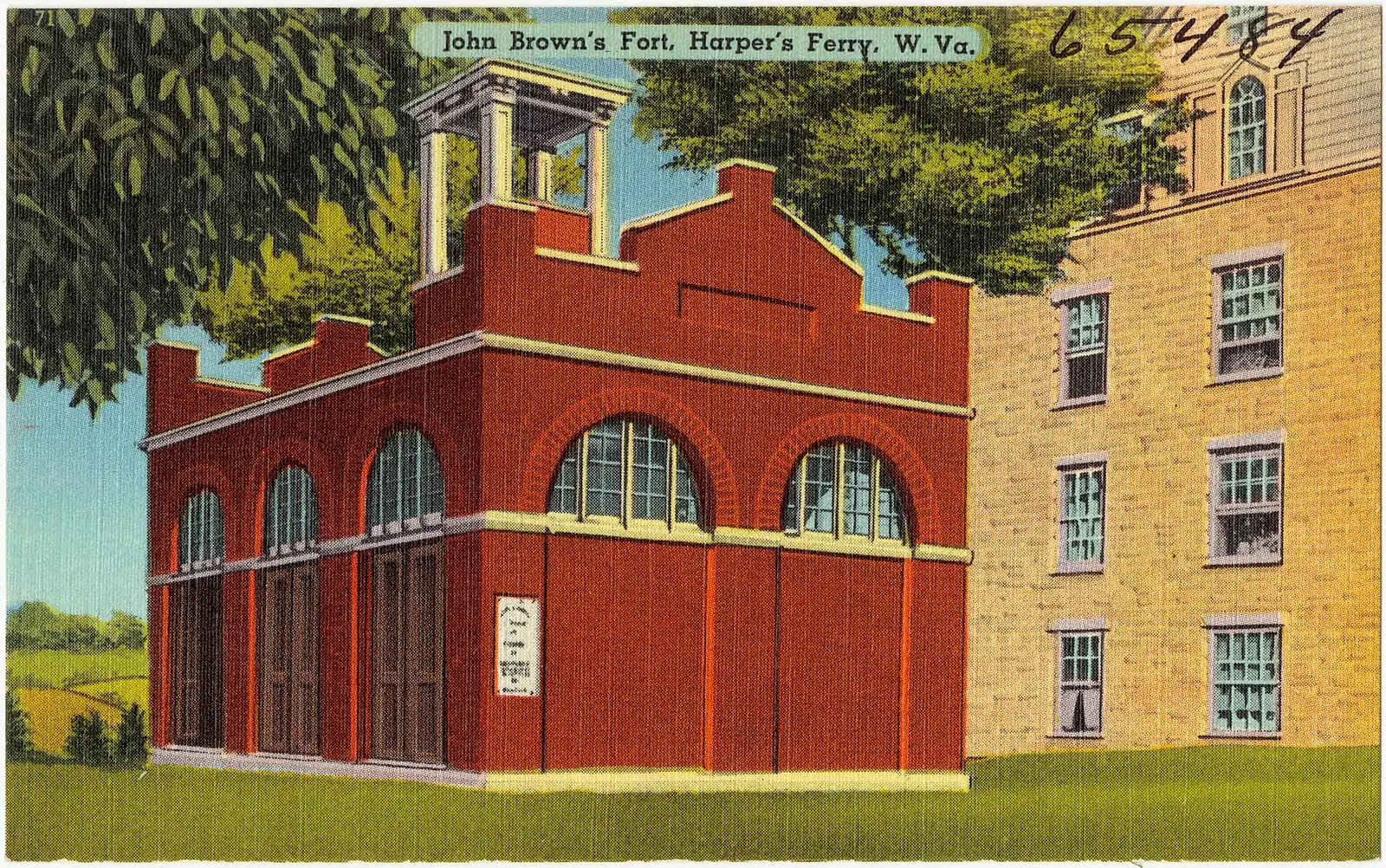
Historic site
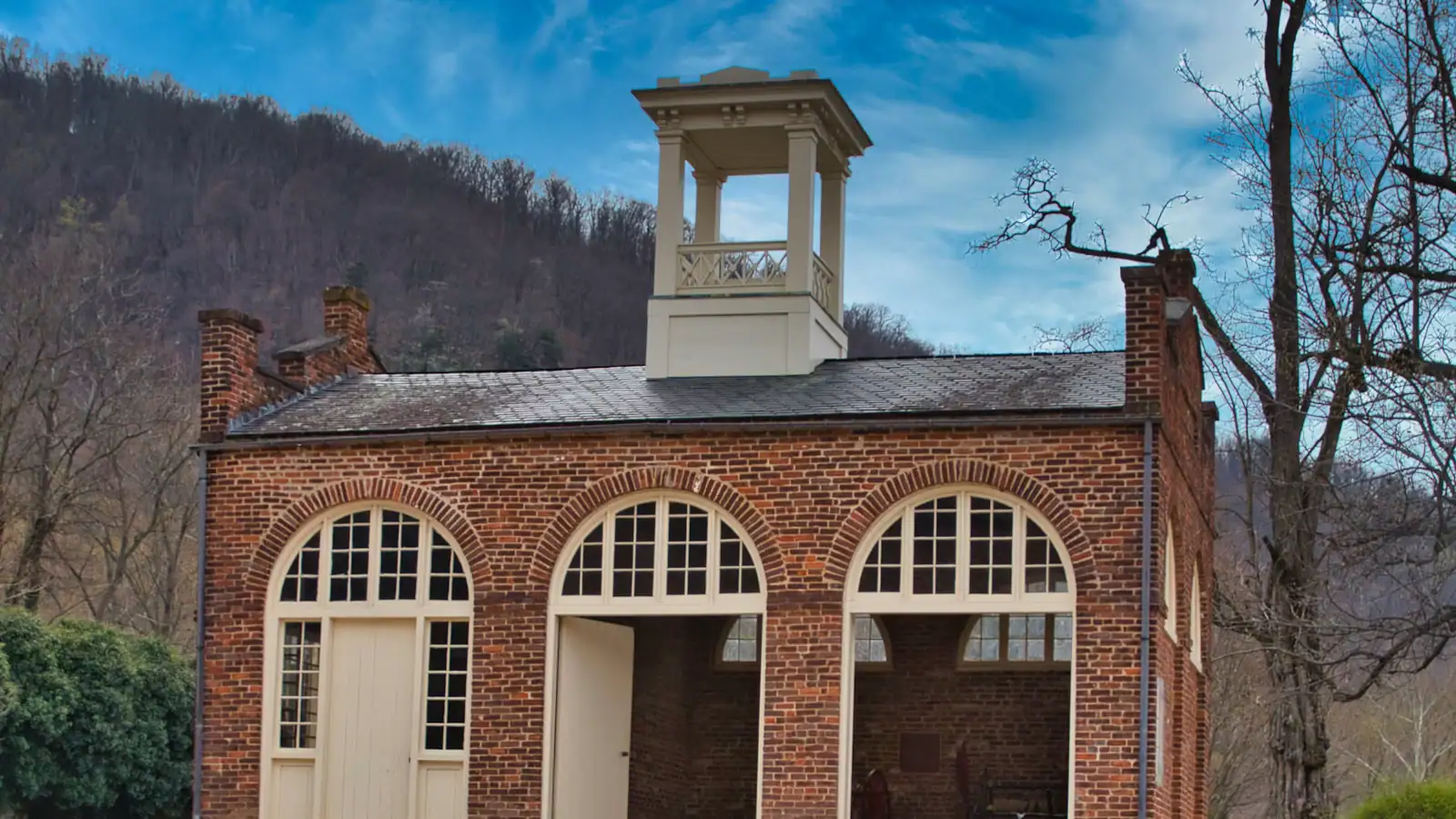
An 1848 fire engine house, the only armoury building to survive the war, and it does not stand where any of this happened.
10–30 minutesCovered by the park entrance fee; no separate charge710 ft away
Where this place fits into a day, and the pages that plan one.
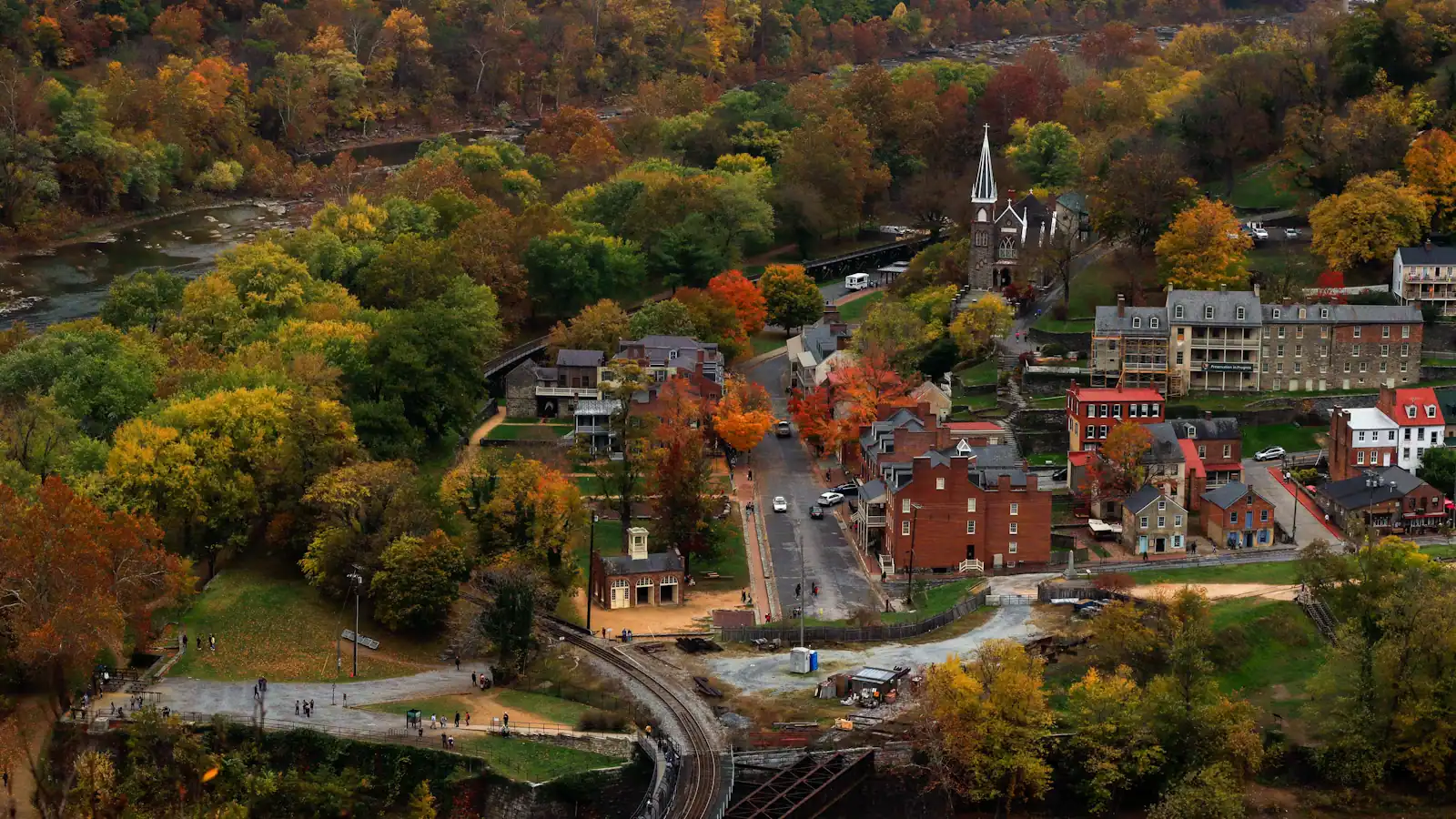
Guide hub
At most national parks the town is outside the gate. Here the town is the park. Harpers Ferry National Historical Park covers roughly 3,660 acres in…
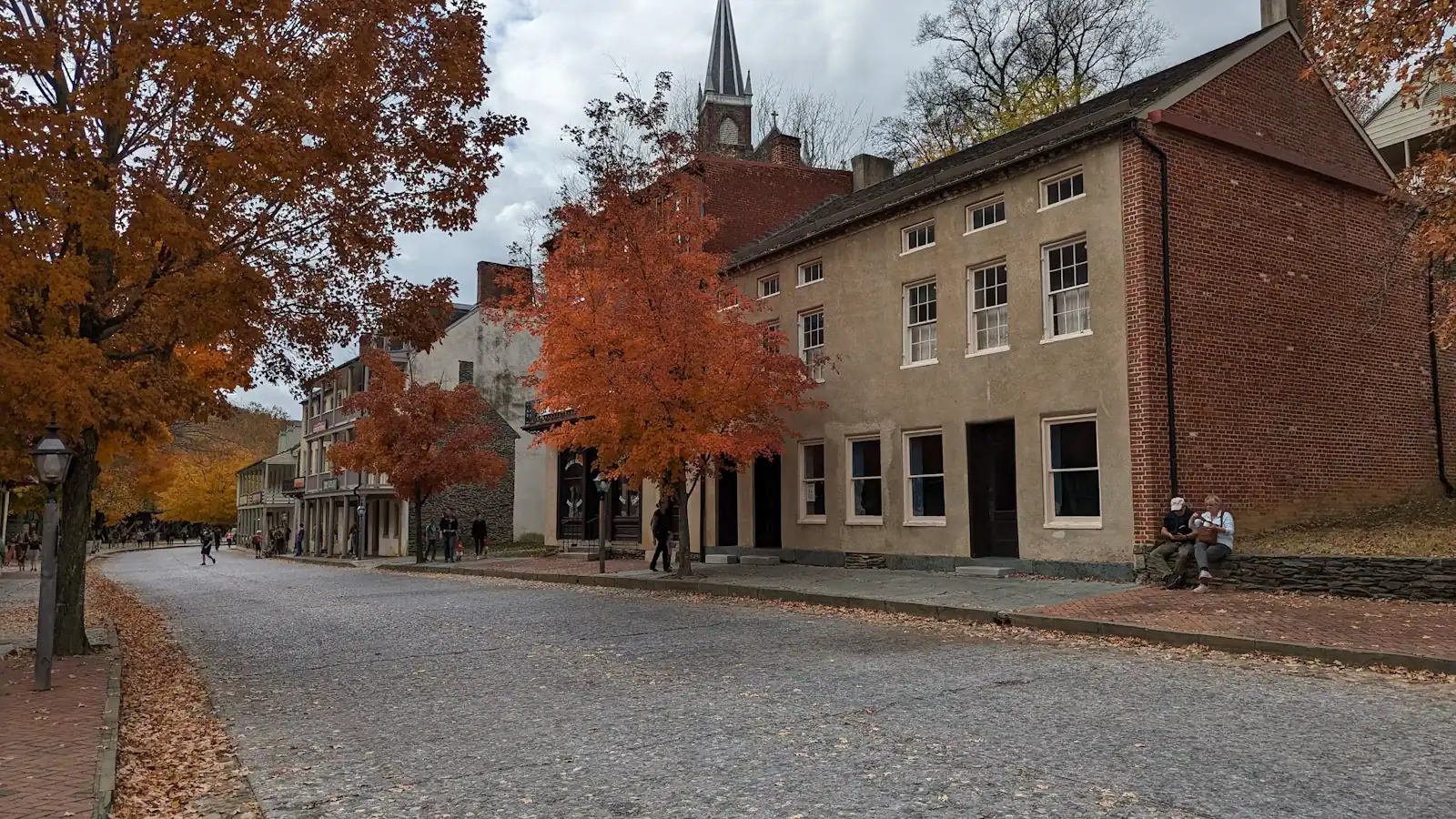
Plan your trip
Learn one thing before you set off and the rest of the day looks after itself: you do not drive into the lower town. The streets that John Brown's…
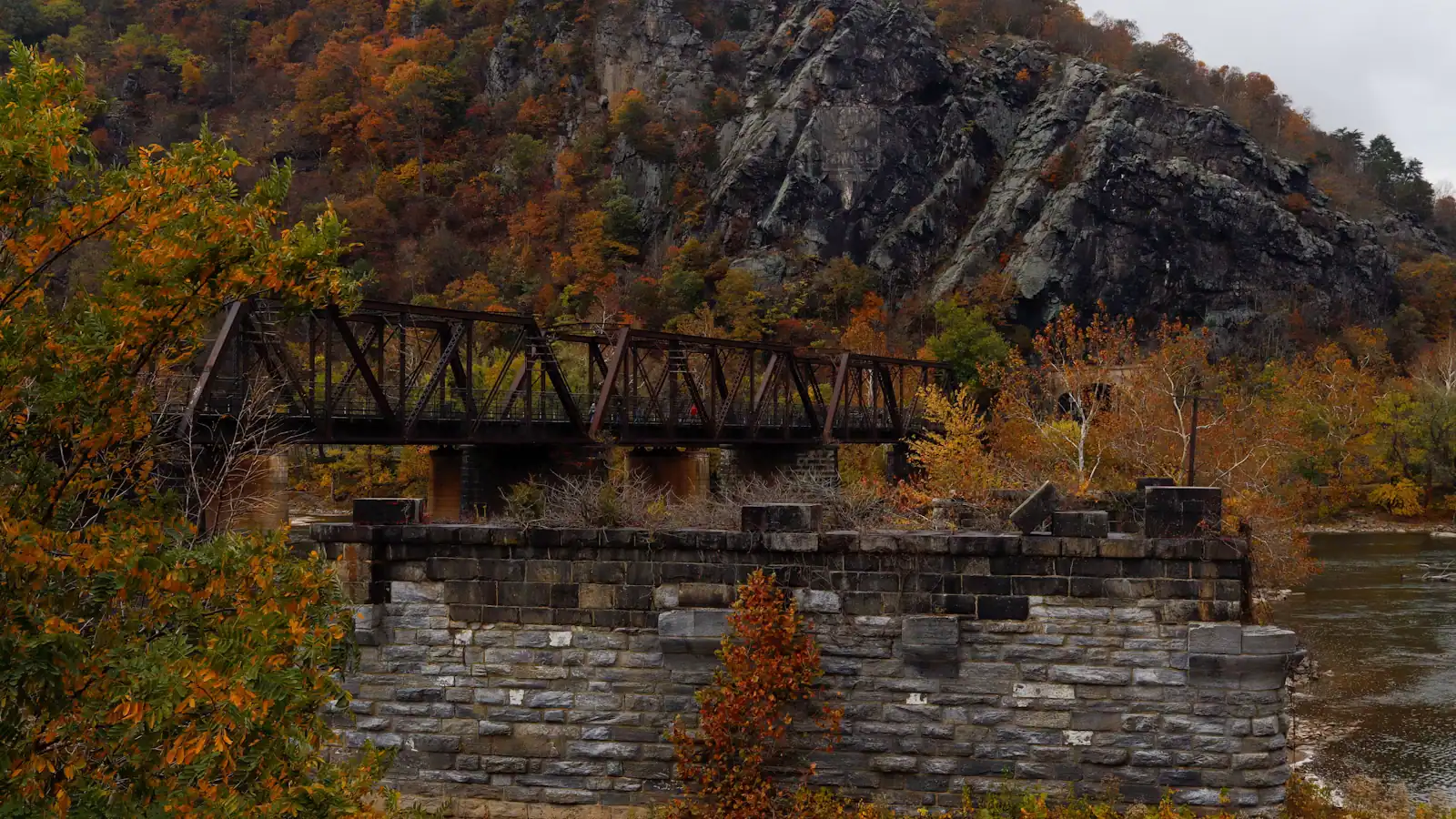
Plan your trip
Once you are off the bus, Harpers Ferry is a walking town — and a vertical one. That second part is what people underestimate. The whole of the…
Things to do
The lower town runs out of daylight before you run out of interest. Museums close at five, the last shuttle up from the lower town is seven in the…
Guide
Cobbles, stone steps and a thousand-foot ridge on three sides. The flat walking is across a footbridge reached by stairs. Here is which parts of this actually work with children.
8 min readPrudence Ashby
Guide
The platform is inside the national historical park. No lot, no shuttle, no hill. The catch is that the commuter timetable runs the wrong way for a day-tripper, and the workaround is worth knowing.
9 min readPrudence Ashby
Guide
The lower town has nowhere to leave a car. Park at 171 Shoreline Drive off US 340, pay at the entrance station, and ride the bus down. The last bus back is the only deadline that matters.
8 min readPrudence Ashby
Yes, and the platform is inside the historic town rather than a drive away, which is rare. Two operators call here. MARC's Brunswick Line runs on weekdays only and mostly in the commuter peak direction, so a day trip needs the timetable checked carefully. Amtrak's Floridian calls once in each direction every day, weekends included. Both are worth using, neither is turn-up-and-go, and you should read the current schedules before committing.
MARC does not. The Brunswick Line has no Saturday or Sunday service to Harpers Ferry at all, which is the single most common planning mistake visitors make. The only weekend rail option is Amtrak's Floridian, which calls once in each direction daily. If your visit is fixed to a Saturday and you have no car, plan around that one train and treat the return as the fixed point of the day.
No. The platform is not step-free and the station is listed as inaccessible to mobility-impaired passengers. If someone in your group cannot manage steps, arriving by car and using the park shuttle is the better route, since the shuttle buses carry ramps or lifts and the visitor center on Cavalier Heights is accessible. Contact the operator directly if you need to discuss boarding assistance.
The present building opened in the autumn of 1894 as a Baltimore & Ohio station, designed by E. Francis Baldwin. It does not stand on its original spot: the railroad realigned its tracks in 1931 and the building was moved to suit. The National Park Service has owned it since 2001, which is how a working commuter platform came to sit inside a national historical park.
Not on the railroad bridge itself, which carries an active CSX freight line and is not a walkway. The Goodloe Byron Memorial Footbridge is cantilevered off the side of it and is the pedestrian crossing, carrying the Appalachian Trail over the Potomac to the C&O Canal towpath and the Maryland Heights trailhead. It is reached by steps from Potomac Street near the station and gives an excellent view of trains entering the tunnel.