Skip to content
Menu

A booking made through these earns us a commission from Viator. The price is the same, and the commission had no bearing on what is recommended.

Historic site

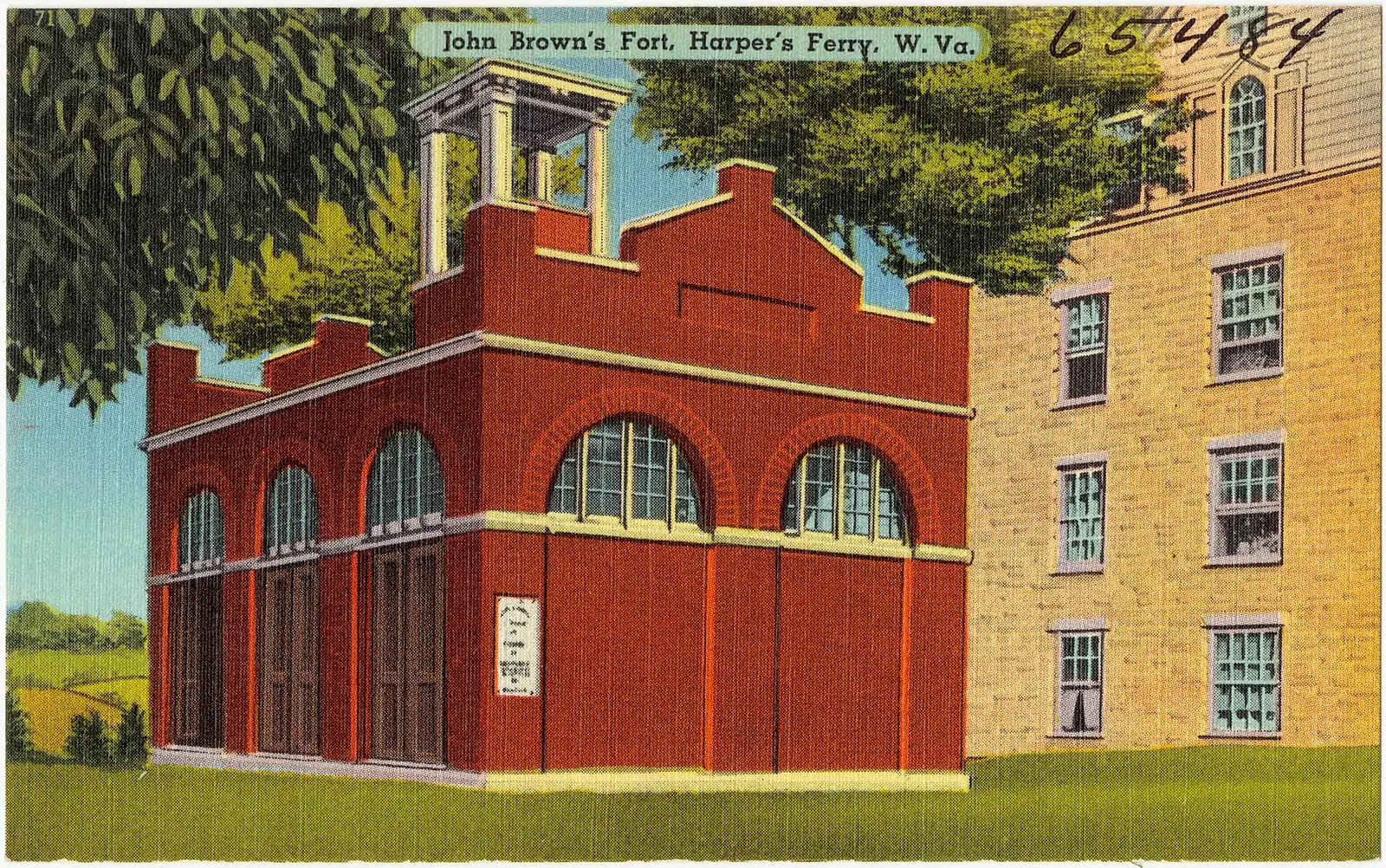
John Brown's Fort

Last updated

An 1848 fire engine house, the only armoury building to survive the war, and it does not stand where any of this happened.

Photo: John Myerly Company, Hagertown, Md.Public domain

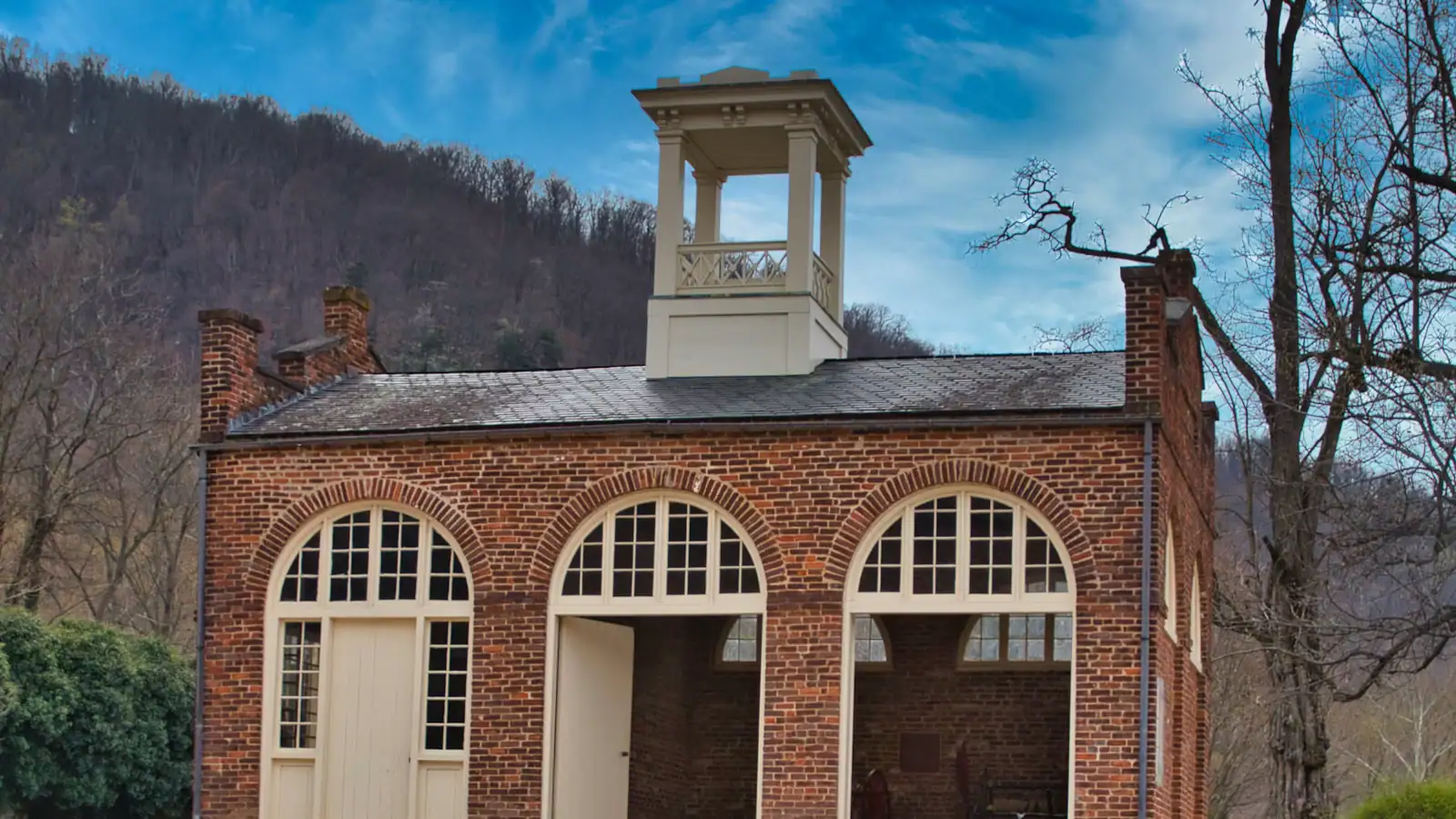
It is a small brick building with three arched doorways and a squat cupola, and it is the most consequential structure in the state. It was built in 1848 as the fire engine and guard house for the United States Armory at Harpers Ferry — a utility shed, essentially, for the fire apparatus of a federal weapons works that turned out more than 600,000 firearms between 1801 and 1861.

On the night of Sunday 16 October 1859 John Brown crossed the Potomac from a rented farmhouse in Maryland with eighteen men, leaving three behind. They cut the telegraph wires, took the armoury and the rifle works, and seized hostages, among them a great-grand-nephew of George Washington. The plan was to arm an uprising out of the arsenal's stock. It did not happen. Local militia sealed the bridges by morning, the raiders were pinned back into this building, and on the morning of the 18th a company of United States Marines under Colonel Robert E. Lee broke the door in with a ladder. The assault took about three minutes. Ten of Brown's men were killed, including two of his sons. The first person to die in the raid was Hayward Shepherd, a free Black baggage handler at the railway station, shot by the raiders — a fact worth carrying rather than smoothing over.

Brown was tried at Charles Town, eight miles west, and hanged there on 2 December 1859. Within eighteen months the country was at war.

Here is the part nobody expects. The building in front of you has been taken apart and moved four times, and it is not standing where the raid happened. It was dismantled and shipped to Chicago for the 1893 World's Columbian Exposition, where it drew a famously thin crowd. It came back to a farm outside town in 1895, was re-erected on the Storer College campus in 1909, and was moved by the National Park Service in 1968 to where you see it now — about 150 feet from its original site. That site is under a railroad embankment. The obelisk across the tracks marks it.

Getting there and parking

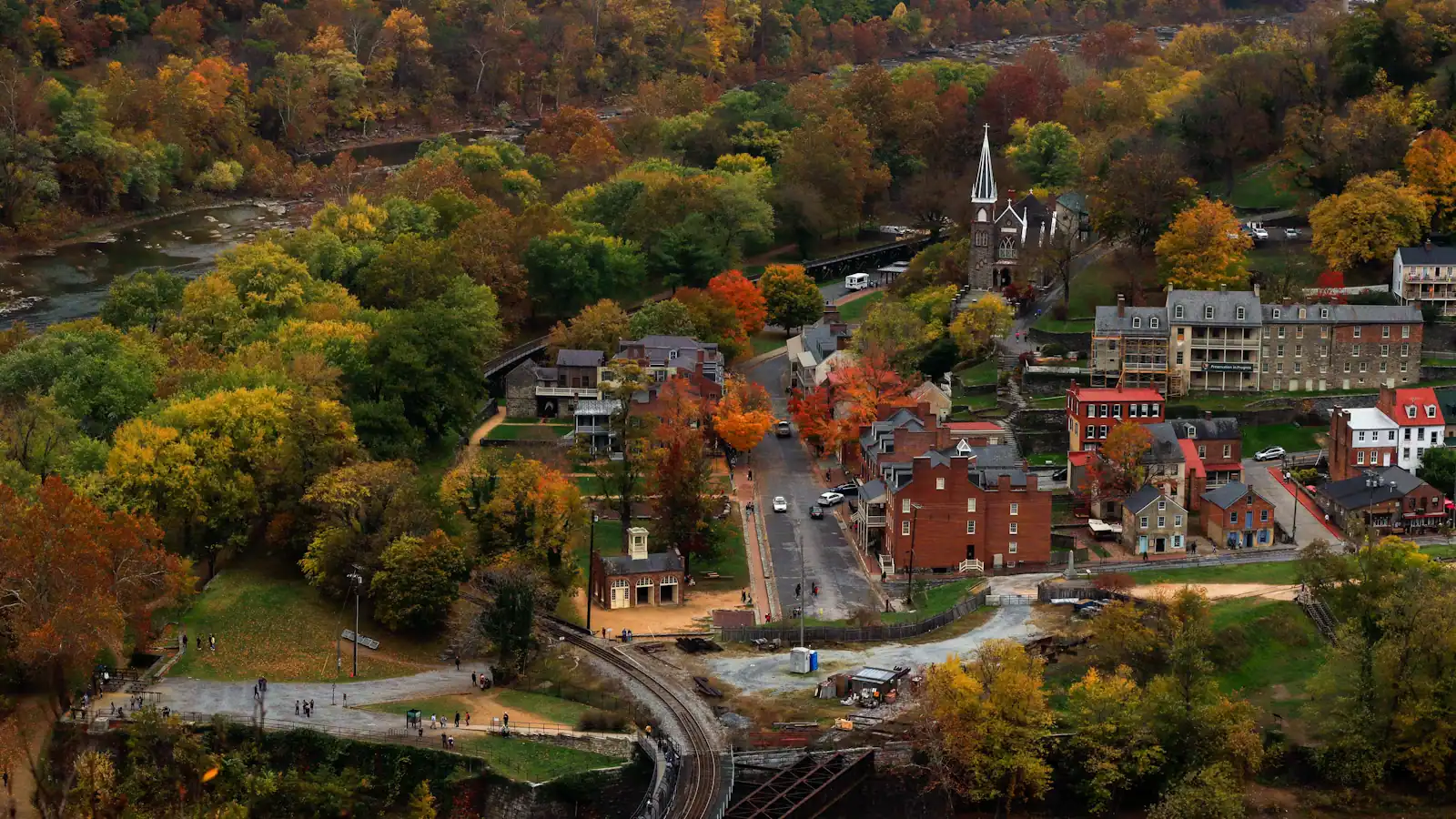
Take the shuttle down from the visitor centre on Cavalier Heights and walk two minutes. The building stands on open ground between Shenandoah Street and the railway, close to the shuttle drop-off and to the confluence, and it is signed from every direction.

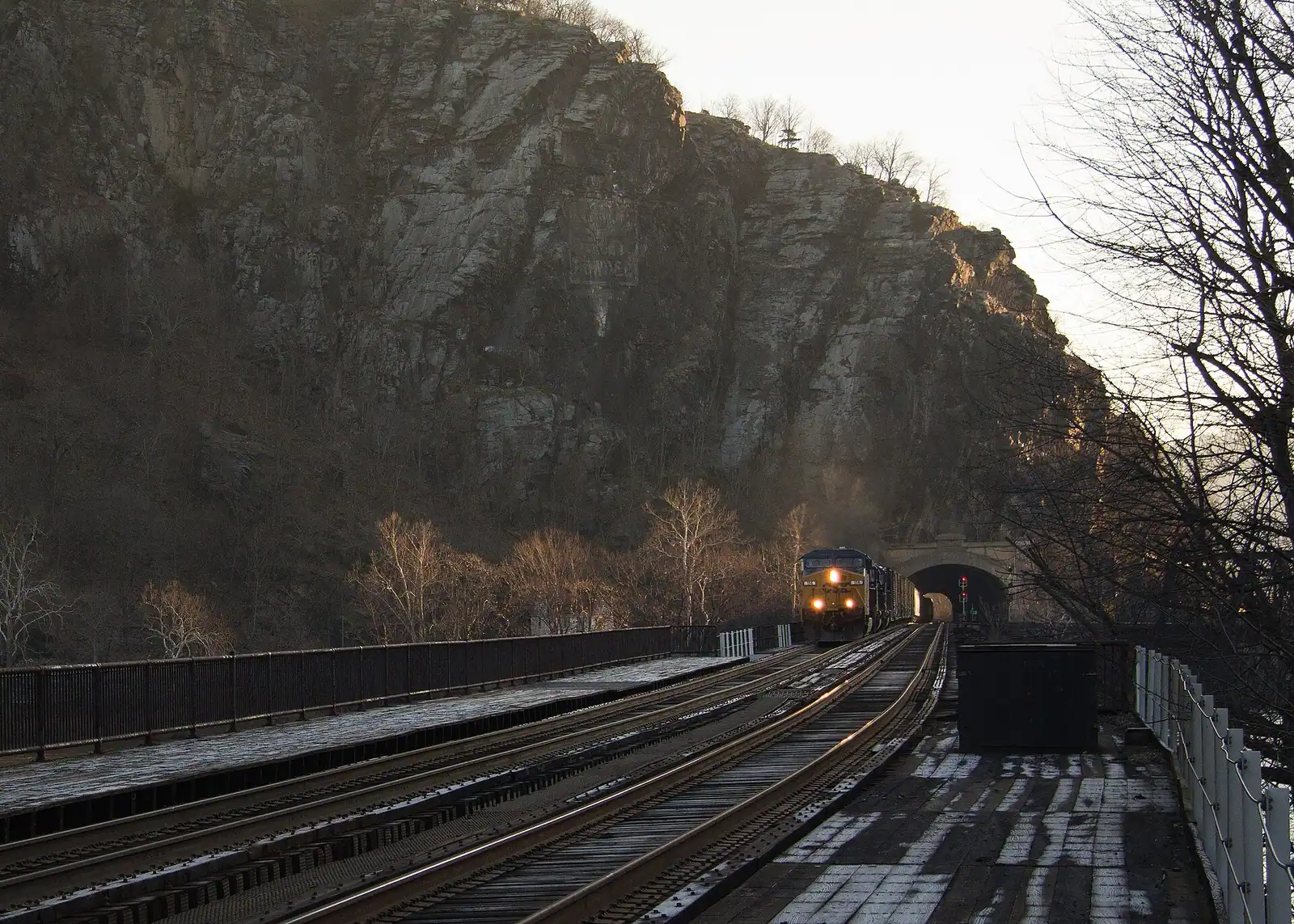
Arriving by train, you are already there — the station platform is a few hundred yards away at the West Virginia end of the railroad bridge.

The approach is level from the shuttle stop, which makes this one of the few major sites here that does not involve steps or a gradient. Look across the tracks for the granite obelisk: that marks the armoury site where the engine house originally stood, and the walk between the two tells you more about the building's history than any panel does.

Thirty-six hours in October 1859

Brown's party numbered twenty-two including himself: sixteen white men and five Black men, several of them formerly enslaved. They had been living quietly at the Kennedy farmhouse in Maryland since July, and they crossed on a wet Sunday night.

The opening hours went to plan. The watchman on the railroad bridge was overpowered, the armoury gates were taken, and by dawn Brown held the arsenal, the rifle works on Hall's Island and about forty hostages. Then it stopped going to plan, in the most ordinary way possible: he let a Baltimore & Ohio train through, and its conductor telegraphed ahead.

By Monday afternoon militia companies from Charles Town, Shepherdstown and Martinsburg had the bridges. Brown's men were driven back into the engine house with a handful of hostages. Two of his sons, Watson and Oliver, were mortally wounded; Brown is recorded talking to Oliver through the night.

The Marines arrived from Washington late on Monday. On Tuesday morning Lieutenant J.E.B. Stuart carried a surrender demand to the door, Brown refused it, and Stuart stepped aside and signalled. Lieutenant Israel Green led the rush and cut Brown down with his dress sword.

Seven raiders were later executed. Five escaped. The engine house was the only armoury building still standing when the war ended.

The four moves, in order

1891–1893, to Chicago. The building was bought, dismantled brick by numbered brick and re-erected near the World's Columbian Exposition as a paying attraction. It was a commercial disaster. Contemporary accounts describe a derisory number of paying visitors across the entire fair.

1895, back to Jefferson County. Journalist Kate Field led the effort to bring it home. It was re-erected on a farm about three miles outside Harpers Ferry, because its original ground was by then railroad property.

1909, to Storer College. Moved again, this time onto the campus on Camp Hill, where it became the emblem of a college founded to educate people who had been enslaved. That is where the Niagara Movement delegates walked to at dawn in 1906 — three years before the move, when the building still stood on the farm, and the walk was three miles each way.

1968, to the lower town. The National Park Service brought it down the hill to its present position, roughly 150 feet from where it was built. The original footprint lies beneath a railroad embankment raised in the 1890s. A granite obelisk on the far side of the tracks marks the spot.

Four moves, four different meanings. The building has been a curiosity, a relic, a symbol and an exhibit, and it has been all of them without ever being where the thing happened.

What is actually inside

Less than people expect, and that is not a criticism. The interior is a single open bay with a brick floor, roof timbers overhead and a small amount of interpretation. There is no furnished scene, no recreated barricade and no waxworks. You walk in, stand in a room about the size of a double garage, and work out for yourself that twenty-odd people, some of them dying, spent a night and a morning in it.

Give it ten minutes, then give the next twenty to the John Brown Museum a short walk away on Shenandoah Street, which carries the narrative properly: the planning at the Kennedy farm, the raiders themselves, the trial, and what the country made of Brown afterwards.

Note the brickwork if you like that sort of thing. A building dismantled and rebuilt four times carries the evidence — mismatched courses, replacement brick, the cupola rebuilt more than once.

The building is open on the park's current conditions listing, which is not true of everything around it: the Civil War Museum, the Black Voices exhibit and the Harper House were all closed for repairs in late September 2026.
Brown himself, and the argument that has never settled

Brown is not a figure this site is going to hand you a verdict on, because the argument about him has run for 167 years and it is a real argument.

He was a man who believed slavery could only be ended by force, who had already killed pro-slavery settlers in Kansas, and who walked into a federal armoury with eighteen men and no workable plan for what came next. He was also right about the thing that mattered most, and he said so at his trial in terms that Emerson and Thoreau seized on immediately and that Frederick Douglass — who had declined to join the raid, calling it a trap — spent the rest of his life arguing about.

Southern states read the raid as proof that the North intended insurrection. Militia companies were raised across Virginia in its aftermath, and some of those companies were at Bull Run two years later.

The Niagara Movement delegates who walked to this building in 1906 were not being sentimental. They came because W. E. B. Du Bois had chosen Harpers Ferry deliberately, and because the argument about what Brown did was, for them, an argument about the unfinished business of the war.

Near John Brown's Fort

Straight-line distances, so allow more on the road — the island is long and has one main parkway.

  • A narrow street of nineteenth-century shopfronts running uphill between stone kerbs

    Neighbourhood

    Lower Town Harpers Ferry

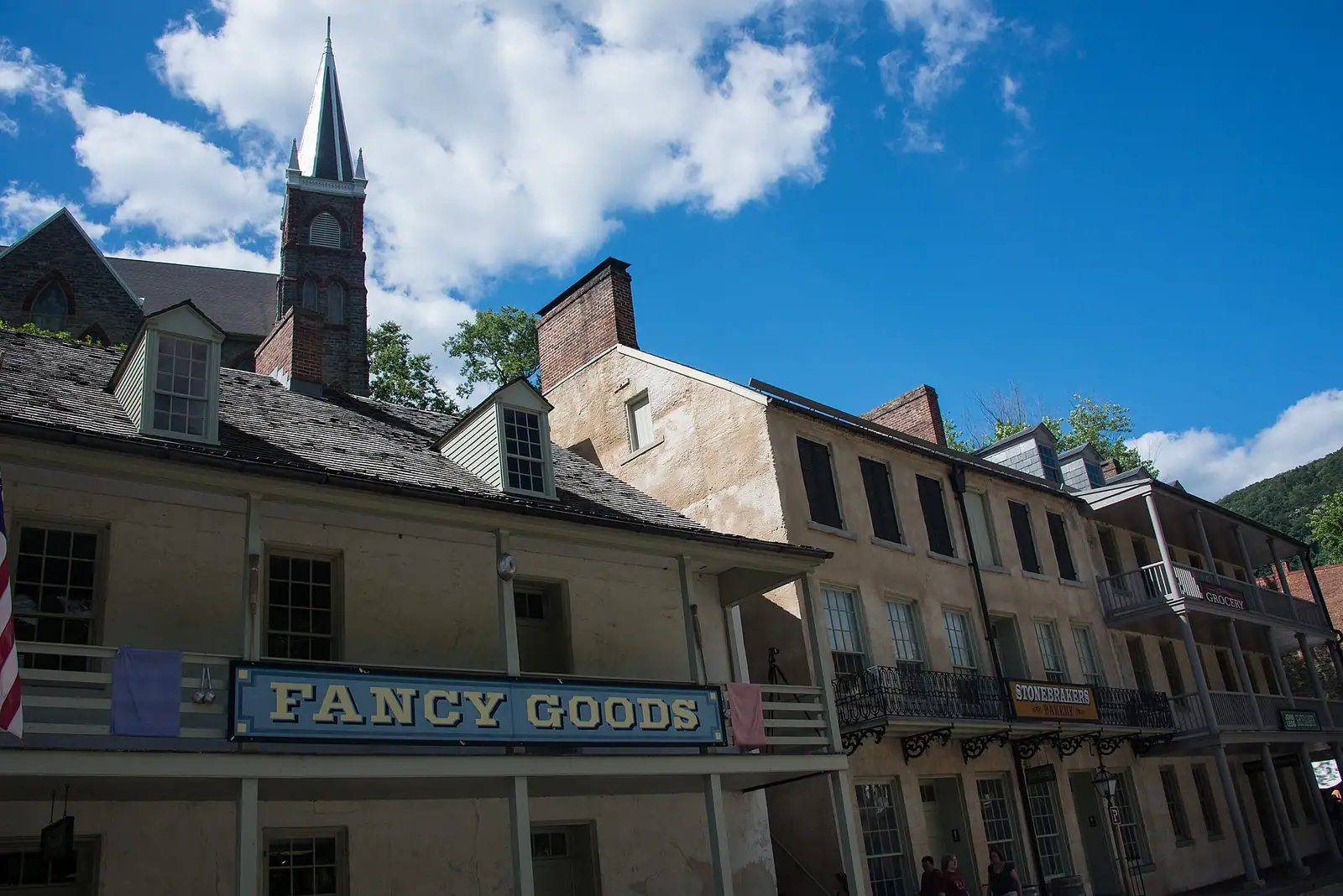
    Two streets and a flight of stone steps, all of it inside a national park, with the high-water marks still on the walls.

    2–5 hoursPark entrance fee applies; National Park Service exhibit buildings are then free to enter360 ft away

  • A long steel bridge carrying a walkway across a wide river, with a forested ridge rising behind it

    Viewpoint

    Free

    The Point

    Ninety seconds from the shuttle stop, level the whole way, and the only spot where the town's geography explains itself.

    10–30 minutesFree; covered by the park entrance fee already charged on your vehicle500 ft away

  • A street of nineteenth-century shopfronts with stone kerbs running between them

    Historic site

    Shenandoah Street

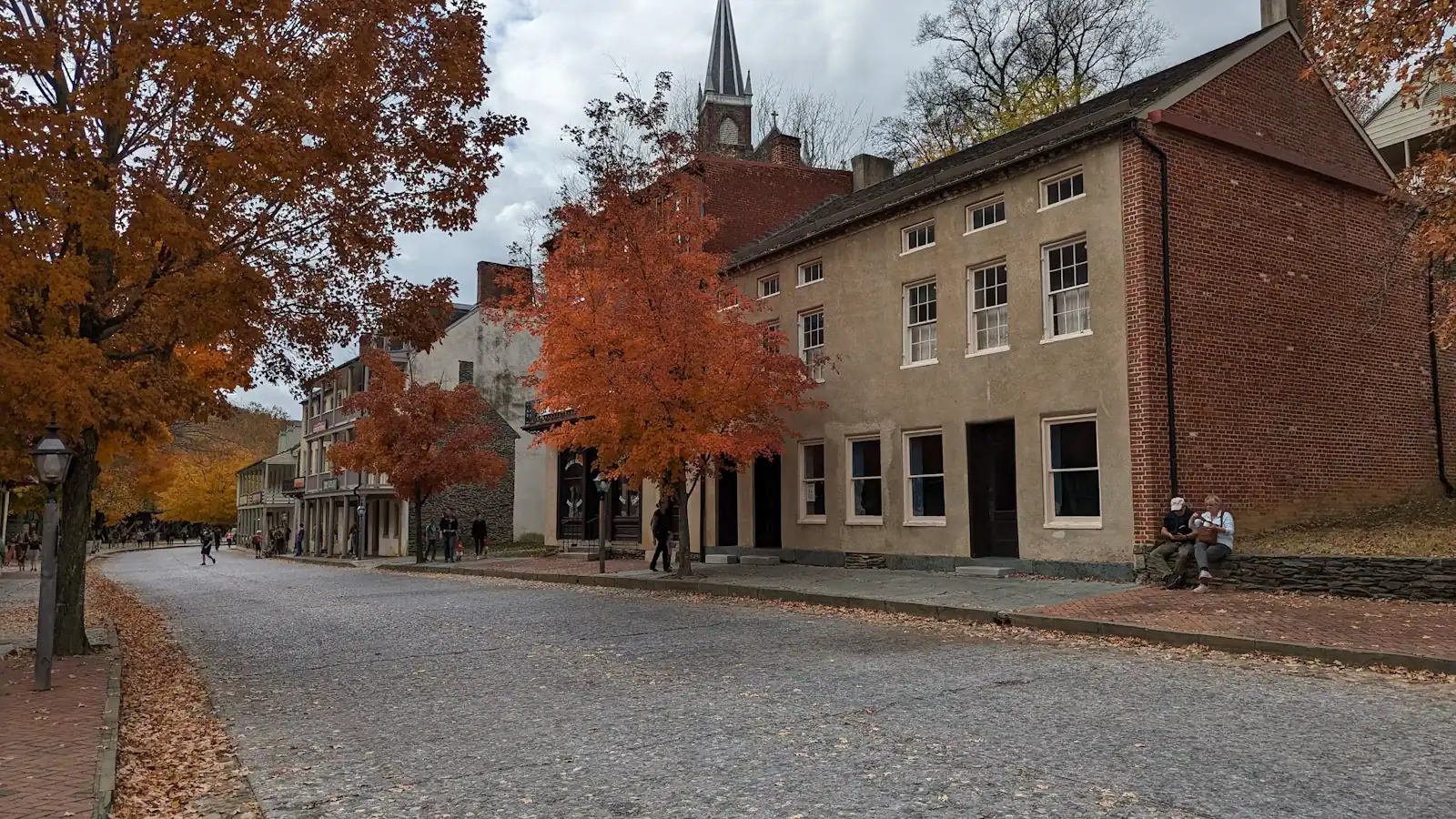
    The one level street in the lower town: park museums door by door, the shuttle stop, and the restored shopfronts of an 1860s street.

    1–2.5 hoursIncluded with park entrance; the museums along the street carry no separate charge30 ft away

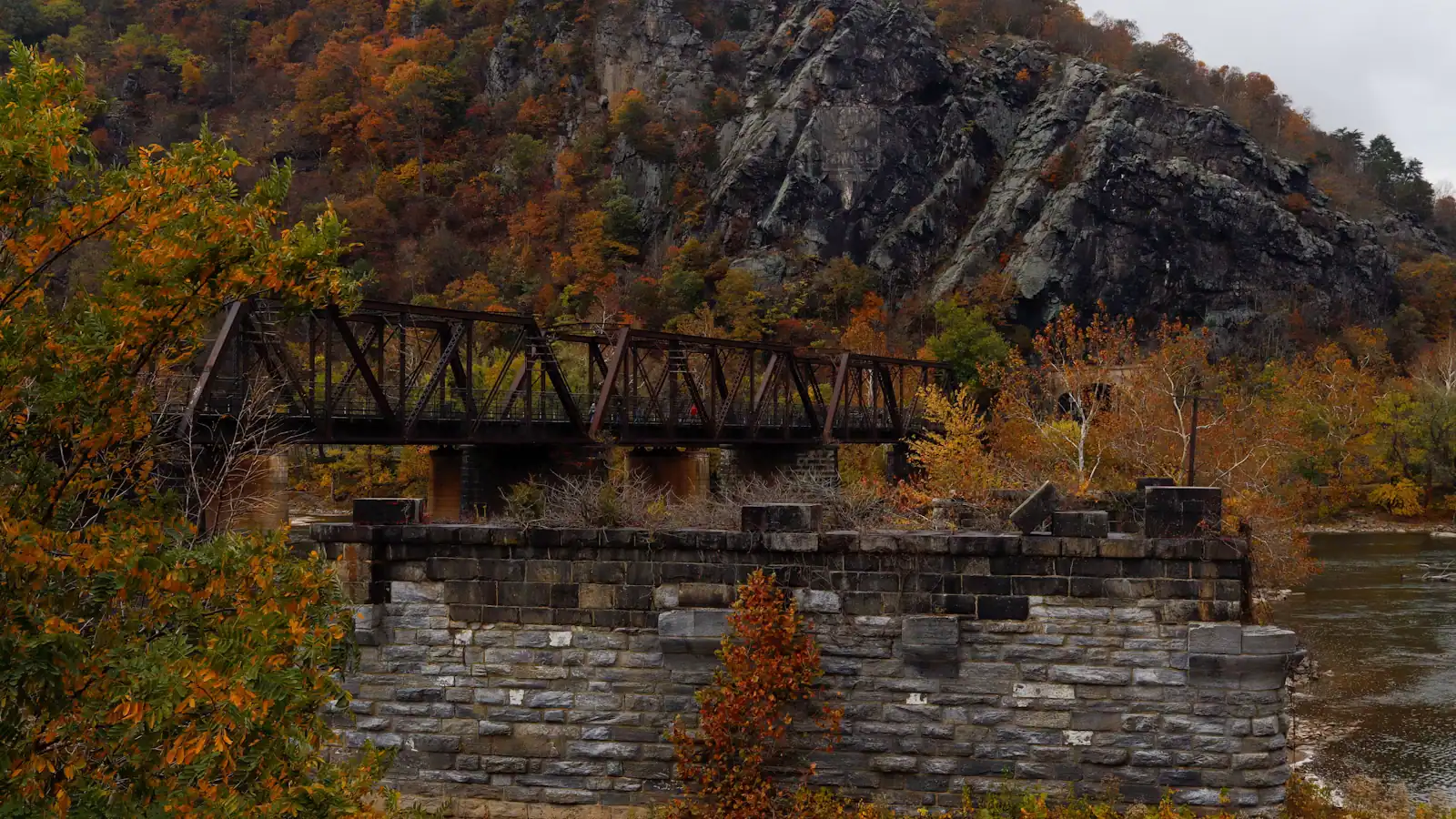
  • A steel railway bridge with a walkway along its side crossing a wide river below a wooded ridge

    Landmark

    Free

    Harpers Ferry Train Station

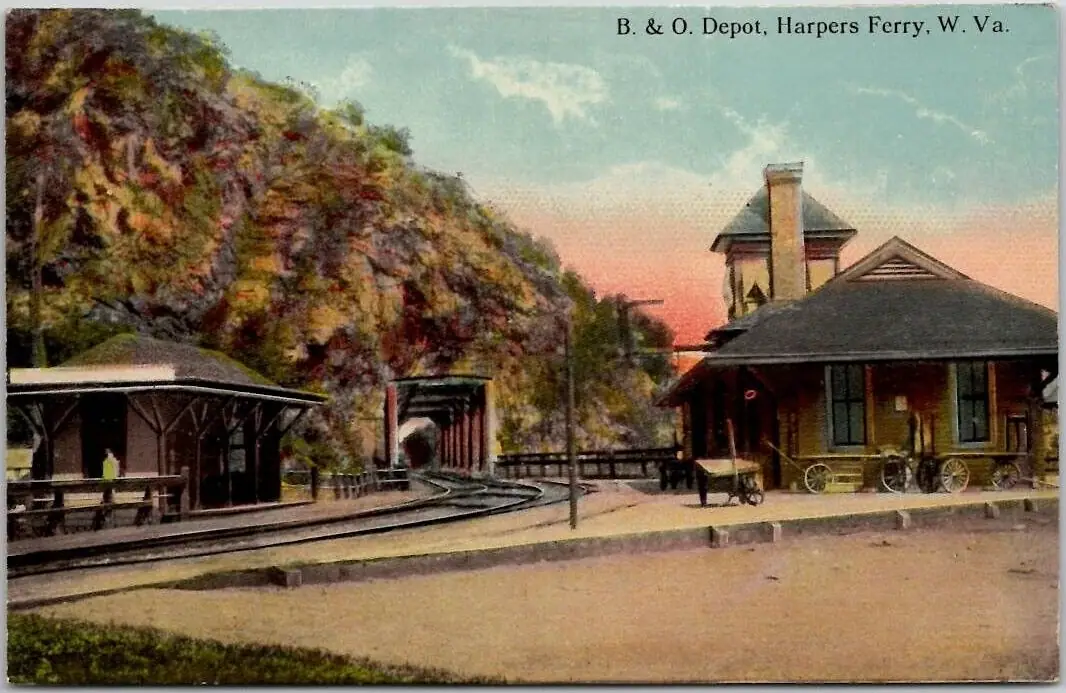
    An 1894 B&O station whose platform sits inside the historic district, served by weekday MARC trains and one Amtrak each way.

    10–30 minutesFree to visit. Rail fares are charged by MARC and Amtrak separately710 ft away

John Brown's Fort: common questions

Is John Brown's Fort in its original location?

No, and this is the most misunderstood thing about the building. It has been dismantled and moved four times: to Chicago for the 1893 World's Columbian Exposition, back to a farm outside town in 1895, onto the Storer College campus in 1909, and down to its present position by the National Park Service in 1968. It now stands roughly 150 feet from where it was built. The original ground is beneath a railroad embankment, marked by a granite obelisk across the tracks.

What was John Brown's Fort before the raid?

The fire engine and guard house of the United States Armory at Harpers Ferry, built in 1848. It held the armoury's fire apparatus and sheltered the watchmen. It became a fort only because Brown's raiders retreated into it when the militia sealed the bridges, and it acquired the name afterwards. It is the only building of the entire federal armoury complex to survive the Civil War.

How long did John Brown's raid last?

About thirty-six hours. Brown crossed the Potomac on the night of Sunday 16 October 1859, held the armoury through Monday while militia companies closed in, and was overrun by United States Marines on the morning of Tuesday the 18th. The final assault on the engine house took roughly three minutes. Ten of his men were killed, including two of his sons. Brown was tried at Charles Town and hanged there on 2 December 1859.

Can you go inside John Brown's Fort?

Yes, during park museum hours, and there is no separate ticket beyond the park entrance fee. The interior is a single open brick-floored room with light interpretation rather than a furnished scene, so ten minutes is usually enough. Pair it with the John Brown Museum on Shenandoah Street, which carries the full narrative of the planning, the raid, the trial and the aftermath. Interior access can be suspended during maintenance or high water.