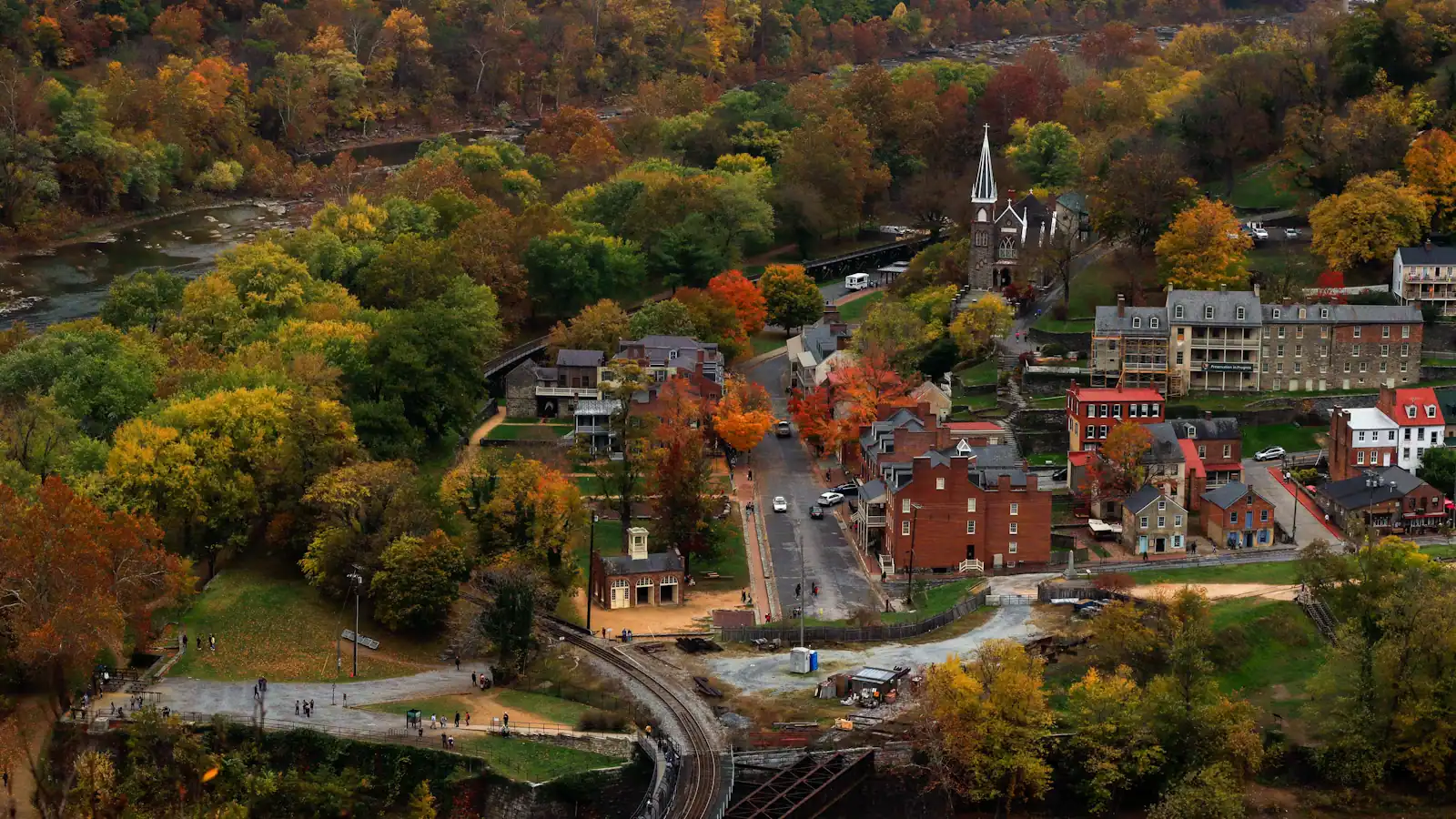
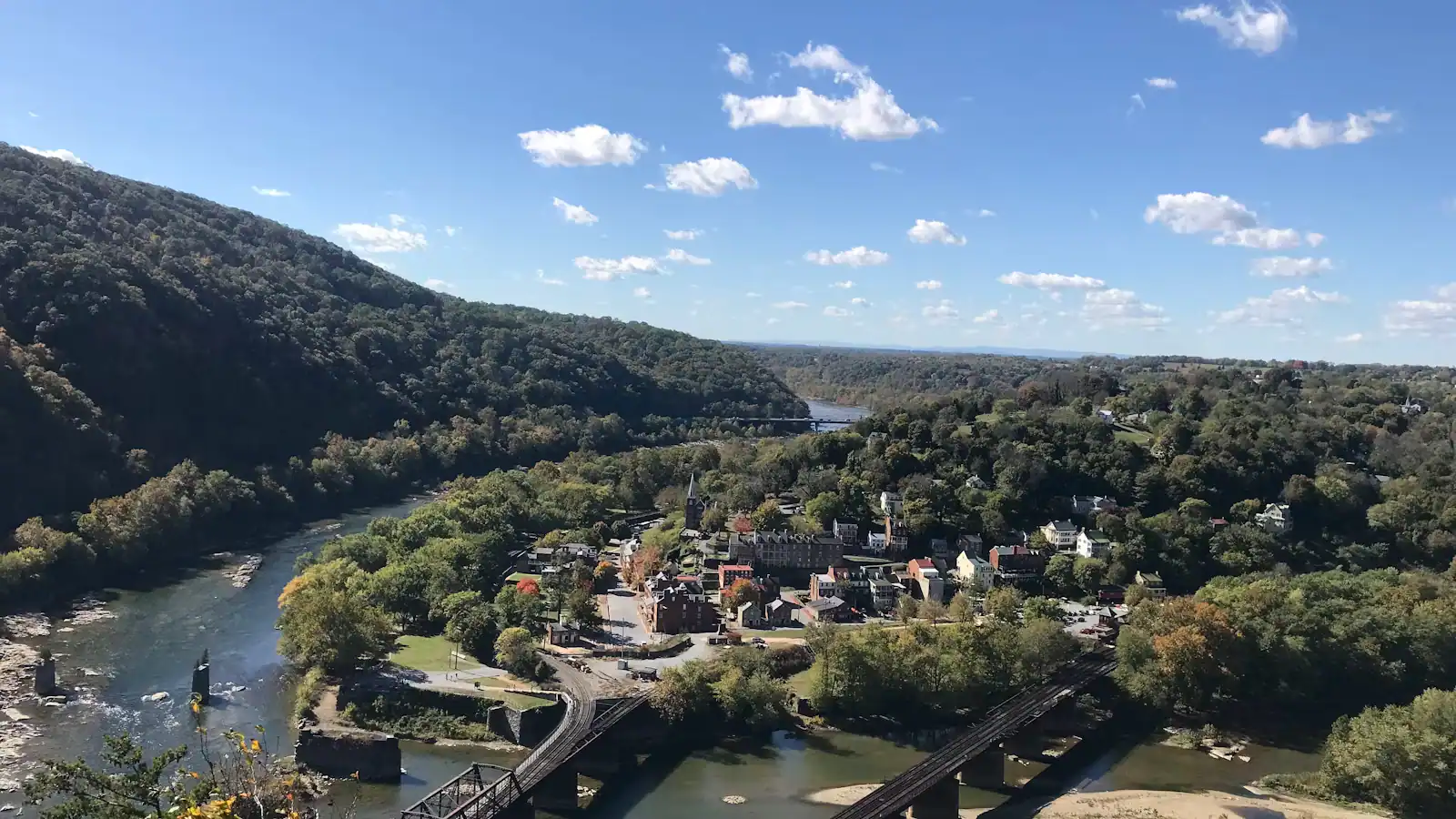
Set your expectations by the census. Two hundred and sixty-nine people live in Harpers Ferry, and the National Park Service says in its own visitor information that every place to eat, sleep or shop lies outside the park boundary, in the town itself and in Bolivar on the ridge above it. What that adds up to is a short row of small kitchens, a couple of cafés, a bakery, an ice cream counter in season, and a handful of places up the hill that serve the people who actually live here.
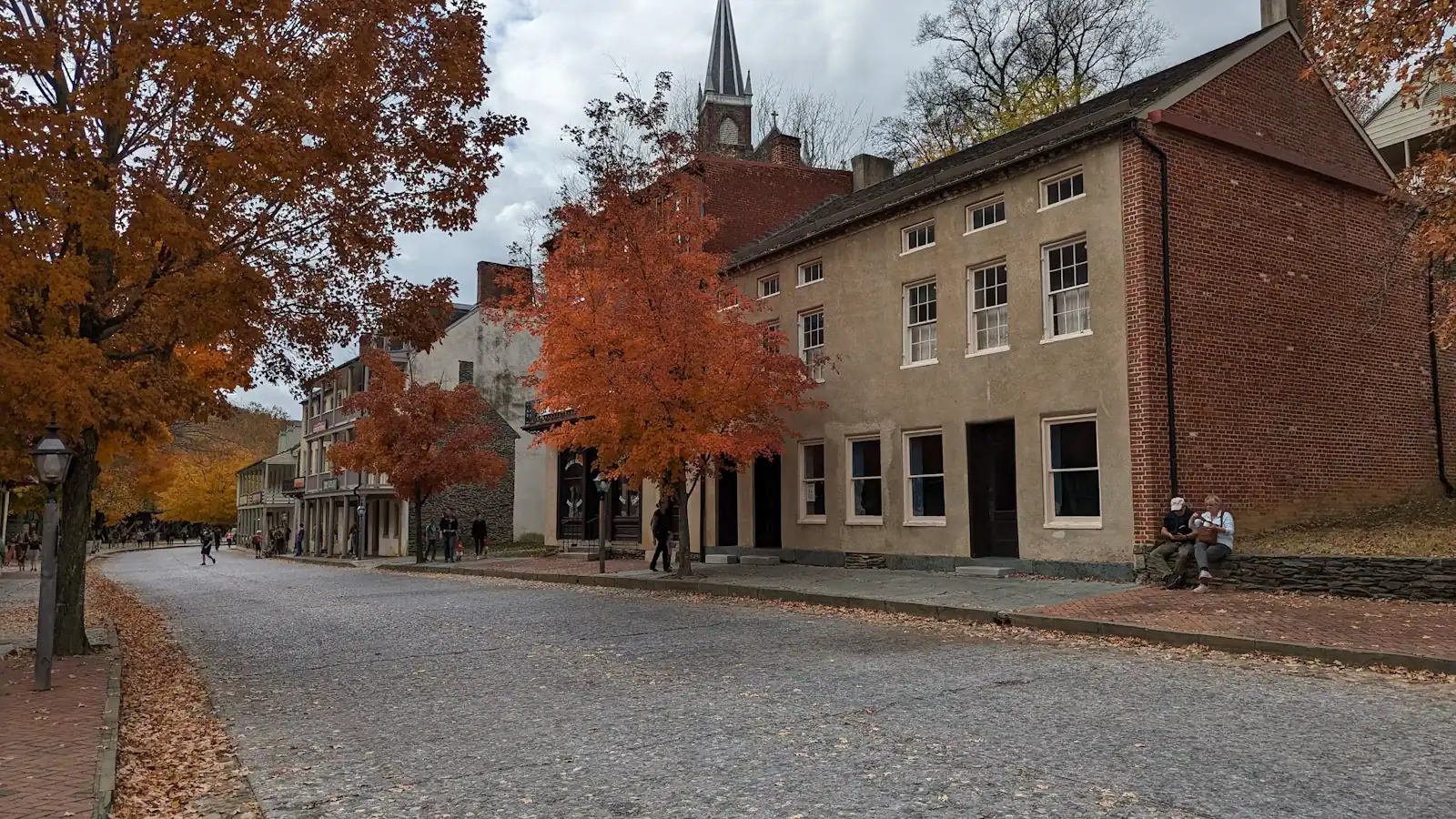
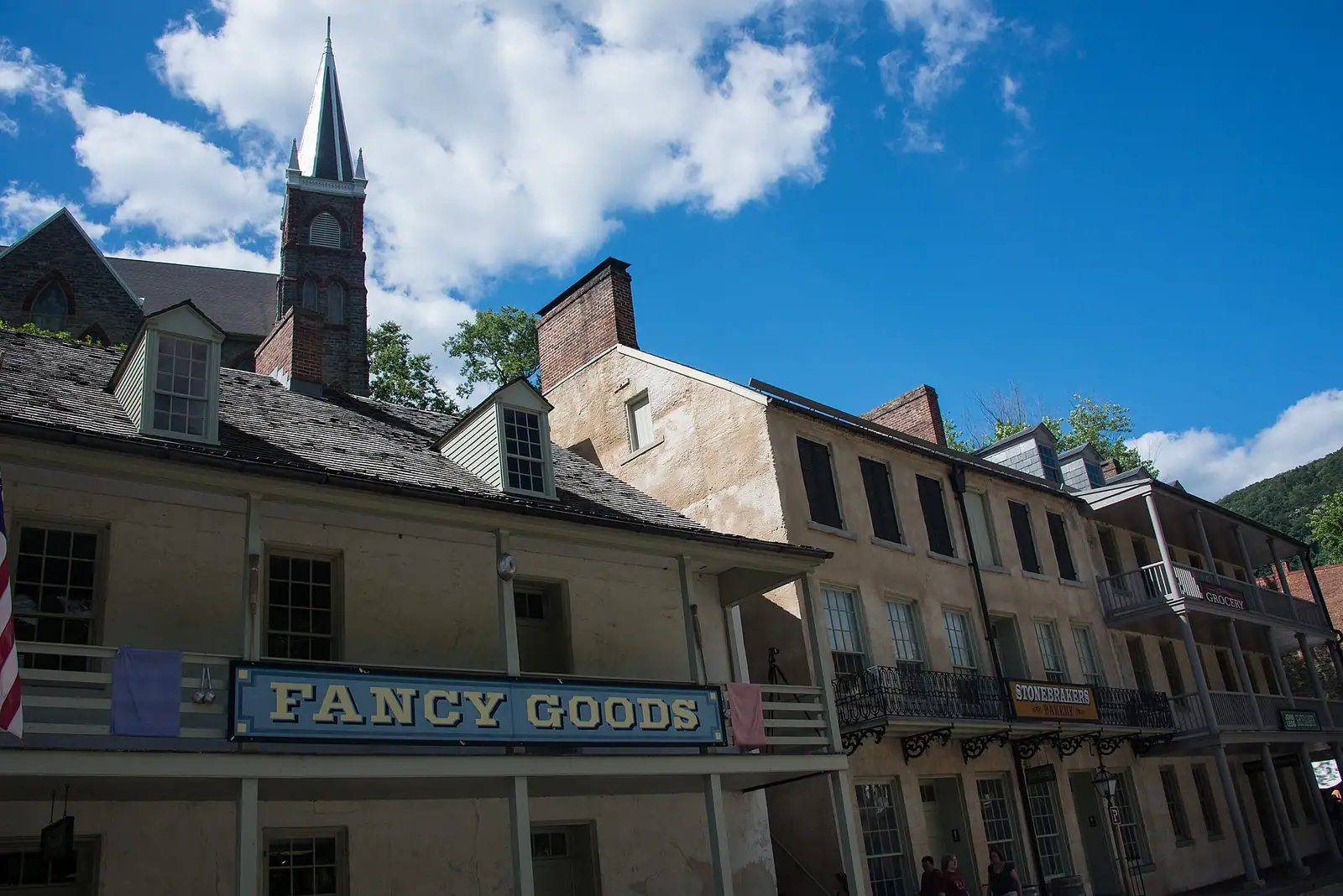
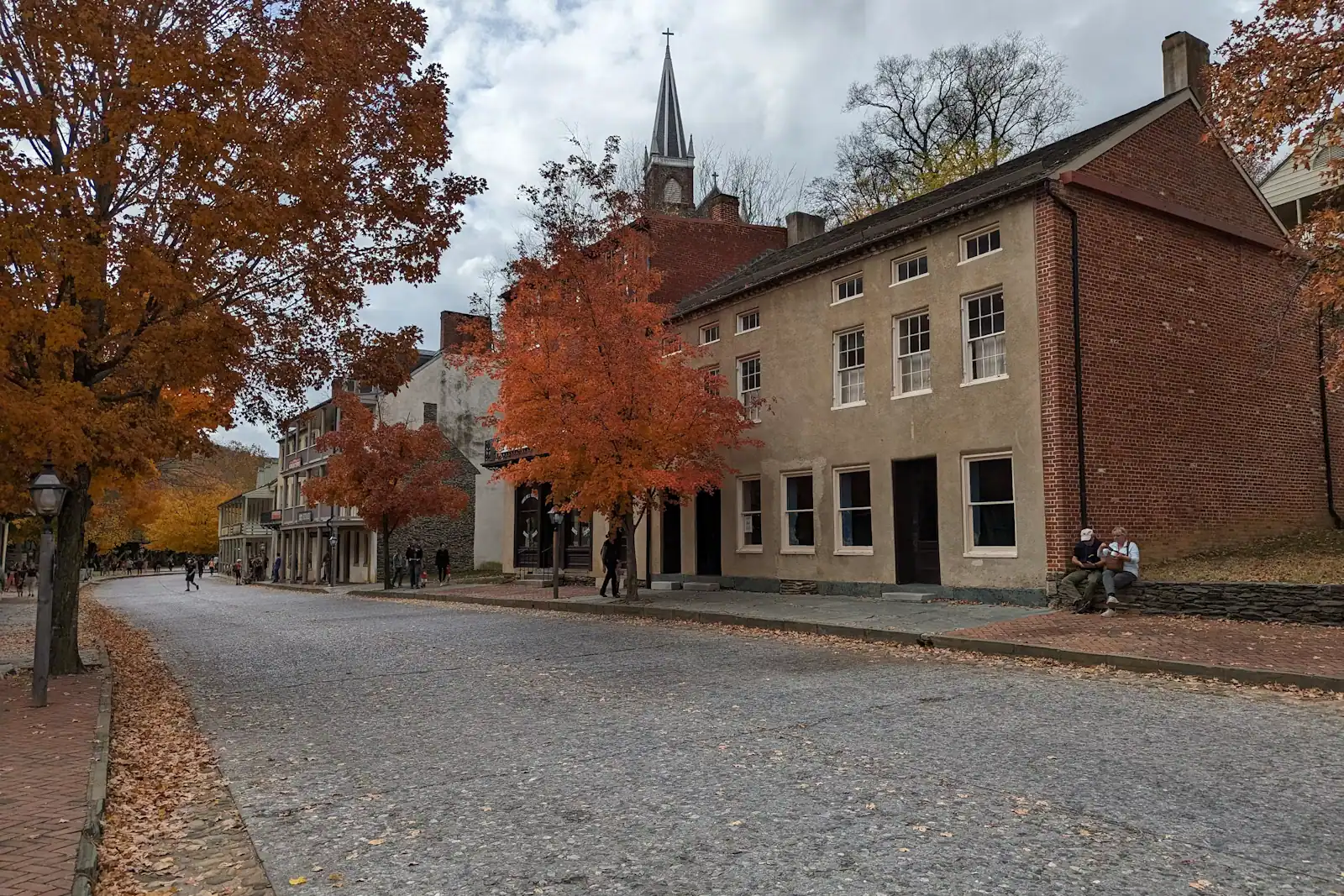
That is not a complaint. It is the reason the lower town looks like 1860 rather than like a food court. But it does mean the usual restaurant-guide approach fails here, and we are not going to fake it. This page names no business, quotes no hours and recommends no dish, for one reason: a town this size turns over, kitchens cut to weekends in winter, and a recommendation that was true when it was written is a wasted trip when it is read. The Harpers Ferry-Bolivar Tourism Association and the Jefferson County visitors bureau keep current listings, and the park's own information desk points visitors at them.
What we can tell you is the shape of the thing, which does not change. Food in the lower town is concentrated on High Street and Potomac Street, a couple of minutes uphill from the shuttle stop, and it is lunch food: sandwiches, soup, coffee, ice cream, the sort of thing you eat between the exhibit buildings and the stone steps. Bolivar, a twenty-minute walk or a short drive up the hill, has more of what a resident eats, including kitchens that keep going after the park empties out. And for dinner at a table with a choice of more than three things, most people drive — Shepherdstown is about twelve miles away and has a college in the middle of it, which is precisely why it has the restaurants that a town of 269 cannot support.
Three practical facts worth carrying. The kitchens here are small and the lunch rush on an October Saturday is not a metaphor: several hundred people come off the shuttle inside an hour. The exhibit buildings shut at five and the last bus back up the hill leaves at seven in summer and half past five in winter, which is why the lower town feels closed at an hour when other towns are filling up. And the shuttle will not carry coolers or open food and drink, so the picnic that made sense in the car park has to be repacked before you board.