Skip to content
Menu

A booking made through these earns us a commission from Viator. The price is the same, and the commission had no bearing on what is recommended.

All Tours

Harpers Ferry Ghost Tours: the Stories, the Record and the Parking

Last updated

Evening lantern walks through the lower town of Harpers Ferry — which stories have a record behind them, when tours run, and why the park shuttle cannot help.

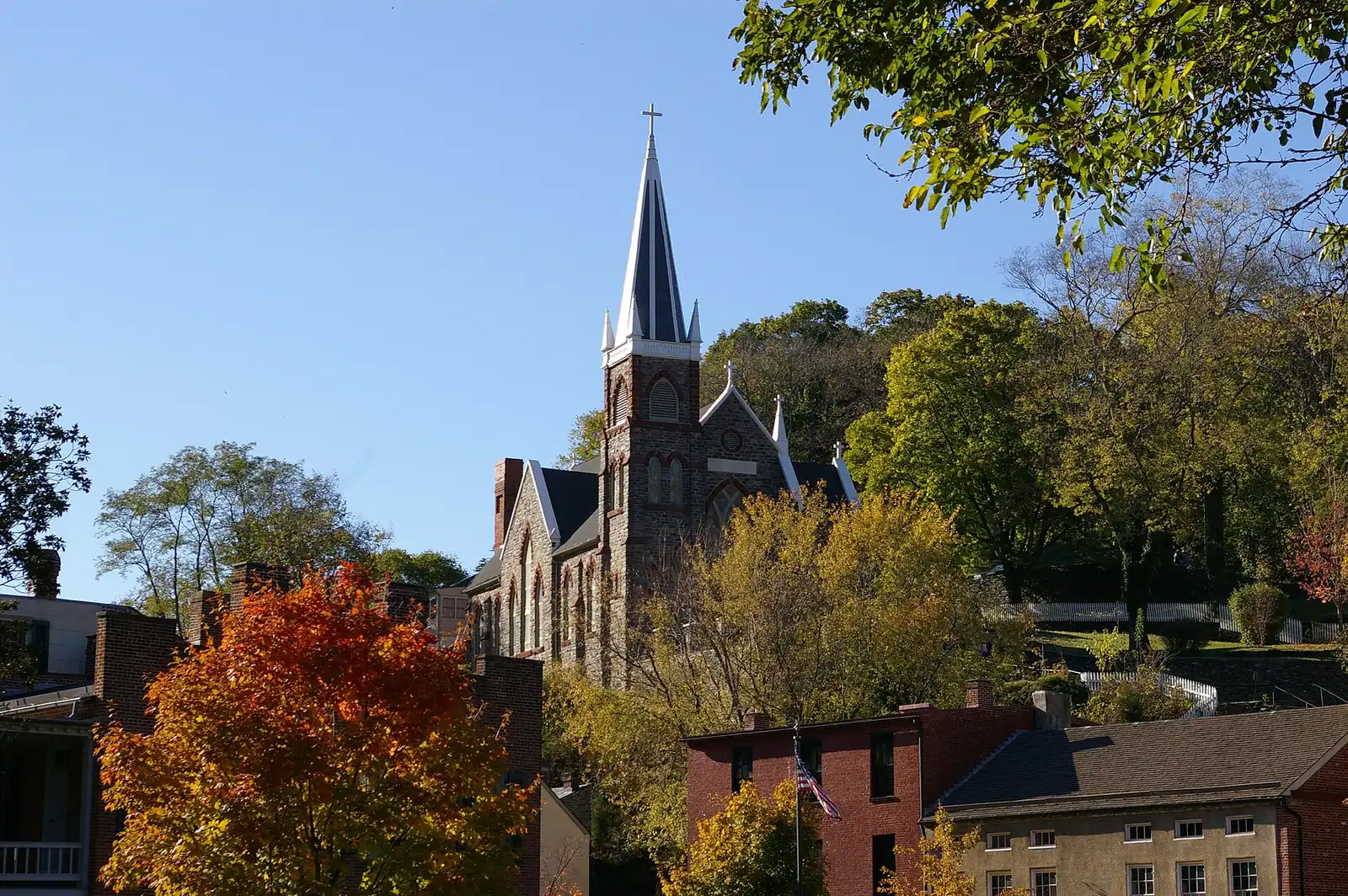
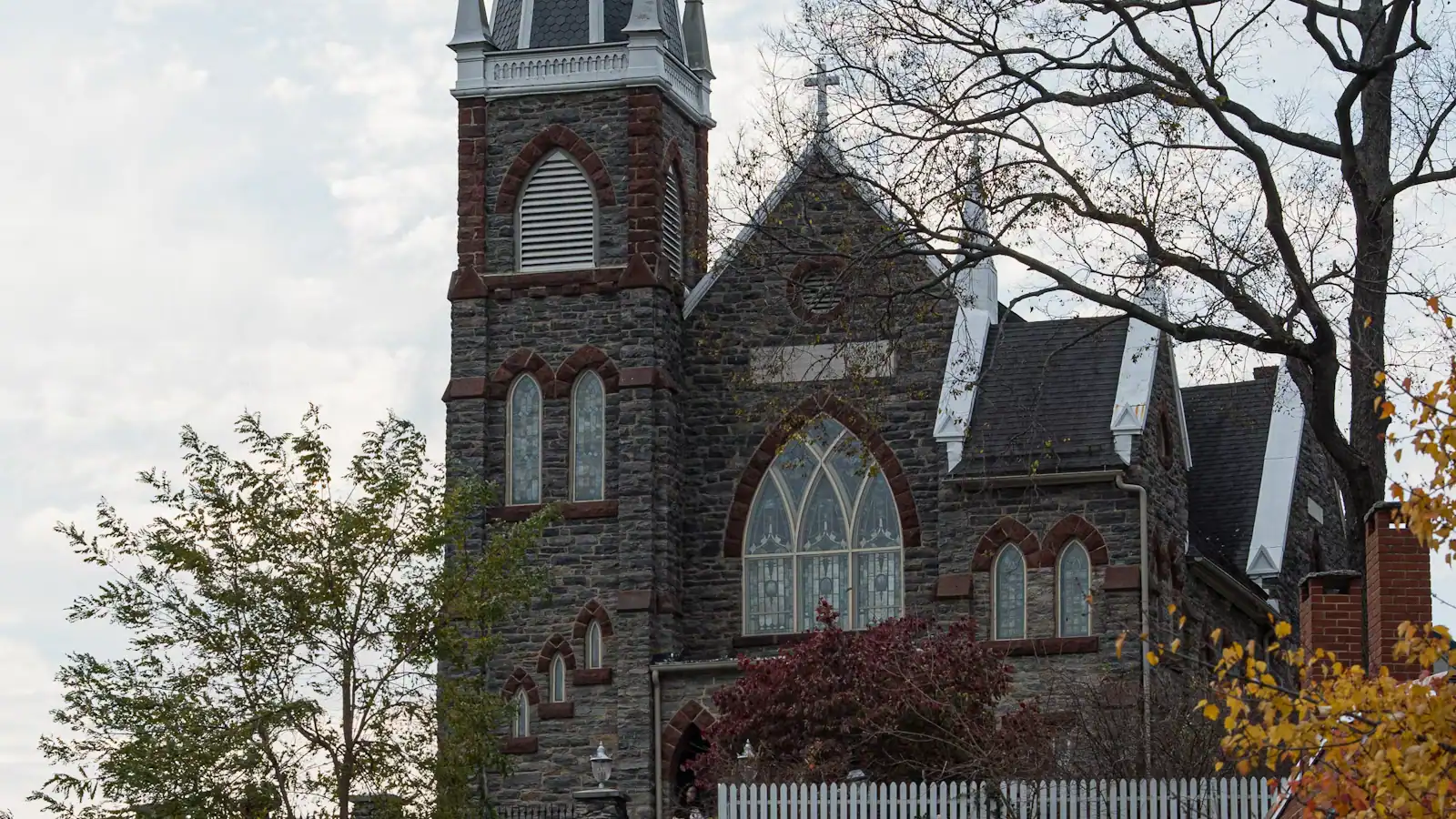
A brick church with a steep slate roof and a pointed steeple standing above a hillside of treesUnsplash

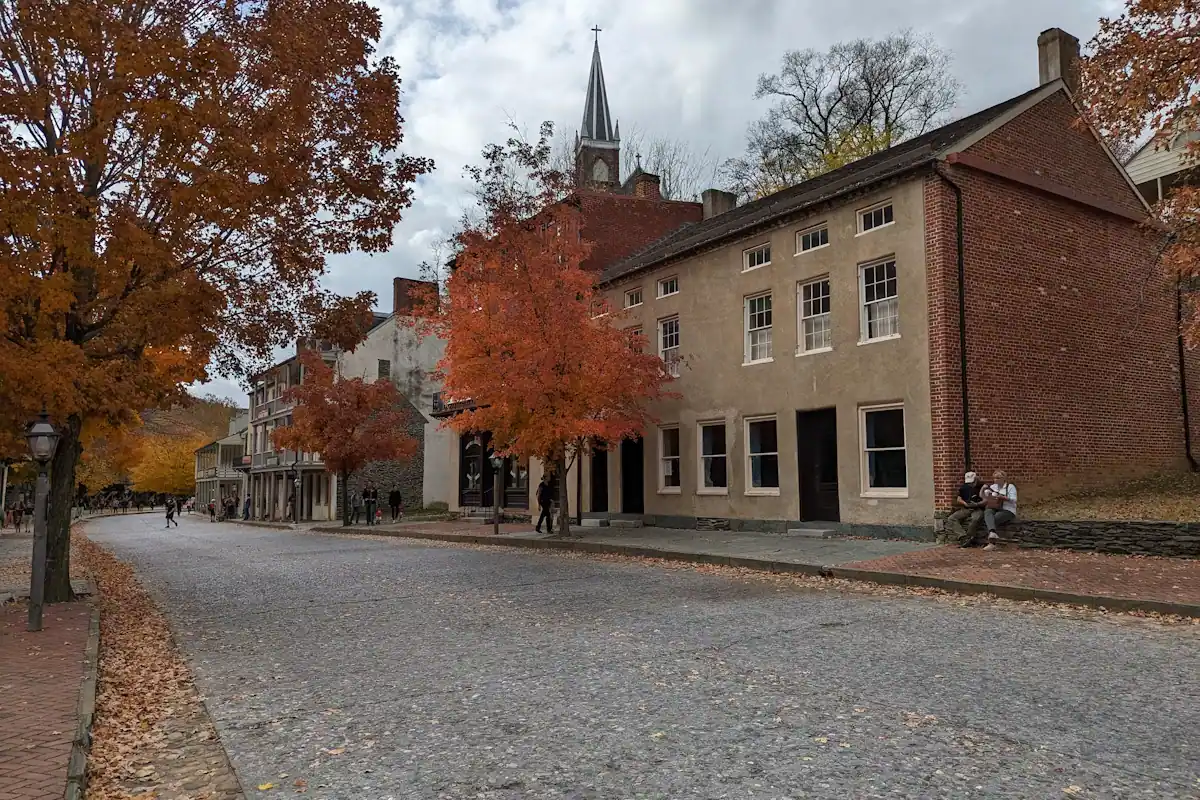
An evening walking tour with a lantern is one of the oldest businesses in this town after the railway, and on an October Saturday it is the busiest thing happening after five o'clock. A guide in period dress takes fifteen or twenty people up High Street and along the darker lanes, stops under a wall, and tells a story. It lasts somewhere between an hour and ninety minutes, it covers less than half a mile, and it is good fun.

It is also folklore, and this site is not going to pretend otherwise. The town's ghost stories are a nineteenth- and twentieth-century oral tradition, collected and put into print at least as far back as 1976, when Haunted Houses of Harpers Ferry appeared. They have been retold and embellished ever since by people whose job is to hold a group's attention in the dark. Some of them are built on things that unmistakably happened. Some of them have no record behind them at all, and we will tell you which is which further down this page, because the distinction is more interesting than the stories are.

What gives the genre unusual raw material here is that the body count is real. Seventeen people died in the space of two days in October 1859, including a free Black railway worker who had come out to see why the train had stopped, the town's mayor, two of John Brown's sons and a US Marine. In September 1862 a garrison of 12,500 surrendered under artillery fire from three directions. Between those dates and after them came military occupation, epidemic disease in crowded quarters, and floods that repeatedly put water through the second storey of the buildings you will be standing outside. A guide in this town does not have to invent a reason for the place to feel uneasy.

Now the practical part, which is the reason to read this page rather than a listings site. The park shuttle cannot get you to an evening tour. The last bus out of the lower town leaves at 7 p.m. under daylight saving time and 5.30 p.m. under standard time, and the park's own car parks close half an hour after sunset. A tour that starts at dusk starts after the system the rest of this site tells you to use has shut down for the night. You will be parking in the town itself, on the street or in a private lot, and walking — which is fine, and entirely manageable, as long as you know it before you book rather than at half past seven with a car on a hill.

Our picks

The ones we would book

  • Editor's Pick

    Best lantern walk through the lower town

    Why we chose it

    What separates the good evening walks here is a guide who will tell you, unprompted, which stories come from a record and which come from the oral tradition. Look for a listing that names its route rather than its atmosphere, runs sixty to ninety minutes, and meets somewhere you can reach on foot from town parking after the park shuttle has stopped.

    New River Gorge Side by Side Family Tour

    Extreme Sports

    Editor's PickLikely to sell outPrivate tour

    New River Gorge Side by Side Family Tour (opens in a new tab)

    49 reviews

    Bring the kids for an awesome family experience! Our Side by Side's seat up to 4 guests and allow those as young as 8 to take part in a…

    3 hours

    Prices checked

    from $435
  • Small Group

    Best capped group for actually hearing the guide

    Why we chose it

    These routes stop in narrow lanes and doorways, outdoors, at night, with traffic on the streets above. A group of thirty cannot hear a guide in that setting and a group of twelve can. Where an operator states a cap, it is worth paying for. Ask what the number is rather than accepting the word "intimate".

    Tree Tops Zip Line Canopy Tour

    Low Supplier Cancellation Rate

    Small GroupFree cancellationLikely to sell out

    Tree Tops Zip Line Canopy Tour (opens in a new tab)

    36 reviews

    Experience a world-class tree-top zip line canopy tour through the endangered hemlock forest of West Virginia’s New River Gorge. With…

    3 hours

    Prices checked

    from $102.64
  • Best for Families

    Best earlier walk with children along

    Why we chose it

    A summer start, while there is still light, suits children who would find a fully dark October route long and cold. The trade is atmosphere for comfort, and with an eight-year-old it is the right trade. Check the age guidance and ask how graphic the 1859 material gets before you book.

    Gravity New River Gorge Zip Lines

    Weather Dependent - Moderate

    Best for FamiliesFree cancellation

    Gravity New River Gorge Zip Lines (opens in a new tab)

    54 reviews

    If you have a need for speed, check out this six-zip racing course that zigs and zags across the ridgeline of a mountain bowl. You’ll soar…

    3 hours

    Prices checked

    from $113.24
  • Best Value

    Best cheap evening on foot

    Why we chose it

    This is a short walk over a small distance, so a listing priced well above a daytime guided history tour of the same streets needs to justify it with something — a costumed interpreter, a capped group, indoor access. Where it does not, take the cheaper one. The ground is identical and the stories are common property.

Which stories have a record behind them

A narrow street of nineteenth-century shopfronts running uphill between stone kerbsUnsplash
A narrow street of nineteenth-century shopfronts running uphill between stone kerbs

This is the part of the genre worth taking seriously, and it splits cleanly in two.

Stories anchored in documented events. The most-told of these is Dangerfield Newby, and it needs no supernatural framing to be devastating. Newby was a formerly enslaved man, freed by his father, who joined Brown's raid for a specific and personal reason: his wife Harriet and their children were enslaved in Virginia and about to be sold south, and he was carrying her letters begging him to come for her. He was the first of the raiders killed, on 17 October 1859. What the crowd in the street did to his body afterwards is a matter of record and is not printed here. The alley where he fell is still there. Every ghost tour in town stops at it. The history is stronger than the haunting.

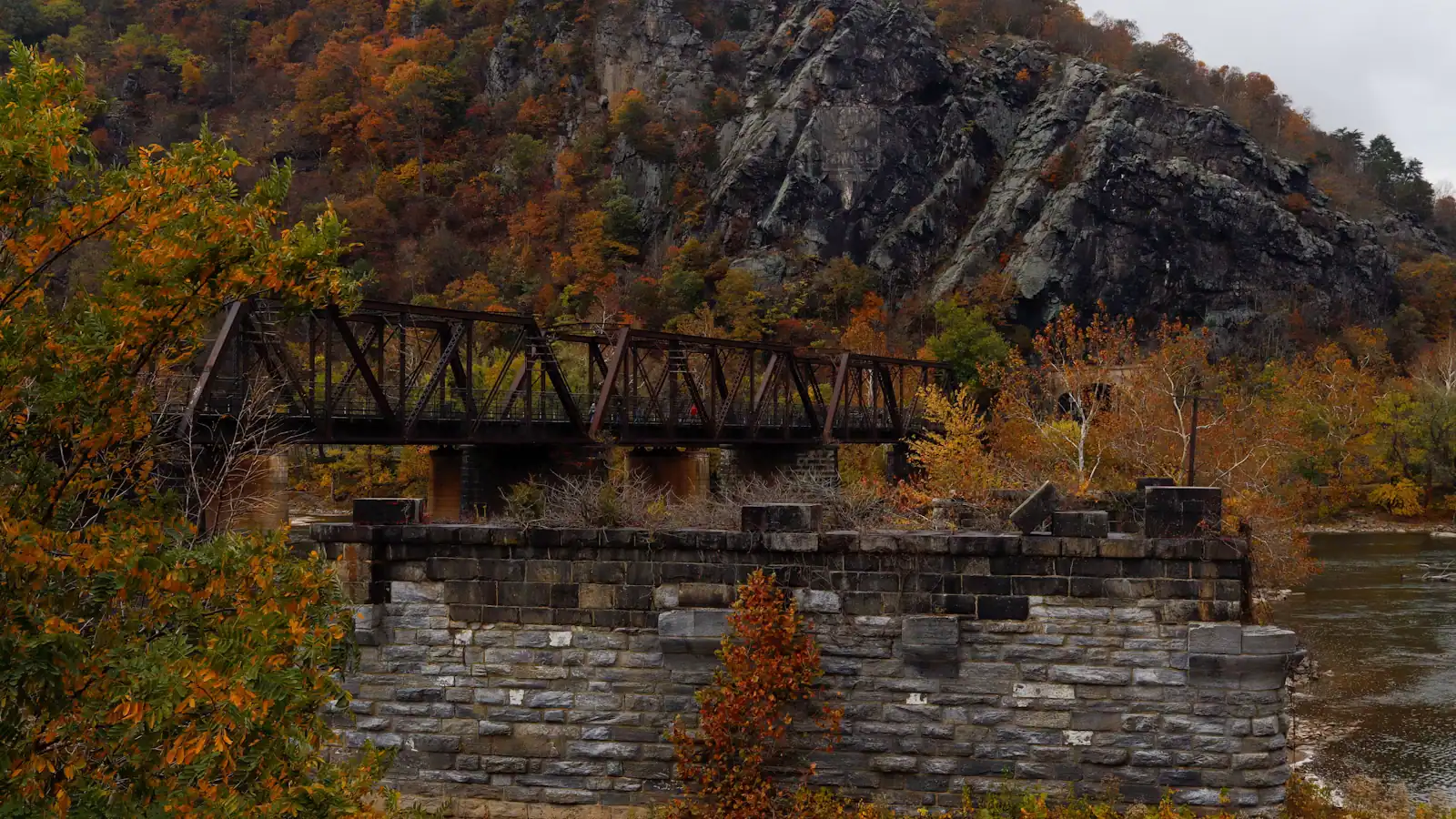
Other stories here attach to real deaths: the mayor shot at the railway trestle, the men killed in the engine house, the garrison on the heights in 1862.

Stories with nothing behind them at all. "Screaming Jenny" is the famous one: a woman living in an abandoned building near the tracks whose clothes catch fire, who runs toward the railway and is struck by a train, and who is said to reappear as a ball of flame on the line. It is a good campfire story. There is no record of Jenny — no name in a register, no inquest, no newspaper. It appears to be pure folklore, and a guide who tells it as history is telling you something about the guide.

Ask the question at the start of the walk. The good guides are pleased to be asked, and will tell you which is which themselves.

When they run, and when to avoid

When to go

October is the season and it is not close. Autumn weekends here stack three things on top of each other — leaf colour on the ridges, the anniversary of the raid on the 16th to the 18th, and Halloween — and the town's parking, restaurants and tour capacity all reach their limit at the same time. If you want an October Saturday, book it weeks out and come down in the afternoon.

Spring and summer run on longer daylight, which pushes start times later. A June tour cannot begin at dusk without starting after half past eight, so summer walks tend to begin while it is still light and finish in the dark. That is a different and slightly less atmospheric experience, and it is considerably easier with children.

Winter thins out sharply. Some operators pause entirely, some run weekends only, and the town around them contracts at the same time — kitchens on High Street and up in Bolivar cut back to weekend trading between January and March. A January evening here is cold, dark by five, and genuinely quiet. Some people find that better. Confirm the tour is actually running before you drive out.

Anniversary weekends are worth knowing about in both directions. Mid-October brings the raid, mid-September brings the 1862 siege and Antietam twenty minutes north, and both fill the town with people who came for the history. Ghost tours sell out on those weekends too.

Two nights ahead is enough booking for most of the year. Two weeks is not too much for an October Saturday.
Taking children, and who should give it a miss

Local tips

  • Age. Most operators pitch a standard evening walk at roughly eight and up. Younger children usually manage the walking and lose interest in the talking, which is a long ninety minutes for everybody else on the tour.
  • Content. The good tours here do not rely on jump scares, but the underlying material is a raid in which people were shot in the street, a siege, and a nineteenth-century death rate. A guide who is being honest will say things a sensitive child will remember. Ask the operator directly how graphic the route gets; they are used to the question.
  • Terrain. Uneven stone, unlit stretches and steps. A pushchair is not practical on most routes. A child who is already tired from a day on the heights will not enjoy this.
  • Length. An hour to ninety minutes on your feet, standing still for much of it. In October that means standing still in the cold. Layers.
  • The alternative. If the evening looks like too much, the park's own ranger programmes in daylight cover the same ground with the same deaths in it and no theatre, and the John Brown Museum tells the 1859 story properly in twenty minutes indoors.
  • Mobility. Nobody should book this expecting a level route. There is no version of the lower town after dark that is not steep somewhere.

If what you actually want is the history

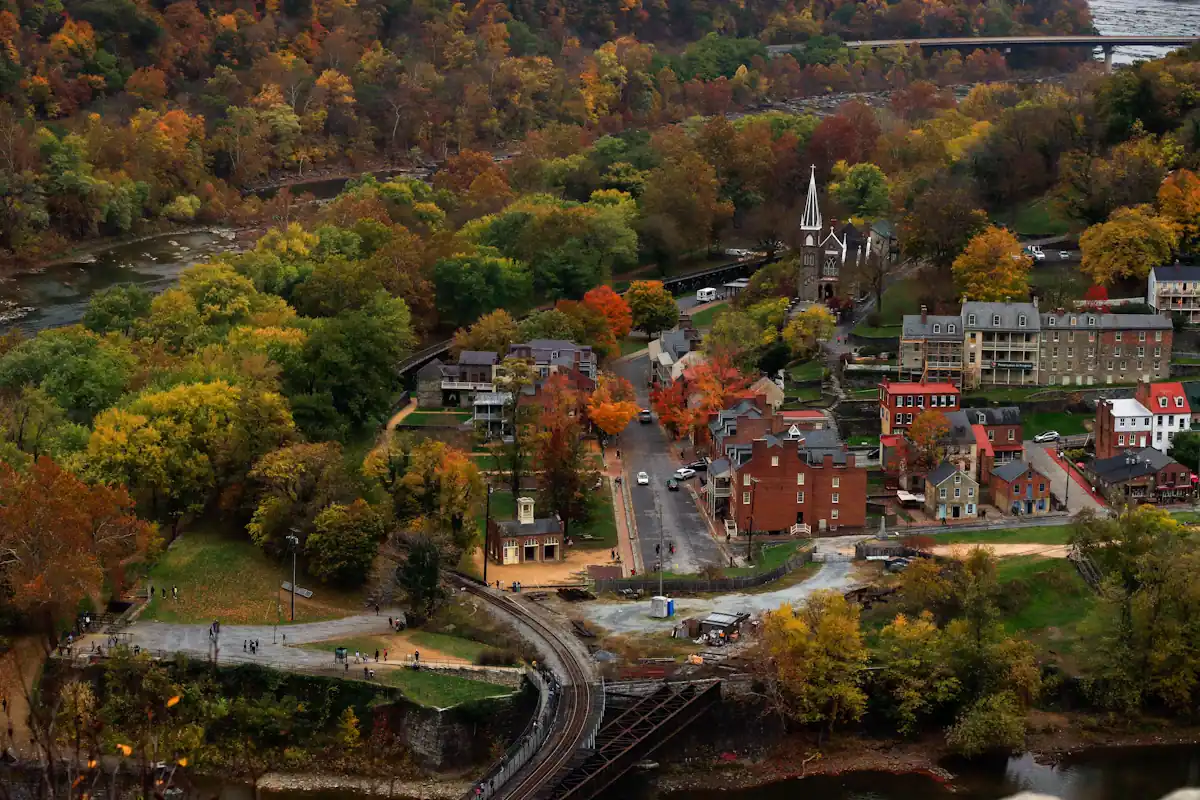
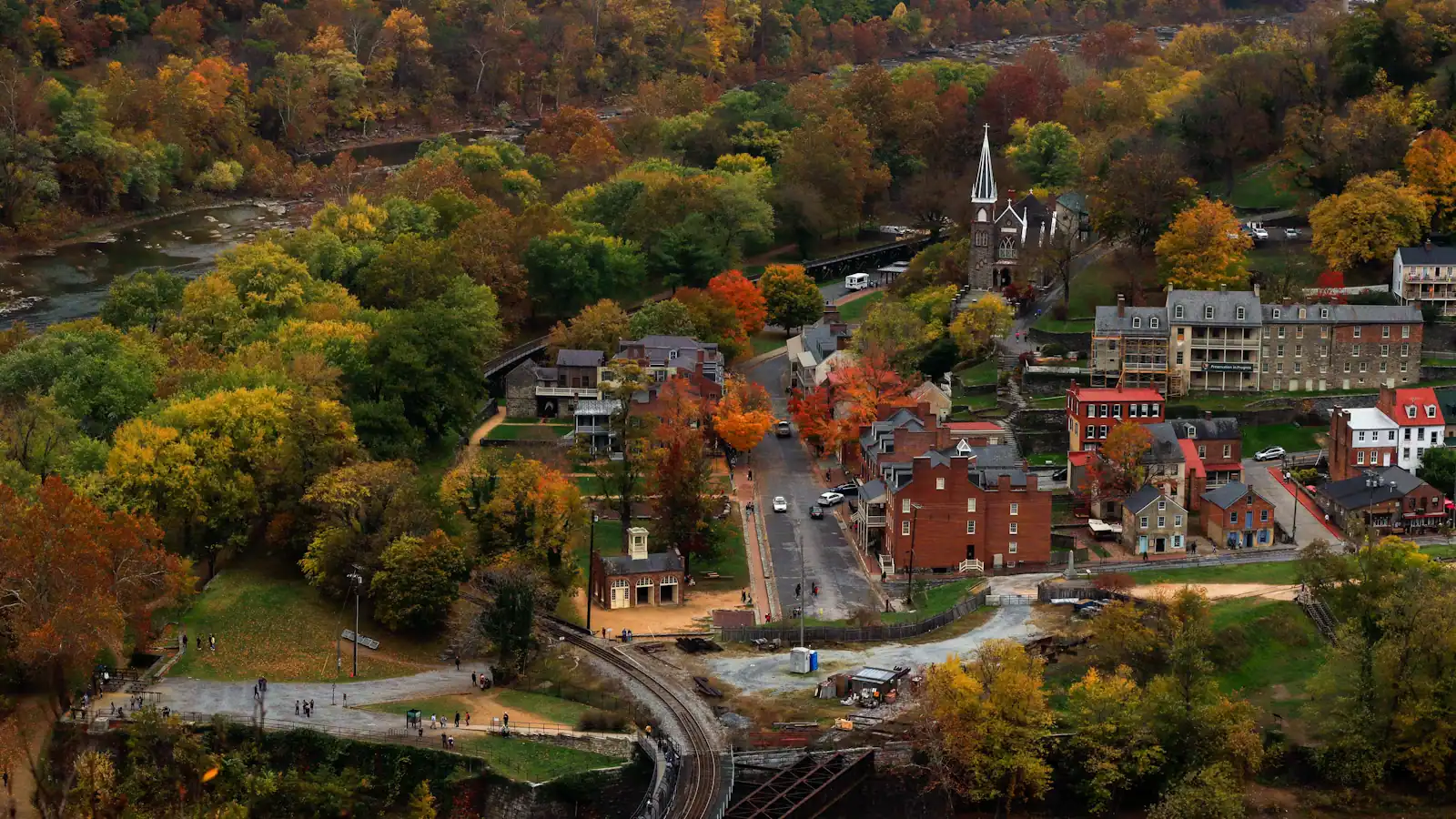
A small town of pale rooftops and a church spire seen from above, wrapped by wooded hills and river waterUnsplash
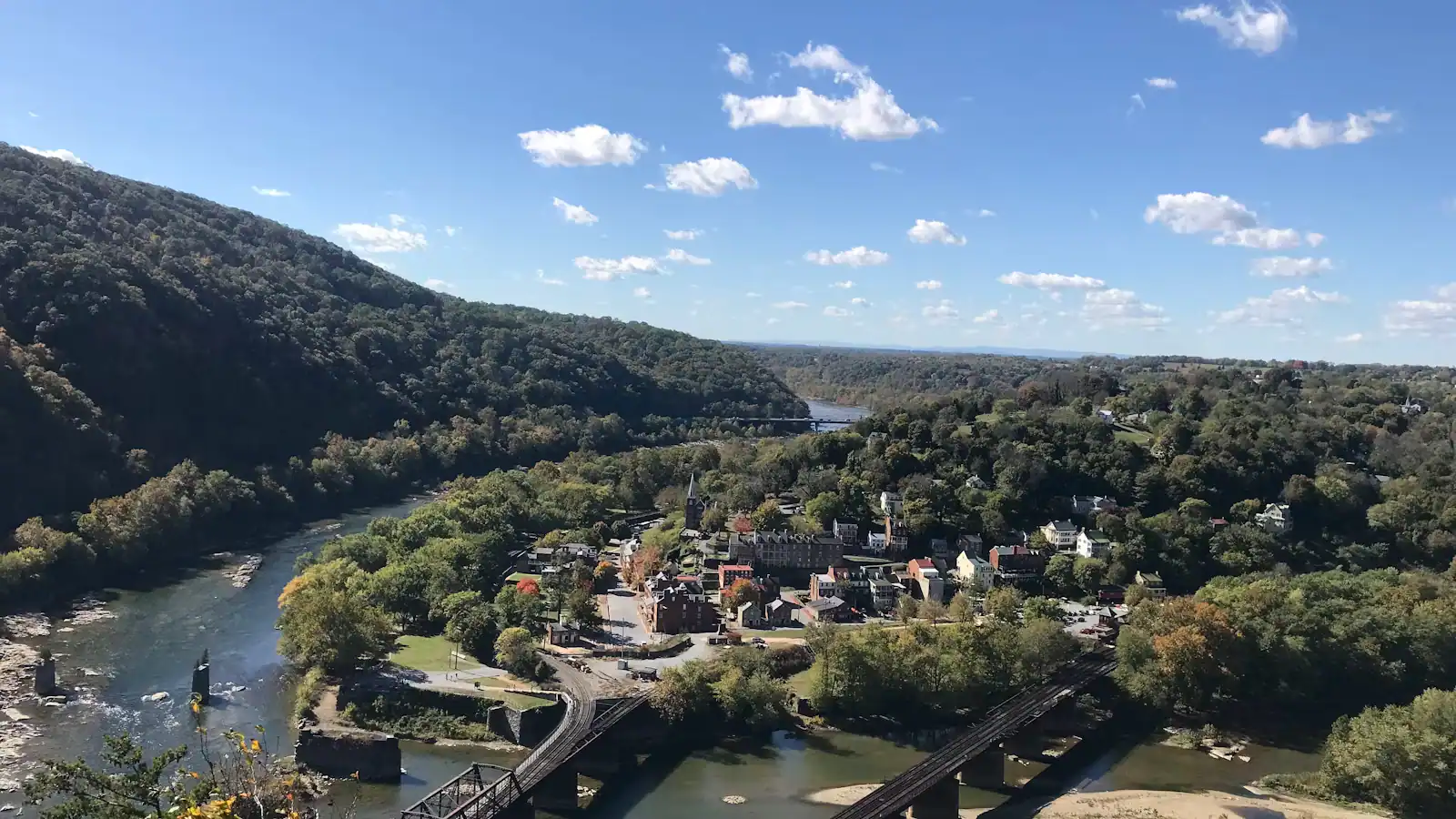
A small town of pale rooftops and a church spire seen from above, wrapped by wooded hills and river water

A fair number of people book a ghost tour because it is the only guided walk they can find listed for the evening, not because they want ghosts. If that is you, there are better uses of the money.

The park runs its own interpretive programmes in daylight, included in the entrance fee, and a ranger standing on the armoury lawn talking about the morning of 18 October 1859 is not competing with anybody's lantern. Programme schedules vary by season and staffing, and the visitor centre desk is the place to ask.

Daytime guided walks from commercial operators also exist here, generally ninety minutes and generally better sourced than the evening product, and they will take you to the same alley where Dangerfield Newby died and tell you what is documented about him.

And the self-guided version costs nothing beyond the entrance fee you have already paid. The lower town is small enough to read on foot in an hour: the engine house, the obelisk marking where it actually stood, the armoury grounds, the railway trestle, the alley, the stone steps up past St Peter's toward Jefferson Rock. Do it in the last hour of daylight in late autumn and the atmosphere is not something anybody has to manufacture for you.

None of which is an argument against the lantern walk. It is a good night out, the guides are often very good indeed, and the town wears it well. It is an argument for knowing which one you are buying.

Book it

Everything else we track

A booking made through these earns us a commission from Viator. The price is the same, and the commission had no bearing on what is recommended.

  • Jet Boat Adventure on the New River Gorge

    Agent Low Quality Product

    Free cancellationLikely to sell out

    Jet Boat Adventure on the New River Gorge (opens in a new tab)

    30 reviews

    Explore the New River Gorge from a unique perspective aboard a high-speed jet boat. This exhilarating adventure takes you upstream…

    2 hours

    Prices checked

    from $50.70

Getting there at night, when the shuttle has stopped

Before you book

Every other page on this site tells you to park at the visitor centre on Cavalier Heights and ride down. For an evening tour, ignore that advice. It does not apply.

Here is the arithmetic. The last shuttle leaves the lower town at 7 p.m. between March and early November, and at 5.30 p.m. the rest of the year. Park lots close thirty minutes after sunset. A tour starting at dusk therefore begins at roughly the moment the park's transport system ends, and leaving a car at the visitor centre is not a plan.

What to do instead:

  • Park in the town. There is metered and private parking on and around Potomac and Shenandoah Streets and up on Washington Street in Bolivar. It is limited, it fills on autumn weekends, and prices are the operators' own business — we do not quote them because they change. Arrive with time in hand rather than at the meeting time.
  • Come down early and make an evening of it. Park while it is light, have dinner on High Street, and walk to the tour. This is the version that works, and it is why the tours pair naturally with the town's restaurants rather than with the park.
  • Check where the tour actually meets. Routes and meeting points differ between operators and some of them are up the hill rather than at the bottom. The walk between the two is a hundred feet of climb on old stone.
  • Bring a torch and sensible shoes. The lower town is unlit in places and the surfaces are nineteenth-century: worn stone, cobble, uneven kerbs, steps without handrails. A phone torch is enough. Smooth soles are not.

On the ground

Where to go

Every place below has its own page — hours, parking, what it costs and what to expect when you get there.

  • A squat brick building with a small square tower and an arched doorway, standing alone on open ground

    Historic site

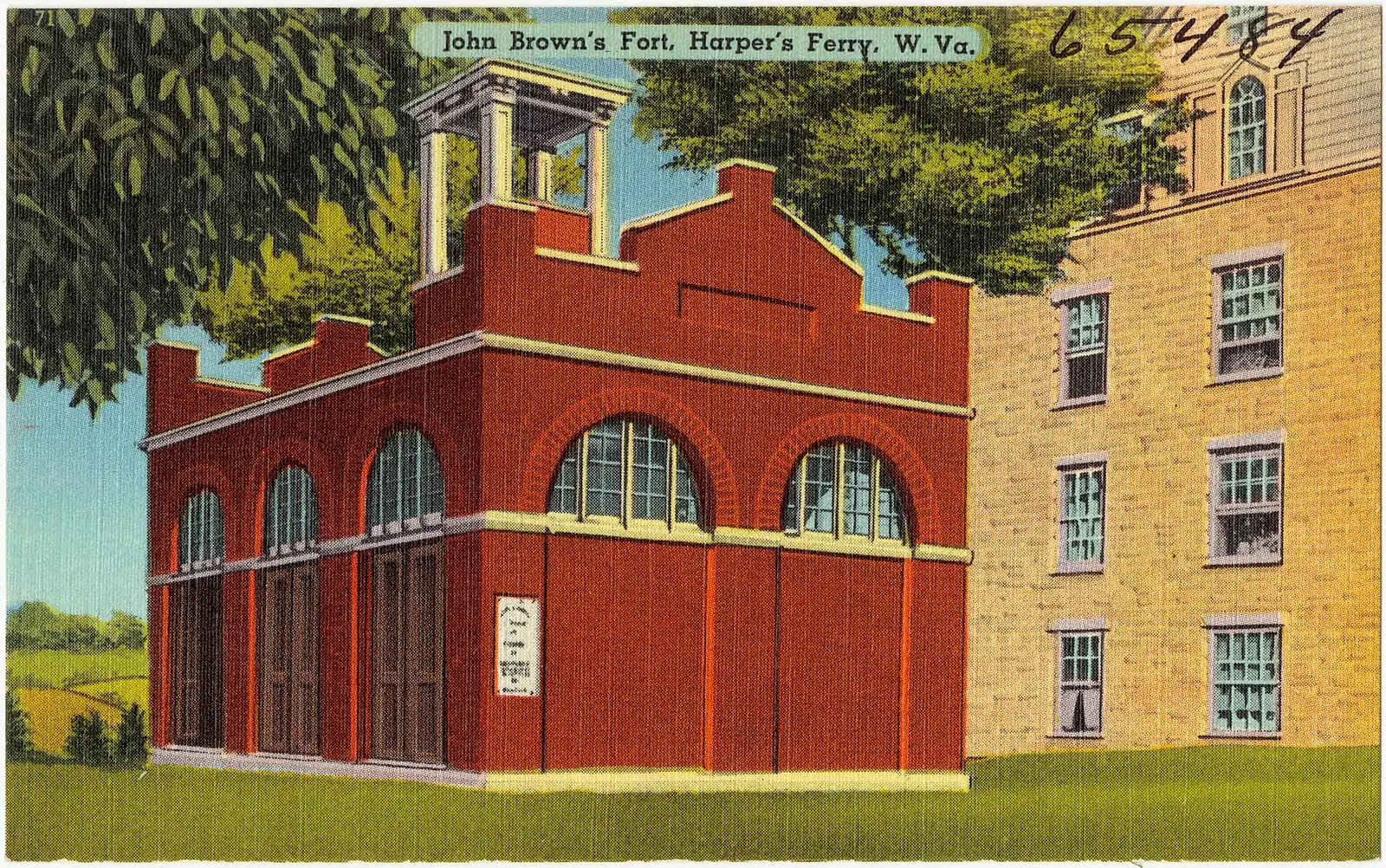
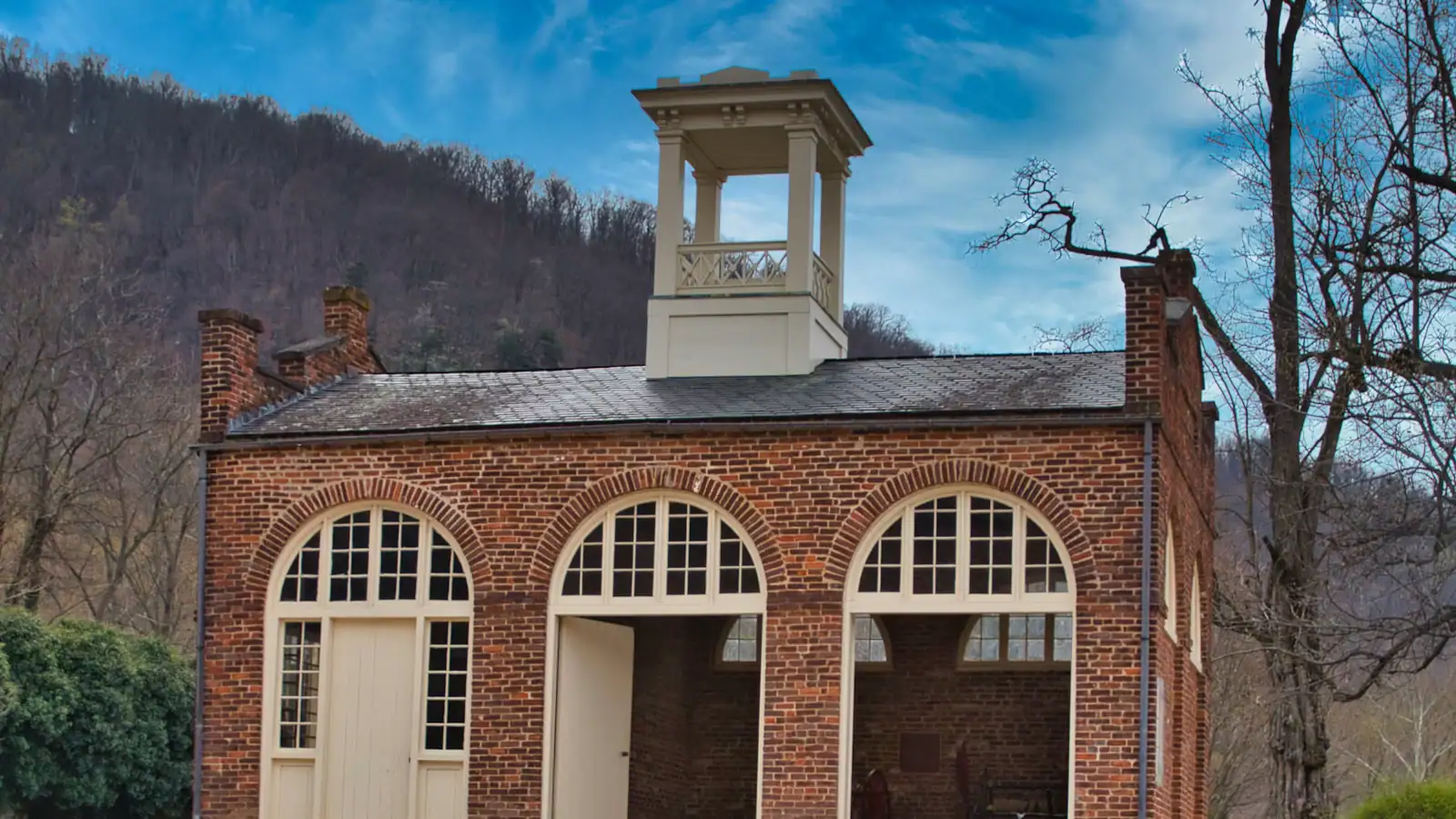
    John Brown's Fort

    An 1848 fire engine house, the only armoury building to survive the war, and it does not stand where any of this happened.

    10–30 minutesCovered by the park entrance fee; no separate charge

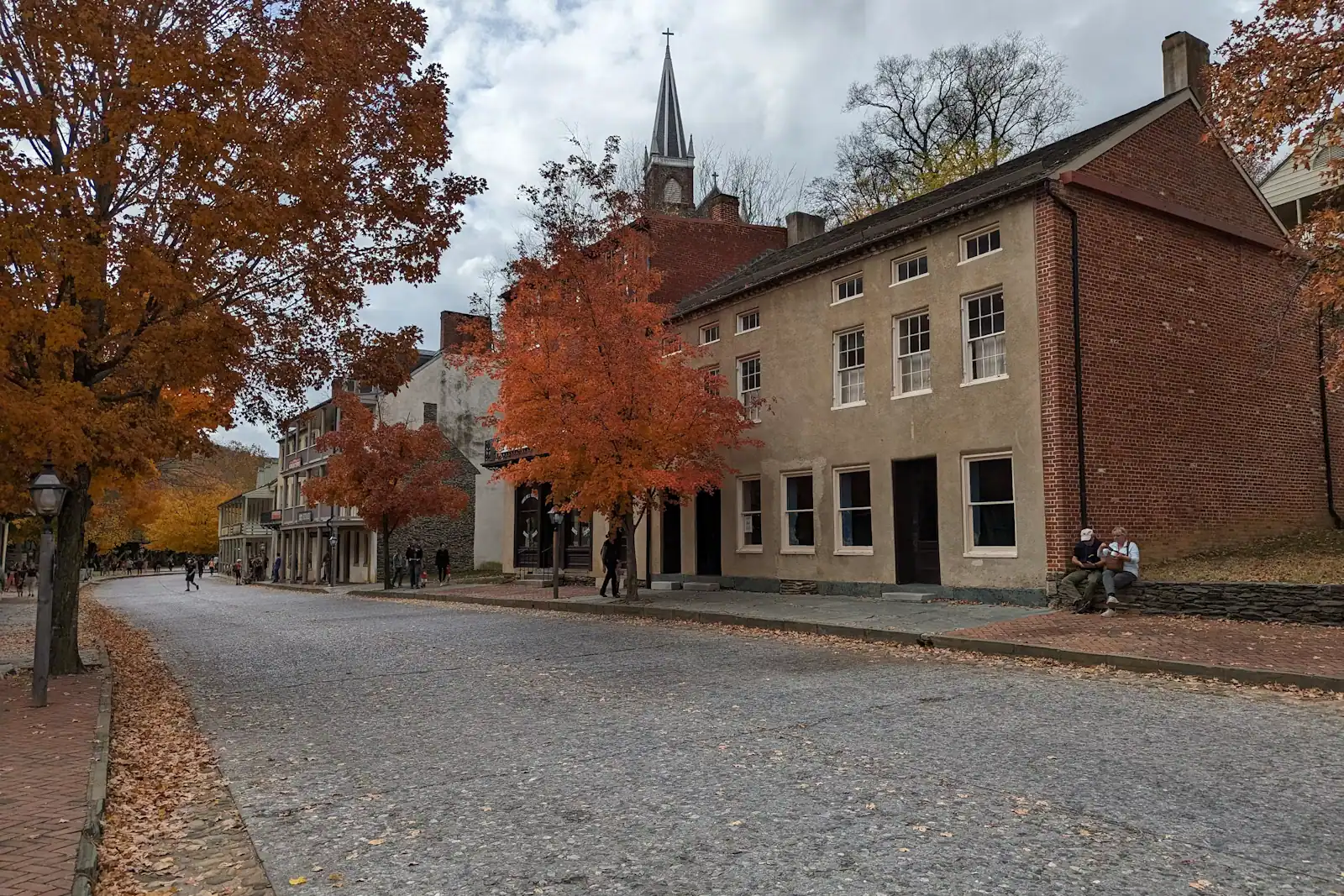
  • A narrow street of nineteenth-century shopfronts running uphill between stone kerbs

    Neighbourhood

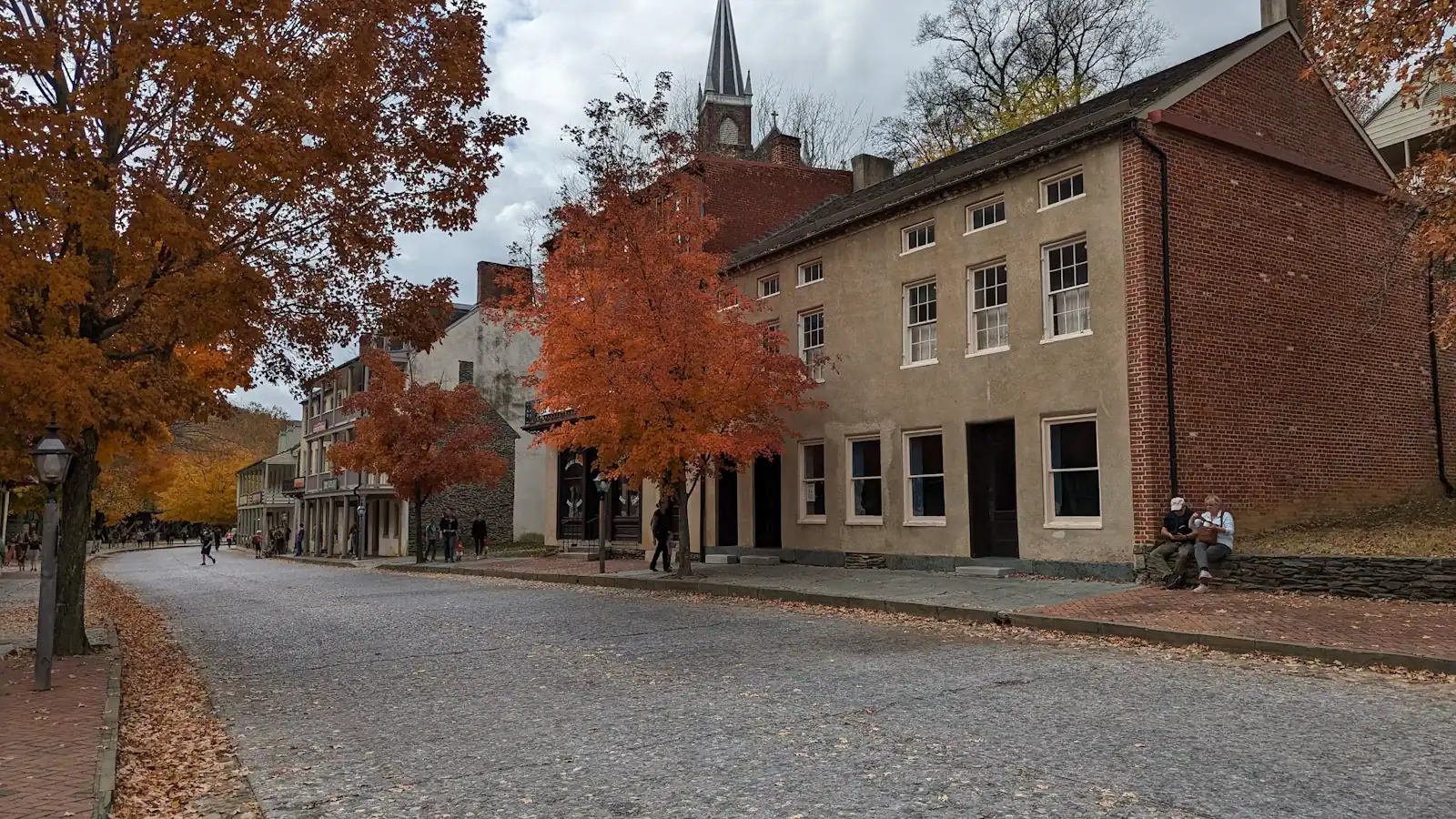
    Lower Town Harpers Ferry

    Two streets and a flight of stone steps, all of it inside a national park, with the high-water marks still on the walls.

    2–5 hoursPark entrance fee applies; National Park Service exhibit buildings are then free to enter

  • A narrow street of nineteenth-century shopfronts climbing between stone kerbs

    Shopping

    High Street

    The lower town's one commercial street: a stone climb of shopfronts ending at the steps up to St Peter's and Jefferson Rock.

    0.5–1.5 hoursThe street is free to walk; reaching it means entering the national historical park

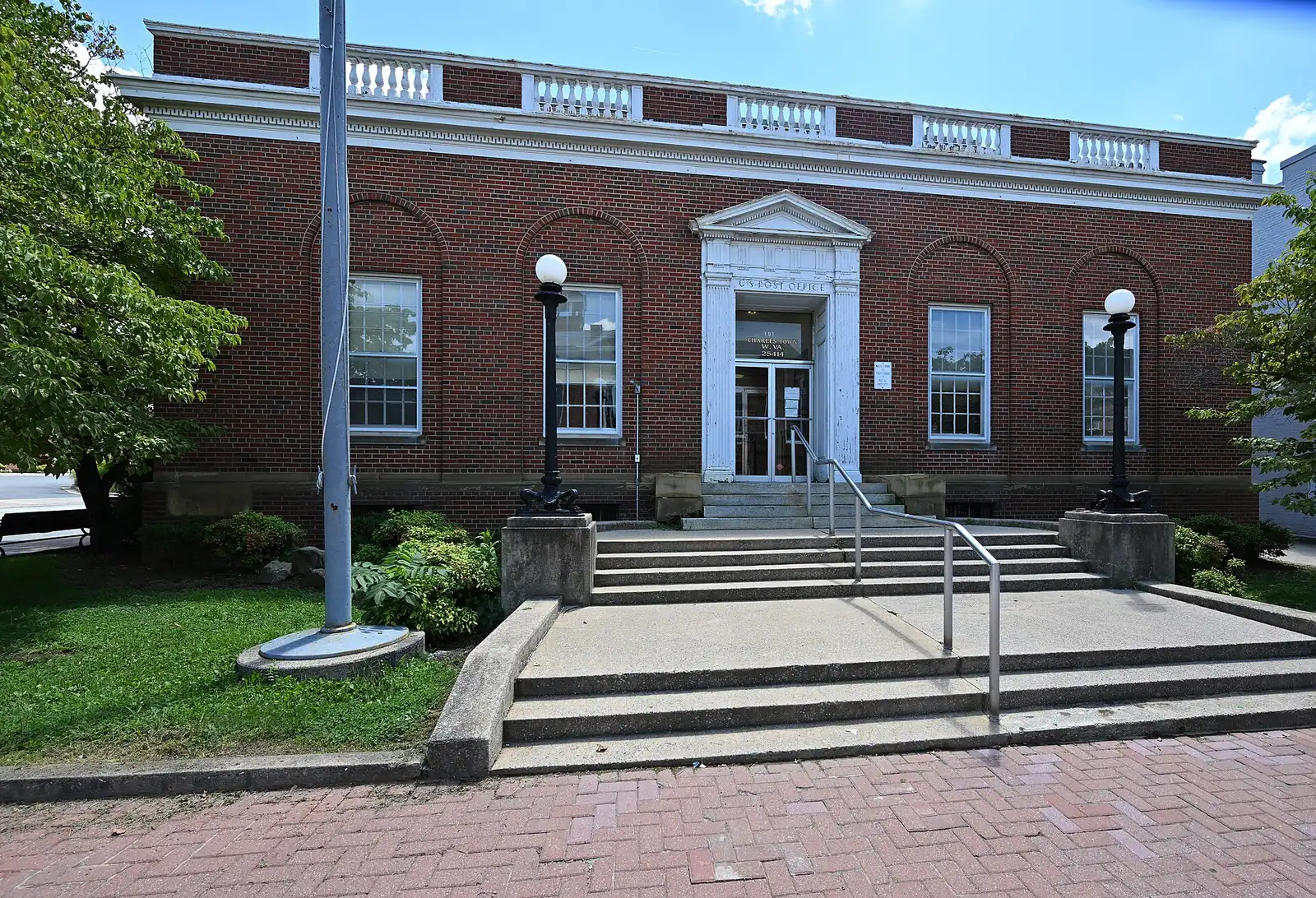
  • Brick commercial frontages of the nineteenth century lining a street with stone kerbs

    Neighbourhood

    Free

    Charles Town

    Eight miles west: the courthouse where John Brown was tried, the ground where he was hanged, and a Washington family town.

    1.5–4 hoursFree to walk. Individual museums and attractions charge separately

  • A brick church with a steep slate roof and a pointed steeple standing above a hillside of trees

    Historic site

    Free

    St Peter's Catholic Church

    The spire in every aerial photograph of this town, and the only church here that came through the war standing.

    10–30 minutesFree; the park entrance fee applies to your vehicle but the church charges nothing

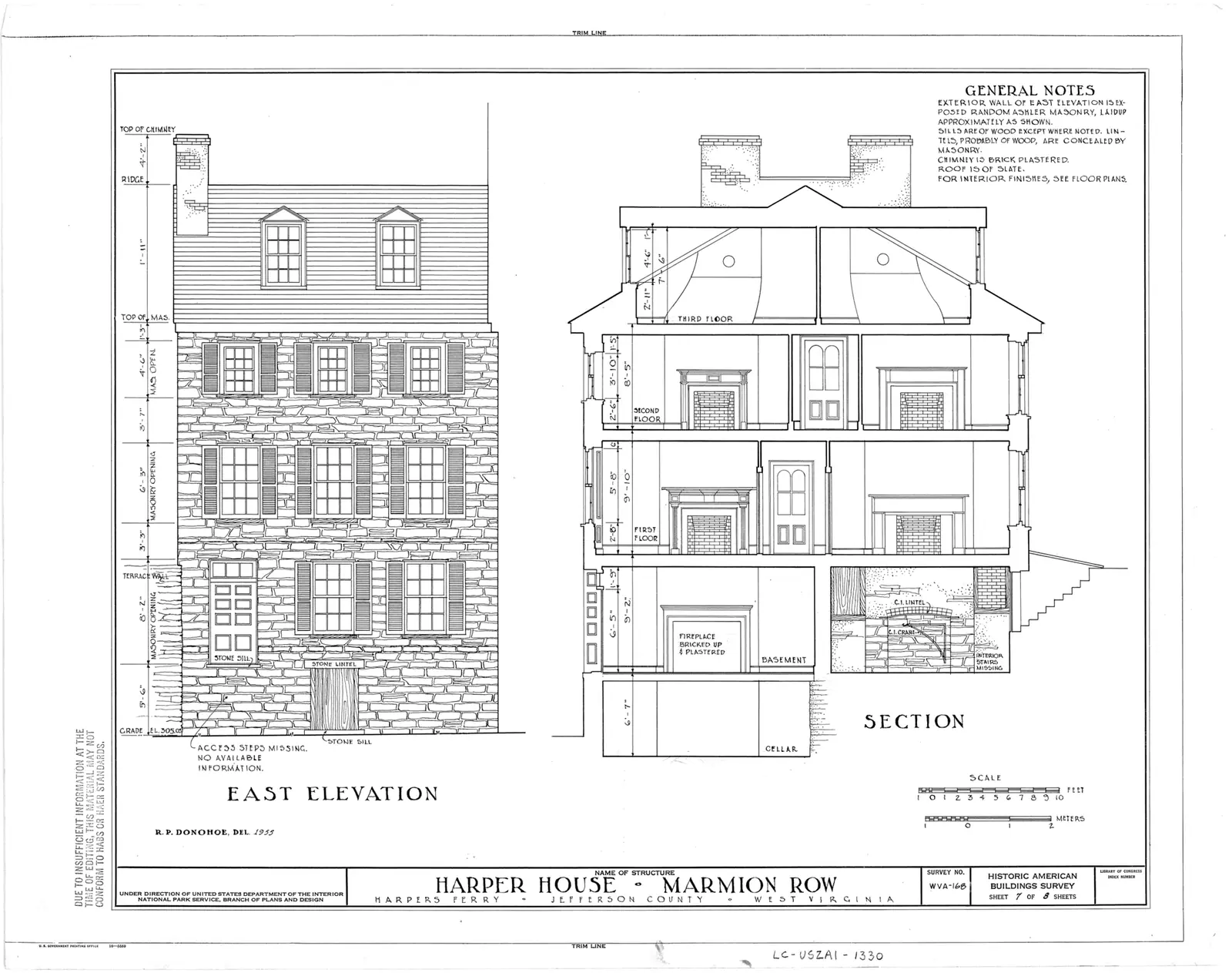
  • A whitewashed stone-walled house on a steep bank, its garden held up by a dry stone retaining wall

    Historic site

    Free

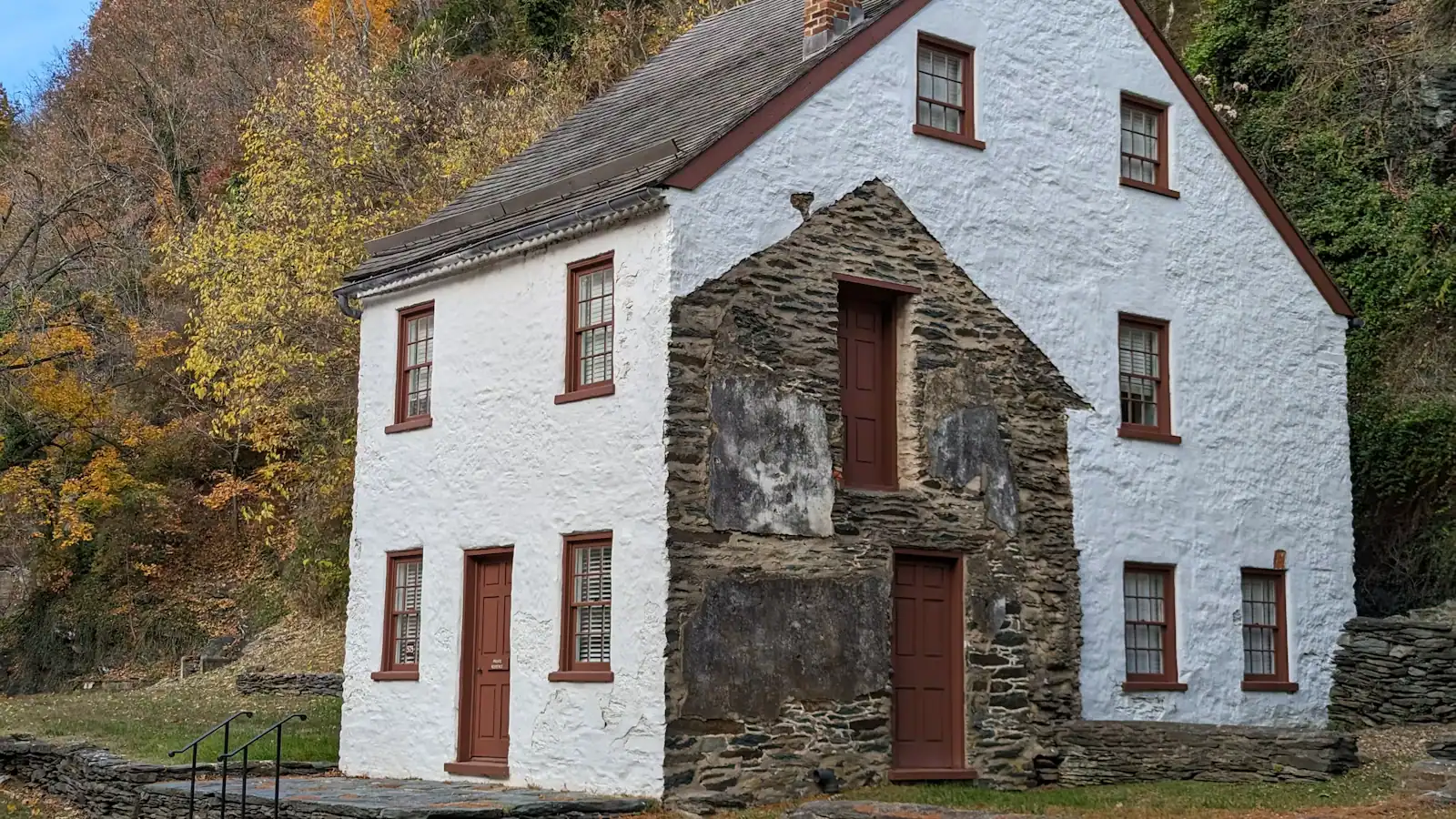
    Harper House

    The stone house the ferryman never finished, the oldest building in town — and shut for repairs at the moment.

    15–40 minutesNo separate charge when open; covered by the park entrance fee

Straight answers

Questions people actually ask

Are there ghost tours in Harpers Ferry?

Yes, and they are among the most-booked things in this small market. They are evening walking tours, usually lantern-lit and often costumed, covering less than half a mile of the lower town and High Street over an hour to ninety minutes. October is by far the busiest month. Operators and schedules change, so confirm the tour is running and where it meets before you drive out.

Can you take the park shuttle to an evening ghost tour?

No, and this catches people out. The last shuttle leaves the lower town at 7 p.m. under daylight saving time and 5.30 p.m. under standard time, and the park's car parks close thirty minutes after sunset. A tour starting at dusk begins after the system has shut for the night. Park in the town itself, come down before dark, and plan to walk back to the car.

Are Harpers Ferry ghost stories true?

Some are attached to documented deaths and some have no record behind them. Dangerfield Newby, a formerly enslaved man killed in the 1859 raid while trying to free his wife and children, is thoroughly documented history, and the alley where he died is on every route. "Screaming Jenny", the woman said to burn and run to the railway line, has no register entry, inquest or newspaper record and appears to be pure folklore. A good guide will tell you which is which.

When is the best time of year for a Harpers Ferry ghost tour?

October, if you can get a place — leaf colour, the anniversary of the raid on the 16th to 18th, and Halloween all land in the same few weeks, and tours, restaurants and parking hit their limit together. Book a Saturday two weeks out. Spring and early autumn are easier and start later because of the daylight. Some operators pause or drop to weekends in deep winter.

Are ghost tours suitable for children?

Most operators pitch them at about eight and up. The walking is easy but the surfaces are uneven and unlit in places, the standing around is long, and the underlying material is people shot in the street in 1859 and a nineteenth-century death rate. Ask the operator how graphic the route gets. A summer tour starting in daylight is much easier with children than a dark October one.

How long is a Harpers Ferry ghost tour?

Typically an hour to ninety minutes, covering well under a mile. The distance is small and the time goes on standing still and listening, much of it outdoors, so dress for standing rather than walking. Add time either side for parking in town and for the climb between the lower town and High Street, which is about a hundred feet of ascent on old stone.

Is there a free alternative to a ghost tour in Harpers Ferry?

Yes. The park's own ranger programmes are included in the entrance fee and cover the same deaths without the theatre — ask at the visitor centre desk which are running. The self-guided version costs nothing extra either: the engine house, the obelisk marking its original site, the armoury grounds, the railway trestle and the stone steps past St Peter's take about an hour, and the last hour of daylight in November supplies its own atmosphere.