Neighbourhood
Camp Hill
The terrace above the lower town: Storer College, the 1906 Niagara Movement meeting, and the view without the queue.
1–1.5 hoursIncluded with park entrance; the grounds carry no separate charge590 ft away
A booking made through these earns us a commission from Viator. The price is the same, and the commission had no bearing on what is recommended.
Historic site
Last updated
A college founded to educate people who had been enslaved, closed in 1955 by the consequences of a civil rights victory.
Photo: Unknown authorUnknown authorPublic domain
Climb the stone steps out of the lower town, past St Peter's and Jefferson Rock, and you come out on Camp Hill: a level terrace of brick and stone buildings under old trees, about as far from the crowds on Shenandoah Street as it is possible to get in ten minutes. This was Storer College, and it is the part of Harpers Ferry that most day-trippers walk past without stopping.
It began in 1865 as a mission school run by Freewill Baptists from New England, in a town that had just been wrecked by four years of war. Nathan Brackett, who led it, was teaching freed people across the Shenandoah valley within two years. A Maine businessman named John Storer then offered a substantial gift on two conditions: that an equal sum be raised, and that the school admit students without distinction of race. It was chartered as Storer College in 1867.
For the next quarter of a century it was the only place in West Virginia where a Black student could get an education beyond primary level. Over 88 years it taught more than 7,000 people, trained the teachers who staffed schools across the region, and anchored a community: by the early twentieth century roughly three-quarters of the Black residents of Harpers Ferry owned property, and the college's land dealings and salaries were a large part of the reason.
It closed in 1955, and the reason is the hardest thing on this page. After Brown v. Board of Education in 1954, West Virginia integrated its state institutions and withdrew the annual appropriation — about $20,000 — that kept Storer running. A victory for civil rights removed the funding case for a college created because those rights did not exist. The historically Black colleges that closed in that decade closed for that reason, and it is not a simple story to tell.
The campus is now part of the national park and has housed the National Park Service's Stephen T. Mather Training Center since 1963. Park rangers from across the country are trained on this hill.
On foot from the lower town: climb High Street, take the 1810 stone steps past St Peter's and the ruin of St John's, continue past Jefferson Rock and follow the path along the hillside onto the Camp Hill terrace. Ten to fifteen minutes, all of it up, on worn stone and packed earth.
There is also a road approach through Bolivar for anyone who cannot manage the steps, which brings you onto Camp Hill on the level. Parking up here is very limited and largely reserved, so this is worth asking about at the visitor centre rather than assuming — for most visitors the shuttle and the climb is the answer.
Coming down, the stone steps are steeper than they felt on the way up and slick after rain. Allow more time than you think, particularly in late October when wet leaves cover them.
The Niagara Movement had been founded the year before, in 1905, at a meeting held on the Canadian side of the Niagara River because hotels on the American side would not take the delegates. For its second gathering W. E. B. Du Bois chose Harpers Ferry, and Storer College hosted it in August 1906. It was the first Niagara Movement meeting held on American soil.
The choice of location was the argument. This was the town where John Brown had tried to end slavery by force, and the college on the hill above it existed because that war had been won and its promises had not been kept.
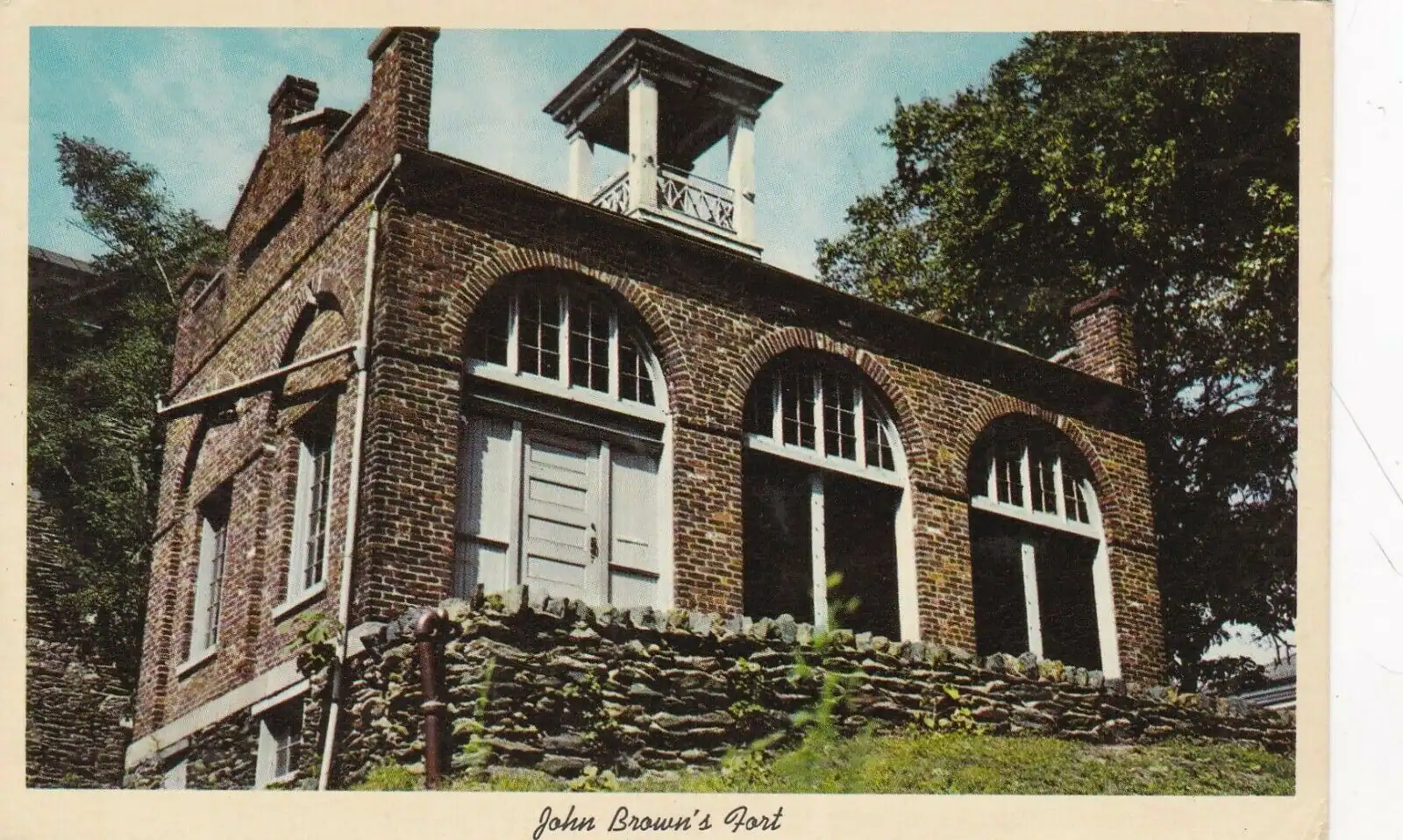
The delegates made a pilgrimage at dawn. They walked out to John Brown's Fort, which in 1906 stood on a farm about three miles from town, having been shipped to Chicago for the 1893 world's fair and brought back in 1895. Accounts describe them removing their shoes as they approached. It was 1909 before the building was moved onto this campus.
Du Bois issued the Address to the Country from this meeting: a demand for the vote, for equal treatment before the law, and for the education of Black children. Four years later most of the movement's leadership was in the NAACP.
The park interprets this on the campus. Ask at the visitor centre what is currently open, because access to individual buildings here varies.
Set expectations before you climb. This is not a museum campus with a ticket desk. It is a working National Park Service training facility on historic ground, and the balance of what you can enter changes.
What is always available. The campus itself: the buildings from outside, the tree-lined green, the interpretive panels, and the walk along Camp Hill with views down to the Shenandoah. It is free, it is quiet, and it is open during normal park hours.
What varies. Interior access to individual buildings, ranger programmes on the campus, and the Niagara Movement interpretation. Ask at the visitor centre on Cavalier Heights, or at the Place in Time exhibit in the lower town, what is running on the day you visit. The Lower Town Information Center has been operating without a ranger on duty.
The Lockwood House stands on the same hill and is part of the same story: a former armoury official's house that served as a hospital, a headquarters and then as one of the first buildings the school used.
Allow forty minutes. More if there is a programme on. The climb up from the lower town takes ten to fifteen minutes and the route passes the two churches and Jefferson Rock, which is the best half-hour of walking in the town.
Harpers Ferry is sold as an 1859 story with a Civil War epilogue. That framing puts Storer College in a footnote, and the footnote is wrong.
The sequence runs the other way. Brown's raid was an attempt to destroy slavery. The war did destroy it. And then, in a ruined armoury town with no industry left, a school opened to educate the people that destruction had freed — within months, in buildings the army had used as hospitals. The college is not an epilogue to 1859. It is the part of the story where somebody tried to build something.
It is also the part that shows how long the argument ran. The Niagara Movement came here in 1906 because forty-seven years after the raid the vote was being taken away again across the South. Storer's own students were being taught in a state that would still be segregating its schools half a century later.
And the closing in 1955 is the detail that stops any of it being tidy. The college was ended by the legal victory that made its founding principle law. There is no comfortable way to shape that into a conclusion, so this page does not try.
Come up the hill. It takes fifteen minutes and it changes what the lower town means.
Straight-line distances, so allow more on the road — the island is long and has one main parkway.
Neighbourhood
The terrace above the lower town: Storer College, the 1906 Niagara Movement meeting, and the view without the queue.
1–1.5 hoursIncluded with park entrance; the grounds carry no separate charge590 ft away
Viewpoint
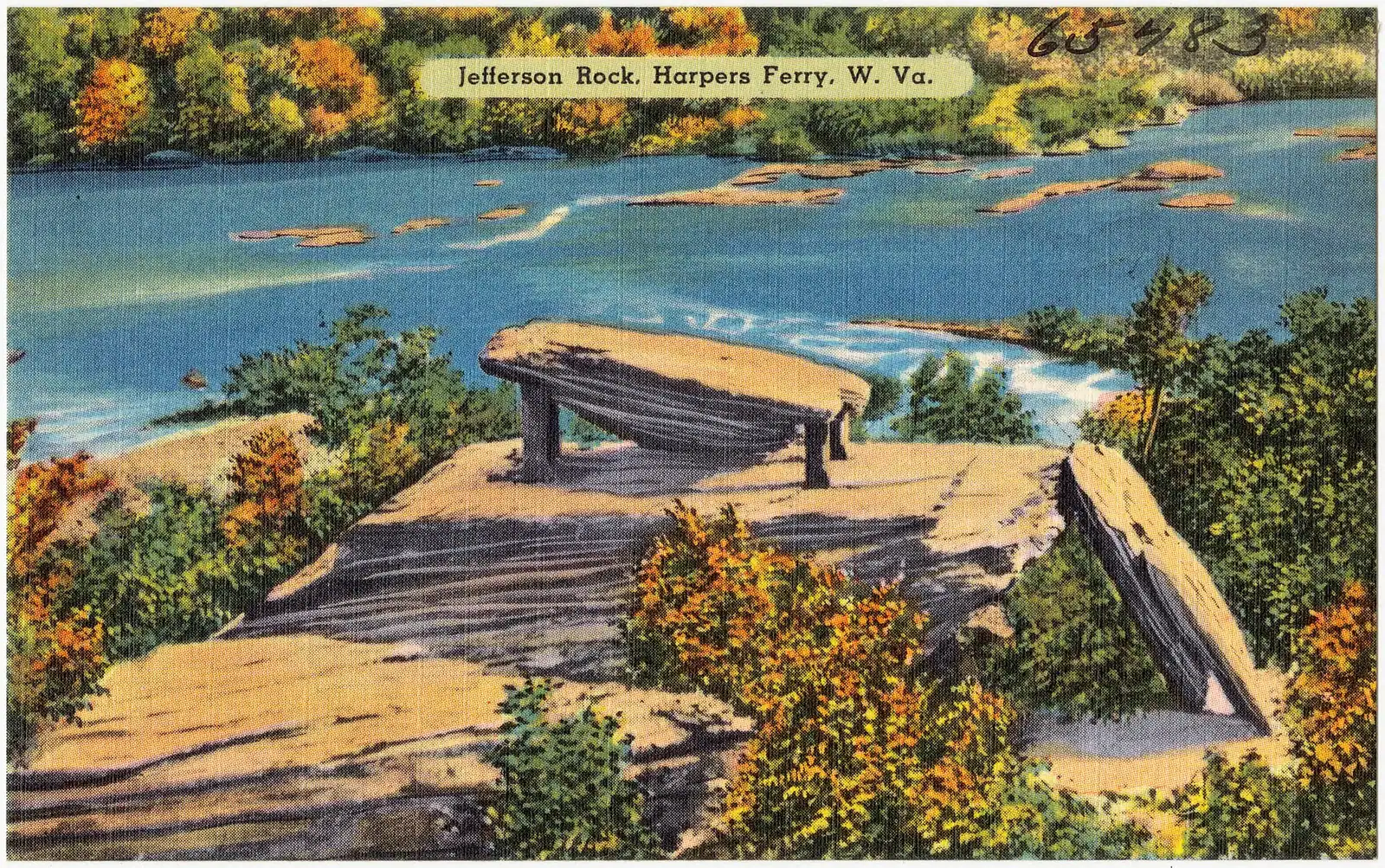
A propped shale slab above the Shenandoah gorge, and the spot that gave American travel writing its first great sentence.
0.5–1.5 hoursFree once you are inside the park; the park entrance fee still applies to your vehicle960 ft away
Historic site
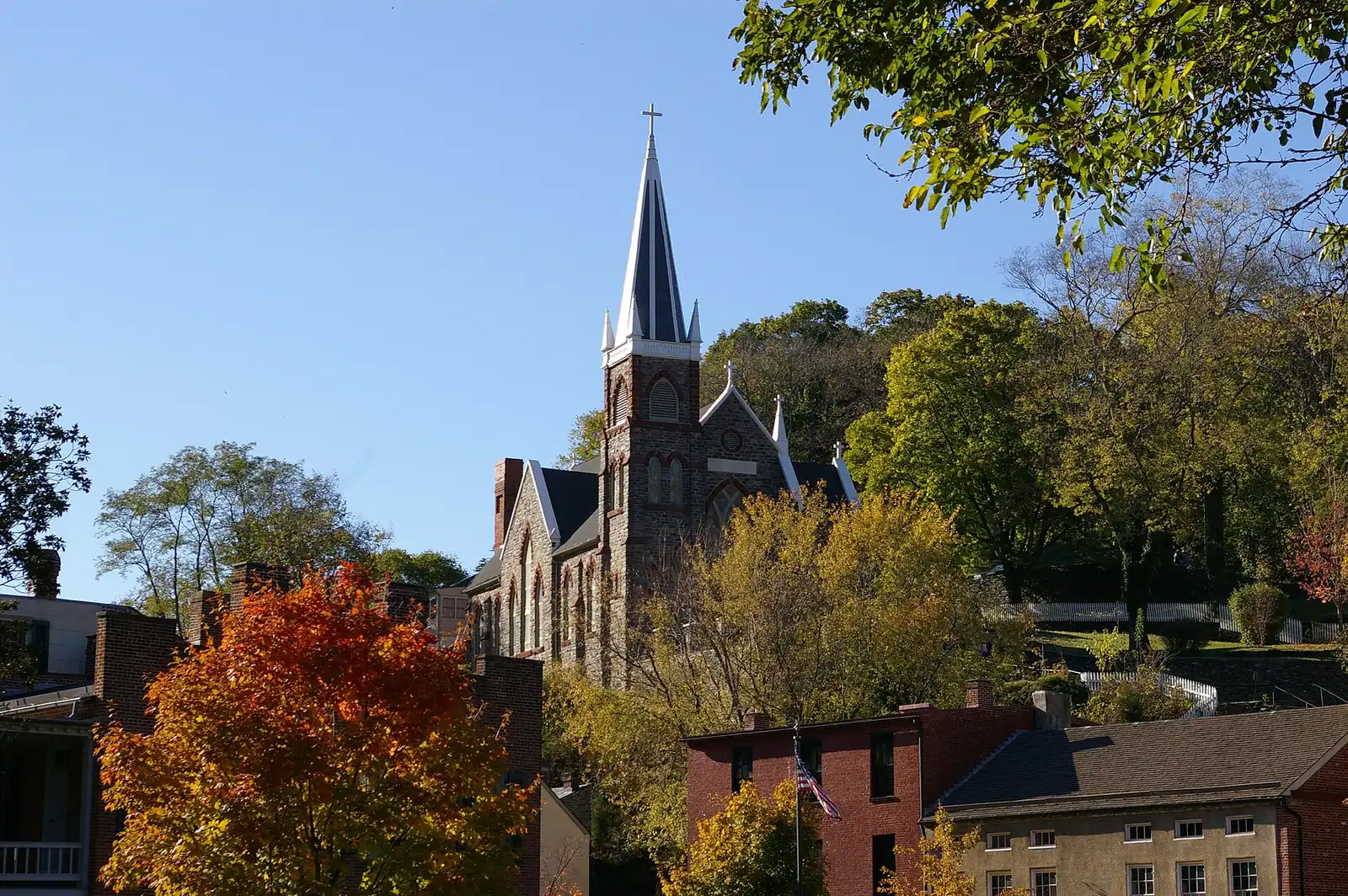
The spire in every aerial photograph of this town, and the only church here that came through the war standing.
10–30 minutesFree; the park entrance fee applies to your vehicle but the church charges nothing0.2 mi away
Neighbourhood
Two streets and a flight of stone steps, all of it inside a national park, with the high-water marks still on the walls.
2–5 hoursPark entrance fee applies; National Park Service exhibit buildings are then free to enter0.3 mi away
Where this place fits into a day, and the pages that plan one.
Things to do
The United States built its second national armoury on this ground in 1799 because the ground did the work. Two rivers arrive at the same corner…
Guide hub
An attractions list usually ranks things. This one maps them, because in Harpers Ferry the only question that matters is what altitude a place sits…
Guide hub
At most national parks the town is outside the gate. Here the town is the park. Harpers Ferry National Historical Park covers roughly 3,660 acres in…
Budget
Harpers Ferry is one of the cheapest good days out in the mid-Atlantic, and it is worth being precise about why, because the word free does two…
Things to do
Adjust the expectation before you arrive and this becomes one of the best hours in the park. There is no Harpers Ferry Museum. There is no hall with…
Guide
Cobbles, stone steps and a thousand-foot ridge on three sides. The flat walking is across a footbridge reached by stairs. Here is which parts of this actually work with children.
8 min readPrudence Ashby
Guide
The lower town read in geographical order tells the story backwards. Here is the day arranged chronologically instead, from the armoury grounds at nine to Jefferson Rock at dusk.
9 min readLoretta Sims
Guide
Twenty-two men seized a federal armoury on a Sunday night in October 1859. Thirty-six hours later it was over. The argument it started took another six years and 600,000 lives to finish.
10 min readLoretta Sims
A school founded in Harpers Ferry immediately after the Civil War to educate people who had been enslaved. It began as a Freewill Baptist mission school in 1865 and was chartered as Storer College in 1867, named for the Maine businessman whose gift was conditional on the school admitting students without distinction of race. For 25 years it was the only institution in West Virginia offering education beyond primary level to Black students. It operated for 88 years and taught more than 7,000 people.
Because of Brown v. Board of Education. After the 1954 Supreme Court decision West Virginia integrated its state institutions and withdrew the annual appropriation, around $20,000, that kept Storer running. The college closed in 1955. It is an uncomfortable piece of history: a victory for civil rights removed the funding case for a college that had been created precisely because those rights did not exist, and several historically Black colleges closed in the same decade for the same reason.
Yes. The campus on Camp Hill is part of Harpers Ferry National Historical Park and the grounds are open during normal park hours, free beyond the park entrance fee. It is not a conventional museum campus — the site houses the National Park Service's Stephen T. Mather Training Center, where rangers from across the country are trained — so interior access to individual buildings varies. Ask at the visitor centre what is open on the day.
The second gathering of the organisation W. E. B. Du Bois had founded in 1905, held at Storer College in August 1906 and the first one on American soil — the founding meeting had taken place on the Canadian side of the Niagara River because American hotels refused the delegates. At Harpers Ferry the delegates made a dawn pilgrimage to John Brown's Fort, then standing on a farm three miles from town, and Du Bois issued the Address to the Country. Much of the leadership went on to found the NAACP.